
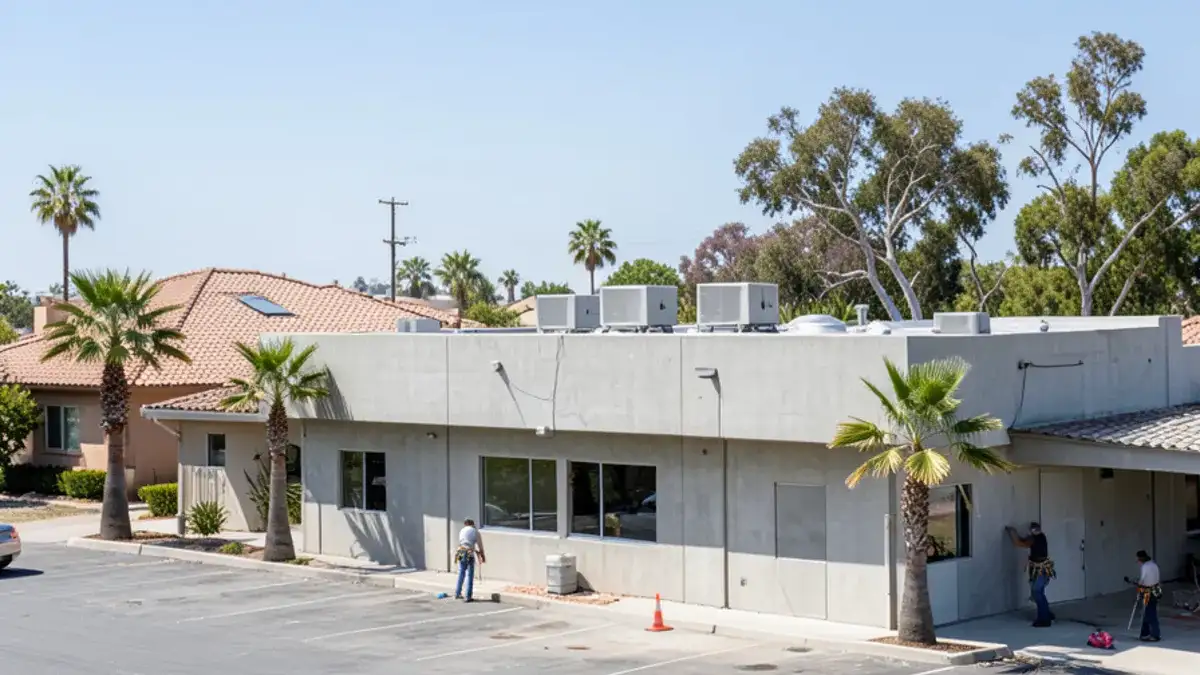
By Tylzen Spoke Roofing · Published
A commercial roof inspection checklist for buyers covers five areas: the paperwork behind the roof, the membrane surface, the edges and penetrations, the drainage system, and the underside of the deck from inside the building. The goal is a written condition report that estimates remaining life, flags wet insulation and prices the repairs you will inherit, in time to use it in the negotiation.
General property condition reports often give the roof a paragraph and a photo from the ground. This checklist goes further, and it is the same ground our commercial roof inspection covers for buyers during escrow.
Why the roof deserves its own line in due diligence
The roof is often the most expensive building component a buyer can be surprised by after closing. A replacement may be years away or due next winter, and the difference changes the deal. Wet insulation hidden under a sound-looking membrane, a second roof layer that rules out a recover, or failing drains can all move the budget a long way.
A roof-specific inspection also tells you whether existing manufacturer coverage exists and transfers, and whether the roof will satisfy your lender and insurer.
Code is part of the picture as well. A future reroof that replaces half or more of a low-slope roof generally has to meet California's Title 24 cool-roof rules, which in Climate Zone 9 call for a CRRC-rated surface with an aged reflectance of at least 0.63. Most white membranes qualify, but the requirement belongs in your long-term budget.
Want a roofer to look at it?
Call with your address and what you are seeing. We visit same-day or next-day when crews are free.
- 4.9 from 48 Google reviews
- Based on Rosemead Blvd
- Photos and a written quote before work
The commercial roof inspection checklist
Documents to request from the seller
- Installation date, contractor, system type and any manufacturer warranty documents.
- Repair and maintenance records, leak history and tenant complaints.
- Permit records for past reroofs, from the city or county building office.
- Any prior roof reports, moisture surveys or core results.
On the roof
- Membrane surface: splits, blisters, shrinkage, exposed scrim, worn coating, punctures.
- Seams and laps, especially at corners and around curbs.
- Perimeter edge metal, parapet coping and counterflashing.
- Penetrations: HVAC curbs, pipes, pitch pans, exhaust fans, skylights and smoke vents.
- Drains, scuppers, gutters and downspouts, plus dirt rings that show ponding.
- Rooftop equipment condition and whether units sit on proper supports.
Inside the building
- Stains, rust or rot on the deck underside and structure.
- Ceiling tile stains, buckets or tarps over racking.
- Drain leaders and their joints.
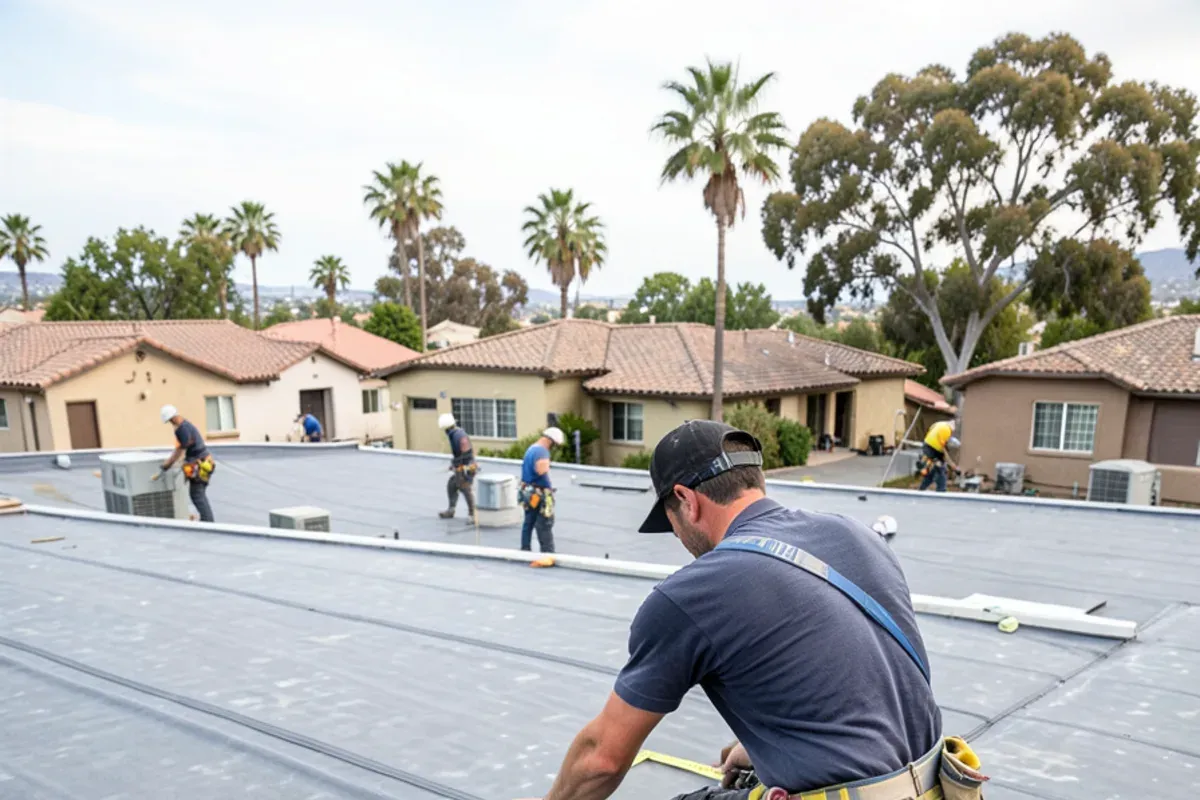
How can you estimate a commercial roof's age?
Sellers do not always know, and a listing that says the roof is recent may describe only one section. Combine several clues.
- Permit history at the building department, which often shows the year of the last reroof.
- Warranty documents and manufacturer registration, which name the install date.
- Core cuts that show how many layers exist and what each one is.
- Membrane condition compared with typical aging for that system in our climate.
- Rooftop equipment dates, which sometimes hint at when the roof was last opened up.
Aging clues by roof system
- TPO and PVC: a chalky or dull surface, then shrinkage that pulls at corners and curbs, and finally exposed scrim fabric showing through worn spots.
- Modified bitumen: granules washing off the cap sheet, cracks along laps, and seams that lift when pressed.
- Built-up roofs: alligator cracking in the asphalt, bare patches where gravel has blown away, and blisters between plies.
- Coated roofs: thin or chalking areas, peeling at seams, and an underlying membrane showing through in walkways.
What should a roof condition report tell you?
| Report section | What it should say |
|---|---|
| Roof plan | Each section outlined and measured, with drains, curbs and skylights marked |
| System and layers | Membrane type, insulation, deck type and number of existing roofs |
| Moisture findings | Where insulation is wet, how it was tested and how much area is affected |
| Condition rating | A rating per section and an estimate of remaining service life |
| Deficiencies | Photos of each problem, keyed to the plan, ranked by urgency |
| Recommendations | Repair, maintain, coat, recover or replace, with the reasons |
| Pricing | Written, line-by-line figures for urgent repairs and the long-term option |
What we see when buyers ask us to look at buildings in Commerce and Industry
Much of the inspection work we do for buyers is on industrial and flex buildings in Commerce and City of Industry. A few findings come up again and again.
- A fresh white coating applied before listing, sometimes over seams that were never repaired underneath.
- Newer sections next to much older ones, so the building has two roof ages, not one.
- Abandoned curbs and penetrations left from former tenants' equipment.
- Drains with damaged strainers or missing clamping rings, hidden under debris.
- Interior racking shielded by plastic sheeting, which is worth asking about.
None of these is a reason to walk away. Each is a cost that belongs in the numbers before closing.
Trade-offs inside a short escrow
A baseline property condition assessment under ASTM E2018 is a walk-through survey, so it rarely includes core cuts or moisture testing. Adding a roof-specific inspection costs more time and money, but it is the only way to learn whether the insulation is wet before you own it.
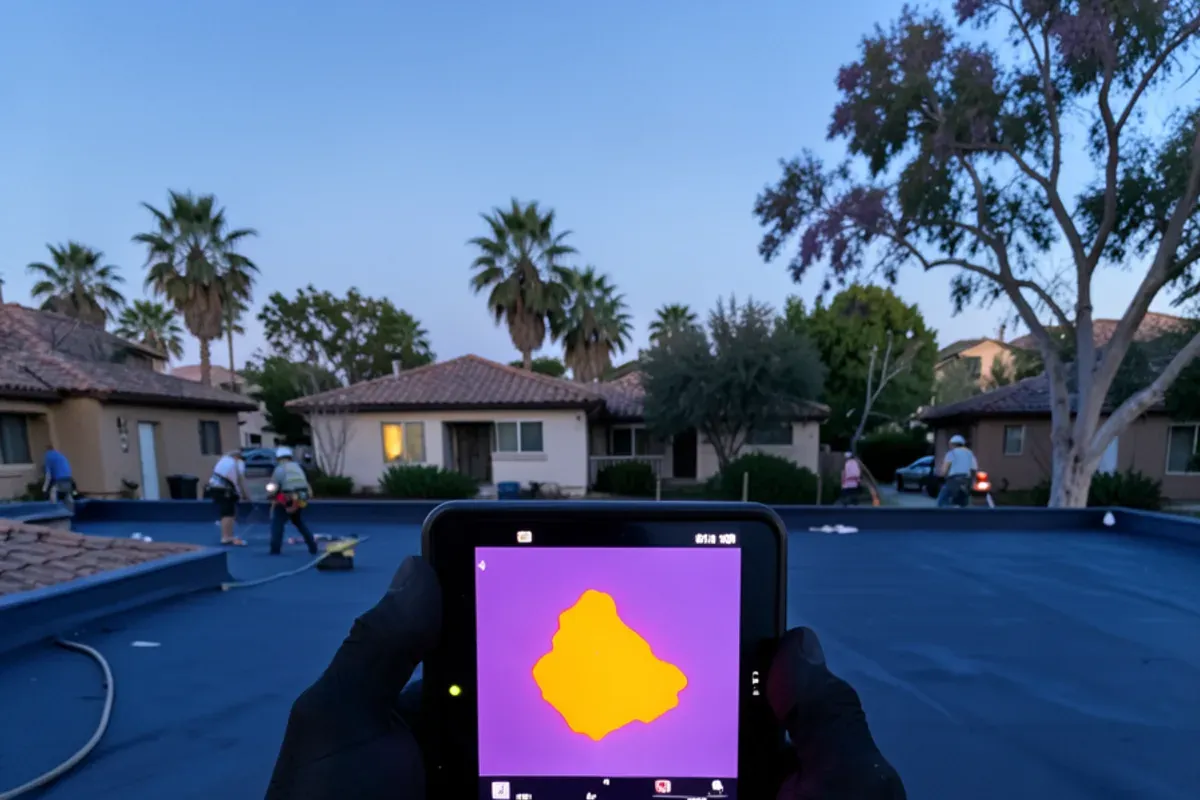
Timing cuts both ways. An infrared scan needs a dry roof and a clear evening after a sunny day, which a winter escrow may not deliver. In that case, extra core cuts and moisture meter readings fill the gap, though they sample fewer spots. On the deal side, a seller repair before closing is quick, but you do not choose the contractor or the materials. A price credit or escrow holdback leaves the repair in your hands and on your schedule, which is usually the better trade when the roof work is more than a patch. After closing, a commercial roof maintenance plan keeps the condition report current.
Red flags that justify a closer look before you close
Most findings become numbers in the deal. A few deserve extra testing or an engineer before you go hard on the contingency:
- Soft or springy areas underfoot, which point to wet insulation or a weakened deck.
- Sagging between joists or a low area mid-span that holds water after every storm.
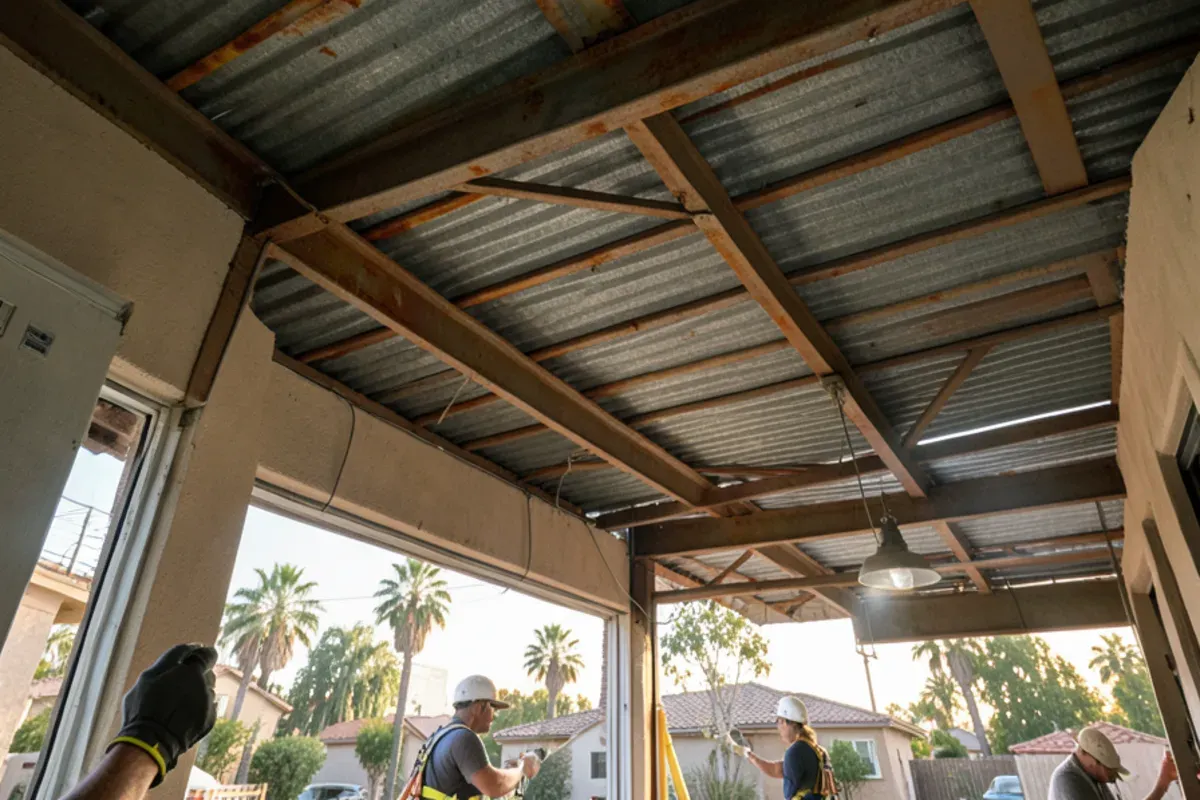
- Rust flakes, holes or stains on the underside of a steel deck seen from inside the building.
- Rooftop units resting on wood sleepers directly on the membrane instead of on curbs or proper supports.
- Parapet walls with cracked coping or leaning sections, especially on older masonry buildings.
- Overflow scuppers or secondary drains that are missing, blocked or covered by later roofing.
- A fresh coating with no record of seam repair, moisture testing or the product used.
Any of these can still lead to a sound purchase. They simply move the roof from a line item to a project, and the price of that project should be known before the contingency runs out.
Turning roof findings into negotiating points
- Separate urgent repairs from planned replacement, so each can be handled differently in the deal.
- Ask for a price credit, a seller repair before close or an escrow holdback for the urgent list.
- Confirm in writing whether manufacturer coverage exists and what the transfer process requires.
- Build the replacement estimate into your capital plan and lease structure.
- If repairs happen before closing, ask for photos and invoices, and make sure the contractor holds a C-39 license you have checked at cslb.ca.gov.
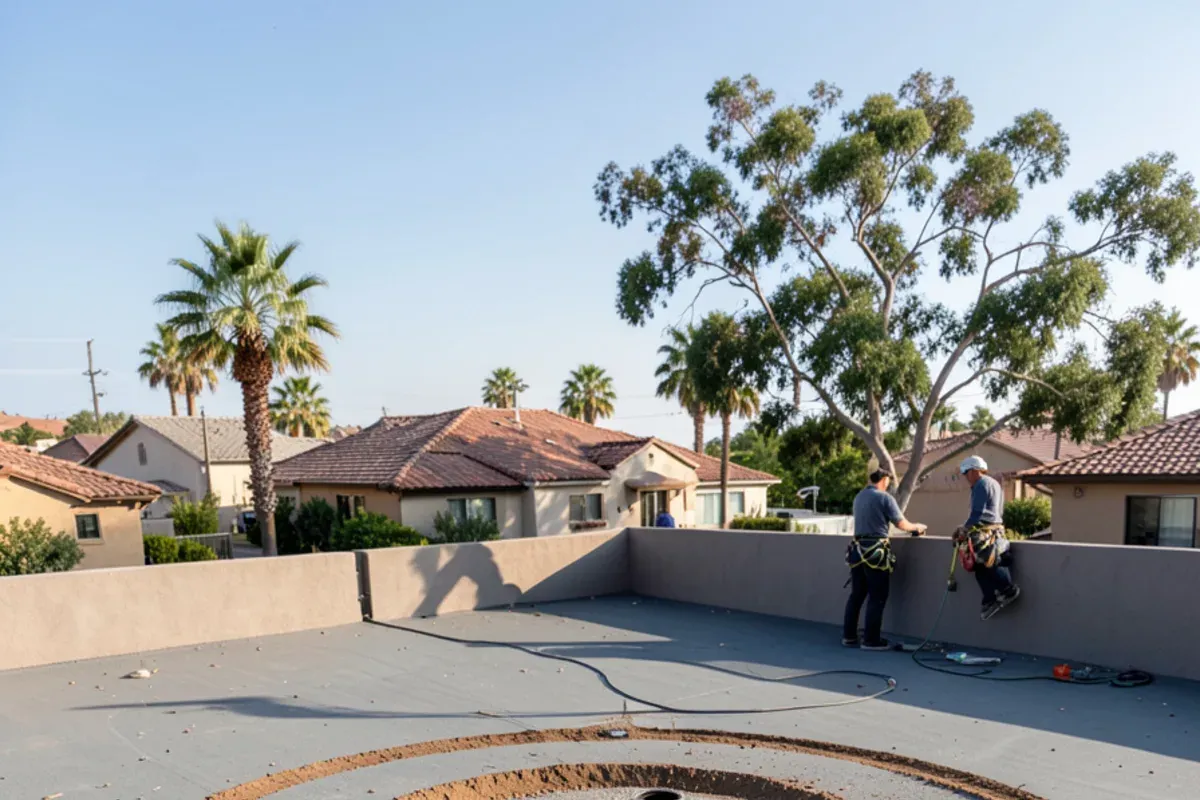
Scheduling a roof inspection inside your escrow window
Book the roof early in the contingency period so there is time for core cuts, pricing and a second look if needed. You receive a photo-documented report plus itemized pricing for urgent repairs and for commercial roof replacement when it is on the horizon. For smaller problems, our commercial roof repair team can price fixes the seller may agree to complete. Call (725) 745-8803 or request a quote to get on the schedule.
Questions readers ask
Is a general property condition assessment enough for the roof?
It is a good overview but rarely enough on its own. Many assessments view the roof briefly and do not include moisture testing or core cuts. A roof-specific inspection adds those, estimates remaining life per section and prices repairs, which gives you firmer numbers for negotiating.
Will core cuts damage the roof?
A core cut is a small, deliberate opening that is patched the same day with matching material. Sellers sometimes ask for their permission first, so request it through your broker. The few cuts needed are a small price for knowing how many layers exist and whether insulation is wet.
Can an existing commercial roof warranty transfer to a new owner?
Sometimes. Manufacturer terms vary by product line, and many require a transfer request, a fee or an inspection by the manufacturer. Workmanship terms are written in the original contract. Get both documents from the seller and read the transfer conditions before closing.
Who should be on the roof during a buyer inspection?
The roofer doing the inspection, with the seller's permission and access arranged through the broker. Buyers are welcome to watch from the hatch or review the photos afterward. Walking a commercial roof near skylights and edges requires fall protection, so we keep visitors off the open roof.
Where can a buyer find permit history for past reroofs?
Start with the building department that covers the property. Incorporated cities keep roof permits through their own building division or the county office they contract with, while unincorporated parcels are handled by LA County Public Works Building & Safety. Ask for permits by address and year, and compare the last reroof date with what the seller's documents and the core cuts show.
Sources
Written by Tylzen Spoke Roofing
A roofing contractor on Rosemead Blvd (CA-19) in Rosemead, working on shingle, tile, metal and flat roofs across the San Gabriel Valley. This guide reflects what our crews check on local roofs. Questions about your roof? Call (725) 745-8803.