
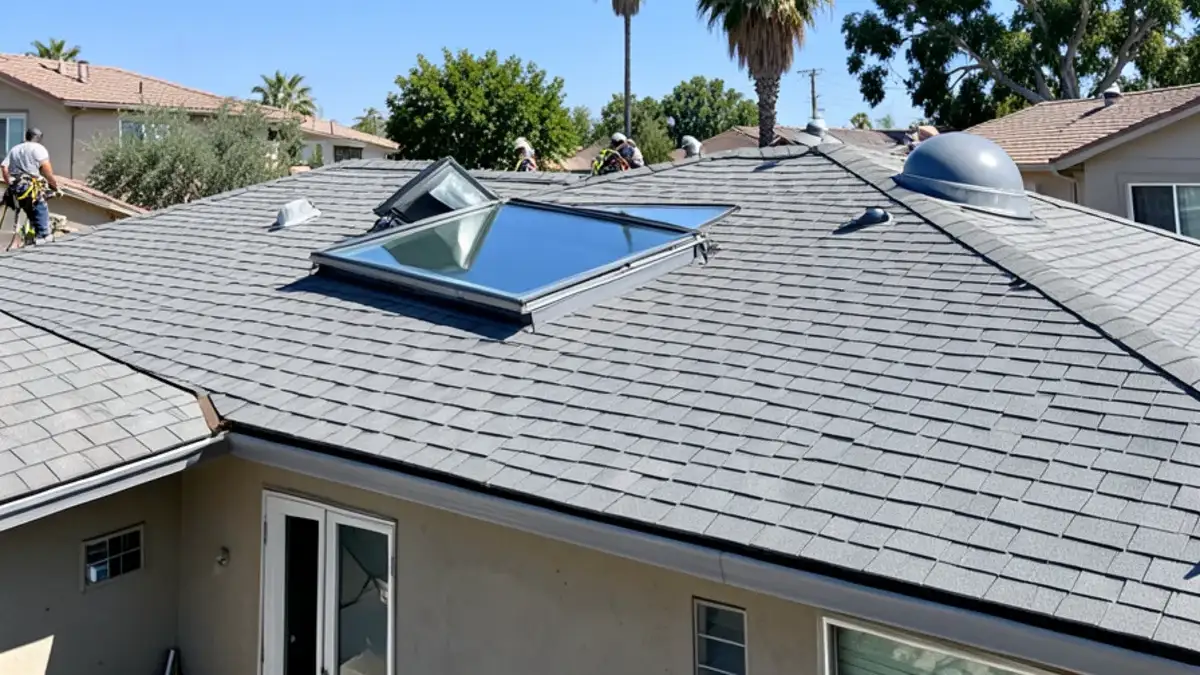
By Tylzen Spoke Roofing · Published
The three main types of skylights are fixed units that bring in light and a view, venting units that also open to let heat and moisture out, and tubular skylights that pipe daylight through a reflective tube into small spaces. For most homes the choice comes down to the room: venting for kitchens and bathrooms, fixed for living areas and vaulted ceilings, and tubular for hallways, closets and interior rooms with an attic above.
Heat and leak risk follow a similar pattern. More glass brings in more summer heat, and every moving part or large curb is one more joint to keep sealed.
How the three skylight types compare
| Factor | Fixed | Venting | Tubular |
|---|---|---|---|
| What it does | Light and sky view; does not open | Light, view and fresh air; opens by crank, electric or solar motor | Light only, through a reflective tube |
| Typical rooms | Living rooms, vaulted ceilings, stairwells | Kitchens, bathrooms, upstairs bedrooms | Hallways, closets, laundry rooms, small baths |
| Roof opening | Sized to the unit; may need reframing | Same as fixed | Small round hole between rafters |
| Summer heat gain | Moderate to high, set by glass and size | Moderate to high; opening it releases hot air | Low |
| Leak risk | Low with correct flashing | Slightly higher: sash gaskets and moving parts | Low; small round flashing |
| Relative cost | Moderate | Higher | Lowest |
| Ceiling work | Framed and finished light shaft | Framed shaft, plus wiring for electric units | Ceiling ring; tube runs through the attic |
Product lines such as VELUX skylights and Sun Tunnels or Solatube daylighting devices are examples of what is on the market. Whatever the brand, the flashing kit should come from the same maker as the unit.
Want a roofer to look at it?
Call with your address and what you are seeing. We visit same-day or next-day when crews are free.
- 4.9 from 48 Google reviews
- Based on Rosemead Blvd
- Photos and a written quote before work
Which skylight type suits each room?
Kitchens and bathrooms
These rooms produce heat and moisture, so a venting skylight earns its extra cost. Opened a few inches, it lets rising hot air and steam escape at the highest point of the room. Solar-powered venting units need no house wiring, and many include a rain sensor that closes the sash when the first drops hit.
A venting skylight is a second way to clear humidity, not a replacement for the bathroom exhaust fan that codes still expect. For a small bathroom with no outside wall, a tubular skylight is often enough on its own, brightening the room without a large opening over the shower.
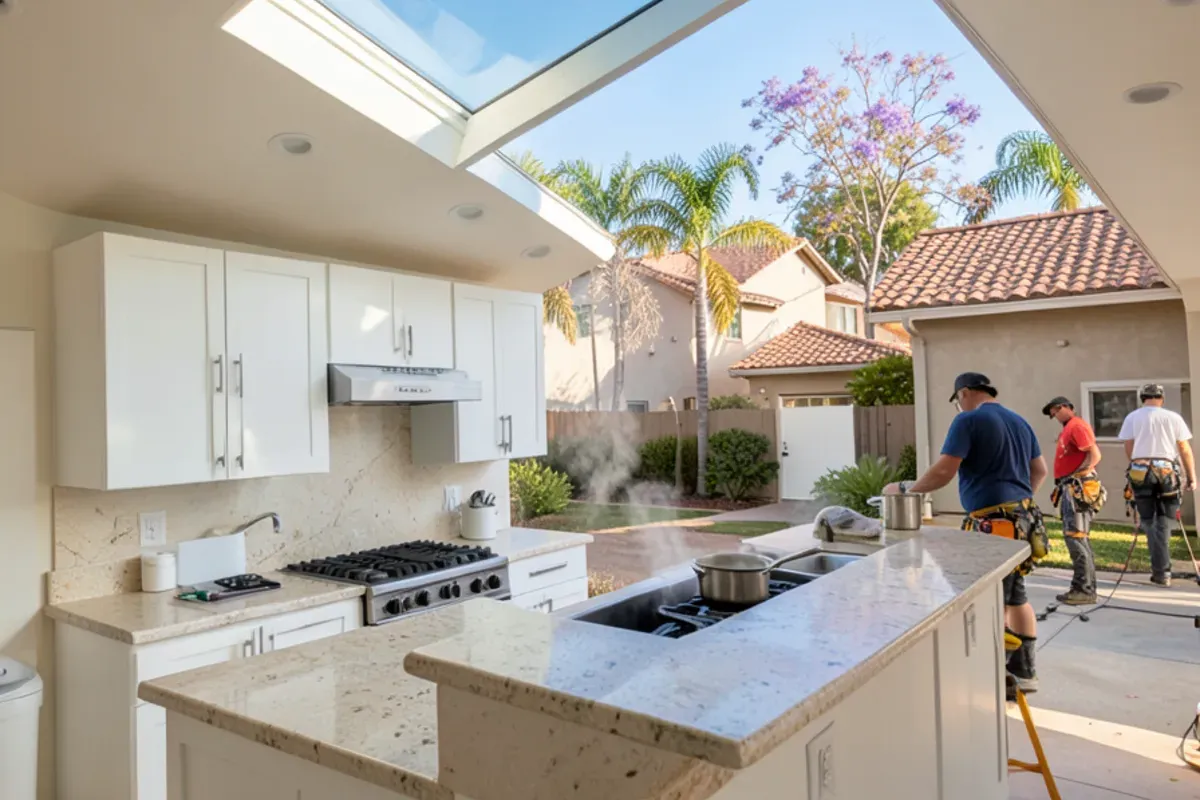
Living rooms, stairwells and vaulted ceilings
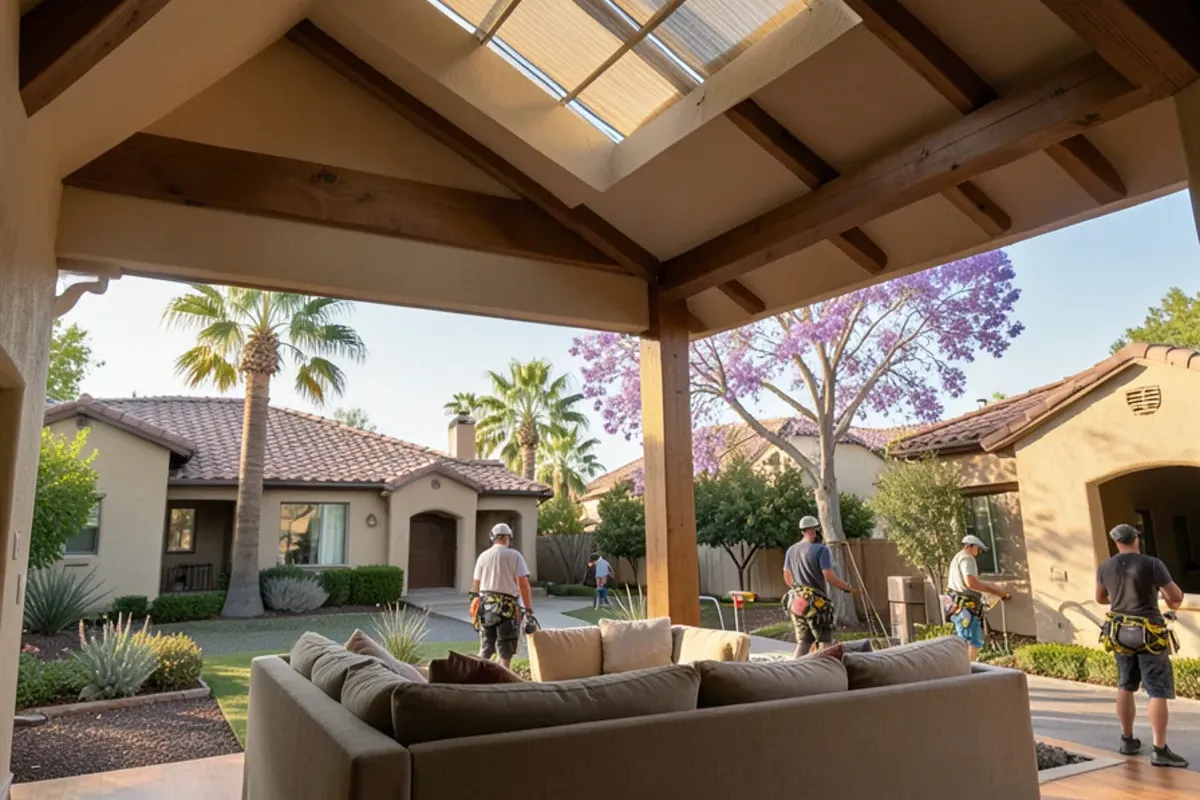
Fixed skylights suit spaces where you want to see the sky and do not need airflow. On a vaulted ceiling the unit can sit in the roof plane with no shaft at all, which keeps the installation simpler.
Hallways, closets and laundry rooms
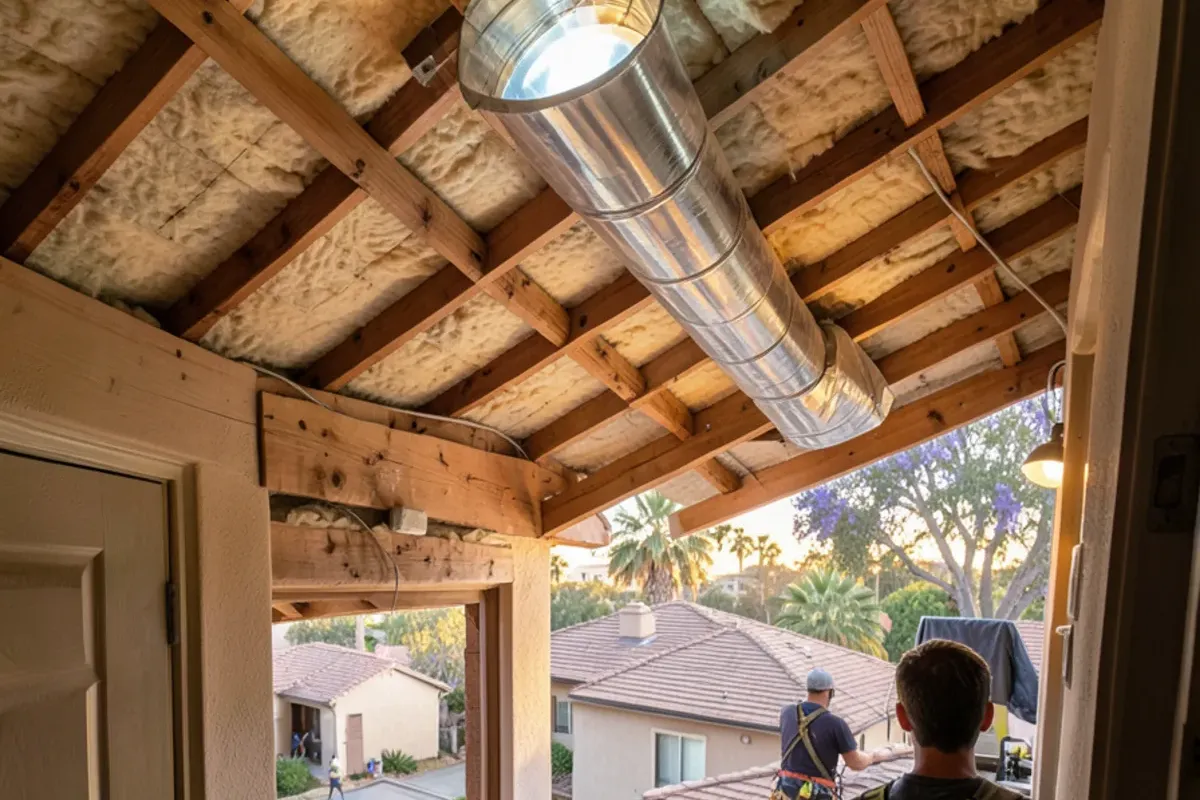
Tubular skylights shine here. The tube snakes through the attic around framing and ducts, and a ceiling diffuser spreads the light evenly.
Six questions that settle the choice
- Does the room make steam or cooking heat? If yes, start with a venting unit.
- Is there an attic between the roof and the ceiling? A vaulted ceiling suits a fixed or venting unit set in the roof plane; an attic makes a tubular unit possible.
- Which way does the roof slope face? North slopes give soft, steady light, while west slopes bring the hottest afternoons.
- Do you want to see the sky, or only brighten the room? A view needs a fixed or venting unit.
- Is the roof clay or concrete tile? Every type works on tile, but the flashing costs more and a smaller opening keeps that cost down.
- For a venting unit, is solar power enough, or is a circuit already close by in the attic?
How much heat does a skylight add in an SGV summer?
A skylight faces the sun for most of the day, so it gains more heat than a wall window of the same size. With summer highs around Rosemead in the 78-88°F range, that heat reaches the room below by mid-afternoon. These choices keep it in check:
- Choose double-pane, low-E glass; the rating label lists the solar heat gain coefficient (SHGC), and a lower number means less heat.
- Keep the size modest, since a skylight larger than the room needs adds heat without adding useful light.
- Favor north-facing slopes for steady, softer light; south and west slopes bring the most heat.
- Add a light-filtering or blackout shade, which many fixed and venting units accept.
- Consider a tubular unit, whose small dome collects light with far less glass area.
State energy rules under Title 24 apply to skylight glass on new and replacement units as well. Confirm the current rules with your building department before choosing glass.
Which skylight type leaks least?
Installation decides leaks far more often than skylight type does. A fixed or venting unit with a matched flashing kit and underlayment lapped correctly around the curb stays dry; the same unit sealed in with roof cement will leak within a few rainy seasons.
Each type still has its own weak spots. Venting units add a sash gasket and a motor or crank, and the gaskets and screens need occasional attention. Fixed units have the fewest parts. Tubular units have the smallest roof opening and so the least flashing to fail, though the dome seal and the tube joints should stay tight to keep dust and moisture out. If an existing unit already drips, skylight repair may come before any upgrade.
Tile roofs need matched flashing
On clay S-tile and concrete tile, the flashing kit must match the tile profile, and the underlayment around the curb matters as much as the metal. Ask your installer which kit they plan to use for your roof.
Swapping one skylight type for another
Changing type is common when an old skylight fails, and the work depends on which way the swap goes. Our skylight replacement visits often start with one of these three:
- Fixed to venting in the same opening: many venting units come in the same rough-opening sizes as fixed ones, so the framing often stays. The new work is a screen, an opening sash and either a solar panel or a wire run.
- Large fixed unit to tubular: the old opening is framed in, sheathed and roofed over, the shaft drywall is closed, and a small tube goes in nearby. It suits hallways where a big dome brought heat and leaks but little real benefit.
- Adding a tubular unit beside existing ones: the tube has to route around ducts, wiring and attic framing, so we map that path from the attic before picking the roof location.
Going the other way, from tubular to a full skylight, means cutting rafters and building a framed shaft, which is a bigger job and often a permit.
What we see when SGV homeowners add skylights
Many single-story stucco homes in Rosemead and San Gabriel have long interior hallways and windowless bathrooms, and those are the spaces where tubular skylights change the most for the least money. The attics above them usually leave room for a short, straight tube run.

Kitchen remodels are where venting skylights come up most. Heat builds under a kitchen ceiling on an August afternoon, and a skylight that opens lets it out.
The opposite mistake is common too: an oversized fixed skylight on a west-facing slope that turns a family room into a greenhouse. Before we quote a new skylight, we check which way the slope faces and suggest a size and glass that keep the room comfortable.
Where each type falls short
No skylight type is the right answer everywhere. Tubular units give flat, even light with no sky view, and a long run with two or three bends delivers noticeably less of it. Venting units need their rain sensor working; a manual unit left open before a sudden winter shower lets water straight into the room. Fixed units on high vaulted ceilings are hard to reach for cleaning or shade changes without a pole or a remote-operated blind. We would rather point these out before the quote than hear about them after the install.
Choosing the right skylight for your roof
Pick the type by the room: venting where heat and steam collect, fixed where you want the view, tubular where you just need daylight. Then match the glass and size to the sun exposure and insist on a matched flashing kit. Our skylight installation visits start with a look at the roof, the attic path and the room, followed by a written quote for each option you are weighing. Call (725) 745-8803 to talk it through, or request a quote.
Questions readers ask
Is a tubular skylight as bright as a regular skylight?
In a small room it can be. A 10-inch or 14-inch tube delivers a surprising amount of daylight to a hallway or bathroom, though it cannot light a large living room the way a big fixed unit can. Brightness also depends on tube length, the number of bends and how much sun the roof slope gets.
Do venting skylights need electricity?
Not always. Manual units open with a crank pole, and solar-powered models charge from a small panel on the frame, so no house wiring is needed. Hardwired electric units need a circuit run through the attic, which adds an electrician's time. Solar and electric models often include a remote and a rain sensor.
Can a skylight go on a flat or low-slope roof?
Yes, using a curb-mounted unit that raises the glazing above the roof surface so water drains away. Low-slope roofs over additions and patio rooms are common around the SGV, and the curb has to be flashed into the membrane, not just sealed to it. Some units specify a minimum pitch, which a sloped curb can provide.
What is the best skylight type for a small bathroom?
For most small bathrooms, a tubular unit. It brightens the room through a frosted ceiling diffuser that keeps privacy, needs only a small roof opening, and puts no large glass panel over the shower. Choose a venting unit instead if the room has a vaulted ceiling or no exhaust fan path, and keep the exhaust fan either way, since neither skylight replaces it.
Sources
Written by Tylzen Spoke Roofing
A roofing contractor on Rosemead Blvd (CA-19) in Rosemead, working on shingle, tile, metal and flat roofs across the San Gabriel Valley. This guide reflects what our crews check on local roofs. Questions about your roof? Call (725) 745-8803.