
By Tylzen Spoke Roofing · Published
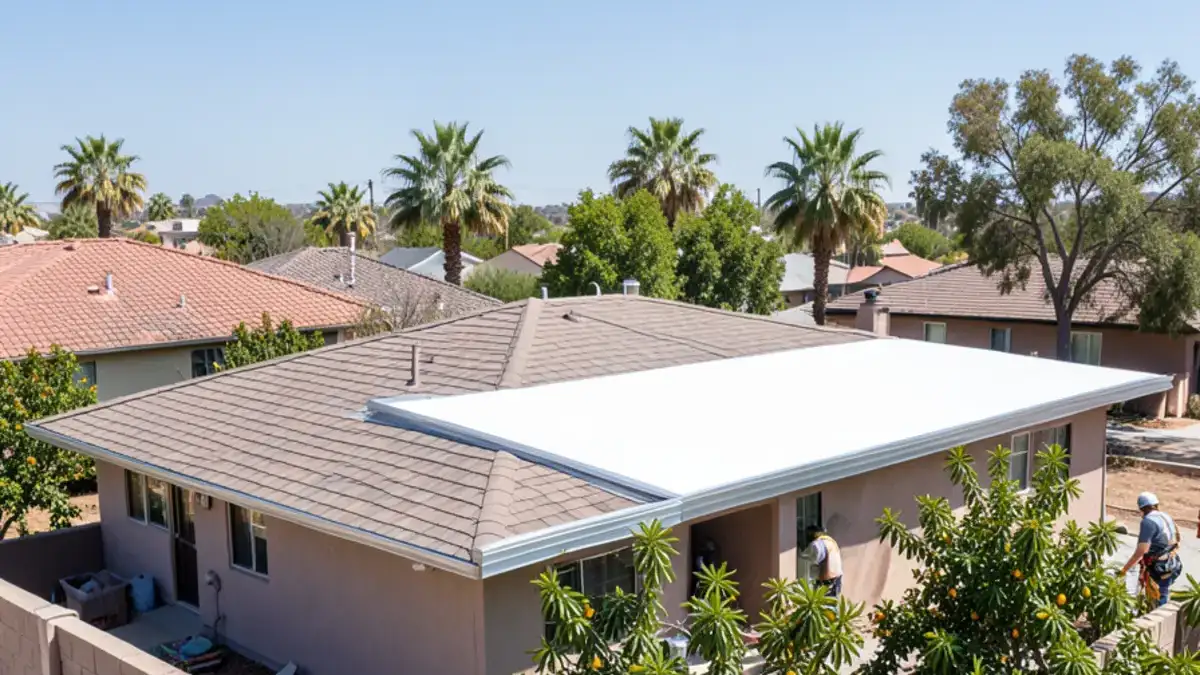
Flat roof replacement cost is set less by square footage than by what lies underneath: how many old layers must come off, whether the deck is rotted, whether the roof needs re-sloping or new drains, and which membrane goes on top. A small garage roof with one clean layer and good drainage can cost far less per square foot than a larger addition with soggy gravel, sagging joists and a parapet wall.
We do not publish set prices, because every low-slope roof hides something different. This guide walks through each cost driver so you can read a quote line by line and compare bids fairly.
What drives the cost of a flat roof replacement?
| Cost driver | Why it changes the price | What you can check |
|---|---|---|
| Tear-off layers | Old built-up gravel roofs are heavy and slow to remove; extra layers add labor and dump fees | Look at the roof edge for stacked layers |
| Deck condition | Wet or rotted sheathing must be replaced before any membrane goes down | Soft spots, ceiling stains, sagging areas |
| Drainage and slope | Crickets, tapered insulation or new drains add material and time | Water still sitting two days after rain |
| Membrane type | TPO, torch-down and coatings differ in material and labor | Ask what each bid specifies |
| Insulation | Rigid insulation above the deck adds cost but improves comfort | Hot rooms under the roof |
| Edges, parapets and penetrations | Each wall, curb, vent and AC stand needs flashing | Count vents, skylights and equipment |
| Access | Two-story or tight-lot roofs take longer to load and clean | Distance from street to roof |
| Permits and inspections | Required on replacements; listed separately | Ask whether the bid includes them |
Homeyou's 2025 figures, built from about 1,010 Rosemead-area jobs, give only loose background: typical roofing work there ran $7,158-$8,133. That figure covers roofing work in general, not flat roofs specifically, and it is not a quote. Real prices depend on size, layers, deck condition and material.
Want a roofer to look at it?
Call with your address and what you are seeing. We visit same-day or next-day when crews are free.
- 4.9 from 48 Google reviews
- Based on Rosemead Blvd
- Photos and a written quote before work
Tear-off and deck repair: the hidden half of the bill
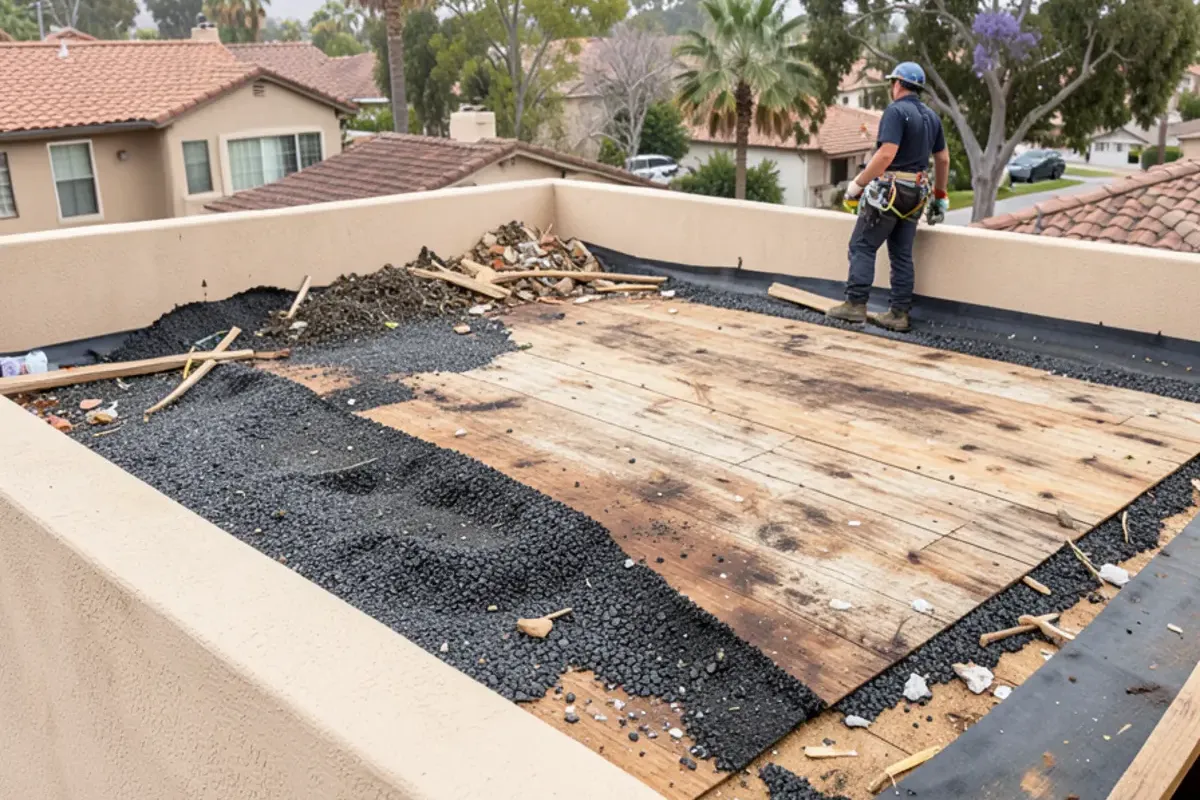
Many older flat roofs in the valley are built-up roofs with tar and gravel, sometimes with a newer cap sheet or coating on top. Removing that weight takes time, and disposal is charged by the load. Laying a new membrane over the old one can work, though only if the existing roof is dry, well bonded and still under the code's layer limit.
Deck damage is where quotes jump. Water that sat on a low spot for years often rots the sheathing beneath. A careful bid prices deck repair per sheet so you only pay for what is actually replaced, and the crew shows you photos before closing it up.
How much does membrane choice change the price?
Membrane choice moves the price, but rarely as much as tear-off and drainage. Here is how the common options compare in relative terms.
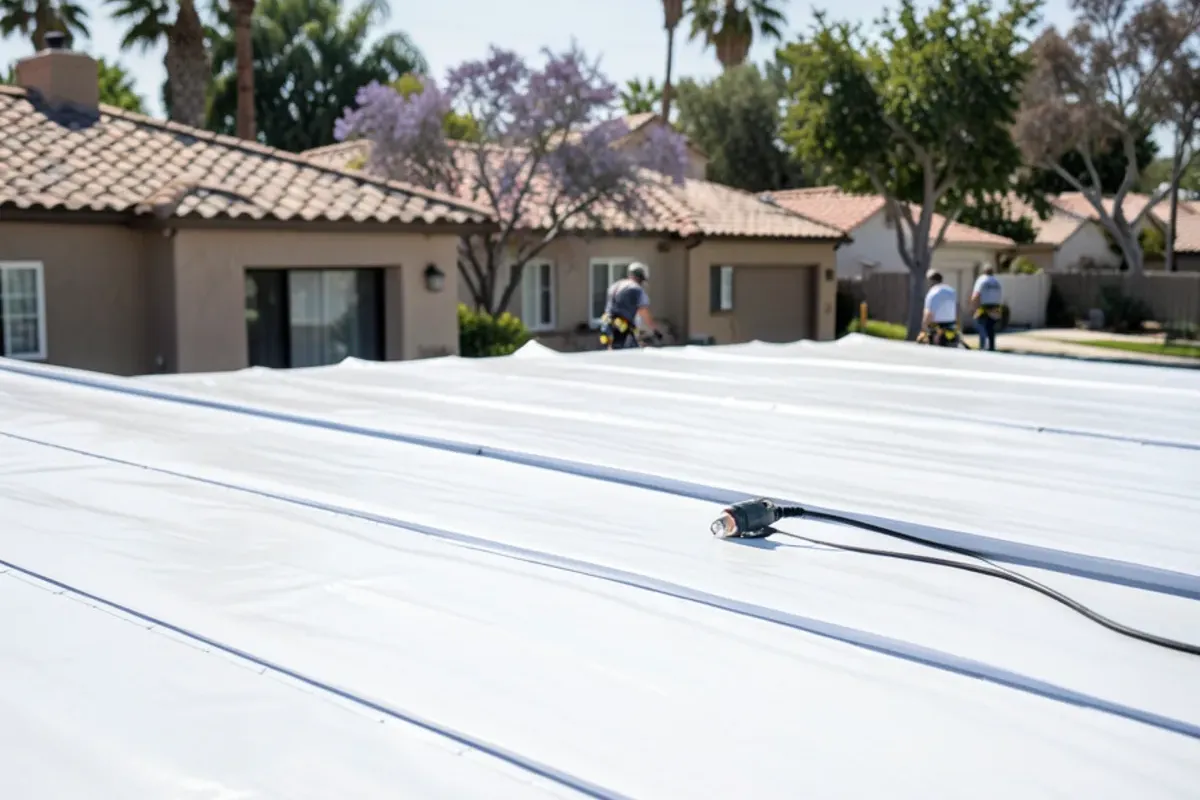
- TPO roofing: a white single-ply sheet with heat-welded seams. Mid-range cost, reflective out of the box, good for larger or simple roofs.
- Torch-down roofing: modified bitumen applied in layers. Tough under foot traffic; needs a reflective cap sheet or coating to meet cool-roof rules.
- Roof coatings: silicone or elastomeric fluid applied over a sound existing roof. Often the lowest cost when no tear-off is needed, but not a fix for a wet or failing roof.
- Built-up roofing: still used on some commercial roofs, less common on homes today.
Title 24 and insulation on low-slope roofs
California's Energy Code treats low-slope roofs (2:12 or less) differently from pitched roofs. In the zones that require cool roofs, the rules kick in once a project replaces at least half the roof area, or over 2,000 sq ft on some low-slope roofs. For these roofs the target is 0.63 aged solar reflectance and 0.75 thermal emittance, or SRI 75 instead, from a CRRC-rated product.
White TPO and most white coatings meet that target easily. A dark torch-down cap sheet does not, so the bid needs a white granulated cap or a rated coating on top. Some projects also add rigid insulation, which raises cost but cuts heat into the rooms below. Confirm the requirements with your local building department.
Repair, recoat or replace: which costs less over time?
Not every tired flat roof needs a full replacement. The cheapest option on the day is not always the cheapest across the next decade, so it helps to see what each path leaves unsolved.
| Option | When it fits | What it leaves unsolved | Relative cost |
|---|---|---|---|
| Targeted repair | One or two leaks at seams, flashing or a drain on an otherwise sound roof | General aging of the membrane | Lowest now; may repeat |
| Coating over the existing roof | Dry, well-bonded roof with good drainage and surface wear | Wet insulation, rot and slope problems underneath | Low to moderate; needs periodic renewal |
| Tear-off and replacement | Wet layers, soft deck, repeated leaks or a roof at its layer limit | Nothing, if drainage is corrected at the same time | Highest now; longest service |
A core cut or moisture reading settles the choice more reliably than the roof's age. When a small section is wet, flat roof repair can cut it out and patch it, which sometimes buys a coating several more good years.
Garage and patio roofs vs. home additions
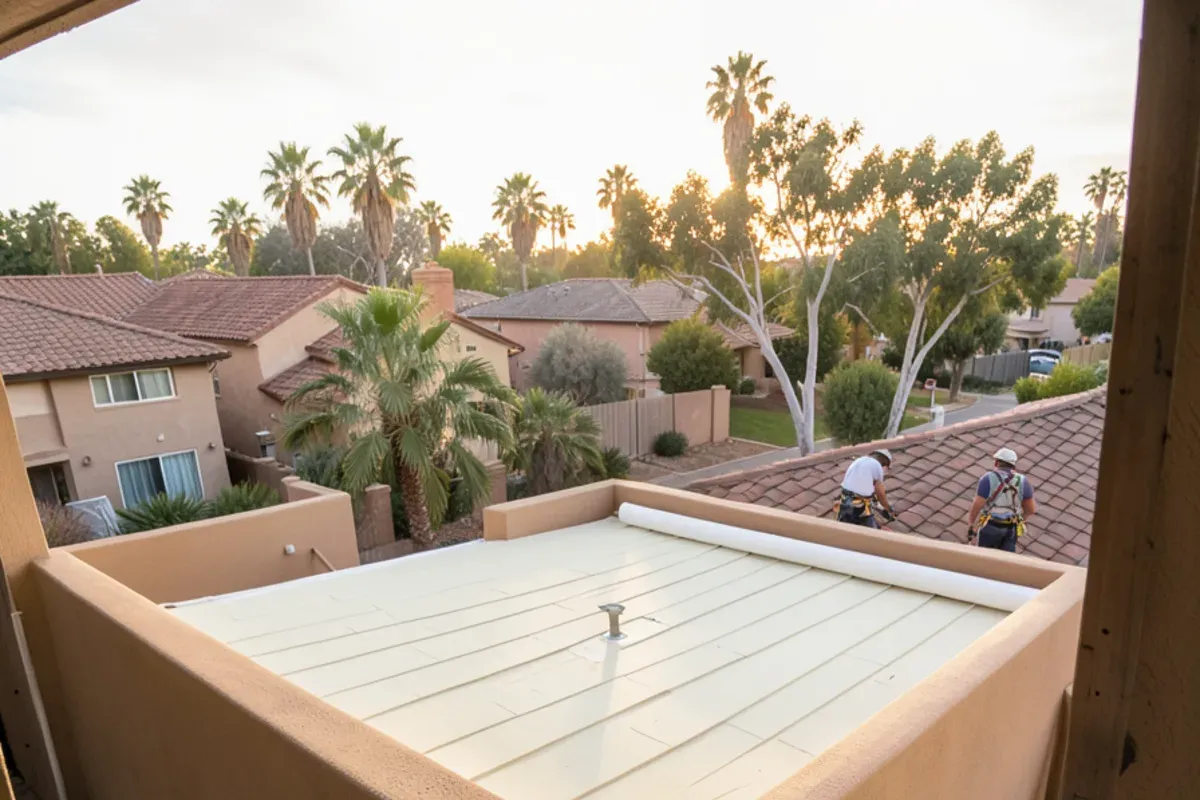
Detached garages and patio covers are usually the least costly flat roofs to replace: small, single-story and often without insulation requirements. An addition over living space costs more per square foot because it ties into the main roof, has walls and windows to flash, and carries the comfort and Title 24 concerns of conditioned rooms.
Apartment buildings and commercial blocks add scale, equipment curbs, parapets and tenant scheduling, which our flat roof replacement service handles on both homes and small buildings.
Cost surprises our crews see on SGV flat roofs
Around Rosemead, South El Monte and nearby cities, the same flat-roof surprises show up repeatedly.
- A coating applied over a wet roof years ago, trapping moisture that has since rotted the deck.
- Drains and scuppers clogged or set too high, leaving a permanent pond that has sagged the joists.
- Additions roofed at nearly zero slope, which need tapered insulation or crickets to drain.
- AC units set directly on the membrane, wearing holes beneath them.
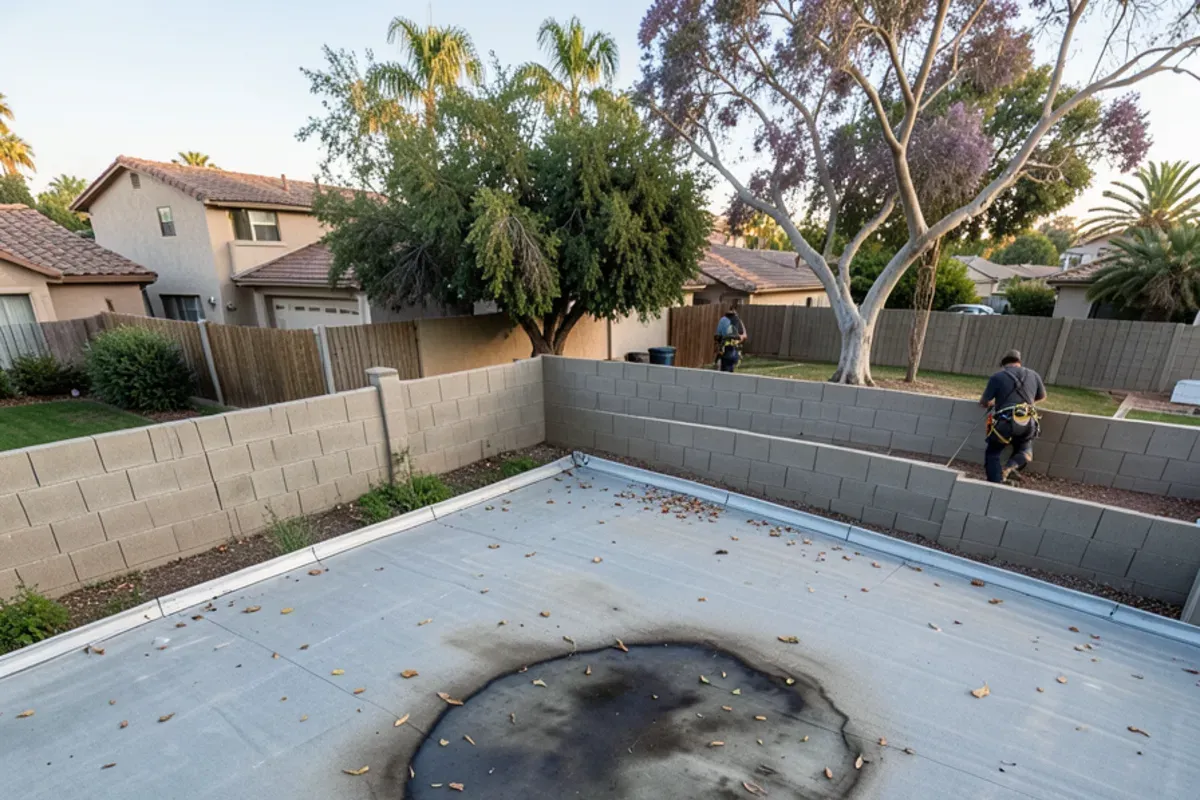
We find these during the inspection, photograph them and price each fix as its own line, so nothing appears for the first time after the old roof is off.
Where spending more pays off, and where it may not
- Tapered insulation costs more than adding a cricket or two, but on a roof that ponds across its whole field it is often the only fix that actually moves water to the drains.
- A thicker TPO sheet adds material cost and buys more wear layer above the reinforcing scrim. On a small garage nobody walks on, the thinner standard sheet is usually enough.
- Self-adhered modified bitumen avoids an open flame near wood fascia and attic vents, at a higher material price than torch-applied rolls. We favor it beside combustible trim and in tight spots.
- Raising rooftop AC units onto proper stands or curbs adds a line to the quote, yet it prevents the worn spots under equipment that cause many repeat leaks.
Getting an accurate flat roof quote
Use this checklist when you line up two or three bids side by side.
- Number of existing layers and whether all of them come off.
- Deck repair priced per sheet, with photos promised before close-up.
- Drainage work named specifically: tapered insulation, crickets, new drains or scuppers.
- Membrane brand, type and thickness, plus the cap sheet or coating on torch-down.
- Flashing at walls, parapets, curbs and every vent, skylight and equipment stand.
- Permit, inspections, disposal and cleanup as their own lines.
Compare the scopes line by line, not just the totals: the cheapest bid is often the one that leaves out drainage work or deck repair. For a photo-documented inspection and written quote on your flat roof, call (725) 745-8803, or fill in the form to request a quote online.
Questions readers ask
Is it cheaper to coat a flat roof than to replace it?
Usually yes, when the existing roof is dry, well attached and draining. A coating avoids tear-off and disposal costs. If the roof has wet insulation, soft decking or many open seams, coating only seals in the problem, and replacement becomes the more economical choice over time.
Why do flat roof quotes vary so much?
Bidders often price different scopes. One may include tear-off to the deck, re-sloping and deck allowances, while another overlays without addressing drainage. Ask each to itemize layers, deck repair, drainage, membrane, insulation and permits so you can compare the same work.
Does a garage flat roof need a permit to replace?
A full replacement of a garage roof generally needs a building permit, even on a detached structure. The city or county reviews the scope and inspects the finished roof. Our quote lists that permit separately, and we arrange the inspection with the city or county.
How many days does replacing a flat roof take?
Many garage and small addition roofs are finished in a day or two once materials arrive. Larger roofs, deck repairs or re-sloping add time, and weather can delay membrane work. Your written quote outlines the expected schedule before work starts.
Can a flat roof be replaced during the rainy season?
Yes, with planning. Most of Rosemead's rain falls from November through March, so winter jobs tear off only what can be dried in the same day and watch the forecast closely. TPO welding and torch-down work in cool weather, but every membrane needs a dry deck. Coatings are the most weather-sensitive, since they need dry hours to cure before rain arrives.
Sources
Written by Tylzen Spoke Roofing
A roofing contractor on Rosemead Blvd (CA-19) in Rosemead, working on shingle, tile, metal and flat roofs across the San Gabriel Valley. This guide reflects what our crews check on local roofs. Questions about your roof? Call (725) 745-8803.