
By Tylzen Spoke Roofing · Published
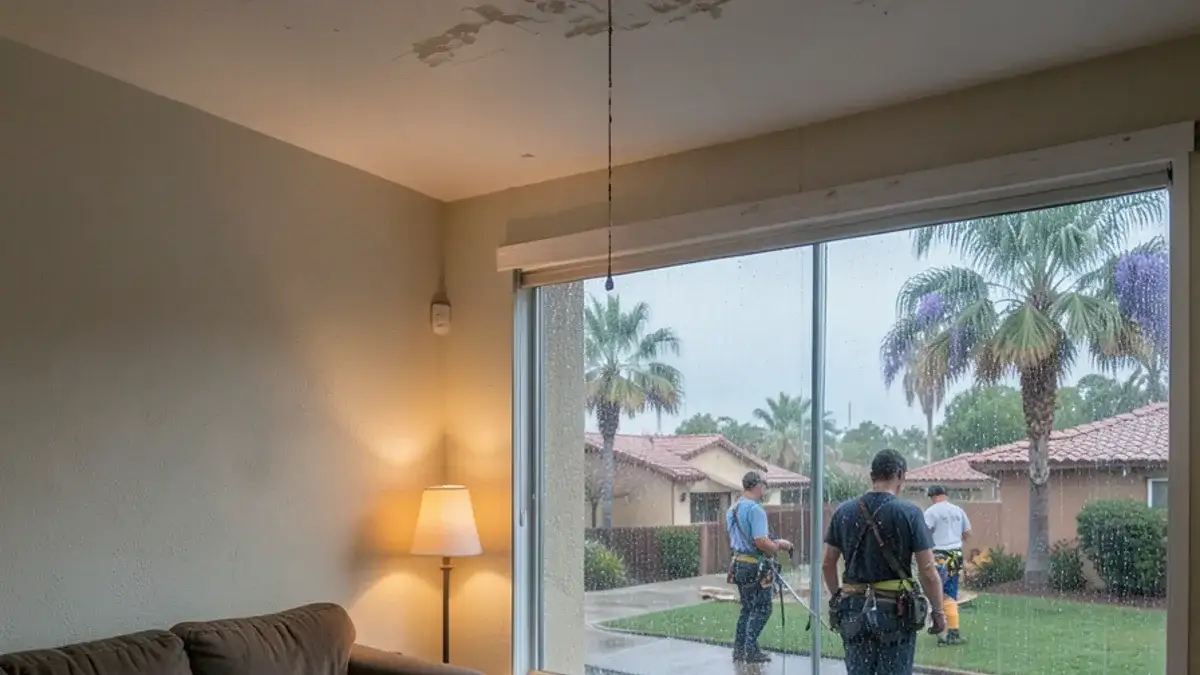
Is a roof leak an emergency? It is when water is reaching light fixtures or outlets, when a ceiling is sagging or bulging, when water is coming in fast or in more than one room, or when part of the roof is open to the sky. A small, dry stain that has not grown can usually wait a few days for a scheduled repair, but not until next season.
Below is a simple way to sort your situation, a decision table you can use during a storm, and what happens if you call. The examples reflect the homes we work on around roofing in Rosemead and the neighboring San Gabriel Valley cities.
Signs a roof leak needs help today
Any one of these turns a leak from an annoyance into an urgent call.
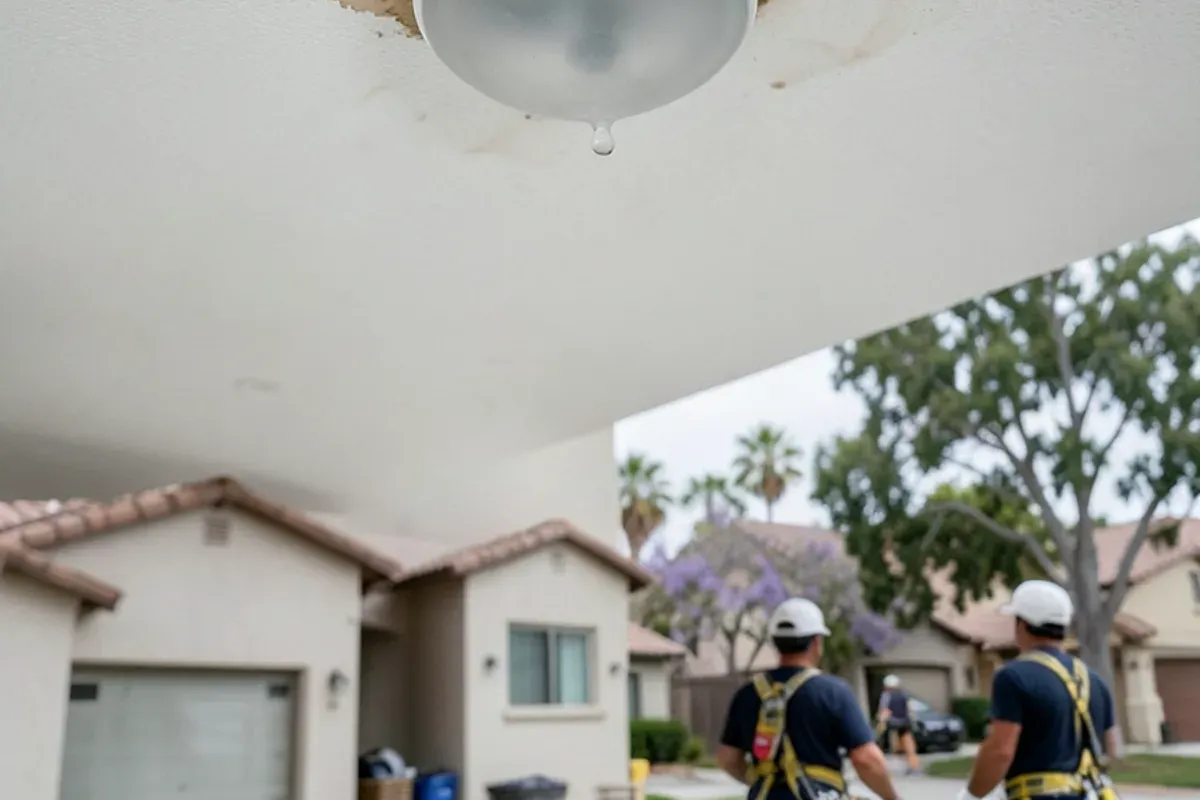
- Water dripping from or running near a ceiling light, fan, smoke detector or recessed can.
- A ceiling that sags, bulges, cracks or feels soft when pressed gently with a broom handle.
- A steady stream rather than a slow drip, or drips in two or more rooms.
- Daylight or an obvious opening visible from the attic.
- Missing shingles, tiles or a fallen branch, with more rain in the forecast.
- Water reaching the electrical panel, a furnace in the attic or an appliance.
Want a roofer to look at it?
Call with your address and what you are seeing. We visit same-day or next-day when crews are free.
- 4.9 from 48 Google reviews
- Based on Rosemead Blvd
- Photos and a written quote before work
Why water near a light fixture changes the answer
Water and household wiring are a shock and fire hazard. Ceiling fixtures sit in electrical boxes cut into drywall, and water following the framing often finds those boxes first. If you see water near any fixture, turn off the breaker for that circuit from a dry spot, and do not touch switches with wet hands.
Once the power is off, the leak is still urgent but the immediate danger drops. Have an electrician check any fixture that got wet before you turn the circuit back on.
Attic equipment raises the stakes too. Many valley homes have a furnace or air handler and ductwork in the attic, and water dripping onto that equipment can short controls or soak duct insulation. If the leak is above it, shut the system off at the thermostat and mention it when you call.
What does a sagging, bulging ceiling mean?
A bulge is water pooled on top of the drywall, held in by paint and texture. Water is heavy, and soaked drywall loses strength quickly, so a bulge can let go without warning. Move people and belongings out from under it.
If the bulge is small and you can reach it safely, put a bucket below and pierce the lowest point with a screwdriver to drain it. That controlled hole is far easier to patch than a collapsed section of ceiling and soaked flooring.
Emergency or scheduled repair: a quick decision table
| What you see | Urgency | What to do |
|---|---|---|
| Water near fixtures, outlets or the panel | Emergency | Cut power to the circuit, then call right away |
| Sagging or bulging ceiling | Emergency | Clear the room, drain into a bucket, call |
| Fast leak or drips in several rooms | Emergency | Contain water, call for a tarp |
| Roof opening, missing tiles or branch strike | Emergency if rain is coming | Photograph from the ground and call |
| Slow drip in one spot, wiring dry | Urgent within days | Bucket and towel, book a repair |
| Stain that grew after the last storm | Book soon | Schedule an inspection before the next rain |
| Old, dry stain that has not changed | Can be scheduled | Have it checked during a dry spell |
Quiet leak signs that deserve a fast look
Not every urgent leak drips where you can see it. Water that runs inside a wall or along the attic side of the ceiling can do steady damage for weeks before a stain appears. Book a visit within days if you notice any of these:
- Paint bubbling or peeling on an interior wall just below the ceiling line, a sign water is running down inside the wall cavity.
- Baseboards swelling or hardwood cupping along an exterior wall after rain.
- A musty smell in a closet or hallway that gets stronger after storms.
- Rust streaks on nail tips or dark rings on the sheathing when you look into the attic with a flashlight.
- Insulation that is flattened, darkened or damp over an area larger than a dinner plate.
- Water stains on the soffit or eave boards outside, often from a gutter backing up into the roof edge.
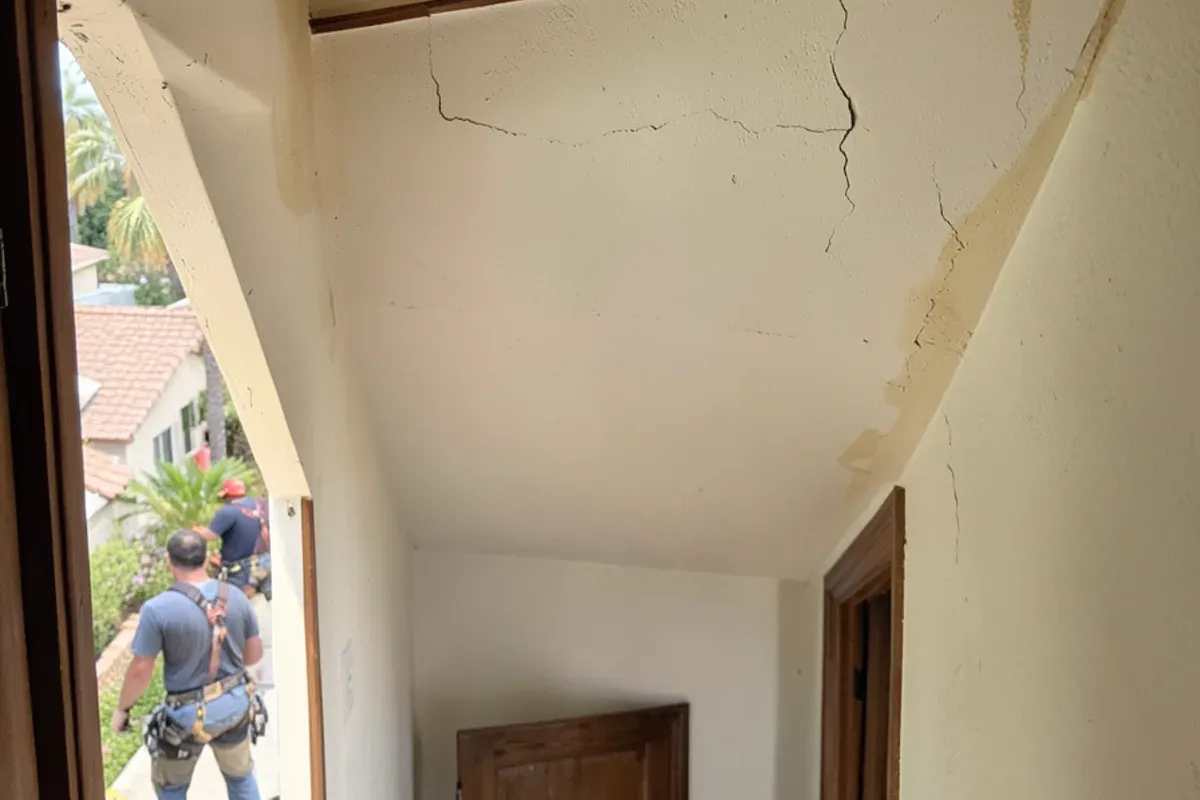
These signs rarely need a crew that same night, since the water is not near wiring or overhead. They do mean wood is staying wet between storms, and that is how a single repair turns into dry-rot work on the deck or wall framing.
Can a slow roof leak wait until the rainy season ends?
Waiting a few days is usually fine. Waiting months is not. Even a slow leak wets the decking, insulation and framing every time it rains, and the EPA notes mold can start growing on wet materials within 24 to 48 hours. In the San Gabriel Valley, rain comes mostly from November to March and peaks in February, so a leak that appears in December will see several more storms before spring.
A slow leak found early is often a small roof leak repair: a pipe boot, a flashing joint or a few tiles. Left alone, the same leak can soften decking, which turns a short visit into sheet replacement.
What we hear on leak calls from Rosemead and Monterey Park
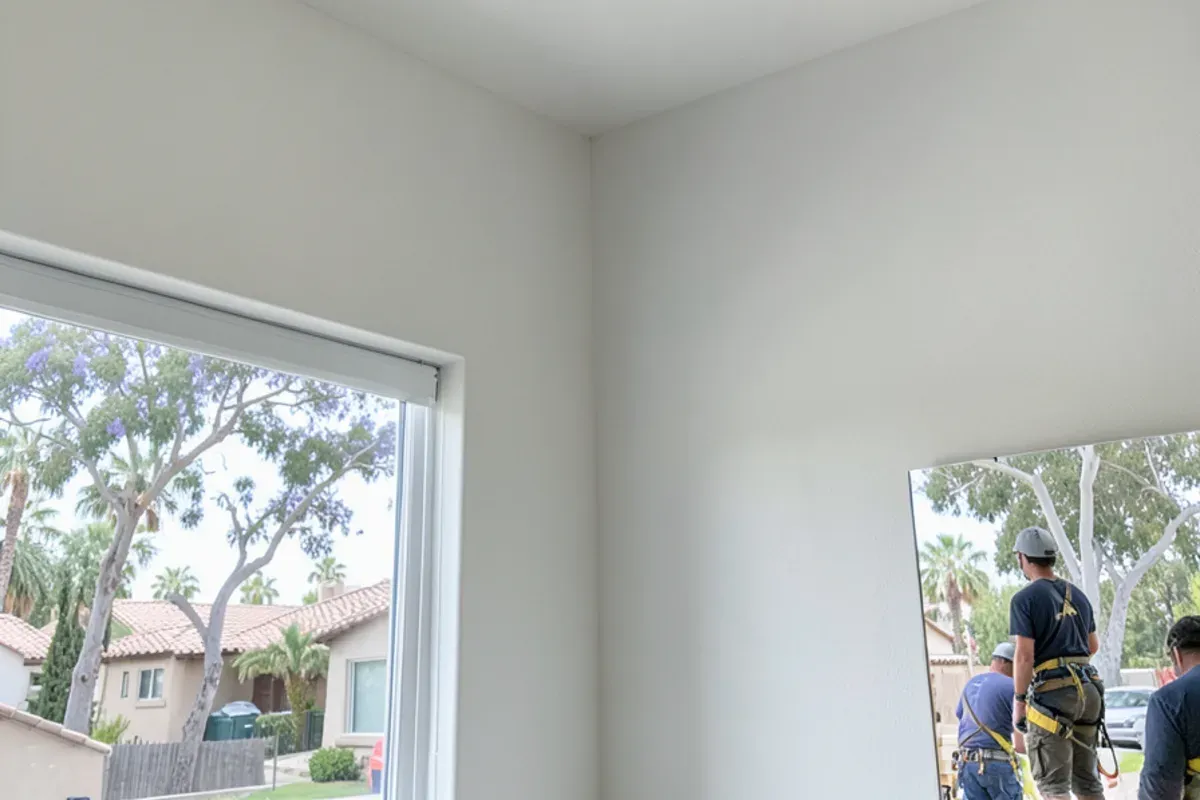
Many calls start with a homeowner unsure whether the problem can wait. On older single-story stucco homes in Rosemead, a large share built before 1960, the usual culprits are cracked vent boots and dried flashing, and those are rarely emergencies unless the water is near a fixture. On the hillside streets of roofing in Monterey Park, concrete tile roofs can hide a leak for weeks until a ceiling finally shows it.
We ask a few questions on the phone: where the water is, whether wiring is nearby, how fast it is coming in, and whether you can see damage outside. That tells us whether to arrange same-day roof leak repair or book the next dry-day slot.

The trade-off of an emergency visit
An emergency visit during a storm is about stopping water, not about the final fix. Wet shingles and tile cannot be opened up safely, sealants do not bond to wet surfaces, and the cause is harder to trace while rain is falling. So a storm visit usually means a tarp or temporary seal now and a second visit for the permanent repair, which adds cost and a second trip. When the leak is slow and nowhere near wiring, a scheduled dry-day repair is often the better value: one visit, a full diagnosis and a single line-item quote. We will tell you honestly which one your situation calls for.
Leaks over garages, carports and enclosed patios are usually lower on the urgency scale because no one sleeps below them, unless the space has been converted to living area or stores an electrical panel. Those low-slope roofs have their own repair approach, covered on our garage and patio roofs page.
When in doubt, call and describe what you see
If water is near electricity, a ceiling is sagging or the roof is open, treat it as an emergency and use our emergency roof repair line. For anything else, book a repair before the next storm. Call (725) 745-8803; we come out same-day or next-day when crews are free, and if we cannot get there today, we tell you when we can.
Questions readers ask
Is it still an emergency if the leak stops when the rain stops?
Usually not an emergency, but it still needs a repair before the next storm. A leak that stops with the rain often points to a pipe boot, flashing joint or wind-driven entry point. Take photos of the stain now so you can see whether it grows, and book an inspection on a dry day.
Will a roofer really come out the same day?
Sometimes. A visit is same-day or next-day when crews are free, though storms bring a rush of calls. If we cannot reach you today, we tell you on the phone and give you steps to contain the water until we arrive.
Can a small, slow leak cause mold?
Yes. Mold needs moisture and a surface to grow on, and a slow leak supplies both every time it rains. Insulation and the paper face of drywall hold water for days. Fixing the roof and drying the wet materials quickly is the best prevention.
What should I tell the roofer when I call about a leak?
Say which room the water is in, how fast it is coming, whether it is near lights or outlets, and when it started. Mention the roof type if you know it, and anything you saw outside such as missing shingles or a branch. Photos sent ahead help us bring the right materials on the first visit.
Is a leak in a converted garage or ADU treated like a house leak?
Yes. Once people live or sleep in the space, the same urgency rules apply: water near lights, a sagging ceiling or fast drips mean call today. Converted garages often keep a low-slope roof with a single drain or scupper, so a clog can flood the roof quickly in a heavy storm. Check that the drain is clear before the next rain.
Sources
Written by Tylzen Spoke Roofing
A roofing contractor on Rosemead Blvd (CA-19) in Rosemead, working on shingle, tile, metal and flat roofs across the San Gabriel Valley. This guide reflects what our crews check on local roofs. Questions about your roof? Call (725) 745-8803.