
By Tylzen Spoke Roofing · Published
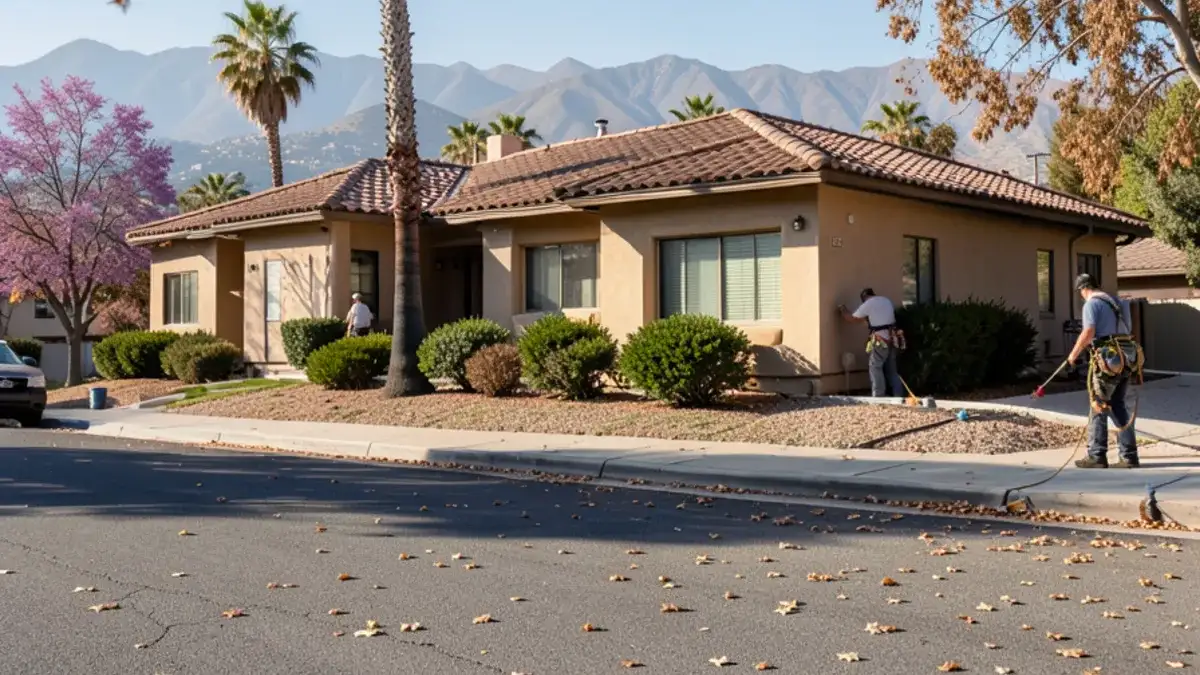
Santa Ana wind roof damage usually shows up first along the eaves, rakes, corners and ridge, where uplift is strongest. Look for missing or creased shingles, tiles knocked out of line, ridge caps that shifted, bent flashing and gutters pulling off the fascia. You can check most of it from the ground with binoculars, then confirm in the attic.
Santa Ana and downslope winds are most frequent between October and March in the San Gabriel Valley, and the January 2025 windstorm showed how much damage one night of gusts can do to foothill roofs. This checklist walks you through what to look for and when the findings call for a professional wind damage roof repair.
How do Santa Ana winds damage a roof?
Wind flowing over a roof creates suction on the surface, and that pull is greatest at the edges and corners. Gusts work under the leading edge of a shingle or tile, lift it, and let it slap back down. Repeat that a few hundred times in a night and the sealant strip breaks, nails loosen and pieces start to go.
Santa Anas add two local twists. They are dry and warm, so shingle sealant that was already baked by summer heat lets go more easily. And the downslope winds come off the San Gabriel Mountains, so cities along the foothills, such as Arcadia, Sierra Madre and Pasadena, often see stronger gusts than homes farther south. Flying debris, from palm fronds to whole branches, adds impact damage on top of uplift.
Want a roofer to look at it?
Call with your address and what you are seeing. We visit same-day or next-day when crews are free.
- 4.9 from 48 Google reviews
- Based on Rosemead Blvd
- Photos and a written quote before work
Wind damage roof checklist: the ground-level walk-around
Wait until the wind has died down and never climb onto the roof yourself. Walk the full perimeter of the house with binoculars or a phone camera on zoom and check each item.
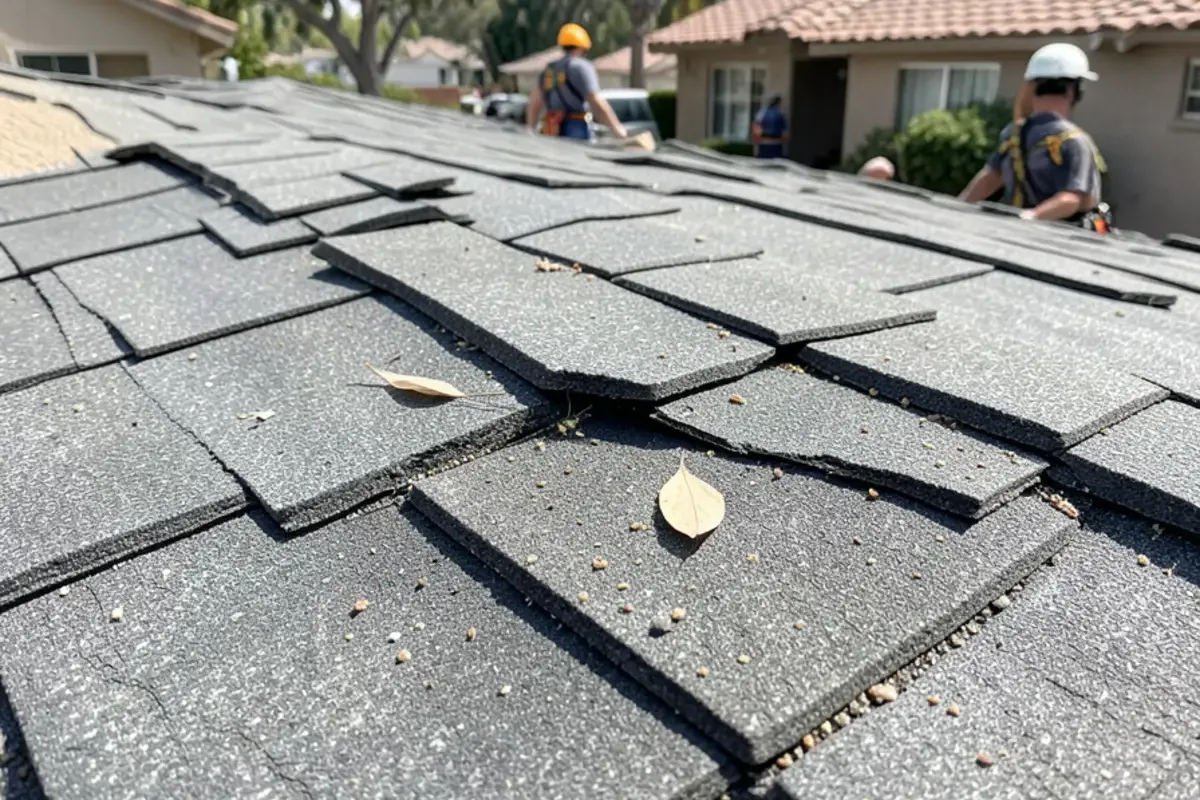
- Shingles missing outright, or bright patches where tabs tore off and exposed fresh asphalt or underlayment.
- Shingle tabs sticking up or showing a horizontal crease line, a sign they folded back in a gust.
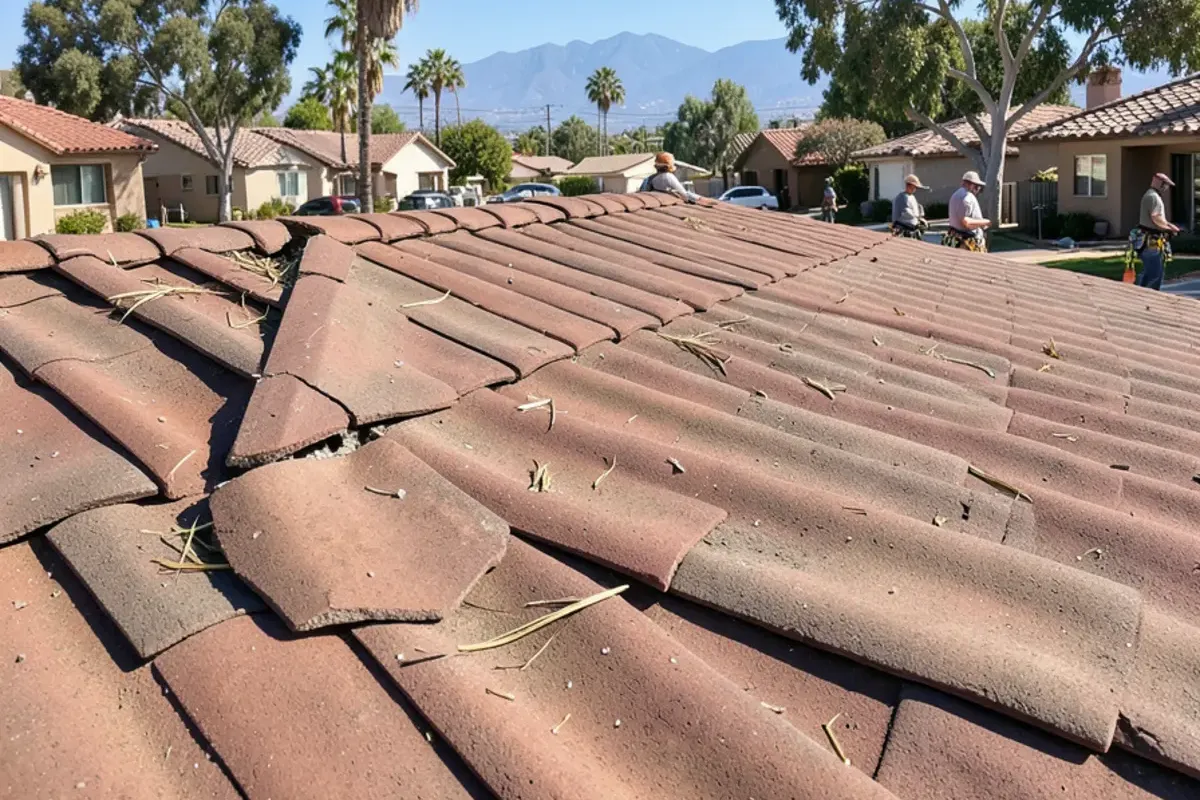
- Clay or concrete tiles slipped out of their row, cracked, or lying in the yard or gutter.
- Ridge and hip caps shifted, missing or with broken mortar along the peak.
- Drip edge or rake metal bent upward at corners.
- Vent caps, turbine vents or satellite dishes knocked loose or tilted.
- Gutters sagging, pulled away from the fascia, or full of granules and broken tile chips.
- Branches resting on the roof, plus any debris lodged in valleys.
- Shingle pieces, tile shards or flashing in the yard, especially on the downwind side.
What should you check inside the attic and on ceilings?
Wind damage does not always leak right away, since Santa Anas are usually dry. The first rain afterward is when problems surface, so a quick attic look now can save a ceiling later.
- Points of daylight through the decking where shingles or tiles are gone.
- Nails that have backed out of the sheathing, often visible as shiny points.
- Dust or debris blown in through damaged vents.
- Fresh stains on ceilings near exterior walls after the next rain.
| Sign | What it usually means | How soon to act |
|---|---|---|
| Missing shingles or tiles | Underlayment exposed to sun and rain | Before the next rain; tarp if a storm is forecast |
| Creased or lifted shingle tabs | Sealant bond broken; more will blow off later | Within a few weeks |
| Loose or missing ridge caps | Open seam at the highest point of the roof | Before the next rain |
| Bent drip edge or flashing | Water can enter at the roof edge or wall | Soon, especially before winter |
| Gutter pulled off fascia | Fascia damage and overflow against the wall | Before heavy rain |
Why creased shingles matter even when none blew off
A creased shingle has already failed even though it is still on the roof. Once the sealant strip lets go and the mat bends, the tab will lift in the next moderate wind and eventually tear free. Creases are also one of the details adjusters look for when separating wind damage from age.
Ridge caps take similar abuse because they sit at the highest, most exposed line. Cracked mortar on tile ridges or lifted cap shingles on composition roofs should be reset before the rainy season; our ridge cap repair page explains how that is done.
What we find on foothill roofs after a windstorm
After a strong wind night, the same handful of problems show up across the valley. On composition roofs, the first course along the eaves and the rake edges lose tabs, because starter strips on older roofs were often skipped or poorly sealed. On tile, we see whole sections nudged out of line where tiles were never fastened, plus cracked tiles under fallen fronds.
Big trees are the wild card. Neighborhoods with mature canopies across roofs in Arcadia and homes in Pasadena collect branch strikes and debris-packed valleys, while calls for roof repair in San Gabriel after wind often involve loose ridge pieces on older tile and shingle homes. Gutters packed with leaves and granules after a wind event are another early clue that the roof surface took a beating.
Nail placement explains many of the tabs we pick up from lawns. Shingles nailed too high, above the manufacturer's nail line, miss the overlap of the course below and hold with half the grip they were designed for. That flaw is invisible from the ground and only shows when the wind finds it, which is why we photograph the back of any shingle that tore loose.
Spot repair, slope replacement or a new roof after wind?
Most wind damage is fixed one patch at a time, but not always. The right scope depends on how brittle the rest of the roof is, whether replacement pieces still match, and how much of one slope was hit.
| Scope | When it fits | Trade-off to weigh |
|---|---|---|
| Spot repair or reset | A few missing tabs or slipped tiles on a roof with years left | Old, brittle shingles next to the repair can crack when lifted to slide new ones in |
| Reseal lifted tabs | Creased or unsealed tabs that are still intact | A short-term measure; a sharply creased tab usually needs replacing instead |
| Replace one slope | Widespread loss on the windward side only | New shingles beside weathered ones can look different for years |
| Full replacement | An aging roof that lost pieces on several slopes | Highest cost, but ends repeat wind calls on a worn roof |
Matching is the sticking point on older roofs. Shingle colors are discontinued and clay or concrete tile profiles change, so a patch can stand out. On a replacement-cost policy, California's Fair Claims Settlement regulations (10 CCR §2695.9) require the insurer to replace all items in the damaged area when the replaced items do not match in quality, color or size, so the result has a reasonably uniform appearance. What counts as the damaged area is the adjuster's call. We bring a sample piece and photos so that decision rests on evidence.
How can you prepare a roof before the next Santa Ana season?
Wind season starts in October, so late summer is the time to remove the weak points a gust would find first. These steps are listed in the order we usually tackle them:
- Trim branches that overhang or touch the roof, starting with dead limbs and palm fronds over the house.
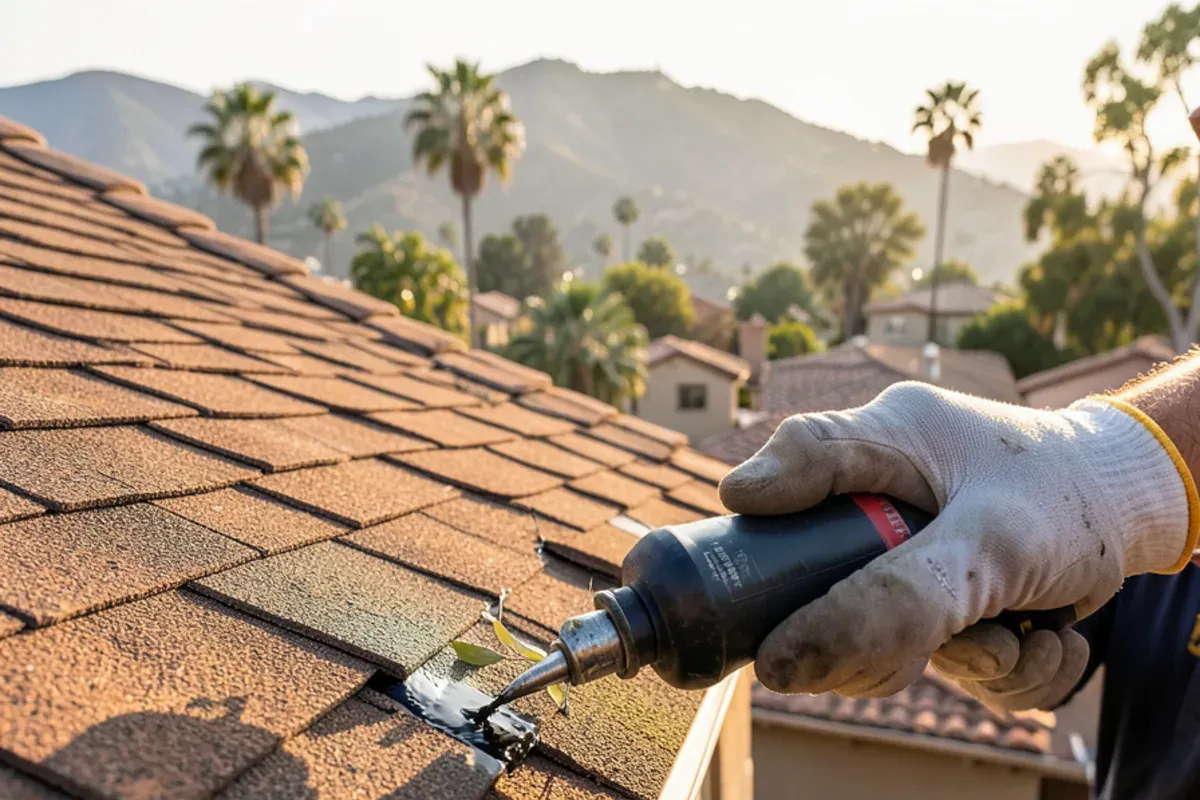
- Have loose or unsealed shingle tabs along eaves, rakes and the ridge hand-sealed with roofing adhesive while the weather is warm, a task that fits into a roof tune-up.
- Ask about added fasteners or wind clips on tile that was laid loose, especially at edges and hips.
- Check that drip edge and rake metal are nailed tight and that the starter course is sealed along every edge.
- Secure satellite dishes, solar conduit and vent caps, and remove anything stored on a flat roof.
- Clean gutters so they are not carrying extra weight when wind pulls at the fascia.
If you are replacing the roof anyway, ask which wind rating the shingle carries. Many architectural lines are tested to ASTM D7158 Class H or ASTM D3161 Class F, and the installation pattern, including nail count and placement, has to follow the manufacturer's high-wind instructions for that rating to mean anything.
When is it time to call for a wind damage inspection?
Call if you spotted any item on the checklist, if pieces of your roof are in the yard, or if a neighbor's roof on the same exposure lost shingles. An inspection documents the damage with photos, which matters if you file an insurance claim, and catches problems while they are still small.

Inspections happen same-day or next-day when crews are free; we tarp anything open before rain and write up an itemized quote for the permanent repair. If you have wind damage now or a storm on the way, call (725) 745-8803 and tell us what you saw from the ground.
Questions readers ask
Does homeowners insurance cover Santa Ana wind damage?
Wind is a covered peril on most California homeowners policies, but your deductible applies and adjusters exclude damage they attribute to age or poor maintenance. Photos taken soon after the event, plus creased or torn shingles and debris in the yard, help show the damage is new. Your adjuster makes the coverage decision.
How soon after a windstorm should the roof be checked?
Within a few days, and before the next rain if possible. Santa Anas are dry, so damage often sits unnoticed until a storm arrives weeks later. An early inspection lets small fixes, like resetting tiles or resealing tabs, happen before water reaches the decking.
Can wind damage show up weeks after the storm?
Yes. Loosened shingles and shifted tiles can stay in place until the next gust or the first heavy rain. That delay is why a dated set of photos taken right after the wind event is worth having, even when nothing seems to be leaking yet.
Do tile roofs hold up better in wind than shingle roofs?
Not automatically. Heavy tile resists uplift better than a single shingle, but tiles laid without fasteners or clips can slide out of line in strong gusts, and a broken tile lets sun and water reach the underlayment. Older foothill tile roofs often have little or no mechanical fastening at the edges. Adding clips or fasteners at the rakes, hips and eaves is a targeted upgrade before wind season.
Sources
Written by Tylzen Spoke Roofing
A roofing contractor on Rosemead Blvd (CA-19) in Rosemead, working on shingle, tile, metal and flat roofs across the San Gabriel Valley. This guide reflects what our crews check on local roofs. Questions about your roof? Call (725) 745-8803.