
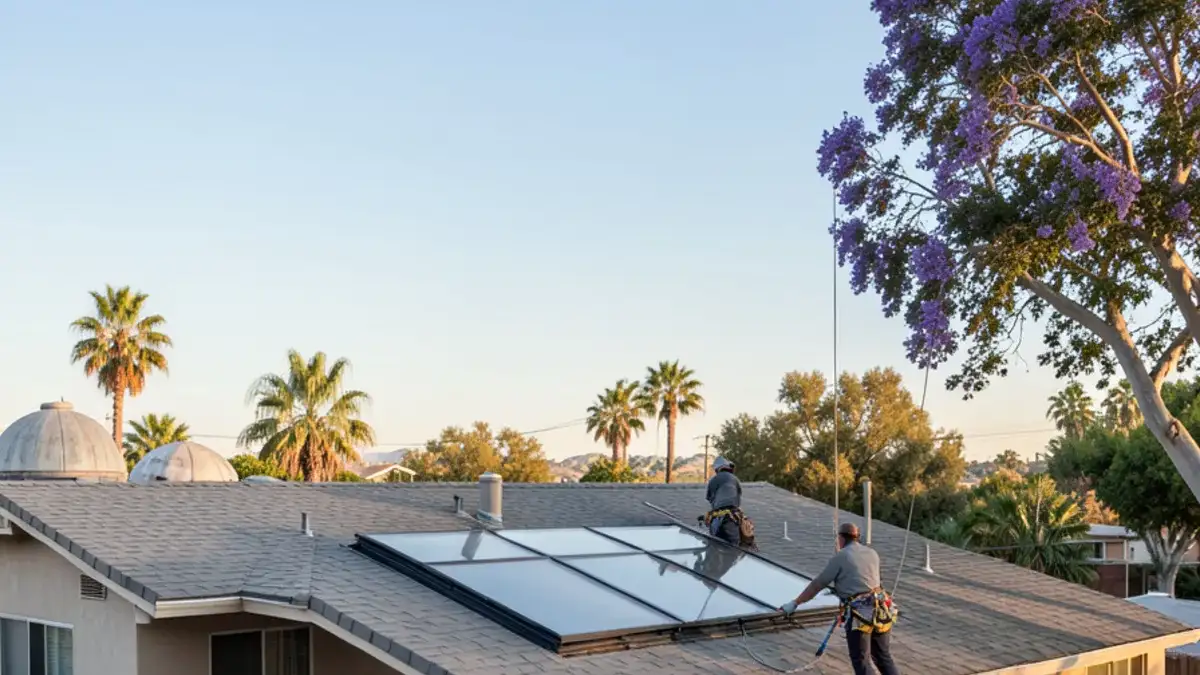
By Tylzen Spoke Roofing · Published
Skylight replacement cost comes down to five things: the type and size of the new unit, the roof material around it, the condition of the curb and framing, how much interior drywall needs work, and whether the job needs a permit. A like-for-like swap on a sound shingle roof sits at the low end. A tile roof, a resized opening or rotted framing pushes the price up.
Replacement is usually worth it when the old unit is a yellowed plastic dome, the glass seal has failed, or a new roof is going on anyway. When a skylight leaks often and lights a room that already has windows, removing it and roofing over the hole can be the smarter spend.
What drives the price of a new skylight?
The unit itself is often a smaller share of the bill than the roofing and carpentry around it. These parts of the job change the number:
- Unit type: a fixed skylight costs less than a venting one, and solar or electric venting units cost more than manual ones. A tubular skylight is the smallest and usually the simplest install.
- Size and fit: matching the existing rough opening avoids reframing. Going larger means cutting a rafter and adding headers; going smaller means filling in framing and drywall.
- Glazing: laminated and low-E glass cost more than basic glazing, and they cut heat gain and rain noise.
- Mounting style: curb-mounted units sit on a raised wood box, while deck-mounted units fasten to the sheathing with a matched flashing kit.
- Roof material: composition shingle is the quickest to work around. Clay and concrete tile must be lifted, stored and reset, and the flashing has to suit the tile profile.
- Hidden damage: soft sheathing or a rotted curb found during tear-out becomes a separate line item.
- Interior finish: a light shaft with water-stained drywall may need new board, tape, texture and paint.
- Access and permit: steep pitches and second-story roofs take more setup, and framing changes often need a permit.
Want a roofer to look at it?
Call with your address and what you are seeing. We visit same-day or next-day when crews are free.
- 4.9 from 48 Google reviews
- Based on Rosemead Blvd
- Photos and a written quote before work
Repair, replace or remove: comparing the three paths
Before pricing a new unit, decide which path fits the skylight you have. Our skylight services cover all of them.
| Path | When it fits | Relative cost | Trade-off |
|---|---|---|---|
| Reseal or reflash the existing unit | Glazing is sound; water enters at the flashing or curb joint | Lowest | Old acrylic or tired glass seals keep aging |
| Replace the unit in the same opening | Dome is cloudy or cracked, glass is fogged between panes, or the frame is warped | Moderate | New flashing and glazing; interior trim may need touch-up |
| Replace with a different size or type | You want a venting unit, more light or less heat | Higher | Framing and drywall work, and often a permit |
| Remove and roof over | The skylight leaks repeatedly and the room has other light | Moderate to higher | Loses daylight; needs framing, sheathing, roofing and ceiling repair |
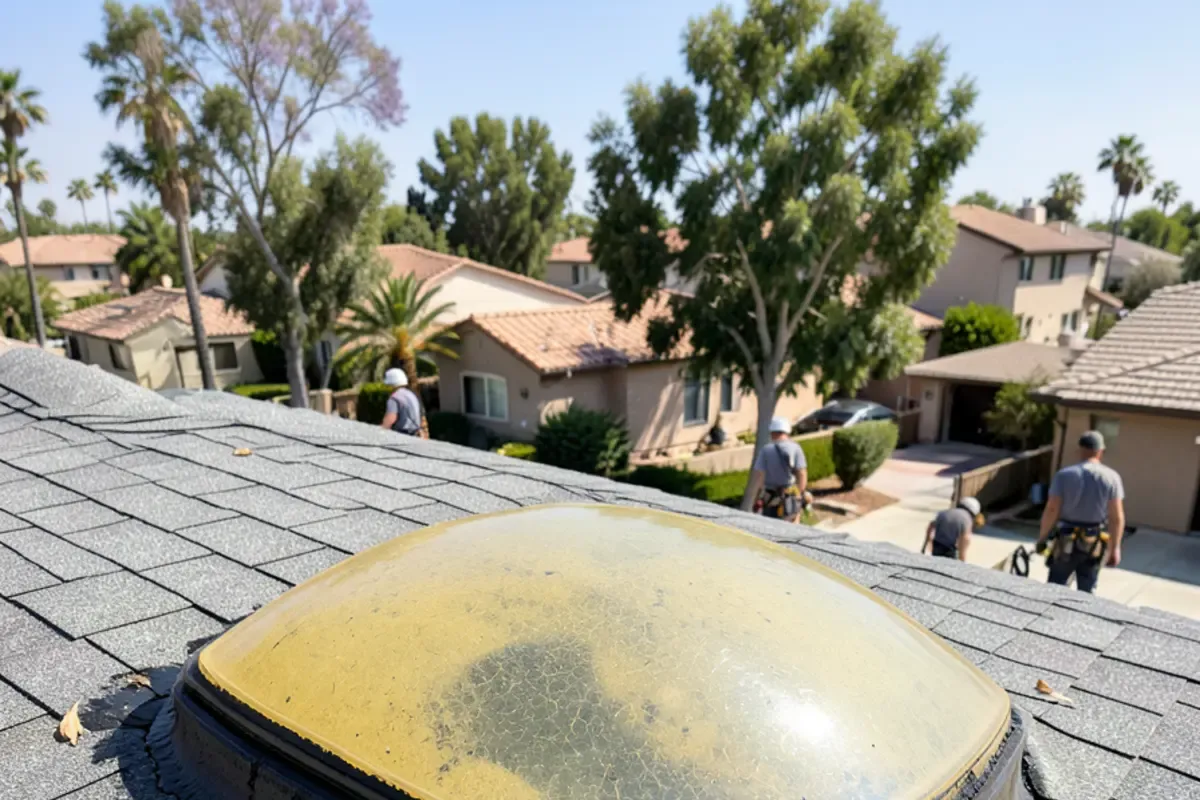
Tubular units sit outside this table because they fit between standard rafters. Swapping a large leaking skylight for a tubular one in a hallway is a common middle path: the old opening is framed in and roofed over, and a small round dome brings the light back.
Is it smarter to replace a skylight during a reroof?
In most cases, yes. During a reroof the roofing around the skylight is already off, so new flashing goes in with the new underlayment instead of being cut into a finished roof later. Keeping an old unit under a new roof also leaves a brand-new roof around a skylight seal or dome near the end of its life. The exception is a glass unit only a few years old with clear panes and a solid curb; it can stay, with new flashing.
Most manufacturers sell flashing kits matched to each unit and roof profile, and reusing old flashing against new shingles or tile is a common source of the first leak on a new roof. If the budget is tight, ask for the skylight swap as its own line on the reroof quote and the added cost is plain to see.
What does skylight removal involve?
Removing a skylight is a small framing job, not just a patch. The work runs in this order:
- Pull the unit and its flashing, then check the rafters and sheathing around the opening for rot.
- Frame the hole to match the surrounding rafters and add new sheathing.
- Install underlayment and roofing that ties into the existing roof, matched as closely as the product allows.
- Close the ceiling with blocking, insulation, drywall, texture and paint, or keep the shaft for a tubular unit.
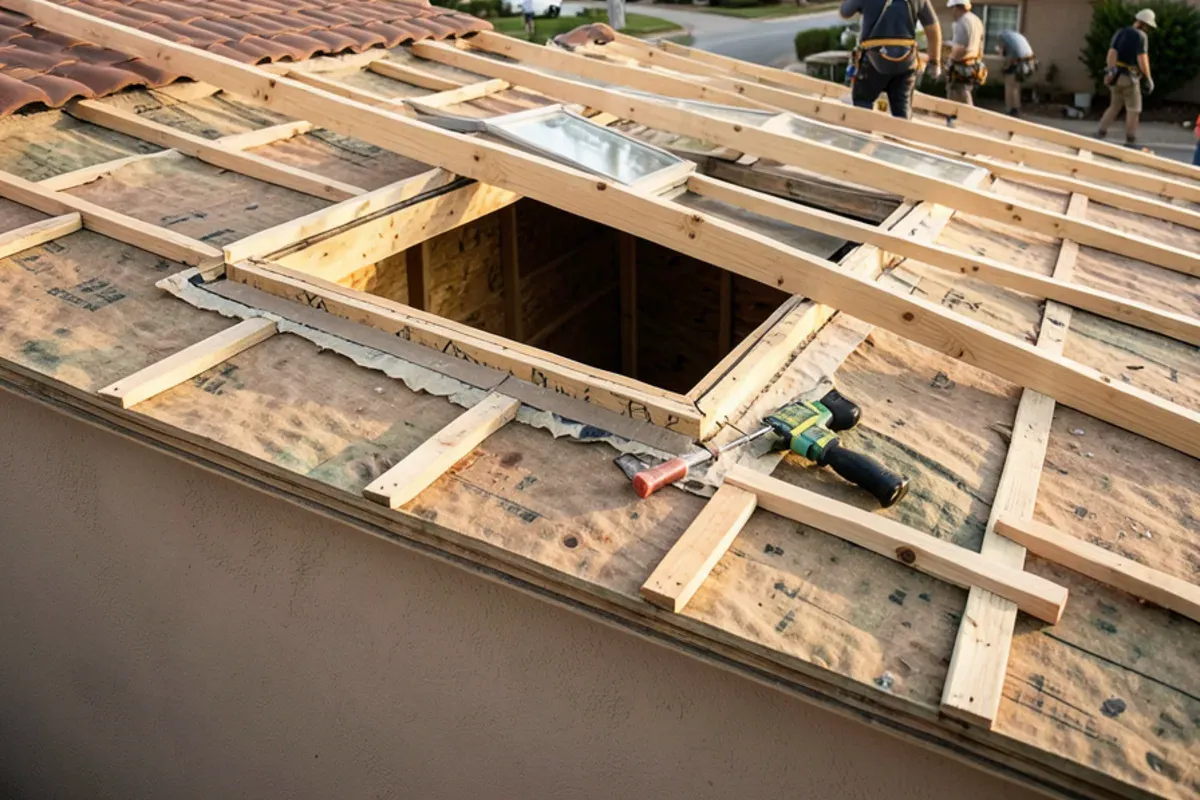
On composition shingle roofs, an exact color match on a patch is hard after a few summers of sun. On tile roofs, salvaged tiles from a less visible slope often fill the area cleanly.
What we see on skylights across the San Gabriel Valley
Many of the post-war stucco homes we work on in Rosemead and the surrounding cities have one or two acrylic dome skylights added during kitchen or bathroom remodels. After years of summer highs in the upper 80s, those domes turn yellow, craze and go brittle, and the curb sealant under them dries out. The first heavy storm of the November to March season is when those calls come in.
In older neighborhoods of Pasadena, Craftsman and Spanish Revival roofs add another layer: skylights set into clay tile, or added to low-slope sections behind parapets. Those jobs cost more because the tile has to come off carefully and the flashing has to suit the profile, and we flag that on the quote before anything is ordered.
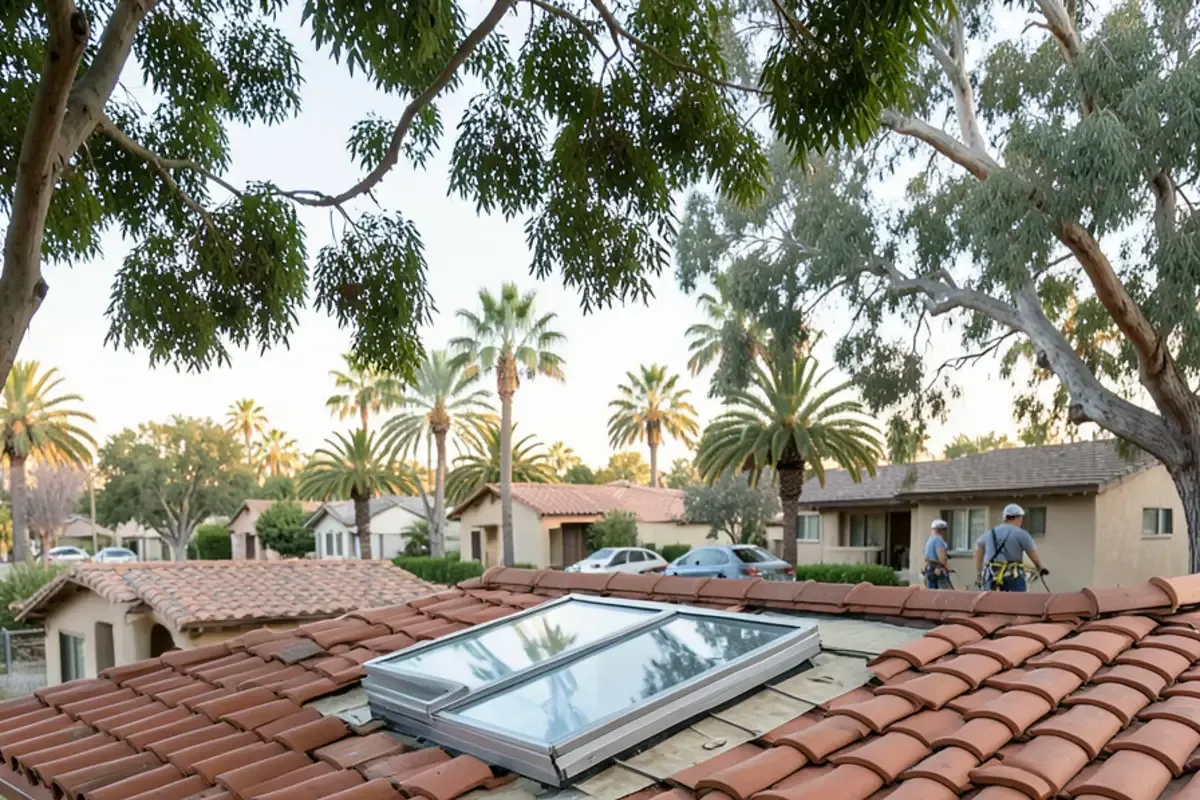
We also find skylights that were never the real leak. Debris piles up on the uphill side of the curb, water dams against it, and the stain shows up inside the light shaft. Clearing and rebuilding that uphill flashing can solve the problem without a new unit.
The trade-offs we lay out on every skylight quote
Every option gives something up. A larger opening brings more light, but it also means cutting a rafter, adding headers and accepting more afternoon heat through the glass. A venting unit clears kitchen heat and shower steam, yet its sash gasket and motor are parts a fixed unit never asks you to service. Roofing over a skylight removes a leak point for good, at the cost of daylight and a shingle patch that may stand out against a sun-faded roof for a few summers. A tubular retrofit is the cheapest way to keep a hallway bright, but the view of the sky is gone.
We also say so when spending less is the right call. A glass unit with clear panes and a dry curb does not need replacing just because the house next door got new skylights, and an acrylic dome on a north-facing slope usually ages far more slowly than the same dome facing west.
Permits, energy rules and building a budget
Adding, resizing or reframing a skylight usually brings a permit into the job. Cities handle skylight permits through their building division or a contracted county office; in unincorporated communities, LA County Public Works Building & Safety issues them. Replacement units also carry a rating label for U-factor and solar heat gain, which the state Energy Code uses to judge skylight glazing. Confirm the rules with your building department before ordering.
For budgeting, ask for a quote that separates the unit, flashing kit, roofing labor, framing, drywall and permit. That makes a straight replacement easy to compare against a removal or a reroof add-on. For larger roof projects, ask about payment options.
What should a skylight quote spell out?
Two skylight quotes can sit far apart and both be honest, because one includes a new curb and drywall while the other assumes the old ones are fine. These questions put competing quotes on equal footing:
- Which unit, by model and size, and does its glazing carry an NFRC label listing U-factor and solar heat gain?
- Which flashing kit goes with it, and is that kit made for your roof profile, shingle or tile?
- Is the existing curb being reused, rebuilt, or dropped in favor of a deck-mounted unit?
- How is rotted sheathing priced if tear-out uncovers it: per sheet, or as a flat line?
- On a tile roof, who supplies matching tiles if some crack when they are lifted?
- Does the price cover shaft drywall, texture and paint, or is that left to you or a painter?
- Is the permit included, and for powered venting units, who runs the wiring through the attic?
A quote that answers all seven in writing can be compared line for line with any other. If a question gets a vague answer, ask for it in writing before you sign.
Getting a skylight quote you can compare
A skylight is worth replacing when the glazing has failed or the roof around it is being rebuilt, and worth removing when it leaks often and the room does not need it. Our skylight replacement service starts with a roof and attic check, photos of the curb and flashing, and a written, line-by-line quote that separates every part of the job. For an honest read on your skylight, call (725) 745-8803 or request a quote.
Questions readers ask
How long does a skylight replacement take?
Most same-size swaps on a shingle roof take one day, including flashing and interior trim touch-up. Tile roofs, resized openings and jobs that uncover rotted framing take longer, and drywall and paint in the shaft can add a second visit once the compound dries. The expected schedule is written into the quote.
Is a tubular skylight cheaper than a standard skylight?
Usually, yes. A tubular unit needs only a small round opening between rafters, so there is no reframing and little drywall work, which is where much of a standard skylight's labor goes. The trade-off is light without a view or ventilation. They suit hallways, closets and small bathrooms well.
Can I replace just the glass or dome?
Sometimes. Some curb-mounted domes and certain manufacturer units allow a lens or sash replacement. Many older plastic domes are no longer made in matching sizes, though, and a fogged glass unit in a budget frame is rarely worth rebuilding. We check the make, curb size and frame before suggesting a partial fix.
Does homeowners insurance pay for a new skylight?
Coverage usually applies to sudden events, like a limb crashing through the dome in a windstorm, and usually not to wear like yellowing or failed seals. Read your own policy or ask your agent. When damage is sudden, we document it with photos and can meet the adjuster, but we do not negotiate the claim.
Is there still a federal tax credit for an energy-efficient skylight?
No, not for new installs. The federal Energy Efficient Home Improvement Credit, which covered qualifying ENERGY STAR skylights, does not apply to property placed in service after December 31, 2025, according to the IRS. A skylight installed in 2026 does not qualify. Check SCE and Energy Upgrade California for any current offers, and take tax questions to your tax preparer.
Sources
- California Energy Commission: Building Energy Efficiency Standards
- National Fenestration Rating Council: window and skylight ratings
- LA County Public Works: Building & Safety
- Contractors State License Board
- IRS: FAQs on changes to the energy efficient home improvement credit (25C) under Public Law 119-21
Written by Tylzen Spoke Roofing
A roofing contractor on Rosemead Blvd (CA-19) in Rosemead, working on shingle, tile, metal and flat roofs across the San Gabriel Valley. This guide reflects what our crews check on local roofs. Questions about your roof? Call (725) 745-8803.