
By Tylzen Spoke Roofing · Published
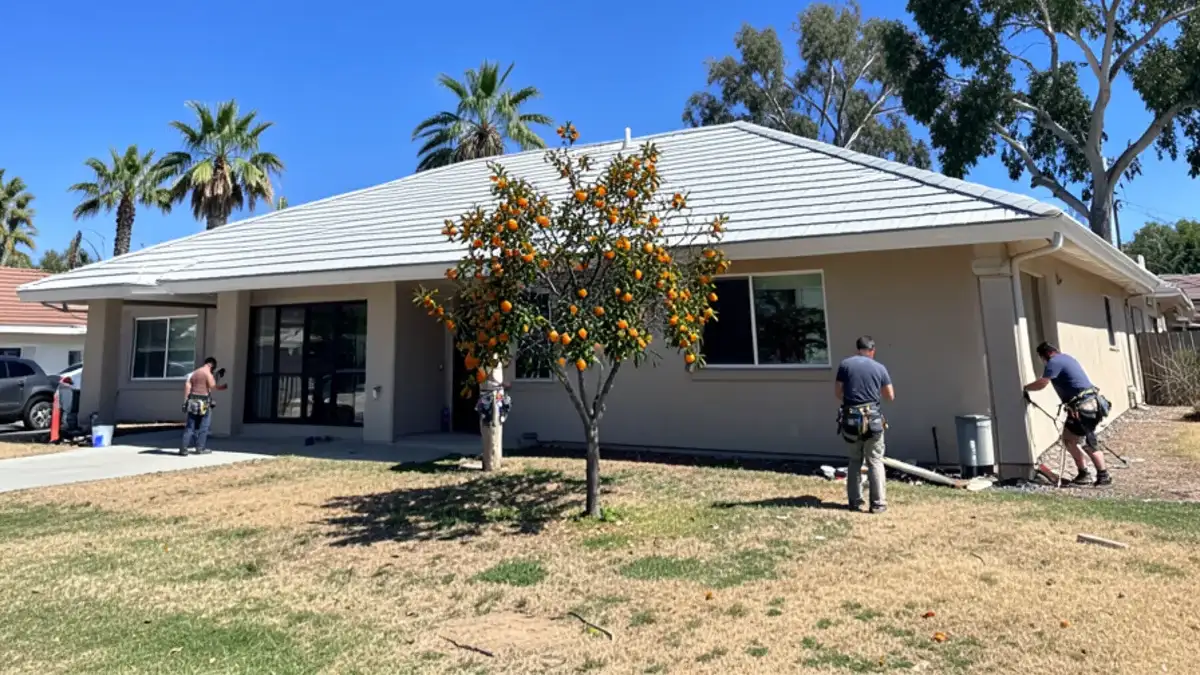
Title 24 cool roof requirements apply in Rosemead when you replace 50% or more of a roof, because the city sits in California Climate Zone 9. For a sloped residential roof, the new covering must reach an aged solar reflectance of 0.20 and a thermal emittance of 0.75, or an SRI of 16, unless the roof qualifies for an exception such as heavy tile. Low-slope roofs face a much higher target.
This guide covers when the rule kicks in, the exact numbers, the exceptions, and what it means for the color you pick. Our cool roof installation page covers the products we install to meet it.
When does the energy code apply to a reroof?
Title 24, Part 6 is the California Energy Code. It covers more than new construction: alterations to existing homes, including reroofs, fall under it too. The cool-roof part applies when a reroof replaces 50% or more of the roof area. On some low-slope roofs, replacing more than 2,000 square feet also triggers it.
Routine repairs do not. Replacing a few shingles, a vent boot or a section of flashing is a repair, not a reroof. A partial replacement of one slope may or may not cross the line depending on its share of the total area, which is one reason the quote should state the roof's total squares and the squares being replaced.
Want a roofer to look at it?
Call with your address and what you are seeing. We visit same-day or next-day when crews are free.
- 4.9 from 48 Google reviews
- Based on Rosemead Blvd
- Photos and a written quote before work
What numbers must a Climate Zone 9 roof meet?
Rosemead and most of the San Gabriel Valley are Climate Zone 9. Coastal Los Angeles and Orange County fall in Zones 6 to 8, and the western Inland Empire is Zone 10, so a roofer working across the region has to check the zone for every address.
| Roof type | Aged solar reflectance | Thermal emittance | Or SRI of |
|---|---|---|---|
| Steep-slope (more than 2:12) | 0.20 | 0.75 | 16 |
| Low-slope (2:12 or less) | 0.63 | 0.75 | 75 |
Aged reflectance is the value measured after a product has weathered outdoors, not the brighter number it shows new. Products have to be rated by the Cool Roof Rating Council (CRRC) and carry its label, which is what the inspector looks for. For comparison, ordinary dark asphalt shingles typically age to a solar reflectance of only 0.05 to 0.15.
Which roofs are exempt from the cool-roof rule?
The code lists several exceptions. The ones that come up most on sloped residential roofs are these:
- Heavy roofs: coverings weighing 25 lb/ft² or more, which includes most clay and concrete tile.
- Attic insulation: a ceiling insulated to R-38 or better.
- Radiant barrier: an attic radiant barrier meeting the code's specifications.
- No attic ducts: homes with no heating or cooling ducts in the attic.
- Solar arrays: the area under photovoltaic panels.
Exceptions have conditions, and the building department applies them. Upgrading insulation through attic insulation work is one route some owners take when they strongly prefer a dark roof. Confirm the exact path with the city before you commit to a color.
What changed for reroofs under the 2025 Energy Code?
California updates its Energy Code every three years. The 2025 edition took effect on January 1, 2026, and the edition that governs a job follows the date its permit application is filed. For a steep-slope home in Climate Zone 9, the headline numbers did not move: 0.20 aged reflectance and 0.75 emittance, or an SRI of 16. Several details around them did change.
- A new equivalent path: R-2 or greater continuous insulation above or below the roof deck now counts alongside R-38 ceiling insulation and a qualifying radiant barrier.
- The no-ducts exception still lists Climate Zone 9, so a home with its ducts inside conditioned space, or with ductless wall units, may qualify.
- Unrated products are penalized: a shingle with no CRRC rating must assume a default aged reflectance of 0.08, which fails the 0.20 target.
- Packaging labels must list the emittance plus both the initial and the 3-year aged reflectance, and that label is what the inspector reads on site.
- Liquid-applied coatings carry added product requirements beyond the CRRC rating, so a coating chosen for a flat section needs its data sheet checked against the code.
Cool roof shingles: the colors still on the table
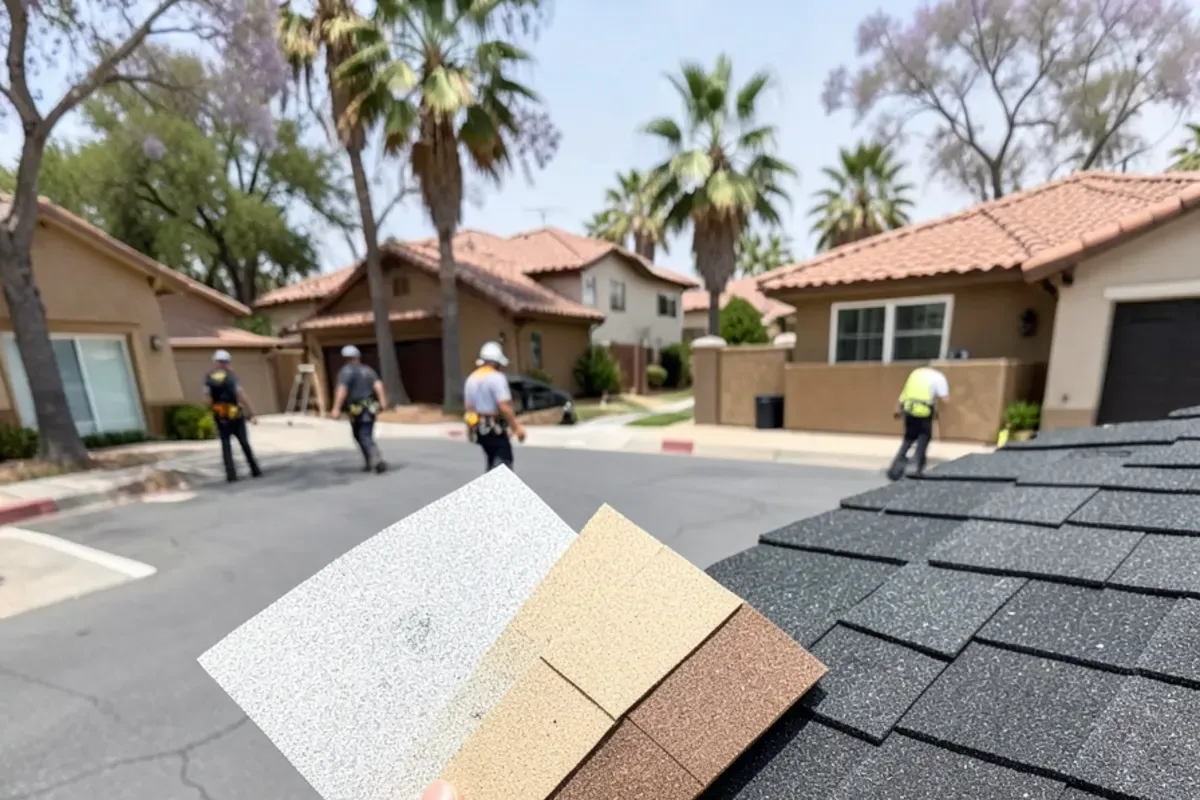
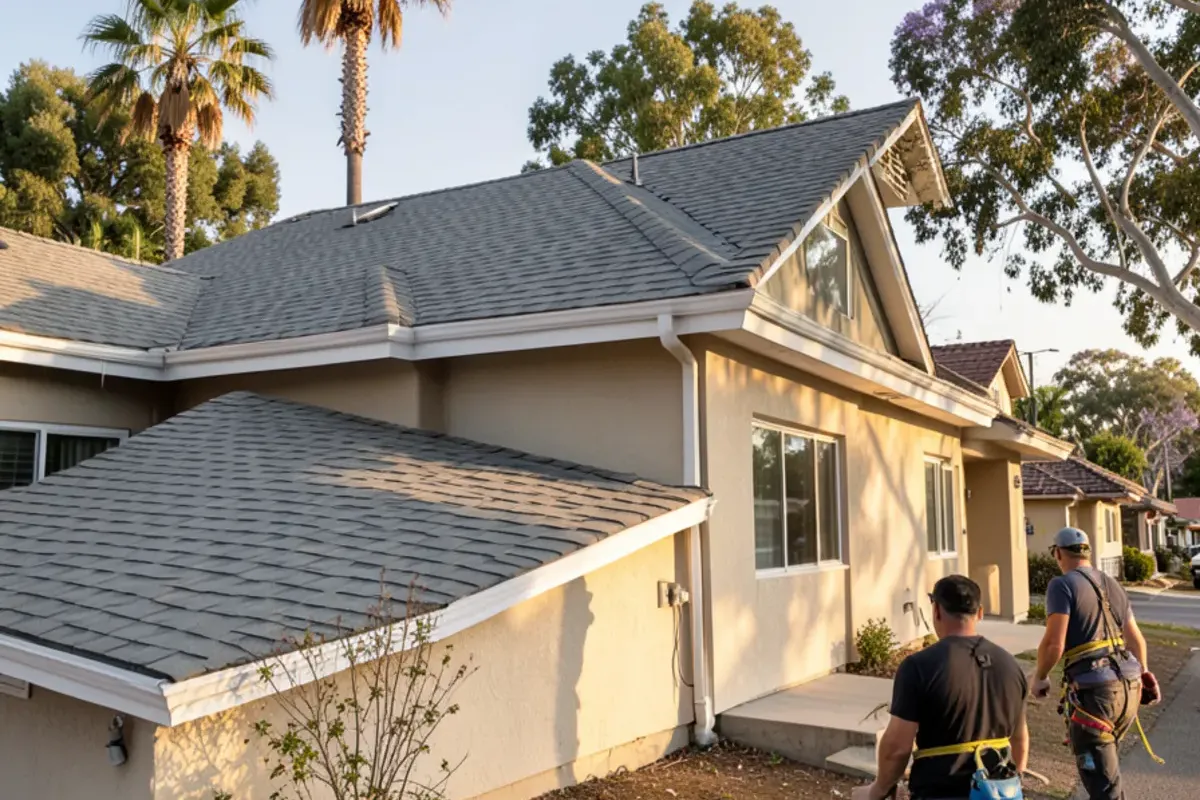
A cool-rated shingle is not necessarily white. Manufacturers use reflective granules that bounce back more infrared light while still looking gray, tan, brown or even fairly dark. The 0.20 steep-slope target is modest, so many mid-tone colors qualify. The very darkest charcoal and black shingles usually do not.
When you choose, ask to see the CRRC aged rating for the exact color, not just the product line. Two colors in the same line can rate very differently. We put the product, color and rating into the written quote so there is no surprise at inspection.
Cool shingle or an exception: weighing the trade-offs
Most owners have four realistic ways to comply, and each one carries a cost beyond the roofing itself.
| Path | What it adds | Watch for |
|---|---|---|
| CRRC-rated cool shingle | Usually the least, since it replaces a shingle you were buying anyway | Near-black colors rarely rate high enough; check the aged number for the exact color |
| R-38 ceiling insulation | An attic insulation job alongside the reroof | Recessed lights and attic ductwork have to be dealt with before insulation goes in |
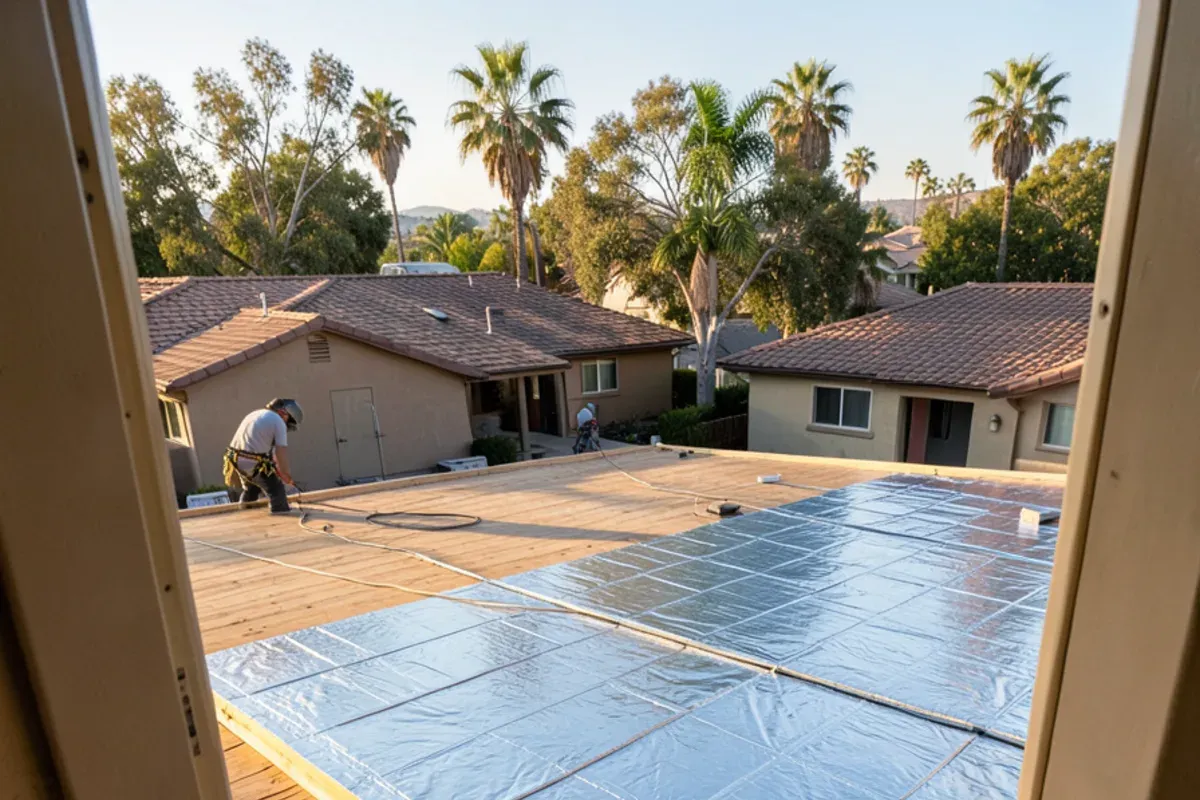
| Attic radiant barrier | A modest add when it goes in while the roof is open | It does not count when laid directly over spaced sheathing, which many 1950s board decks have |
| No ducts in the attic | Nothing, if the house already qualifies | Few post-war tract homes qualify as built, because their ducts run through the attic |
Our view: on most Rosemead ranch homes, a mid-tone cool shingle is the simplest path, and the money it saves is better spent on deck repair and ventilation. When an owner wants a near-black roof, R-38 insulation beats hunting for a dark product that barely passes, because the insulation keeps paying back every summer. On board-deck houses that need new plywood anyway, radiant-barrier sheathing is worth pricing, since it solves the spaced-sheathing problem in the same step.
Low-slope roofs, membranes and coatings
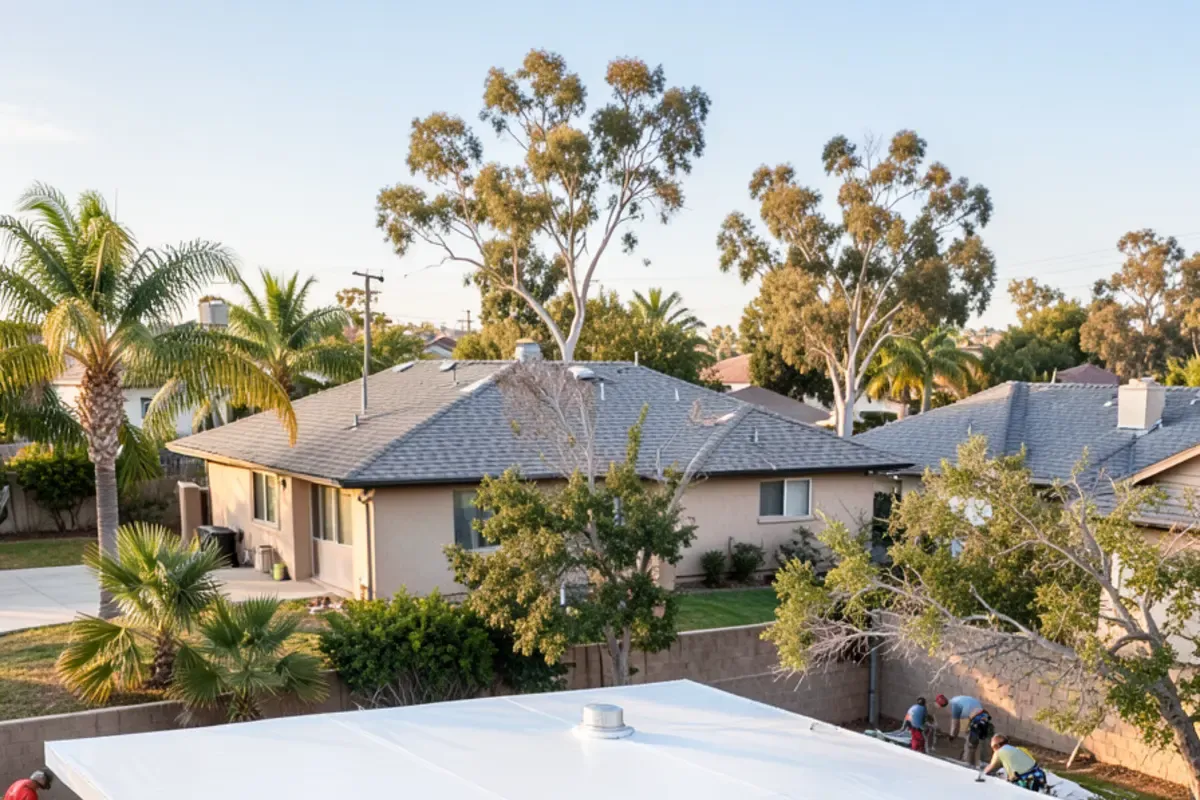
The 0.63 aged reflectance target for low-slope roofs effectively means a white or very light surface. On garages, additions and patio rooms, that usually means a white single-ply membrane or a reflective coating over a sound membrane. Our roof coating options explain which surfaces can be coated and which must be replaced first.
How we handle Title 24 on Rosemead reroofs
On every replacement quote for roofing in Rosemead, we confirm the climate zone, check whether the job crosses the 50% line, and look for an exception before talking color. Many of the post-war homes we work on have heating and cooling ducts in the attic and modest insulation, so the duct and insulation exceptions often do not apply as the house stands.
When the rule applies, we name a CRRC-rated product and color in the quote, keep the labeled packaging on site for the inspector, and pull the permit so the inspection is on record. The process is the same in El Monte and the other Zone 9 cities around us, though each city's building division has the final word on its own forms.
From quote to final inspection, step by step
- Confirm the climate zone for the address with the Energy Commission's zone lookup, which works by ZIP code.
- Measure the total roof area and the area being replaced, so the 50% line is a number rather than a guess.
- Test each exception against the attic as it stands: insulation depth, duct location and sheathing type.
- Choose the product and color, and write its CRRC product ID and aged rating into the quote.
- File the permit with whatever energy compliance paperwork the building division asks for.
- Keep labeled bundle wrappers or packaging on site until the inspector signs off the final.
Rebates and the next step
LADWP's cool-roof rebate is limited to LADWP electric customers in the parts of the City of Los Angeles it serves. Rosemead and most San Gabriel Valley cities are Southern California Edison territory, so check current SCE and Energy Upgrade California offerings directly before you count on any incentive.
If you are planning a reroof and want the code question settled before you pick a color, call (725) 745-8803 or request a quote. We will tell you whether the rule applies to your roof, which exceptions might, and which rated colors fit your house.
Questions readers ask
Does a small roof repair trigger Title 24 cool-roof rules?
No. Repairs such as replacing damaged shingles, a vent boot or a strip of flashing do not trigger the cool-roof requirement. The rule is tied to reroofing 50% or more of the roof area, or more than 2,000 square feet on certain low-slope roofs. A larger partial replacement should be checked against the total roof area.
Can I still get a dark-looking roof in Climate Zone 9?
Often, yes. The steep-slope minimum is an aged reflectance of 0.20, and several manufacturers make mid-gray and brown shingles that meet it. The darkest blacks usually fall short. If you want a very dark roof, an exception such as R-38 attic insulation or a radiant barrier may allow it; confirm with the building department first.
Will a cool roof lower my summer electric bill?
It reduces how hot the roof surface gets, which cuts heat flowing into the attic and any ducts there. How much you save depends on insulation, duct location and how often the air conditioning runs. Homes with ducts in a hot attic tend to notice the most difference on Rosemead summer afternoons in the upper 80s.
Who checks that my new roof meets Title 24?
The building inspector, during the permit inspections. They look for the CRRC label on the installed product and the compliance paperwork the job requires. That is one more reason a reroof should be permitted: without the inspection, there is no record that the roof meets the code.
Does the 2026 code change affect a reroof I applied for in 2025?
No. The code edition follows the permit application date, so a reroof applied for before January 1, 2026 is checked under the 2022 Energy Code, and one filed on or after that date falls under the 2025 edition. For a steep-slope roof in Climate Zone 9 the reflectance targets match in both, but the list of equivalent insulation options grew. Ask the building division if your application was filed near the changeover.
Sources
Written by Tylzen Spoke Roofing
A roofing contractor on Rosemead Blvd (CA-19) in Rosemead, working on shingle, tile, metal and flat roofs across the San Gabriel Valley. This guide reflects what our crews check on local roofs. Questions about your roof? Call (725) 745-8803.