
By Tylzen Spoke Roofing · Published
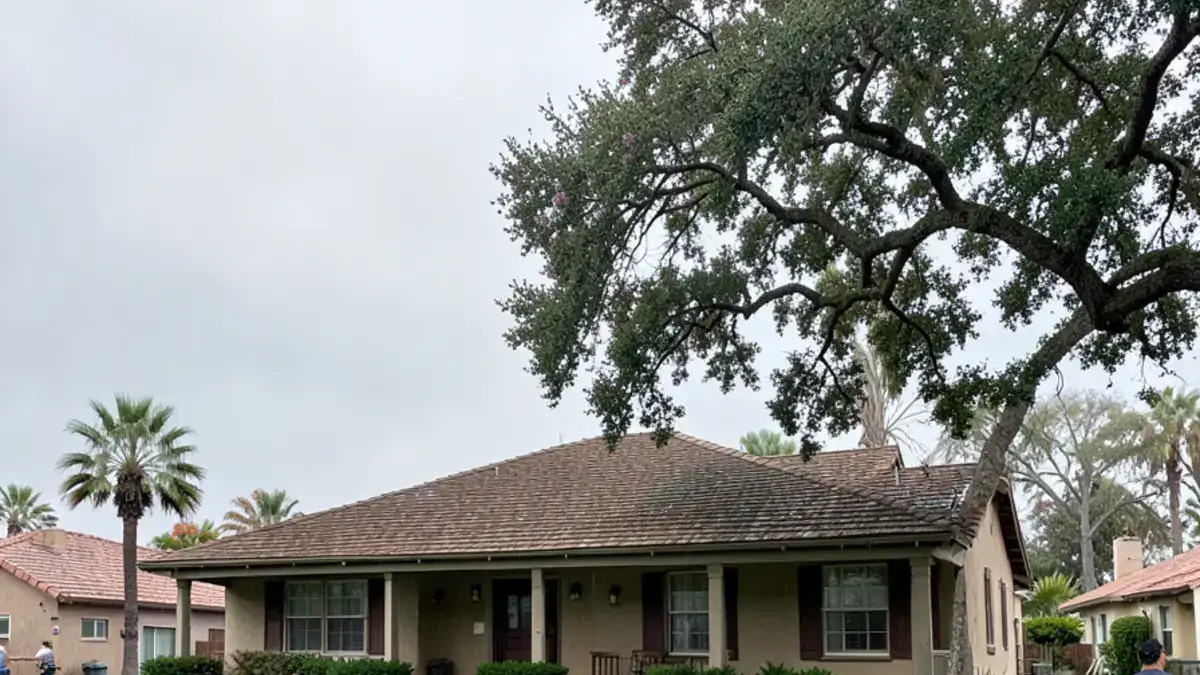
Does insurance cover roof leaks in California? Usually yes when a sudden, accidental event caused the leak, such as wind tearing off shingles, a tree limb puncturing the roof or fire damage, and usually no when the leak comes from age, wear and tear or skipped maintenance. Interior water damage is often covered when the cause is covered. Your specific policy and the adjuster make the final decision.
This guide explains how adjusters tell the two apart, how to document a roof claim, why claims get denied and what you can do about it. It is general information for homeowners, not legal or insurance advice.
Sudden damage versus wear and tear
Most California homeowners policies are written around covered perils, such as windstorm, falling objects and fire, and exclusions, such as deterioration, wear and tear and faulty maintenance. A roof leak lands on one side of that line depending on what caused it.
| Cause of the leak | Often covered? | What decides it |
|---|---|---|
| Wind blew off shingles or tiles | Often yes | Damage pattern and timing match a wind event |
| Tree or limb fell on the roof | Often yes | The tree hit a covered structure |
| Fire, embers or smoke | Often yes | Fire is a core peril on most policies |
| Cracked pipe boot on an old roof | Usually no | Treated as wear and tear |
| Roof at the end of its service life | Usually no | Age and deterioration exclusions |
| Leak ignored for months | Often limited | Ongoing or neglected damage exclusions |
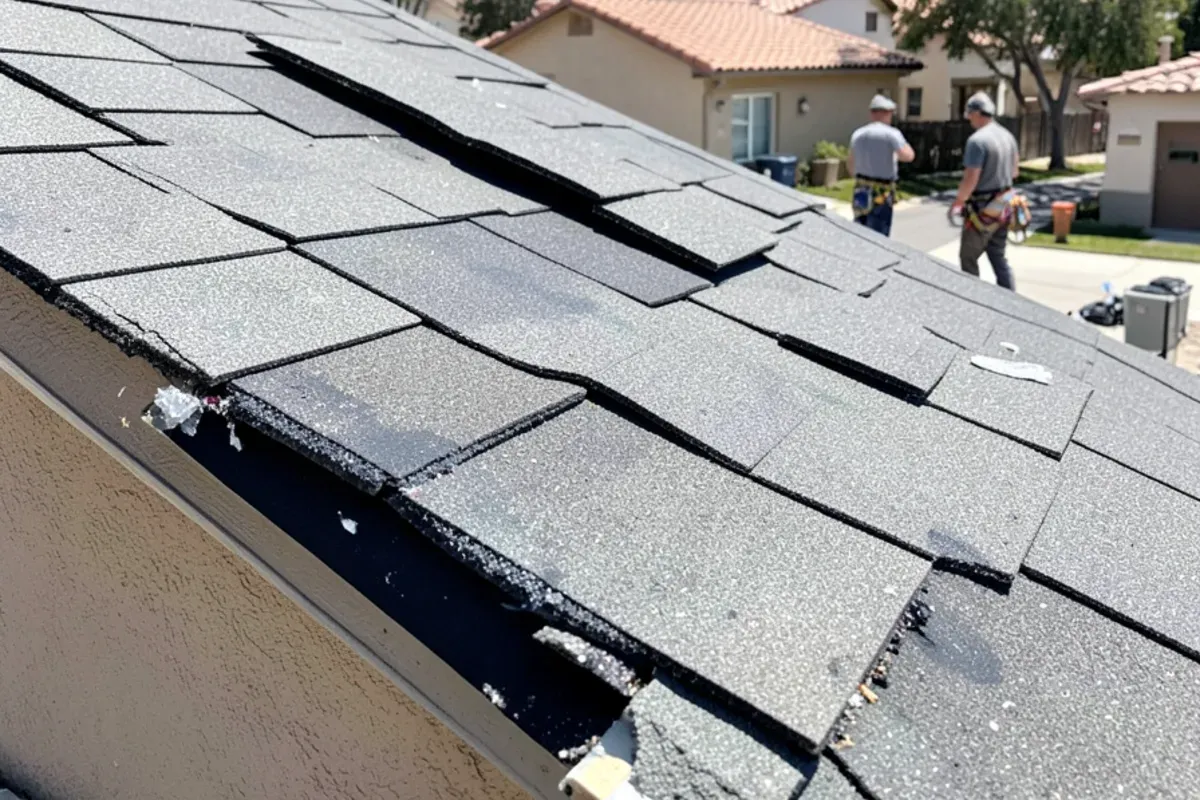
The line between the two is not always clean. A 20-year-old roof can still lose shingles in a genuine windstorm, and in that case the wind damage may be covered even though the roof was aging. What usually is not covered is the part of the problem that existed before the event, such as rotted decking under a long-cracked boot.
Want a roofer to look at it?
Call with your address and what you are seeing. We visit same-day or next-day when crews are free.
- 4.9 from 48 Google reviews
- Based on Rosemead Blvd
- Photos and a written quote before work
What does an insurance adjuster look for on a roof?
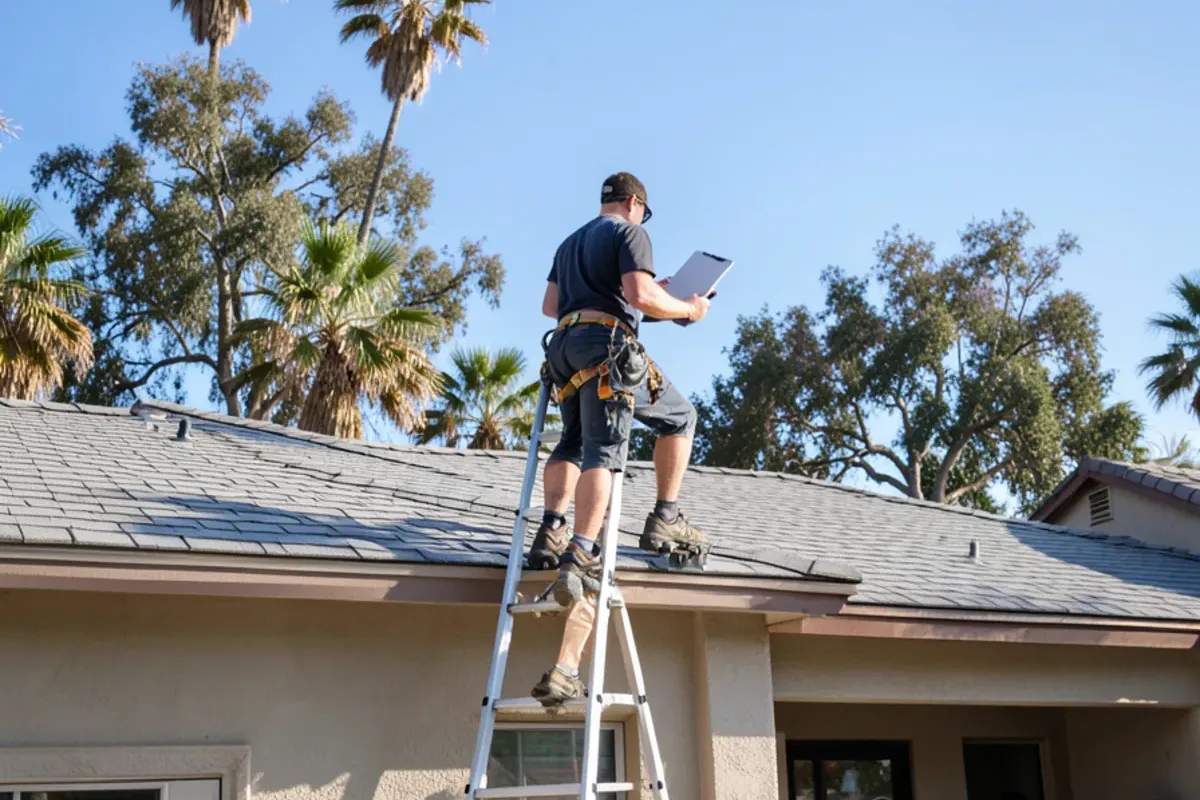
The adjuster's job is to determine the cause and date of the damage. On the roof, that usually means checking the following.
- Whether the damage pattern fits the reported event, such as missing tabs on the windward slope after a Santa Ana night.
- Creased or torn shingles, fresh breaks in tile and clean edges, versus weathered, rounded edges.
- The roof's overall age, granule loss and prior patch work.
- Whether interior stains are fresh or show rings from earlier leaks.
- Signs that you took reasonable steps to prevent further damage, like a tarp.
Weather records for the date of loss often support a wind or storm claim. A roofer's photos and written findings give the adjuster another view of what failed.
How to document a roof claim step by step
- Protect the home first: catch water, move belongings and get any opening tarped.
- Photograph and video the leak, the ceiling, damaged contents and what you can see of the roof from the ground.
- Report the claim promptly and write down the claim number and the date you called.
- Keep every receipt for emergency work, tarps, fans and temporary housing.
- Get a contractor inspection with dated photos and a written, line-by-line scope.
- Be on site for the adjuster's inspection, and ask your roofer to attend.
Keep everything in one folder or shared drive. Claims move faster when the file is complete.
Why are roof claims denied, and what can you do?
Common reasons include damage the adjuster attributes to age, a long delay between the event and the report, no effort to prevent further damage, and damage that predates the policy. A denial is not always the last word.
- Ask for the denial in writing with the specific policy language it relies on.
- Send any new evidence, such as a contractor's report or weather data, and request a reinspection.
- Contact the California Department of Insurance, which handles consumer complaints and explains claim-handling rules insurers must follow.
- Consider a public adjuster licensed by the Department of Insurance, or an attorney, for large or disputed claims.
How long does an insurer have to answer a roof claim in California?
California sets claim-handling deadlines in the Fair Claims Settlement Practices Regulations and the Insurance Code. Knowing them helps you tell a slow claim from a stalled one. The key time limits for a homeowners roof claim:
| Step | Time limit | Where it comes from |
|---|---|---|
| Insurer acknowledges your notice of claim | Within 15 calendar days | 10 CCR §2695.5(e) |
| Insurer accepts or denies, in whole or part | Within 40 calendar days of receiving proof of claim | 10 CCR §2695.7(b) |
| Insurer needs more time | Written notice within the 40 days, then every 30 days | 10 CCR §2695.7(c)(1) |
| You collect withheld replacement cost after repairs | At least 12 months from the first actual cash value payment | Insurance Code §2051.5(b) |
| Same, for a loss tied to a declared state of emergency | At least 36 months | Insurance Code §2051.5(b) |
The 40-day clock starts when the insurer has proof of claim, not when you first call, so send photos, the contractor's scope and receipts early. Keep a dated log of every call and email. If deadlines pass without a written explanation, the California Department of Insurance consumer line is the place to ask about it.
Deductibles, depreciation and the California FAIR Plan
Your deductible comes off the top of any payment, so a small leak repair may cost less than the deductible itself. Many policies pay actual cash value first, meaning the repair cost minus depreciation for the roof's age, then release the withheld amount once the work is complete on replacement-cost policies.
Homeowners who have moved to the California FAIR Plan should know it is mainly fire coverage. Water damage from a roof leak is often outside a basic FAIR Plan policy, which is why many owners pair it with a separate difference-in-conditions policy. Check what each of your policies covers before the rainy season.
How we help with roof claims in Rosemead and Pasadena
Age is the issue we run into most often. Rosemead's housing stock is old, with a median build year of 1959 per Point2Homes, and many older Craftsman and period homes in roofing in Pasadena carry roofs with years of patching. On those roofs, separating fresh storm damage from long-term wear takes careful photos and a clear written explanation.
Our roof insurance claim help covers that work: we photograph the damage, write a line-by-line scope, tarp openings and can meet the adjuster on site. Claim negotiation is a separate job, and in California public adjusters hold a state license for that work. Homeowners around roofing in Rosemead who want a baseline before trouble starts can book a roof inspection on a dry day.
Where a roofer's scope and an adjuster's estimate tend to differ
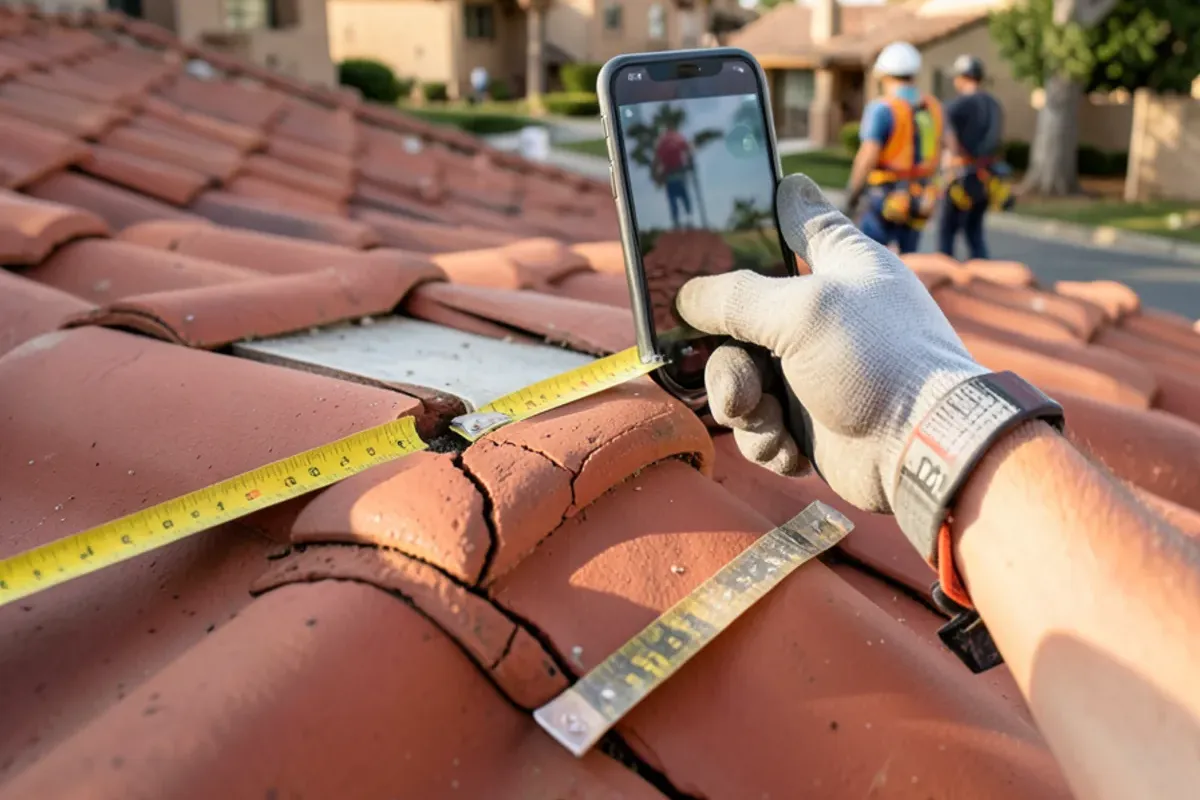
Most gaps between the two come from items that are easy to leave out of a quick estimate. On roof claims we see these most:
- Underlayment, drip edge and starter course replaced along with the shingles or tile above them.
- Decking that only shows its damage once the roofing is off, which we price per sheet as a separate line.
- Tile that cannot be matched, which can widen the area that has to be replaced to keep a reasonably uniform look under California's matching regulation.
- Code items triggered by the repair, such as Title 24 cool-roof rules on large reroofs or Class A and ember-vent rules in fire zones, which usually fall under a policy's ordinance or law coverage, often with its own limit.
- Permit and inspection fees, debris haul-off and tarp costs already paid.
The honest trade-off: a thorough scope can make the claim larger and slower to settle, and some items will still be judged as pre-existing wear. We write what we see and mark it clearly, and you decide what to submit.

Protect the house, document the cause, then call
Coverage depends on the cause, the timing and your policy wording, and good documentation helps on every count. If you have a leak after wind, a tree strike or fire, call (725) 745-8803. We can visit same-day or next-day when crews are free and give you photos and a written scope for your claim file.
Questions readers ask
Will my premium go up if I file a roof claim?
It can. Insurers weigh claim history when renewing or pricing a policy, and the effect varies by company. For a repair that costs less than or close to your deductible, many owners pay directly. Ask your agent how a claim may affect renewal before you file a small one.
Does insurance pay for a whole new roof or only the damaged part?
Usually the damaged area, repaired with like kind and quality. A full replacement is paid when damage is widespread or when a proper repair is not possible on that roof. The adjuster's scope sets the payment, and a contractor's report can point out damage the first inspection missed.
Is there a deadline to file a roof claim in California?
Policies require prompt notice, and they set time limits for filing suit over a disputed claim. Report damage as soon as you find it, because delays make it harder to show the leak came from a specific event. Your policy's conditions section lists the deadlines that apply to you.
Should I get a repair estimate before the adjuster visits?
It helps. A written scope from a roofer shows the adjuster what failed, how much needs replacing and what the repair involves, which makes it easier to compare against the insurer's own estimate. Make only the temporary repairs needed to stop further damage until the adjuster has seen the roof, unless they tell you otherwise.
Does insurance pay for code upgrades on a damaged roof?
Sometimes, through ordinance or law coverage. When a repair triggers current code, such as cool-roof rules on a large reroof in Climate Zone 9 or Class A requirements in a Very High fire zone, that coverage may pay the added cost up to a limit, often a percentage of the dwelling limit. Check your declarations page for the amount, and ask your agent before the rainy season.
Sources
- California Department of Insurance: homeowners insurance and claims help
- California FAIR Plan Association
- Insurance Information Institute: homeowners insurance basics
- California Department of Insurance: Fair Claims Settlement Practices Regulations (10 CCR §2695.1-2695.17)
- California Insurance Code § 2051.5 (replacement cost time limits)
Written by Tylzen Spoke Roofing
A roofing contractor on Rosemead Blvd (CA-19) in Rosemead, working on shingle, tile, metal and flat roofs across the San Gabriel Valley. This guide reflects what our crews check on local roofs. Questions about your roof? Call (725) 745-8803.