
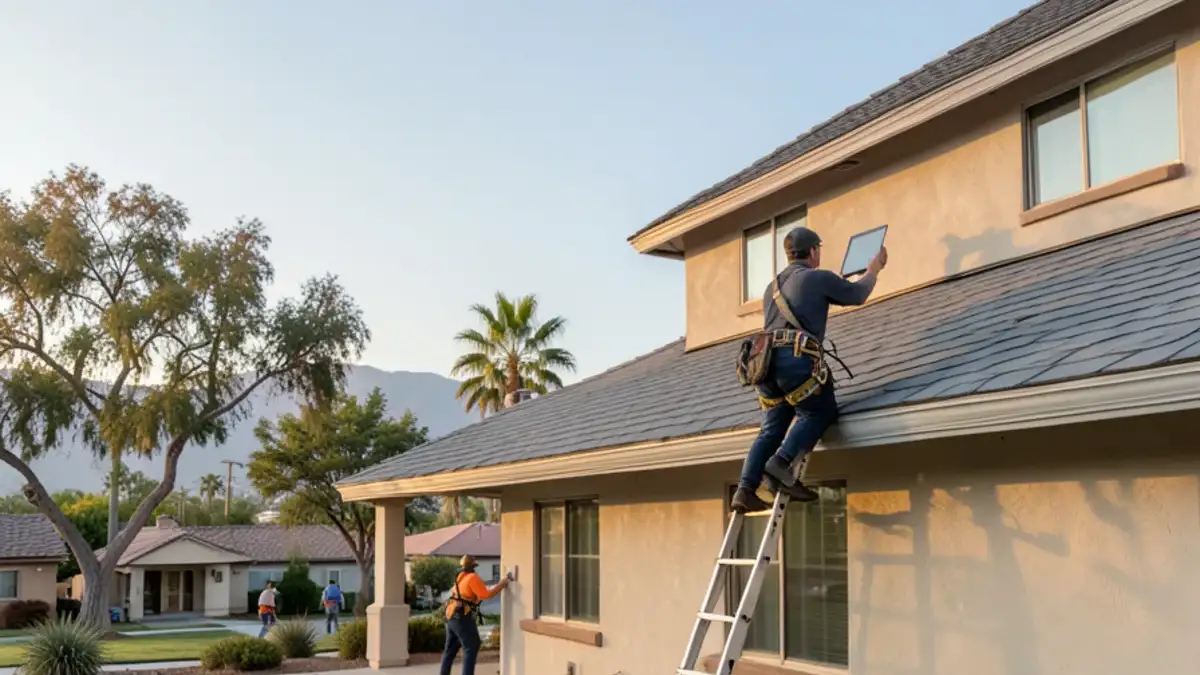
A roof inspection in Rosemead tells you what shape your roof is in before you spend money on it. We check the roofing surface, flashings, penetrations, gutters and the attic, photograph what we find, and give you a written condition report. Inspections are the starting point of our roof maintenance service, and most repair or replacement advice we give begins with one.
Many roofs here are older than they look from the street. With a median build year of 1959 in Rosemead (Point2Homes), plenty of homes sit on their second or third roof, sometimes over decking nobody has seen in decades.
When do you need a roof inspection in Rosemead?
- Before buying a home, or before listing one.
- After a windstorm. Santa Ana and downslope winds peak from October to March, and the January 2025 windstorm stripped roofs across the foothills.
- After any ceiling stain, drip or musty smell in an upstairs room.
- In early fall, before most of the rain arrives between November and March.
- Before solar panels go on, so the roof under them has years left.
- When an insurer asks about the roof's age or condition at renewal.
- After other trades, such as solar, HVAC or cable installers, have worked on the roof.
If the house is in escrow, a roof certification may be what the agents are asking for instead. It starts with the same inspection.
What a roof inspection checks, from ridge to attic
Roof surface
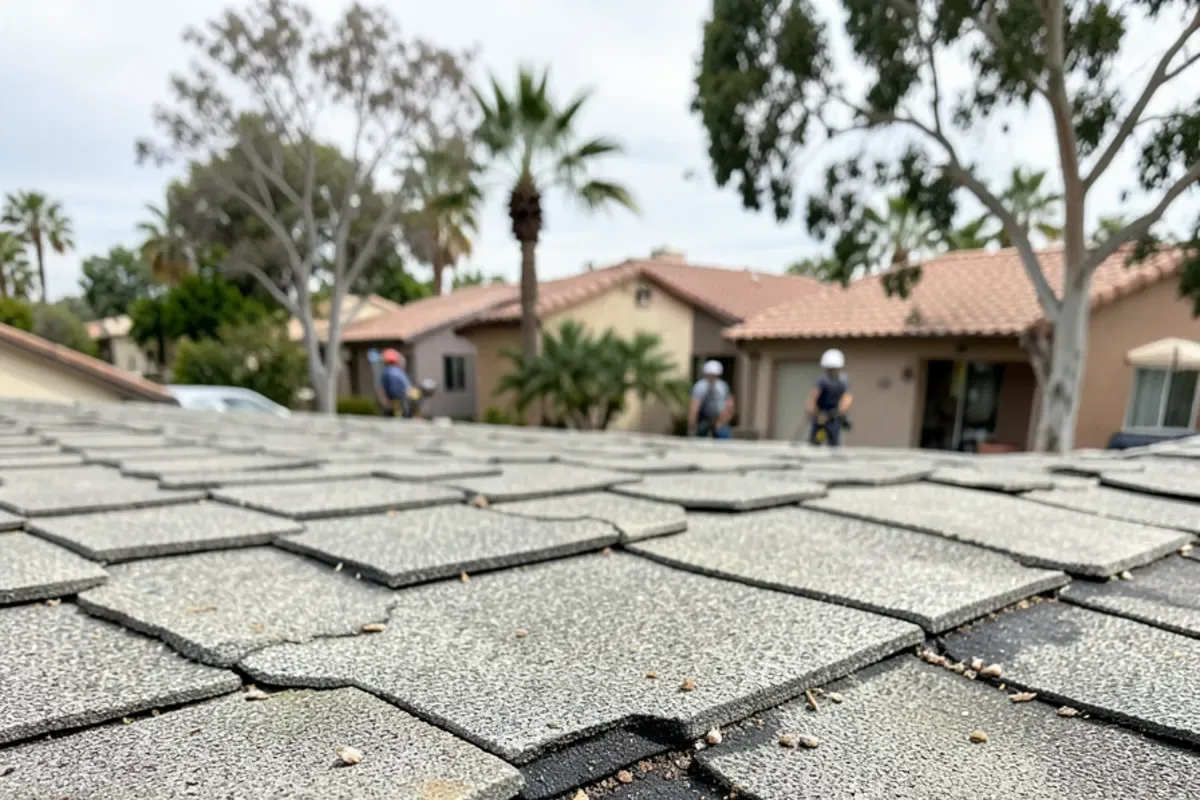
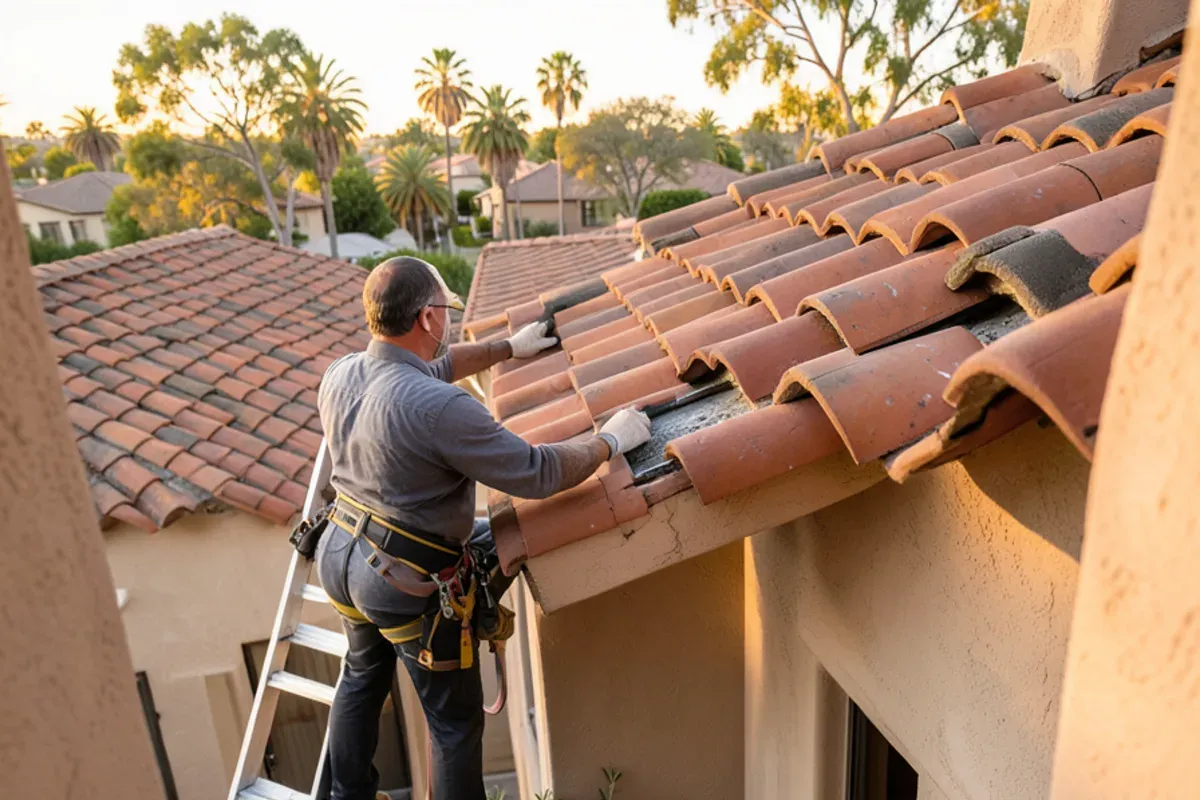
On shingles we look for granule loss, curling, cracking, nail pops and tabs that have come unsealed. On tile we count cracked, slipped and missing pieces and lift a few to check the underlayment. Flat sections get checked for ponding, open seams and blocked drains.
Flashing and penetrations
Chimney, wall, step and valley flashing, plus pipe boots, exhaust vents, skylight curbs and any solar or satellite mounts.
Edges and drainage
Drip edge, fascia boards, gutters and downspouts, and whether water leaves the roof where it should.
Attic inspection
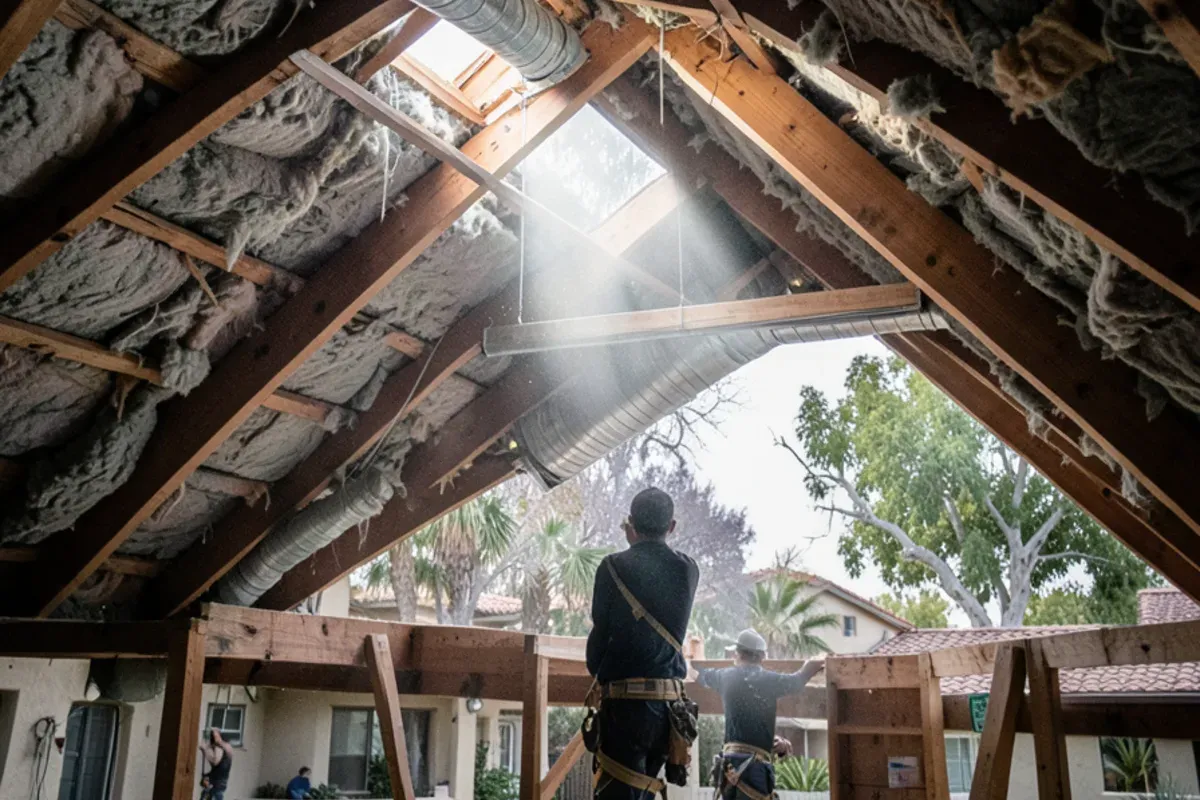
Inside, we look for daylight at the roof boards, water staining on rafters, damp or flattened insulation, blocked vents, bath fans venting into the attic, and droppings or nesting that point to roof rats.
Storm damage roof inspection after strong wind
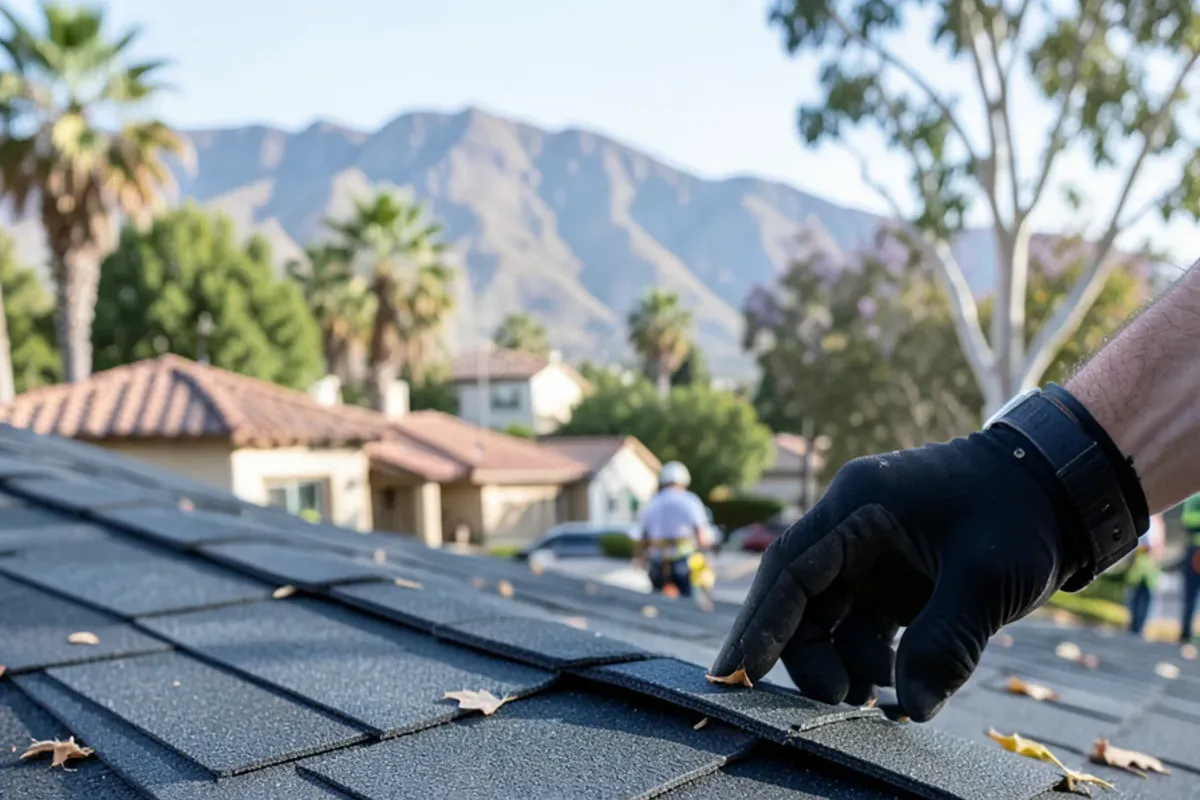
Wind rarely tears a roof off in one piece. More often it breaks the seal strips that hold shingle tabs down, creases tabs so they crack later, shifts ridge tiles, and drops branches that puncture the deck. Much of that damage is invisible from the ground.
After a storm we photograph each damaged area with its location on the roof, which helps if you file a claim. We can meet your adjuster on site, but we do not negotiate claims; California licenses public adjusters for that. For repairs after a storm, see wind damage roof repair.
How long does an inspection take, and when do you get the report?
We book visits same-day or next-day when crews are free. On site, most single-family inspections take about an hour, and up to two on a large tile or two-story roof with a hard-to-reach attic.
The inspection visit in order
- We confirm the address, roof material and any deadline, and ask you to clear a path to the attic hatch.
- From the ground we walk the perimeter, checking gutters, fascia, downspout outlets and how the roof planes sit.
- On the roof we work slope by slope, stepping only where the covering is supported, and photograph each finding with its location.
- Flashings, pipe boots, vents, skylight curbs and mounts get a close look, and on tile we lift sample pieces to see the underlayment.
- In the attic we trace stains back to their source and probe any sheathing that looks dark or soft.
- We sort the findings by urgency, write the report and walk you through it on site or by phone.
The written report with photos follows the visit, and we tell you at booking when to expect it. If you are working to an escrow or insurance deadline, mention it when you call so we can plan around it.
Need roof inspection help this week?
Tell us what you are seeing. We schedule same-day or next-day visits when crews are free and send photos with a written quote.
- 4.9 from 48 Google reviews
- Based on Rosemead Blvd
- Photos and a written quote before work
Your roof condition report and what happens if we find problems
The report sorts every finding by urgency, so you can see what needs doing before the next rain and what can wait.
| Rating | What it means | Typical example |
|---|---|---|
| Fix now | Water is getting in or will with the next storm | Cracked pipe boot, missing tiles, open valley |
| Fix soon | Worn but still holding | Dried sealant at a wall, a few lifted tabs |
| Monitor | Normal aging to watch at the next visit | Light granule loss, faded tile color |
| Plan ahead | The roof is nearing the end of its life | Brittle shingles across slopes, failing tile underlayment |
An inspection needs no permit, but some findings lead to work that does. A full reroof or deck replacement is permitted by the city's building division, or by LA County Public Works in unincorporated communities such as East San Gabriel and South San Gabriel. Repairs above $1,000 in labor and materials require a CSLB-licensed contractor, and C-39 Roofing is the license to look for at cslb.ca.gov. On foothill homes in Very High Fire Hazard Severity Zones, the report also notes whether the roof is a Class A assembly and whether attic vents carry the 1/16 to 1/8 inch ember mesh that Chapter 7A sets for new work there.
Repairs are quoted separately and line by line, and you are free to use the report with any contractor. If the roof is sound but worn at the edges, a roof tune-up handles the reseal-and-reset items in one visit.
Roof inspection cost and who pays
The homeowner usually books and pays for a routine inspection. In a purchase, the buyer typically pays during the contingency period, while a seller pays if they order one before listing. Insurers do not usually pay for the inspection itself, though the photos support a claim when damage was sudden.
The fee depends on roof size, stories, material, attic access and whether a report has to be prepared for a third party such as a lender. We give you the fee when you book.
Why homeowners book roof inspections with Tylzen Spoke
- 4.9 stars across 48 Google reviews, as of November 2026.
- Photo-documented findings and a written quote, with permits and deck work broken out as their own lines.
- Reviewers describe clear explanations and no pressure to buy more than the roof needs.
- On storm claims, we document damage and can be there when the adjuster inspects.
If your roof still carries manufacturer coverage, the report helps show its condition. That coverage depends on the product line, and workmanship terms on any repair are written into the contract; ask for both in writing and whether they transfer at sale.
We inspect roofs throughout the valley, including foothill homes in Monrovia, Sierra Madre and Glendora, where wind events hit hardest.
What customers say on Google
4.9★ from 48 Google reviews (checked Nov 2026)
“We've had a couple of experiences with this roofing company, and both have been great. The first time, we had a leak around an old roof vent. Their team replaced the vent, sealed everything up, and put our cement tile shingles back in place. The work was finished quickly, looked good, and the price was reasonable. …”
“the roofing team did an outstanding job with our roof replacement. even though the timing wasn't ideal for us, as we were selling our house, they really helped make everything go smoothly. tanner came out to inspect the roof after a big storm and then worked closely with our insurance adjuster. …”
“William was very professional and easy to work with. We had a long-term roof leak around the attic and a room on the second floor, and several roofing contractors came out to inspect it and give estimates. William clearly had the strongest roofing experience, explained the problem in simple terms, and his price was competitive too. …”
Where we handle roof inspection
- Rosemead
Many 1950s Rosemead roofs sit over decking nobody has seen since the last tear-off, so the attic check carries extra weight.
- Monrovia
Foothill homes take the brunt of downslope winds, so post-storm visits focus on lifted shingles, shifted ridge tiles and fallen limbs.
- Sierra Madre
Parts of town lie in Very High fire zones, so the report records vent mesh and Class A roof status alongside any leaks.
- Glendora
Foothill streets near the 2014 Colby Fire area get inspections covering ember-resistant vents and dry debris packed in valleys.
- Altadena
Houses that survived near the Eaton Fire burn area often need roof and attic checks for ash, heat-damaged seals and ember entry points.
- San Gabriel
Older homes with added rooms often hide a low-slope tie-in, where inspections turn up ponding, open seams or failed flashing.
- Alhambra
Buyers of 1920s-era homes ask us to check clay tile underlayment and old chimney flashing before their contingency period ends.
- Arcadia
Tall trees over large two-story roofs pack valleys and gutters with debris, which the report flags before the rainy season.
More places we handle roof inspection
Roof Inspection questions
What does a roof inspection check?
The roof covering, every flashing and penetration, the gutters and roof edges, and the attic beneath. In the attic we look for daylight, water staining, damp insulation and ventilation problems. You get photos of each finding, with a note on how urgent it is and what fixing it would involve.
Should I get a roof inspection after a windstorm?
Yes, if the wind was strong enough to drop branches or move patio furniture. Wind breaks the sealant strips that hold shingles down and shifts ridge tiles, and that damage often cannot be seen from the ground. Book within a few weeks, before the next rain, and keep any photos you took on the day of the storm.
How long does a roof inspection take?
About an hour on site for most single-family homes, sometimes two for a large tile or two-story roof with a tight attic. We need to reach the attic hatch, which is often in a closet or the garage ceiling, so clear a path to it before we arrive.
Can you inspect a tile roof without breaking tiles?
Mostly, yes. We step only where tiles overlap and are supported, use pads where needed, and check steep or fragile sections from ladders or with a camera pole. Very old clay can still crack; if a tile breaks during the inspection, we photograph it and tell you before we leave.
Is a roof inspection the same as a home inspection?
No. A general home inspector usually views the roof from the ground, a ladder or a drone and flags concerns for a specialist. A roof inspection goes further: we walk the roof where it is safe, lift tiles or shingle edges to check underlayment and flashing, and price any repairs.
Do I need to be home during the inspection?
Only if we need the attic. Exterior work can happen while you are out, as long as gates are unlocked and pets are inside. For rentals we can schedule directly with the tenant. Either way, you receive the same photos and written findings afterward.