
By Tylzen Spoke Roofing · Published
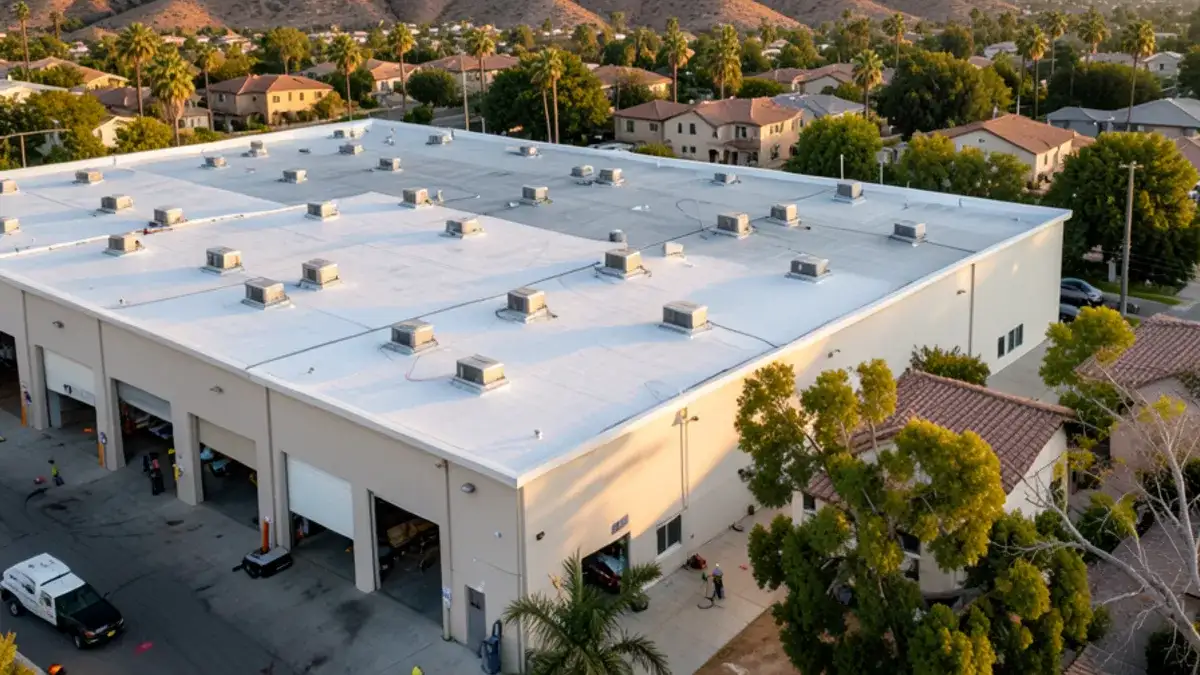
Industrial roofing in City of Industry means huge, nearly flat single-ply roofs over distribution centers, where drainage and rooftop equipment decide how long the roof lasts. In South El Monte and parts of Irwindale, the buildings are often older and smaller, with layered roofs, bow-truss shops and metal buildings that need a different kind of care. The right plan starts with knowing which kind of building you have.
This post looks at the roof systems found across the industrial belt east and south of Rosemead, the problems each one tends to develop, and how our warehouse and industrial roofing work fits around operations that cannot stop for a roof.
What sets industrial roofing in City of Industry apart?
City of Industry is mostly business land stretched along the Pomona Freeway (SR-60), with the Puente Hills to the south. Its largest buildings cover several acres under one roof, and a small defect can be far from the nearest hatch.
- Very low slopes over long spans, so drains, crickets and overflow scuppers carry the whole roof.
- Dozens of rooftop units, exhaust fans and skylights, each a flashing detail to maintain.
- Tenants who change every few years and bring new equipment, penetrations and foot traffic.
- Lease terms that assign roof duties to landlord or tenant, which affects who pays for repairs.
- Insurance and lender requirements that may ask for documented roof condition.
Want a roofer to look at it?
Call with your address and what you are seeing. We visit same-day or next-day when crews are free.
- 4.9 from 48 Google reviews
- Based on Rosemead Blvd
- Photos and a written quote before work
Roof systems found on the valley's warehouses and plants
| Building type | Typical roof | Common issues |
|---|---|---|
| Large tilt-up distribution center | Single-ply TPO or PVC over insulation on a panelized wood or steel deck | Drain blockage, curb flashing, wind at perimeter |
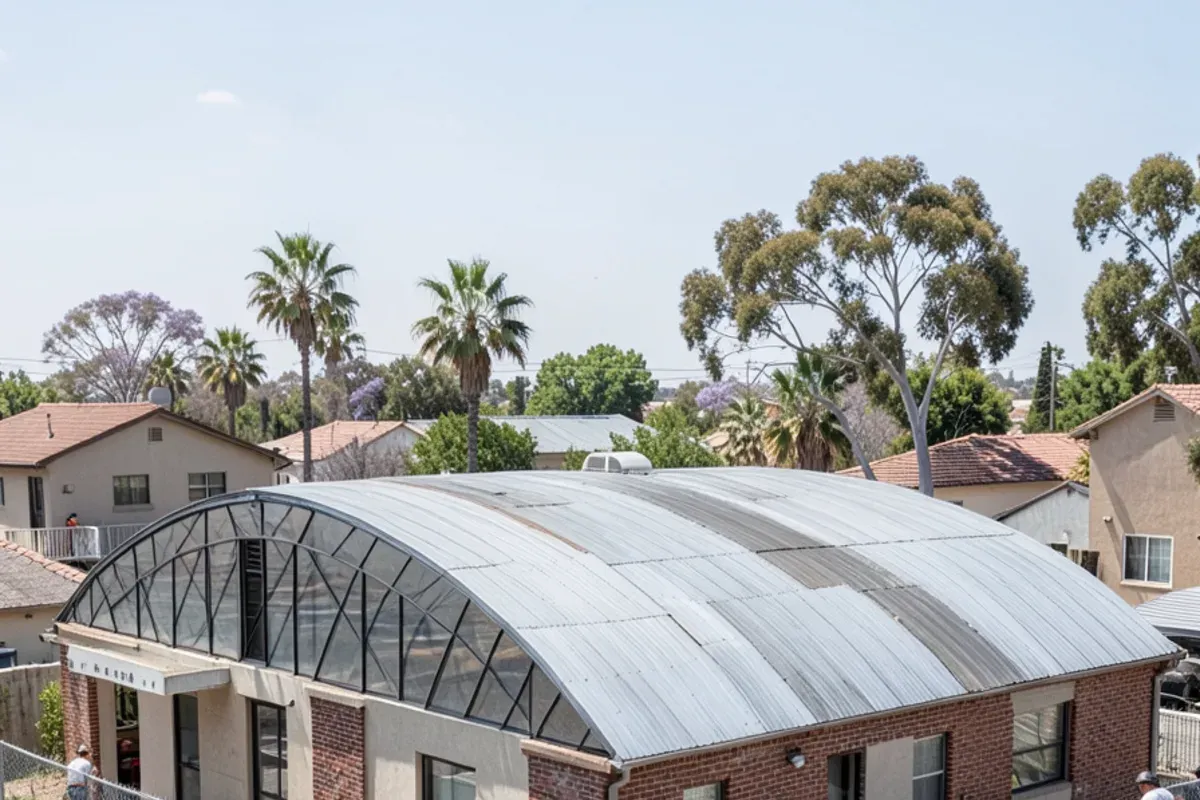
| Mid-century bow-truss shop | Built-up or modified bitumen on a curved roof, often recoated | Layered roofing, worn edges, soft decking near the eaves |
| Pre-engineered metal building | Through-fastened or standing seam metal panels | Loose or rusted fasteners, failed sealant at laps and ridge |
| Office and warehouse combination | Low-slope main roof with a pitched or parapet office front | Transitions between roof types, parapet coping |
| Older masonry plant | Built-up roof inside parapets with scuppers | Scupper and downspout corrosion, cracked parapet caps |
South El Monte's smaller industrial buildings
South El Monte has a dense mix of small manufacturing shops, auto businesses and light industry close to the Whittier Narrows and the 60. Many of these buildings went up decades ago and have been reroofed in pieces as owners and tenants changed.
That history shows up on the roof: a cap sheet over one bay, a coating over another, a metal patch over a former vent. Each transition is a likely leak point. Before quoting a replacement, we check how many layers exist, because a second layer adds weight and hides wet decking, and most codes do not allow a third.
Metal buildings in the area need their own attention. Through-fastened panels rely on rubber washers that harden in summer heat, and sealant at panel laps dries out. Replacing fasteners and resealing laps is often enough to stop leaks without new panels.
Why are drains the first thing to check on a flat industrial roof?
A few inches of standing water across a large roof weighs a great deal. Industrial roofs depend on drains and overflow scuppers to keep that load and the leak risk in check, and they are the first parts to fail in dusty, busy surroundings.
- Clear strainers of grit, wrap and nests before the November-to-March rains.
- Check that overflow scuppers are open and not painted or sealed shut.
- Look for dirt rings that mark water standing more than a couple of days.
- Confirm that drain leaders inside the building are intact and not leaking at joints.
What our crews notice across the 60 freeway industrial belt
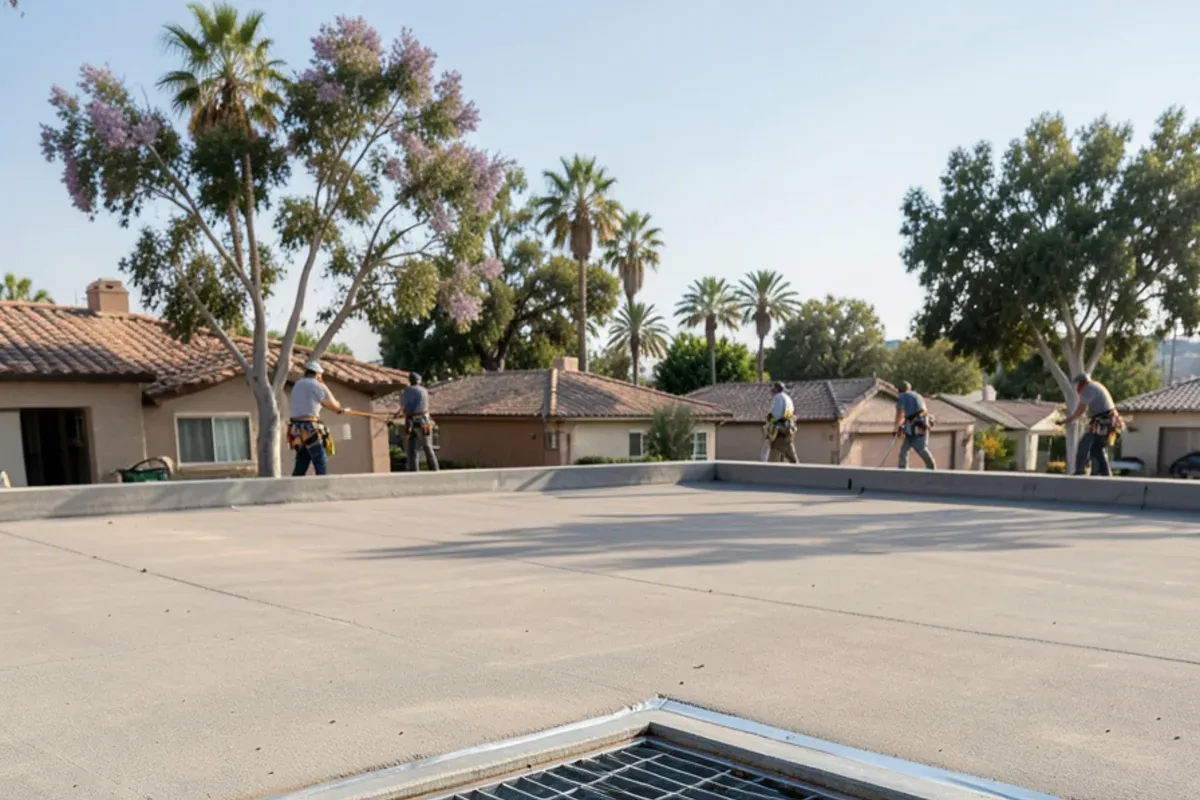
From Irwindale down through South El Monte and east into City of Industry, the same conditions wear on roofs year after year.
- Fine dust and soot from truck traffic and gravel operations dulls white membranes and packs into drains.
- HVAC technicians and solar or telecom installers cross the roof often, leaving scuffs, dropped screws and fresh penetrations.
- Summer highs in the upper 80s and beyond cook sealants at curbs and pitch pans.
- Santa Ana wind events from October through March test perimeter edges and loose flashing.
- Sections reroofed at different times age at different rates, so one roof can be in three conditions at once.
Trade-offs on older shops and metal buildings
A through-fastened metal roof has three realistic paths. Refastening with oversized screws and resealing laps is the cheapest and keeps the building running, but the washers age again and the work repeats. A fluid-applied roof coating system over rust-treated panels seals every fastener at once and brightens the surface, though it only makes sense while the steel is still solid. Retrofit framing with new panels or a single-ply roof over the old metal solves the problem longest, at the highest cost and with the most crane time.
Bow-truss shops raise a different question. A coating holds the curve well and goes on fast, yet it cannot correct soft eave decking or the stacked layers many of these roofs carry. A tear-off down to the boards exposes the rot honestly, and on buildings that old it sometimes reveals framing that needs an engineer before any new roof goes on. We show owners the photos and the price of each path so the choice fits the lease term and the building's future.
A maintenance rhythm that fits industrial operations
Industrial roofs do best on a fixed schedule rather than waiting for leaks. A simple rhythm covers most buildings.
- Fall visit before the rains: drains, seams, curbs, skylights and edges.
- Spring visit after the rainy season: repair anything the storms exposed and log conditions.
- Check-ups after big wind events and after any contractor works on the roof.
- A written report each visit, with photos keyed to a roof plan.
Our commercial roof maintenance visits follow that pattern and give owners a record that supports manufacturer coverage and capital budgets.
Should an industrial roof be replaced before solar goes on?
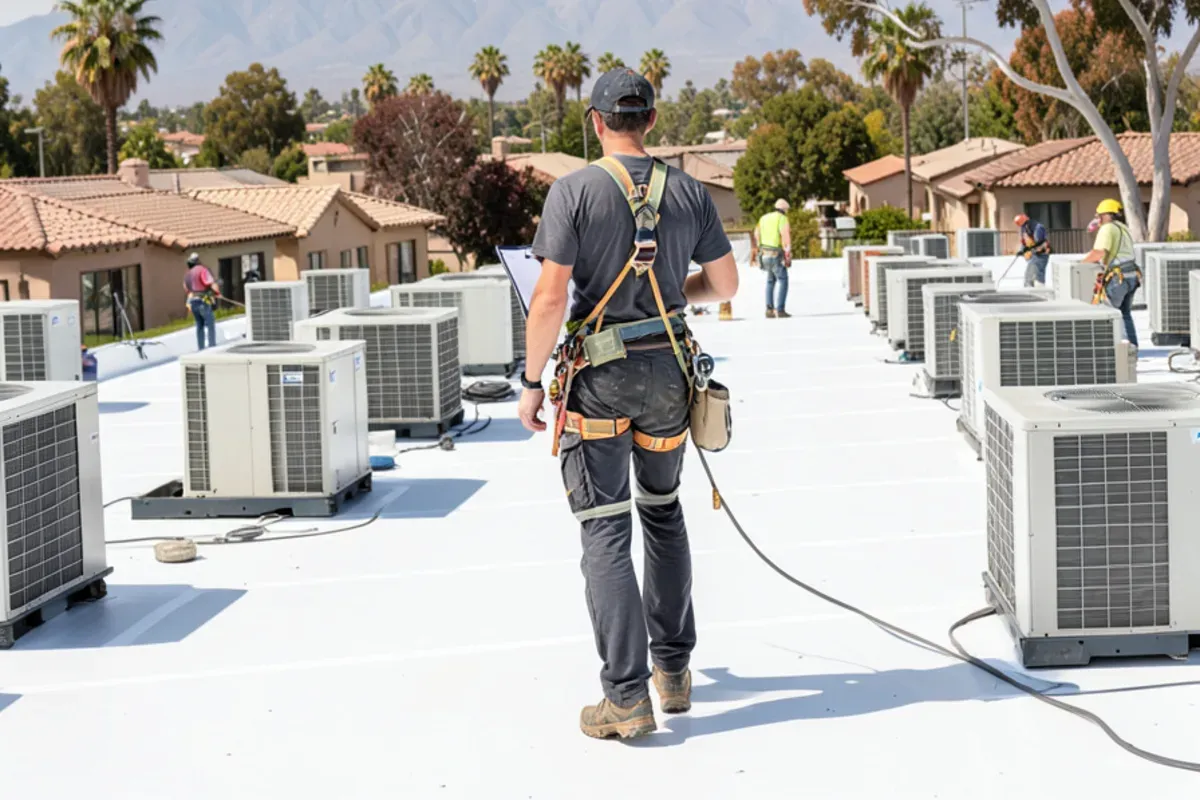
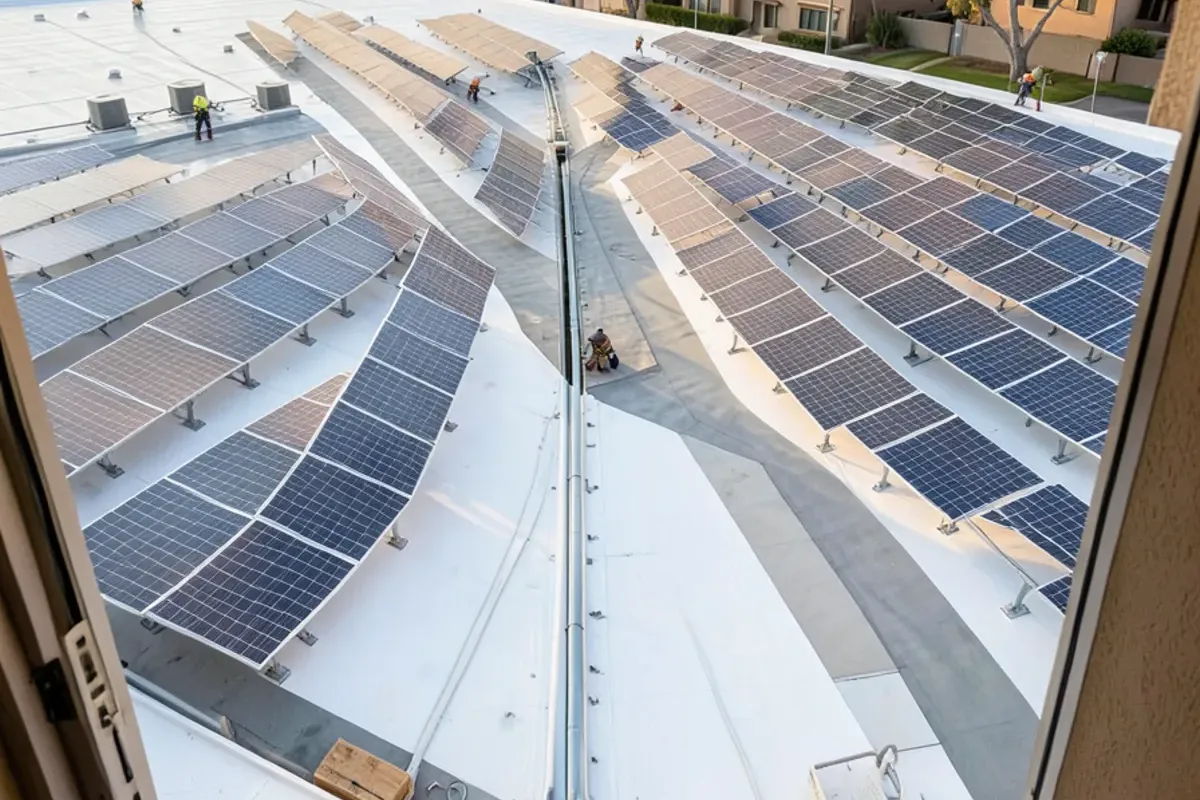
Large flat warehouse roofs are natural sites for solar arrays, and many owners in the corridor are weighing them. The roof under the panels matters as much as the panels. Taking an array off to replace a worn membrane later means paying to remove and reinstall racking, wiring and conduit, so the age of the roof belongs in the solar decision from the start.
- Compare the membrane's remaining service life with the expected life of the array before signing.
- Ask whether the racking is ballasted, which adds weight, or anchored, which adds penetrations that need flashing.
- Keep drains, overflow scuppers and crickets clear of racking so water still reaches them.
- Plan walkway pads and service routes to rooftop units that the array will not block.
- Expect the fire department to review access pathways and spacing under California Fire Code Section 1205.
Title 24 also lists roof area covered by building-integrated solar panels among its cool-roof exceptions (standard rack-mounted arrays are not named), but the rest of the roof still has to comply when a reroof triggers the rules. Coordinating the roofer and the solar installer on one schedule usually saves a second mobilization.
Scheduling roof work around shifts, inventory and tenants
Most industrial clients cannot shut down for a reroof. We phase work by section so each area is watertight at day's end, plan tear-off away from sensitive inventory or open production lines, and coordinate crane lifts and deliveries with shipping schedules. City of Industry and South El Monte issue permits through their own building process or the county office they contract with; our crew files the permit whenever the work calls for one and books the city inspection.
Planning your next industrial roof project
Start with a walk of the roof and a written condition report, then decide between targeted repairs, a maintenance plan, a coating, a recover or a replacement. You will get photos and a line-by-line quote before any work begins. Call (725) 745-8803 or request a quote to set up a visit to your building.
Questions readers ask
Who is responsible for the roof in a leased industrial building?
The lease decides. Triple-net leases often put routine maintenance on the tenant and replacement on the landlord, but terms vary widely. Read the roof clause before scheduling work, and share our inspection report with both parties so repairs are not delayed by a dispute over who pays.
Can a bow-truss roof be reroofed with single-ply membrane?
Often, yes. The curved shape suits fully adhered membranes and some coatings, provided the decking is sound and the edges are rebuilt properly. Older bow-truss buildings sometimes need structural review, so we flag soft decking or framing concerns in the photos before pricing the roof.
How often should a large distribution center roof be inspected?
Twice a year is a common baseline, in fall and spring, plus after wind events or rooftop work by other trades. Buildings with heavy dust, many units or older membranes may benefit from more frequent drain checks during the rainy season.
Can a leaking metal warehouse roof be coated instead of replaced?
Often, if the panels are still structurally sound. The process starts with cleaning, rust treatment and replacing loose or stripped fasteners, then sealing laps and seams before the coating goes on. Panels that have rusted through, or a roof with widespread loose sheets after a Santa Ana wind season, are better candidates for retrofit or replacement than for coating.
Does a warehouse reroof in City of Industry have to be white?
Not by name, but in practice it usually ends up white or very light. Once a reroof triggers Title 24, a low-slope nonresidential roof needs a CRRC-rated product with an aged solar reflectance of at least 0.63 and emittance of 0.75, or an SRI of 75. Darker membranes rarely reach those numbers, so ask each bidder for the CRRC product ID of the exact cap sheet or membrane quoted.
Sources
- California Energy Commission: Title 24 Building Energy Efficiency Standards
- Cal/OSHA (California Division of Occupational Safety and Health)
- FM Global: property loss prevention resources
- National Roofing Contractors Association
- California Building Standards Commission: California Building Standards Code (Title 24)
Written by Tylzen Spoke Roofing
A roofing contractor on Rosemead Blvd (CA-19) in Rosemead, working on shingle, tile, metal and flat roofs across the San Gabriel Valley. This guide reflects what our crews check on local roofs. Questions about your roof? Call (725) 745-8803.