
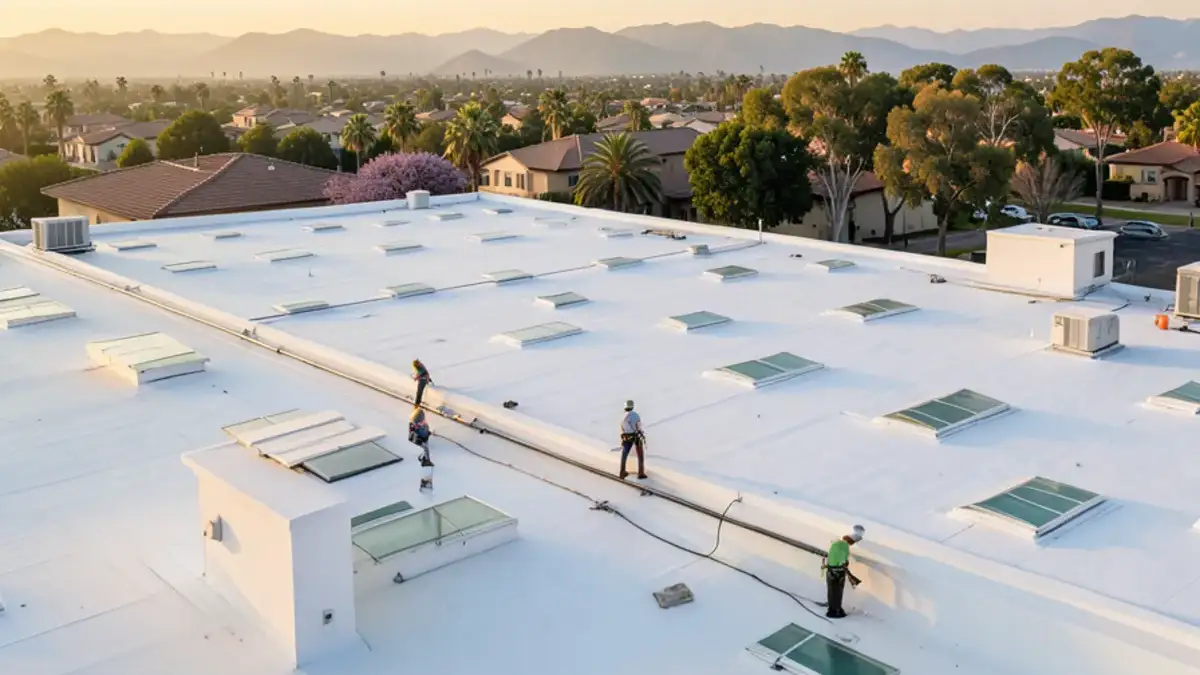
As an industrial roofing contractor in the San Gabriel Valley, we work on roofs that cover a lot of ground with very few drains: tilt-up concrete warehouses, pre-engineered metal buildings, food plants and machine shops. A single leak on these roofs can reach racked inventory, production lines or electrical gear, so we plan the work around the operation underneath.
This is a specialty within our commercial roofing service for the valley, covering industrial corridors from Vernon and Commerce east through South El Monte, Irwindale and City of Industry.
Roof risks on tilt-up warehouses and metal buildings
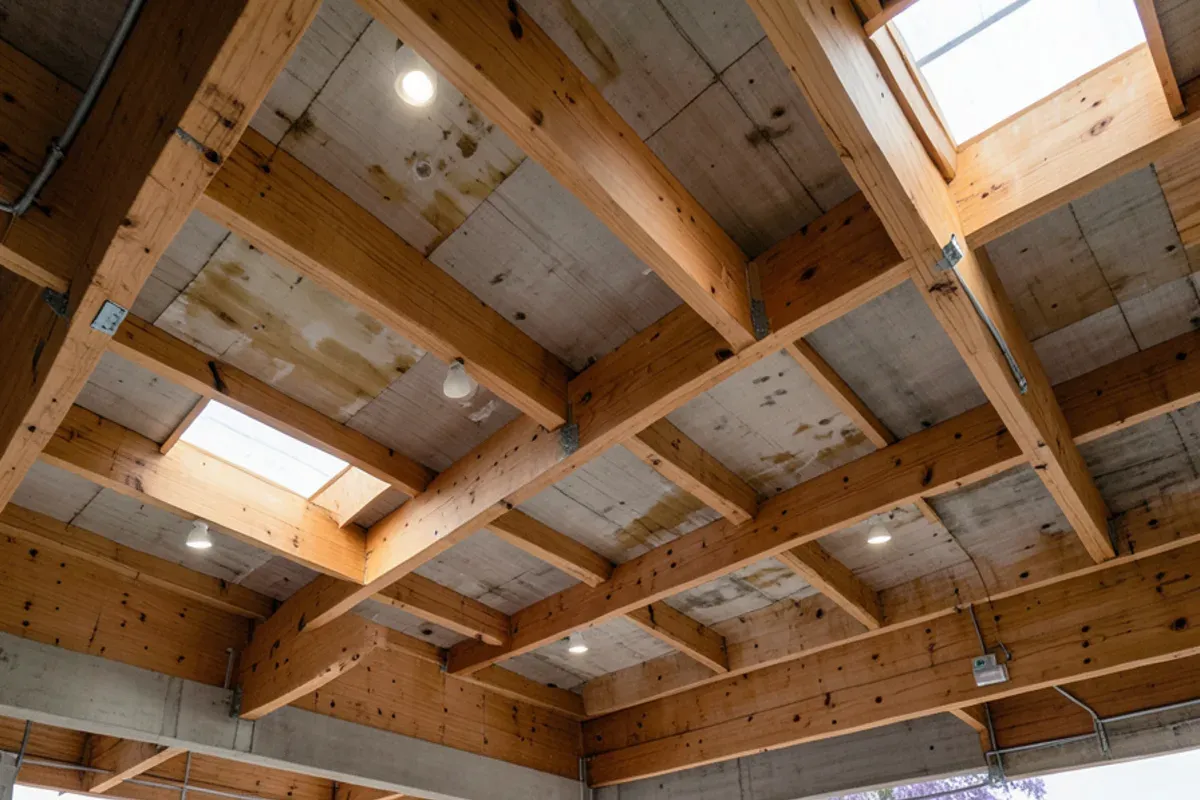
Most tilt-up warehouses in Southern California have a panelized wood roof: glulam beams, purlins and plywood or OSB sheathing behind tall concrete parapets. The membrane on top is usually cap sheet, TPO or a coating. Water that gets through can rot sheathing for years before a ceiling-free interior shows a stain, and the parapets mean water has only drains and scuppers as exits.
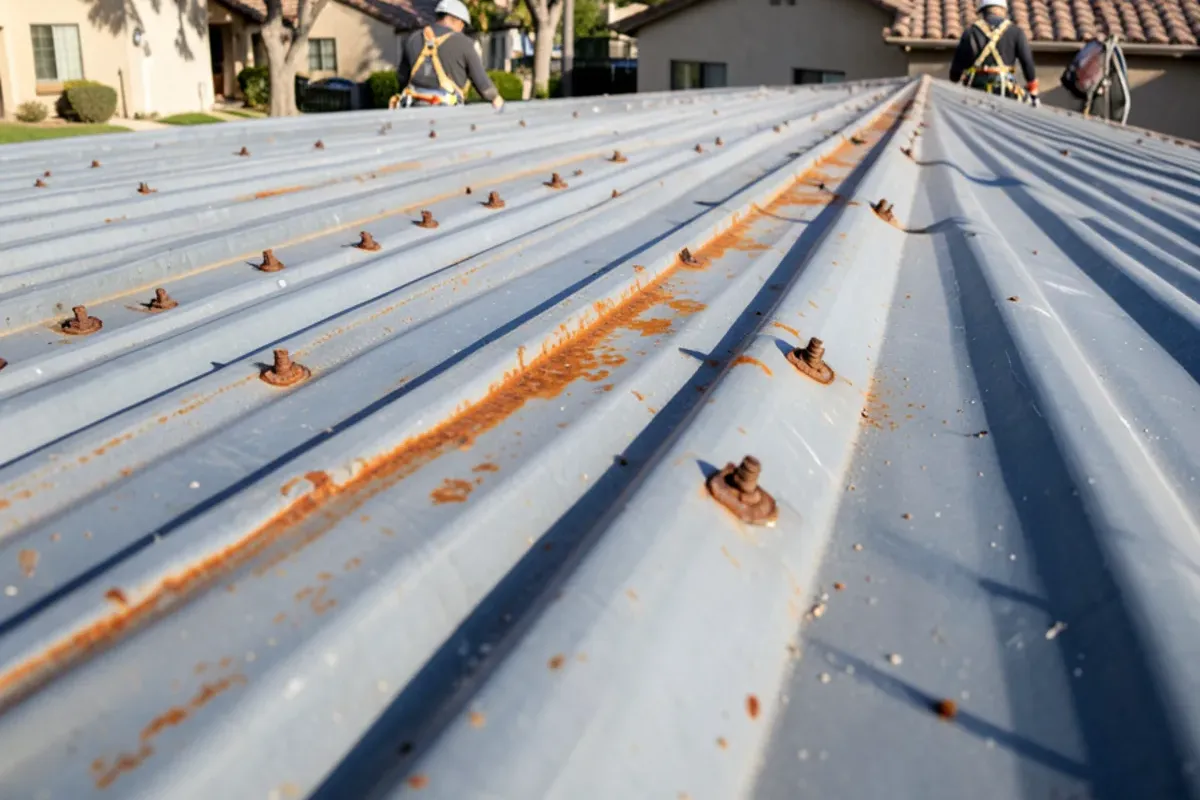
Pre-engineered metal buildings fail differently. Through-fastened panels expand and contract daily, fasteners back out, washers dry and crack, and laps rust where water sits. Older plastic skylight panels yellow, crack and leak at their edges.
- Large drainage areas, so one clogged drain can pond water across thousands of square feet.
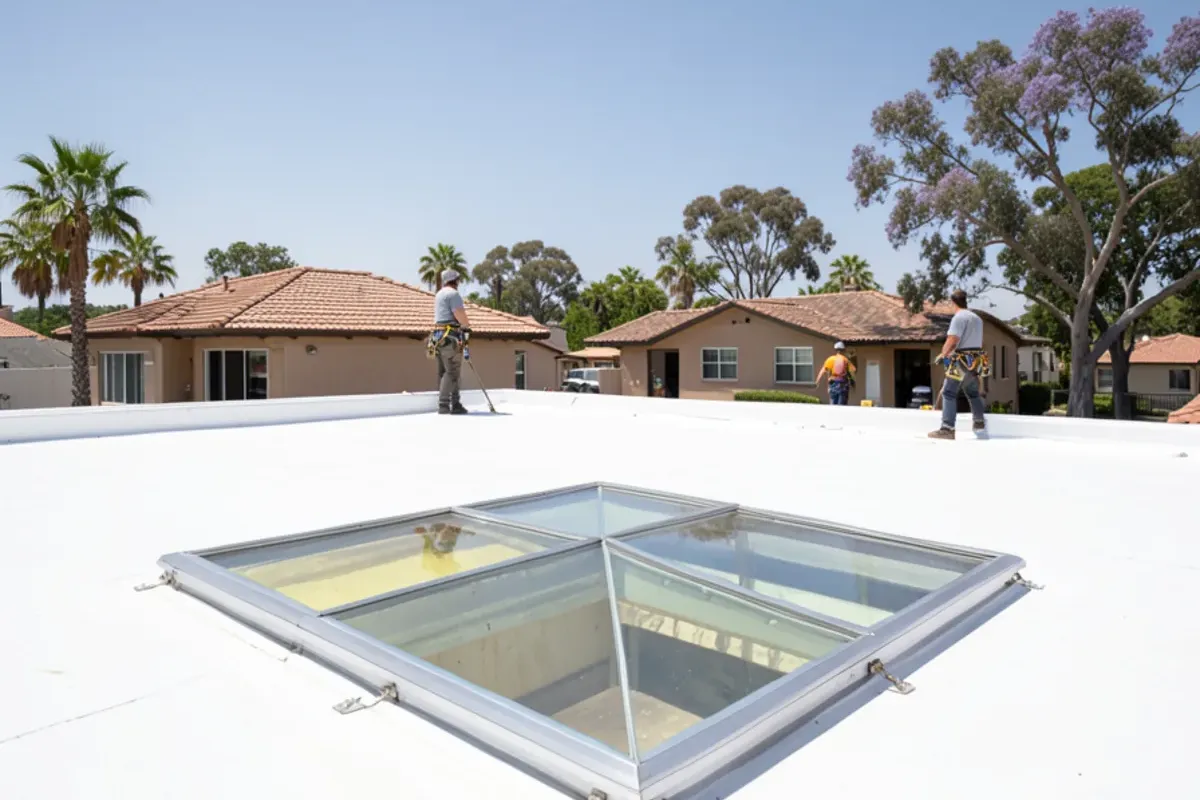
- Skylights that are both leak points and fall hazards; Cal/OSHA requires protection around them for anyone working on the roof.
- Rooftop exhaust from processes or kitchens that can soften membranes.
- Wind uplift at corners and edges during October to March wind events.
An industrial roofing contractor for the San Gabriel Valley's working cities
Each industrial district brings its own roof conditions. In Irwindale, aggregate and quarry operations near the San Gabriel River leave dust on roofs that packs into drains and holds moisture against membranes. Food processing and cold storage in Vernon and Commerce put grease, steam and refrigeration penetrations on the roof. City of Industry's large distribution buildings along the 60 Freeway have huge flat areas where drain spacing is everything. South El Monte mixes small metal shops and older tilt-ups, many with several generations of patches.
We work in South El Monte, City of Industry, Irwindale and Vernon, all reachable from our Rosemead Blvd base.
What records should a warehouse keep about its roof?
Industrial roofs change hands, tenants and insurers often. A clear paper trail protects the owner and makes the next decision easier.
- Permits and final inspection records for every reroof or recover.
- Product data and CRRC labels for reflective membranes, since a reroof of 50% or more can trigger Title 24 cool-roof rules; Rosemead and most of the valley are Climate Zone 9, so confirm with the building department.
- Manufacturer warranty documents and their maintenance conditions.
- Dated inspection and maintenance reports, with photos.
- Lease clauses that assign roof maintenance, repair and replacement.
- Records of skylight guards and roof access equipment.
When a building is sold or refinanced, these records answer most of the questions a buyer, lender or insurer will ask.
Roof permits come from the city where the plant stands, or from LA County Public Works Building & Safety in unincorporated industrial pockets, and the contractor on a permitted reroof must hold a CSLB C-39 license. Check it and the workers' comp record at cslb.ca.gov; since January 1, 2026, SB 216 requires workers' comp for every license classification.
Warehouse roof repair, replacement and skylight work
- Leak repair on cap sheet, TPO, coated and metal roofs, including drain bowls and clamping rings.
- Large drains, overflow drains, through-wall scuppers and conductor heads, cleared or rebuilt.
- Metal roof restoration: fastener replacement, lap sealing and a silicone or acrylic coating over the panels.
- Metal roof retrofit: insulation laid between the panel ribs with a single-ply membrane over it.
- Warehouse skylight replacement, with new curbs and screens.
- Panelized deck repair on tilt-ups, where rotted sheathing is found under the roof.
Tilt-up buildings rely on the roof deck to tie the walls together. We keep deck repairs within the existing nailing and connection pattern, and any structural changes, including seismic retrofit work, go through an engineer. For active leaks on any building, see commercial roof repair, and for troubleshooting tips read our warehouse roof leak guide.
Need warehouse & industrial roofing help this week?
Tell us what you are seeing. We schedule same-day or next-day visits when crews are free and send photos with a written quote.
- 4.9 from 48 Google reviews
- Based on Rosemead Blvd
- Photos and a written quote before work
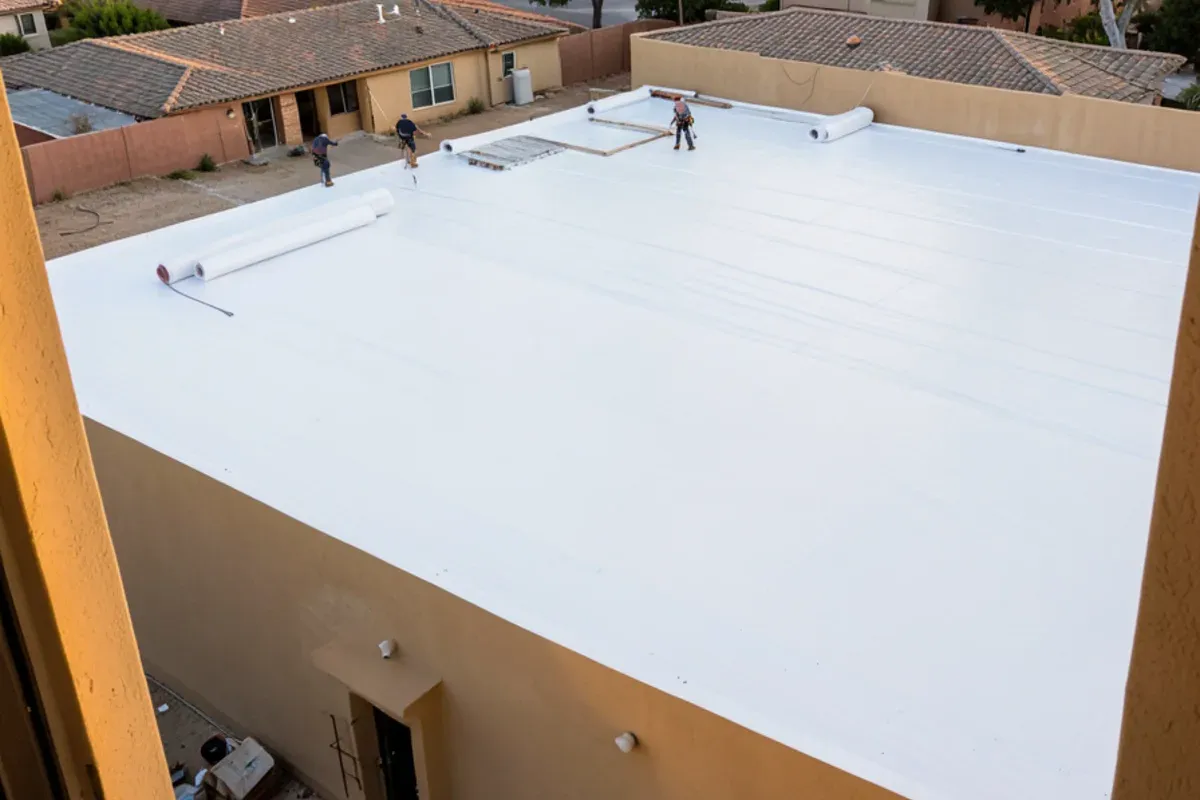
Can a warehouse be reroofed while operations continue?
Usually. We phase the roof by bays and close up each day's section before leaving. Work is planned with the facility manager so trucks, forklifts and shifts keep moving.
- Map racking, sensitive equipment, electrical rooms and dock doors under each section.
- Cover inventory below open sections with plastic sheeting where needed.
- Schedule crane lifts for early mornings or weekends, away from truck traffic.
- Keep debris chutes and dumpsters clear of dock aprons and fire lanes.
- Coordinate with the fire sprinkler and HVAC contractors if any roof equipment must be shut down.
What sets the price of warehouse and industrial roof work?
Size alone says little. A large, plain distribution roof often costs less per square foot than a small machine shop crowded with curbs, stacks and pipe racks. These lines move an industrial quote:
- Penetration count: curbs, exhaust stacks, pipe supports and conduit runs.
- Skylights: new panels, new curbs, or screens and guards where none exist.
- Deck condition on panelized tilt-ups, found by core cuts or from below.
- Drainage changes: added overflows, larger scuppers or tapered crickets.
- Operating limits: night or weekend work, crane days and protecting stock below.
- Membrane choice for exposure to grease, process exhaust or dust.
Each item is its own line on our quote. If the work has to span more than one budget year, ask about payment options.
Why plant and warehouse managers call Tylzen Spoke
- Same-day or next-day site visits when crews are free.
- Photo-documented findings and a written quote, with deck replacement and permits as separate lines.
- Reviewers note clean, protected work areas and crews who keep to the schedule.
- Rated 4.9 stars by 48 Google reviewers, as of November 2026.
Manufacturer coverage depends on the system and product line, while our workmanship terms are written into each contract. Ask for both in writing, and whether they transfer to a new owner. Owners of rental housing should see our apartment and HOA roofing page.
What customers say on Google
4.9★ from 48 Google reviews (checked Nov 2026)
“Our flat garage roof had a leak, and since the main roof was already aging, we decided to handle the full roofing project at the same time and upgrade from asphalt shingles to a metal roofing system. …”
“My wife and I have worked with a lot of roofing and metal roof supply companies while remodeling and restoring homes, and Tylzen Spoke Roofing has easily been one of the best experiences we have had. …”
“I was very happy with the roofing service I received. I reached out because the skylight in my bathroom was leaking, and Brandon scheduled a visit right away. He actually arrived on time, which is rare these days! …”
Where we handle warehouse & industrial roofing
- South El Monte
Small metal shops and older tilt-ups minutes from our base, many patched again and again in different materials.
- City of Industry
Distribution buildings along the 60 freeway, where drain spacing and overflow capacity decide how very large flat roofs perform.
- Irwindale
Quarry and aggregate dust from sites near the San Gabriel River packs into drains and holds moisture on membranes.
- Vernon
Food processing and cold storage roofs with grease exhaust, steam vents and refrigeration lines running through the membrane.
- Commerce
Rail-served warehouses where reroofs are phased around docks, forklift traffic and the goods stored below.
- Santa Fe Springs
Manufacturing plants with process exhaust and pipe racks, where chemical-resistant membranes and pipe portals cut repeat leaks.
- El Monte
Light-industrial parks near the 10 freeway, with metal buildings whose fasteners back out and laps rust over time.
- Montebello
Industrial buildings near the 60 freeway, where older panelized tilt-up decks can hide rotted sheathing under worn cap sheet.
- Azusa
Light-industrial buildings near the foothills, where downslope winds lift membrane edges and copings from October to March.
More places we handle warehouse & industrial roofing
Warehouse & Industrial Roofing questions
Can you reroof a warehouse while operations continue?
In most cases. We work in bays, close each section by the end of the day, protect goods below open areas, and schedule crane lifts and noisy work around shifts and truck traffic. The facility manager approves the section order before we start.
Do you repair metal building roofs and skylights?
Yes. We replace backed-out or stripped fasteners, seal laps, replace cracked skylight panels, and restore metal roofs with coatings or a retrofit membrane. Skylights are protected with screens or guards when we work near them, and we can add permanent screens if they are missing.
How do you handle large roof drains and scuppers?
We clear and check the drain bowl, strainer and clamping ring, confirm the line flows with water, and rebuild the membrane connection if it has failed. Where a roof area has only one outlet, we recommend an overflow drain or scupper, which the plumbing code generally calls for on parapet roofs.
Does grease or dust from operations damage a warehouse roof?
It can. Kitchen and process grease softens TPO and asphalt membranes, and quarry or cement dust packs into drains and holds water. We recommend grease containment at exhaust fans, PVC or a protected membrane near them, and more frequent drain clearing on dusty sites.
Who is responsible for a leased warehouse roof?
The lease decides. Many industrial leases put routine maintenance on the tenant and replacement on the landlord. We can send reports and quotes to both parties so everyone sees the same findings.
Will a warehouse reroof trigger cool-roof requirements?
Often. A warehouse reroof covering half the roof or more may fall under Title 24 cool-roof rules, with an aged reflectance target of 0.63 and emittance of 0.75 for CRRC-rated products. Unconditioned warehouses can be treated differently from conditioned space, so confirm with the building department before picking a membrane.