
By Tylzen Spoke Roofing · Published
Roof damage after a wildfire is often small and scattered, so it is easy to miss. Check the gutters and valleys for burned debris, the attic and eave vents for melted screens, skylights for warping, and the roof surface for pitting or scorch marks where embers landed. Then deal with the ash carefully, because it can be caustic and may carry toxic residue from burned buildings.
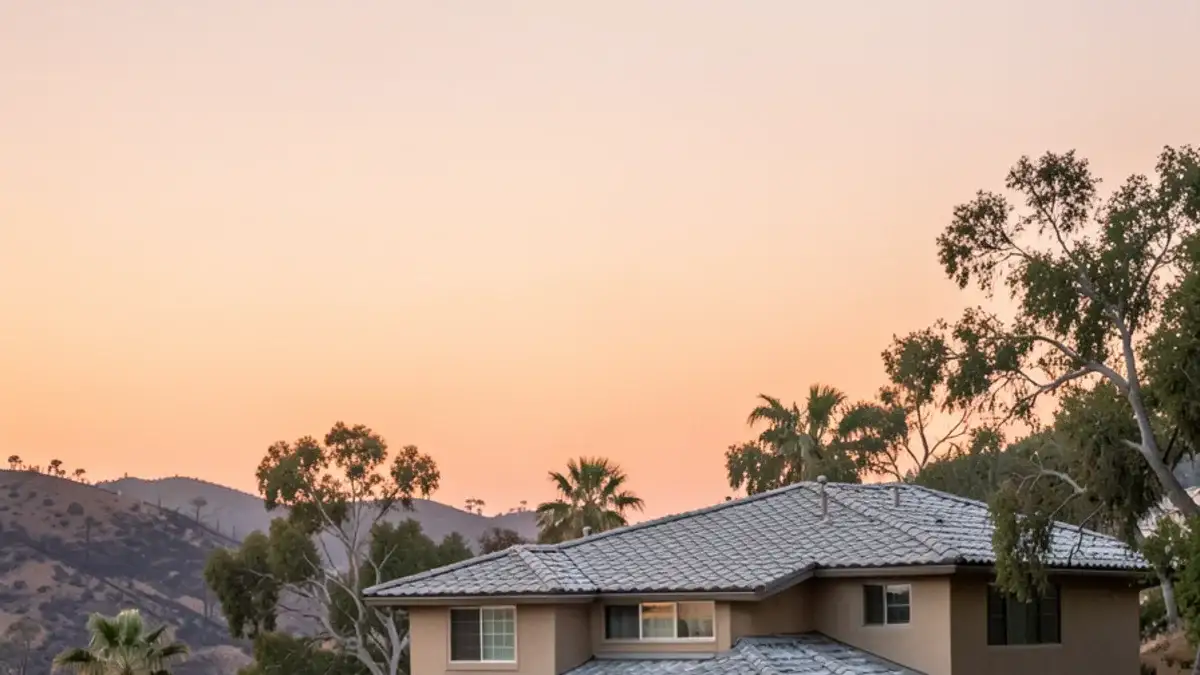
The January 2025 Eaton Fire burned much of Altadena and sent embers and ash across the foothill neighborhoods around it. Many roofs that came through standing still needed vent, gutter or skylight work. This guide shows what to look for and when to bring in a fire damage roof repair crew.
How embers damage roofs that never caught fire
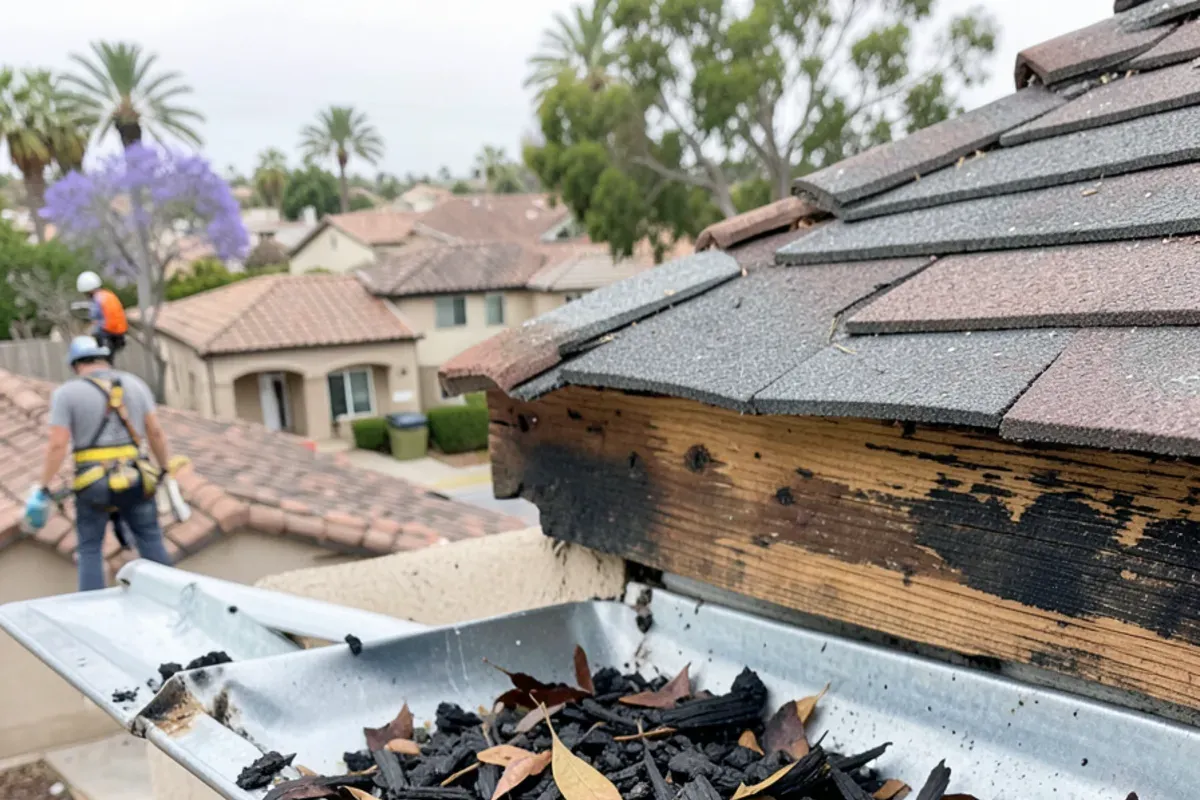
Wind can carry burning embers far ahead of a fire front. They land wherever dry fuel collects: leaf-filled gutters, valleys packed with needles, the open ends of tile at the eaves, and the mesh of attic vents. A small ember fire in a gutter can scorch fascia, melt plastic downspouts and burn through the first course of shingles without spreading to the rest of the house.
Radiant heat from nearby burning structures or brush does a different kind of damage. Acrylic skylight domes craze and soften, vinyl vent covers warp, and sealant at flashing can blister. None of that may show from the street, yet each spot can leak in the first winter storm.
Want a roofer to look at it?
Call with your address and what you are seeing. We visit same-day or next-day when crews are free.
- 4.9 from 48 Google reviews
- Based on Rosemead Blvd
- Photos and a written quote before work
Checklist: where to look for roof damage after a wildfire
Wait until officials have cleared your area and power is safe. Inspect from the ground and from a ladder at the eaves only; leave the roof surface to a harnessed crew.
| Area | What to look for | Why it matters |
|---|---|---|
| Gutters and downspouts | Burned leaves, melted sections, scorched fascia | Ember fires start here and weaken the roof edge |
| Attic, eave and gable vents | Melted or holed screens, soot inside the attic | Openings let embers and future pests into the attic |
| Skylights | Crazed, cloudy or sagging domes; softened seals | Heat-damaged domes crack and leak |
| Shingles | Pitting, burn spots, blistered or brittle areas | Damaged spots lose waterproofing |
| Tile roofs | Cracked tiles, debris burned under the eave ends | Underlayment beneath may be scorched |
| Flashing and sealant | Blistered sealant, discolored metal | Joints may open before the rainy season |
Is the ash on your roof safe to clean up?
Treat it with care. Ash from burned homes and vehicles can contain metals and other harmful residue, and wet ash can irritate skin. LA County Public Health has advised residents to protect themselves and avoid spreading it.
- Wear a well-fitted N95 or better respirator, gloves, long sleeves and eye protection.
- Skip the leaf blower, which puts fine ash back into the air you breathe.
- Mist ash lightly before sweeping or scooping it from gutters, and bag it.
- Keep wash water out of storm drains where you can.
- Leave heavy ash, roofs over two stories, and anything near damaged structures to professionals.
What we look for on Altadena and Sierra Madre roofs after a fire
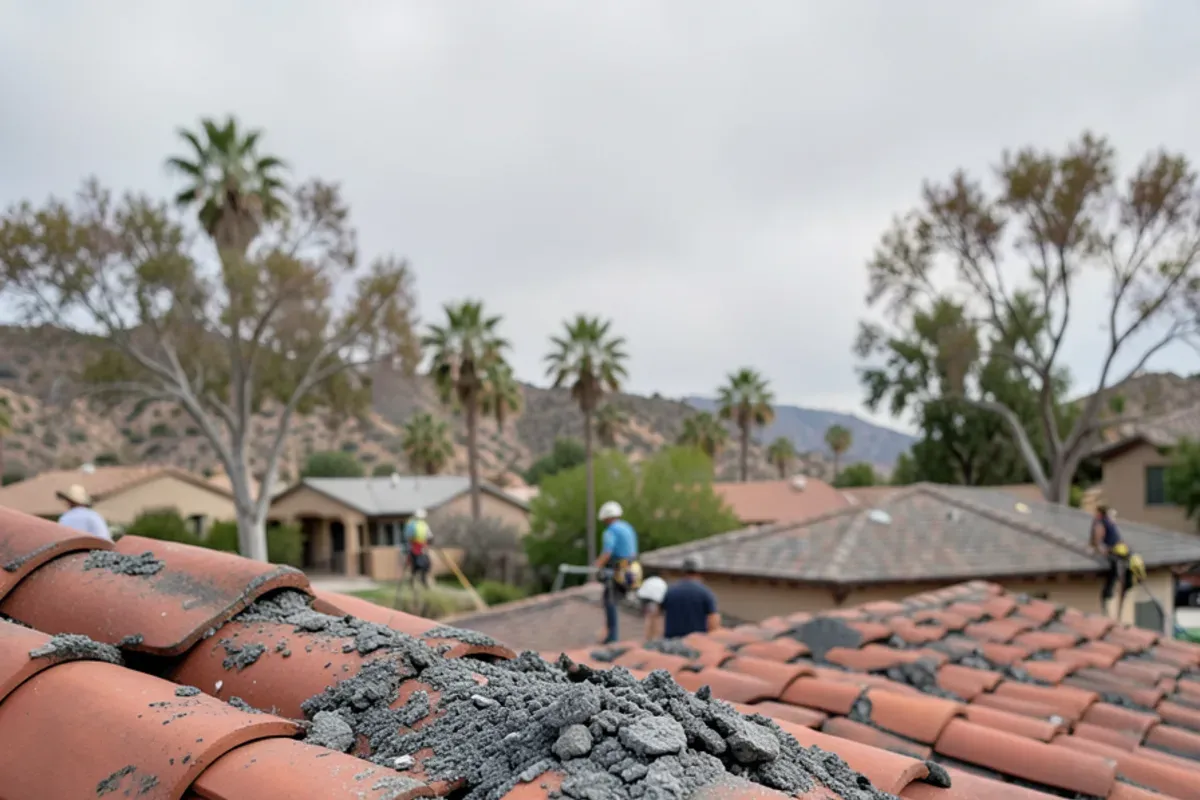
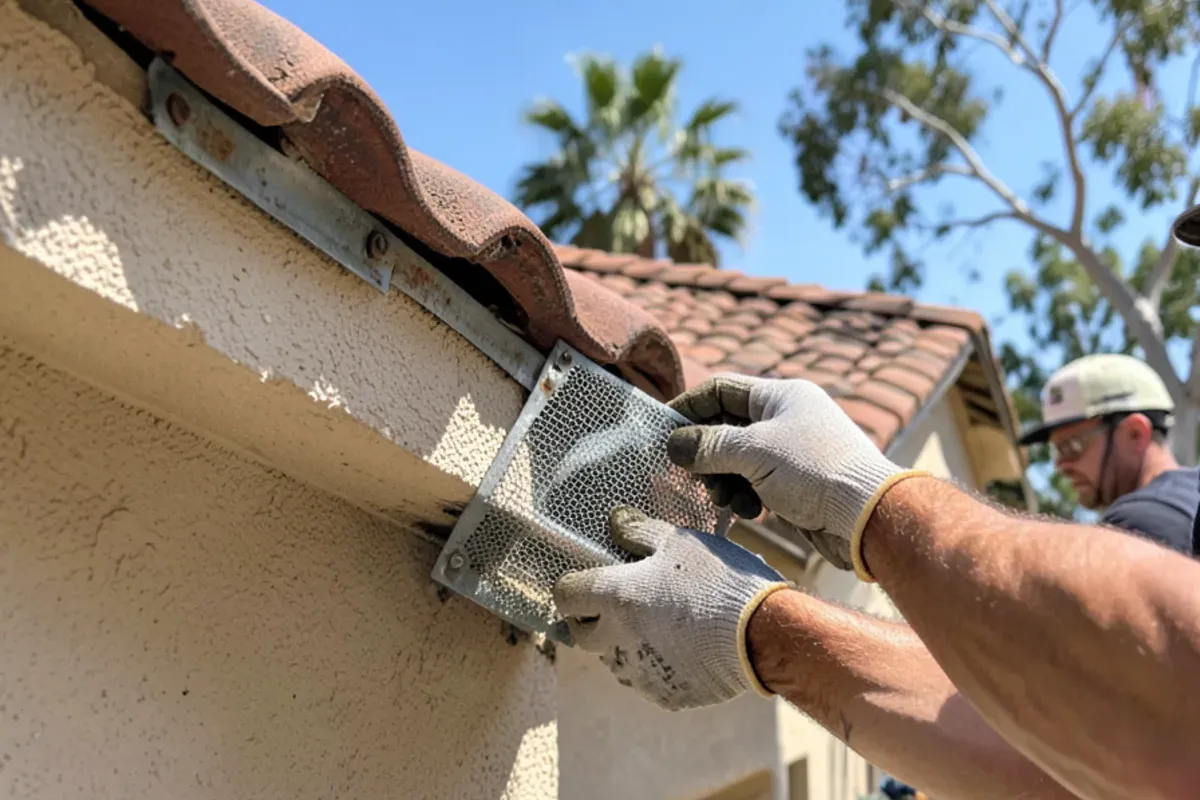
Foothill homes in roofs in Altadena and Sierra Madre roofing sit in or next to CAL FIRE Very High Fire Hazard Severity Zones, so post-fire work is also a chance to close the gaps embers use. Our crews check whether tile eave ends have bird stops, whether vents carry ember-resistant mesh in the 1/16 to 1/8 inch range required under California Building Code Chapter 7A, and whether gutters invite debris buildup.
Across homes in Pasadena and other cities downwind, the most common findings are ash-packed gutters, soot in attics and vent screens that softened or tore. On older wood-framed roofs, we also probe the fascia and decking near any burned gutter section, since charring there is easy to miss under paint.
Clean and repair now, or wait for the full upgrade?
Homeowners often ask whether to hold off on small repairs until they can afford a full fire-zone reroof. We rarely recommend waiting through a winter. A melted vent or a scorched gutter costs little to fix and can let water or the next round of embers in within weeks. The trade-off is some throwaway spending if the whole roof is replaced a year later, so we try to choose parts, such as ember-resistant vents and metal gutters, that can stay in place when the new roof goes on.
Burned hillsides above foothill streets add one more risk: the first heavy rains can wash ash and mud down slope, and gutters already packed with ash overflow fast. Clearing gutters and downspouts of ash before the first storm, on your own or through gutter repair and cleaning, protects the fascia and keeps water moving away from the foundation.
Smoke and heat damage inside the attic
Smoke pulled through vents leaves a film on insulation, framing and the underside of the deck. A strong smoke smell that lingers after the air clears often means insulation needs to be replaced. Look for darkened insulation near vents and soot streaks on rafters.
Heat that reached the attic can also dry out and crack the underlayment from below. We photograph what we find from inside and outside so you have a clear record for your insurer. If insulation has to come out, that is a good moment to seal gaps around pipes and wires where smoke and embers got in, and to confirm that every vent opening is screened.
Ember-hardening upgrades to add while the roof is open
Post-fire repairs put a crew on the roof anyway, so it is the cheapest moment to close the openings that let embers in. Each upgrade below has a cost or upkeep trade-off worth knowing before you add it to the quote.
| Upgrade | What it stops | Trade-off |
|---|---|---|
| Ember-resistant vents with 1/16 to 1/8 inch mesh | Embers entering the attic through eave, gable and roof vents | Fine mesh passes less air and clogs with dust, so the attic may need extra vents and the screens need cleaning |
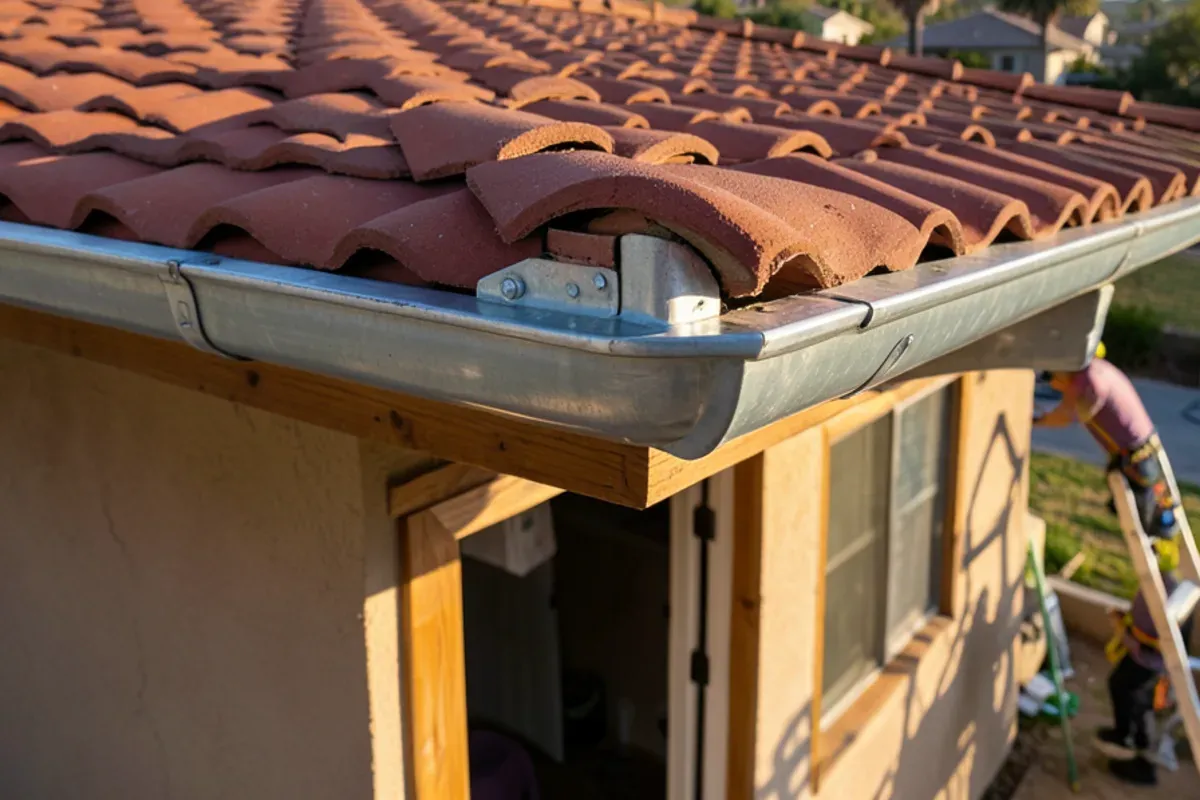
| Bird stops or eave closures on tile | Embers and nesting debris in the open ends of S-tile and barrel tile | Must be fitted to the tile profile; a poor fit leaves gaps |
| Metal gutters with noncombustible guards | Dry leaves collecting where embers land | Guards still need periodic cleaning; plastic guards can soften in heat |
| Replacing heat-damaged acrylic domes | A crazed dome that cracks and leaks in winter | A glass unit costs more and may need curb and flashing work |
| Class A cap sheet on low-slope additions | A weak spot on patio rooms and garages next to the house | May mean tearing off an older built-up roof rather than coating it |
In a Very High zone, some of these items are code requirements when the roof is replaced rather than optional extras. We list each upgrade as its own line, so you can approve the ones that matter most now and plan the rest before the next fire season.
When does fire damage mean repair and when does it mean a new roof?
Isolated burn spots, a few cracked tiles, damaged vents and a ruined skylight are usually repairs. Replacement makes more sense when heat has damaged the underlayment across large areas, when the roof was already near the end of its life, or when the existing covering does not meet current Class A requirements for a fire zone.
A large reroof in a fire hazard zone is generally expected to meet current Class A and Chapter 7A rules, even if the old roof did not. Our fire-resistant roofing page covers Class A assemblies and vent options, and your local building department confirms what applies to your address.
Get the roof checked before the first rain
Fire season often runs into the rainy season, so the window to fix scorched gutters, melted vents and heat-damaged skylights can be short. A photo-documented inspection tells you what needs repair now and what can wait. Call (725) 745-8803 to book a post-fire roof check; expect a same-day or next-day visit when crews are free.
Questions readers ask
Should I have my roof inspected if the fire never reached my street?
Yes, if you saw ember fall or heavy ash. Embers travel well ahead of the flames and land in gutters and vents. A short inspection checks those spots, the skylights and the attic, and gives you dated photos in case damage shows up during the first winter storm.
Can I just hose the ash off my roof?
A light misting to settle ash before bagging it is fine, but a strong spray pushes ash into gutters, downspouts and storm drains and can force water under tiles. Wear a respirator and gloves, avoid leaf blowers, and leave steep or two-story roofs to a crew with fall protection.
Will insurance cover smoke or ash damage to my roof?
Fire, including smoke damage, is a core peril on most homeowners policies and on California FAIR Plan policies. Coverage for cleaning, vent replacement or heat-damaged skylights depends on your policy and the adjuster's findings. Photos taken soon after the fire help show the damage is new.
How long can I wait before fixing a melted attic vent?
Not long. A melted or torn vent screen leaves an open path into the attic for the next ember storm, for rain blown in by wind, and for rats and birds. A temporary cover of metal mesh is better than nothing, but the vent should be replaced with an ember-resistant model before the rainy season arrives.
Does soot on the underside of the roof deck mean it must be replaced?
Not usually. Smoke film on plywood or skip sheathing can be cleaned or sealed with an odor-blocking primer once the wood is checked. Replacement is needed where wood is charred, delaminated or soft when probed. We probe the deck near every vent and burned gutter section and photograph the results, so the scope separates cleaning from replacement.
Sources
Written by Tylzen Spoke Roofing
A roofing contractor on Rosemead Blvd (CA-19) in Rosemead, working on shingle, tile, metal and flat roofs across the San Gabriel Valley. This guide reflects what our crews check on local roofs. Questions about your roof? Call (725) 745-8803.