
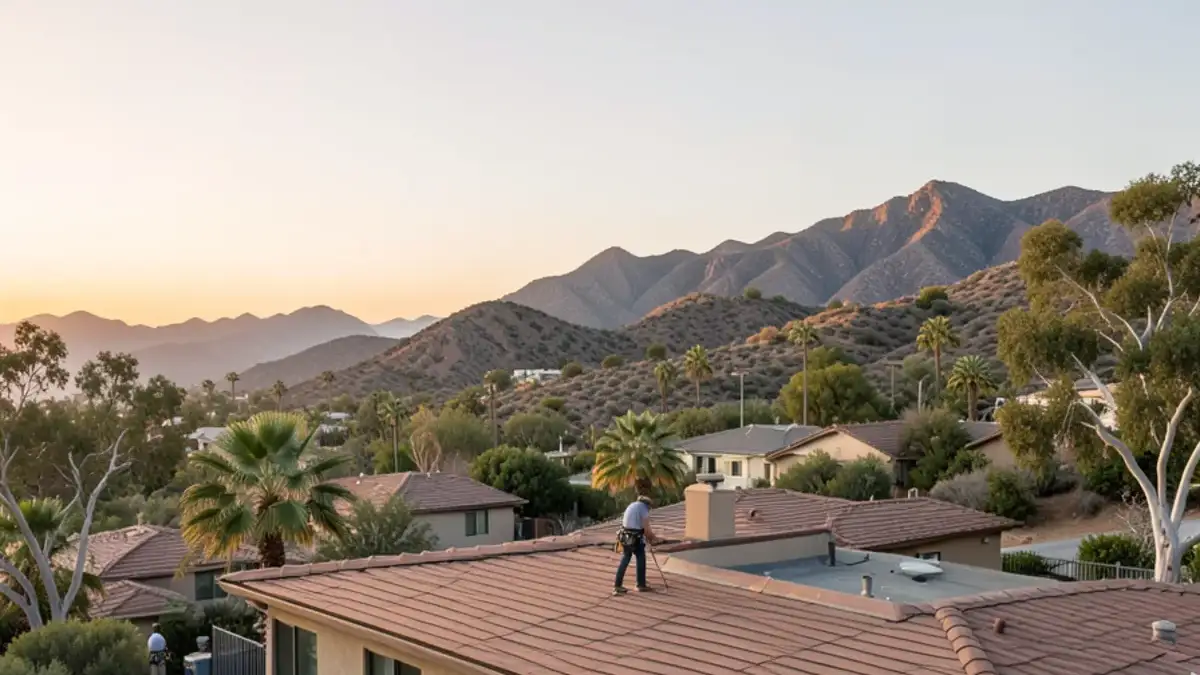
Class A fire rated roofing from our Rosemead base is built for the foothill neighborhoods where wildfire codes apply, from Altadena and Sierra Madre to Monrovia, Glendora and La Cañada Flintridge. A Class A roof resists the most severe fire exposure in standard testing, and wherever CAL FIRE maps a Very High hazard zone it is required on every reroof and new home. We plan these projects as part of our roof replacement service, with the extra details the California Building Code's Chapter 7A calls for.
Embers, not walls of flame, ignite most homes. A fire-resistant roof works only when vents, eaves, valleys and gutters are detailed to keep embers out too.
What makes a roof assembly Class A?
Fire ratings come from standardized tests of flame spread, burning brands dropped on the surface, and whether fire penetrates to the deck. Class A is the highest rating; Class B and C resist less.
The rating applies to the assembly, meaning the roof covering plus whatever is underneath it. Some materials are Class A on their own. Others reach Class A only over a specific underlayment or cap sheet, so swapping one layer can drop the rating.
| Material | Typical fire rating route | Notes for foothill homes |
|---|---|---|
| Fiberglass asphalt shingles | Most lines are Class A as manufactured | Check the bundle label for the rating |
| Clay and concrete tile | Class A, provided the eaves are fire-stopped | Open tile ends must be closed against embers |
| Standing seam and stone-coated steel | Usually Class A as a listed assembly | Confirm the underlayment named in the listing |
| Wood shake | Only treated shake in specific assemblies | Rarely chosen on wildfire-zone reroofs now |
Chapter 7A requirements beyond the roof covering
Wildfire construction rules live in Chapter 7A of the California Building Code, mirrored for houses in section R337 of the Residential Code. On a roof, the main items are:
- A Class A roof assembly over the whole roof.
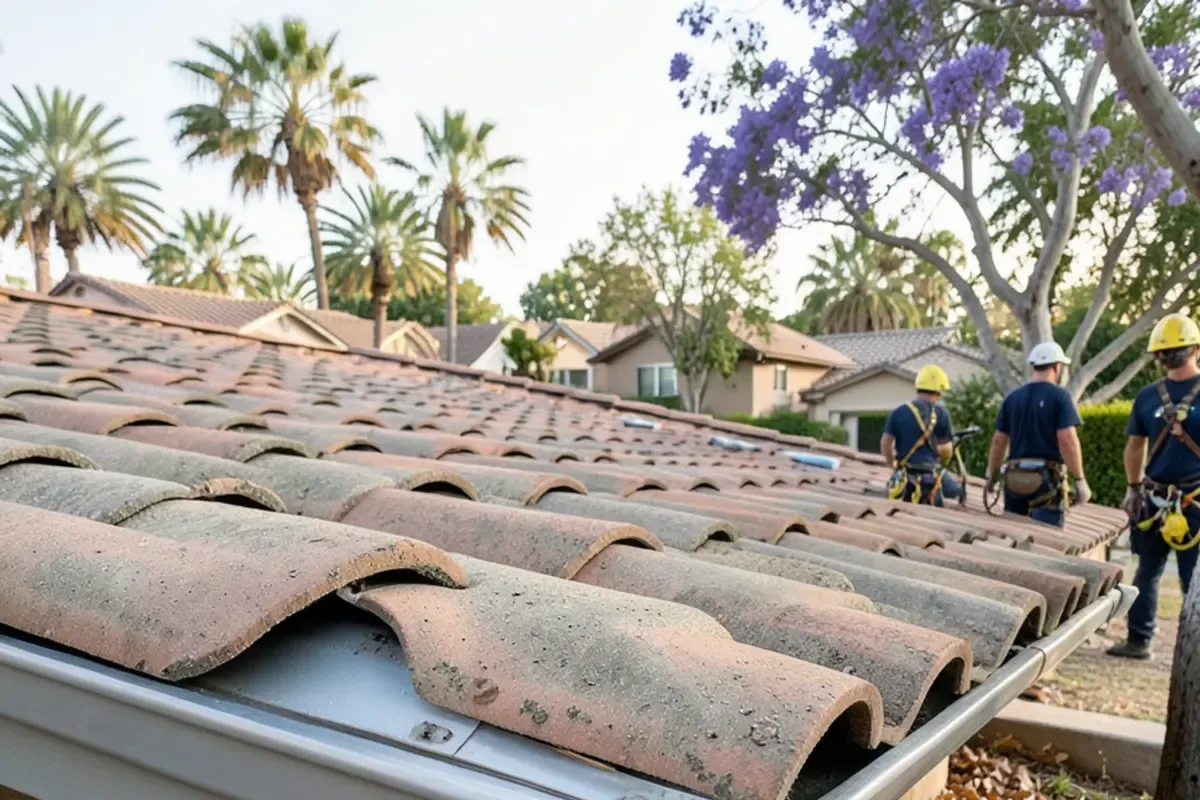
- Fire-stopping at the eaves of tile and other profiled roofs, so embers cannot lodge in the gap under the first course.
- Valley flashing of noncombustible metal over a fire-resistant underlayment strip.
- Gutters fitted with a means to keep leaves and needles from collecting.
- Ember-resistant attic and soffit vents, covered in the next section.
The local building department applies these rules at plan check and inspection. Exact requirements can vary with the zone your parcel sits in, so we check the CAL FIRE map and the city or county standards before quoting.
The map itself changed recently. On March 24, 2025, the State Fire Marshal released updated Fire Hazard Severity Zone maps for local responsibility areas in Los Angeles County, the first major revision in more than a decade, for adoption by local ordinance. Some parcels that sat outside a zone are now inside one, so check your address on the state's online zone viewer before choosing materials.
Why do ember-resistant vents matter as much as the roof?
Wind-blown embers drift into attic vents and ignite dust, insulation and framing from the inside. Chapter 7A requires vents that resist that intrusion, typically by using noncombustible, corrosion-resistant mesh with openings from 1/16 to 1/8 inch, or vents tested and listed as ember-resistant.
- Ridge vents and off-ridge vents on the roof itself.
- Gable-end vents, which on older homes often carry coarse 1/4-inch screen.
- Soffit and eave vents, the openings closest to burning vegetation.
- Dormer vents and the gaps around bird blocks between rafters.
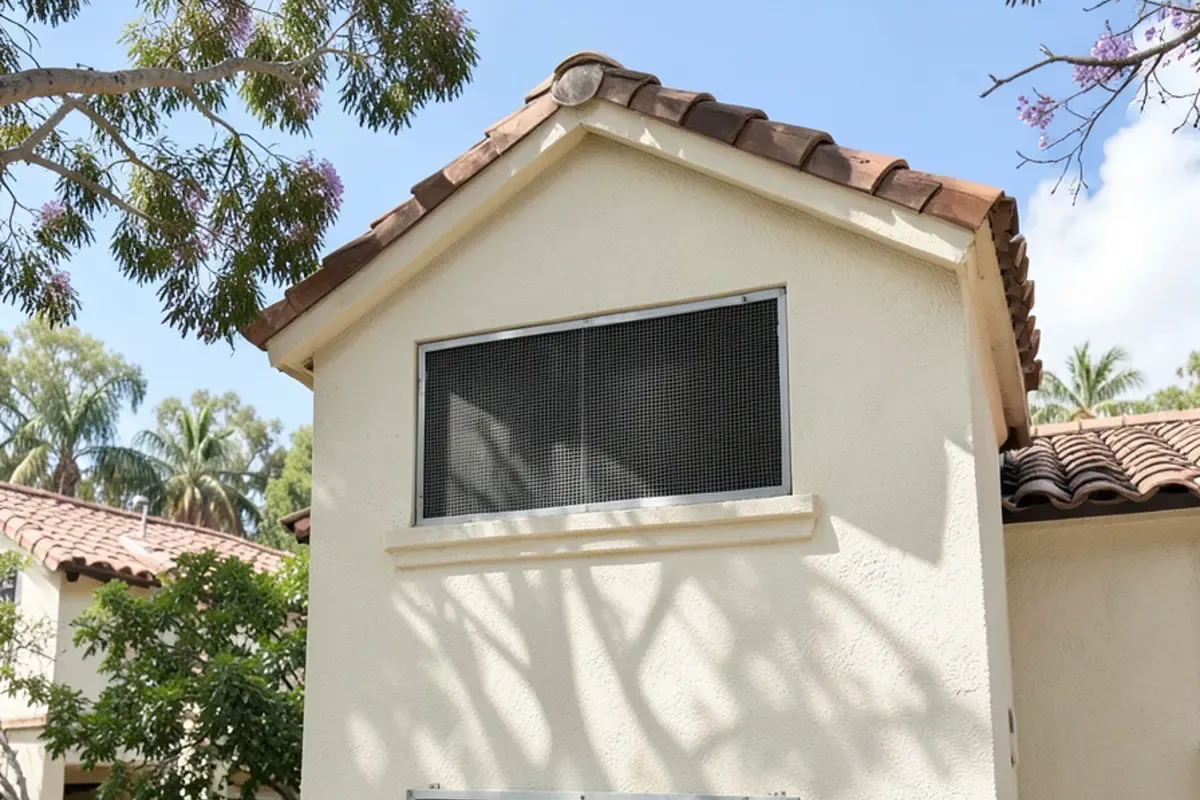
Reroofing is the natural time to upgrade roof vents, and we price soffit and gable vents as separate lines so you can see each cost. Gutter guards that keep needles out of the trough are covered on our gutter guards page.
Rebuilding foothill roofs after the Eaton Fire and earlier fires
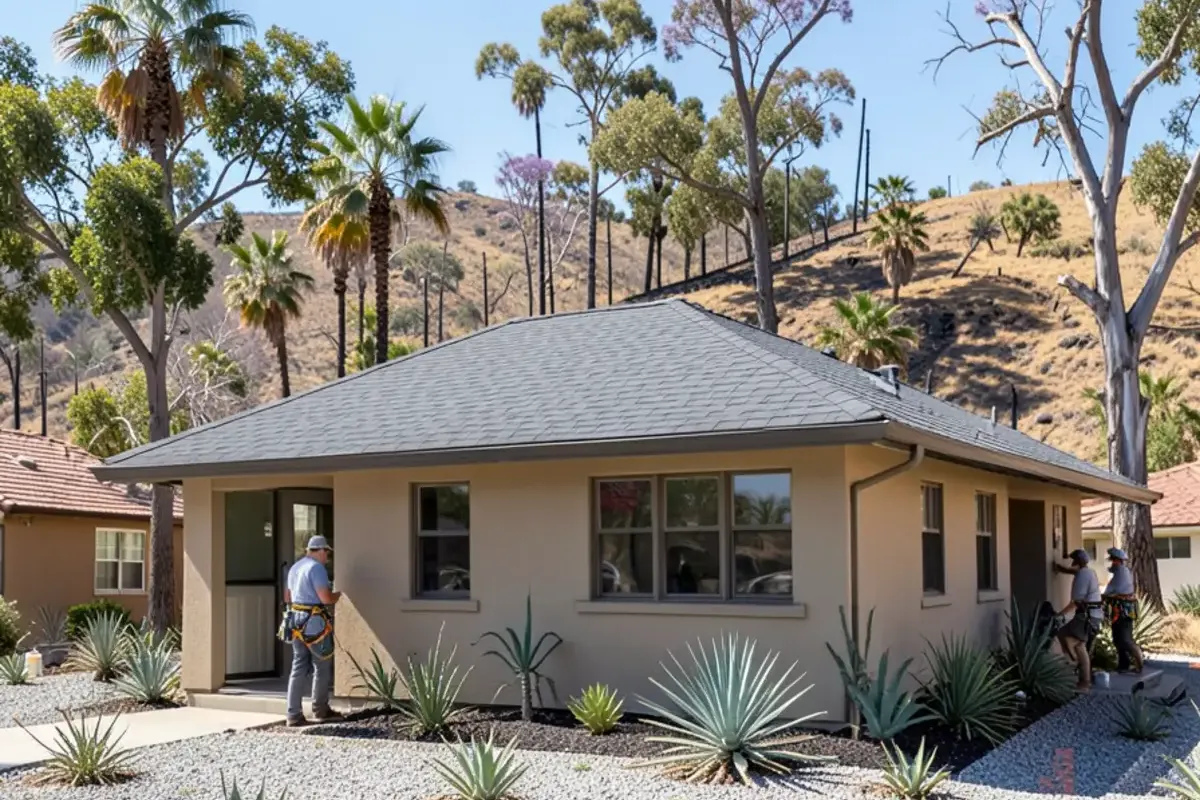
Much of Altadena burned in the Eaton Fire of January 2025. Earlier fires reached other parts of our service area: the 2009 Station Fire along the La Cañada Flintridge edge, and the 2014 Colby Fire in the Glendora and Azusa foothills. Rebuilt homes are permitted as new construction under current wildfire code, so the roof is only one part of a larger checklist.
Homes that survived nearby often have heat-damaged shingles, melted vent screens or ash-clogged gutters even when they look intact from the street. Our Eaton Fire rebuild roofing guide covers what to check and how permits work in unincorporated Altadena, where LA County Building & Safety, part of Public Works, handles permits.
Signs a surviving roof falls short of current rules
- Untreated wood shake, or a covering with no Class A label or listing on record.
- Gable and soffit vents with coarse 1/4-inch screen, or none at all.
- Open tile ends at the eaves with nests, leaves or needles packed underneath.
- Vinyl gutters, or gutters that fill with needles between cleanings.
- Debris piling where the roof meets a dormer or a second-story wall.
Need fire-resistant class a roofing help this week?
Tell us what you are seeing. We schedule same-day or next-day visits when crews are free and send photos with a written quote.
- 4.9 from 48 Google reviews
- Based on Rosemead Blvd
- Photos and a written quote before work
How a wildfire-zone reroof is planned and inspected
- Zone check: we look up the parcel on the CAL FIRE map and note the building department that issues the permit.
- Inspection: roof, vents, eaves, gutters and attic, with photos of anything that fails current code.
- Assembly selection: covering, underlayment and flashing chosen so the full system holds its Class A listing.
- Written quote: roof work, vent upgrades and gutter protection listed line by line.
- Installation and inspection: we pull the permit, build to the listing, and schedule the final.
A typical single-story foothill reroof takes several working days, more with tile, steep lots or limited street access on narrow canyon roads.
Because this is permitted work, California requires a CSLB-licensed contractor, and C-39 is the roofing classification. Before you sign, check any roofer's license status and workers' compensation record at cslb.ca.gov.
Cost factors for wildfire-code roofing
- Roof material and the underlayment or cap sheet its Class A listing requires.
- Number and type of vents to replace with ember-resistant units.
- Eave fire-stopping on tile roofs and metal valley flashing.
- Gutter guards or new gutters.
- Access on steep hillside lots, which affects staging and debris removal.
Vents are the line that surprises owners most: older foothill homes can have a dozen or more gable, soffit and bird-block openings, each priced as its own unit. Tile roofs add eave fire-stopping and metal valleys that a shingle roof does not need. Metal drip edge and noncombustible gutters, which shield the fascia from embers caught at the roof edge, are worth pricing at the same time.
We price the roof and each wildfire-code upgrade separately so you can see what is required and what is optional. Ask about payment options during the quote review.
Why foothill homeowners call Tylzen Spoke
- Our crews come from Rosemead Blvd, a short run up to the foothills from the valley floor.
- Each quote includes photos of vents, eaves and gutters along with the roof itself.
- Reviewers mention help with insurance paperwork; we document damage and can meet the adjuster, while claim negotiation is left to you or a public adjuster.
- Permits and every inspection visit are arranged by us.
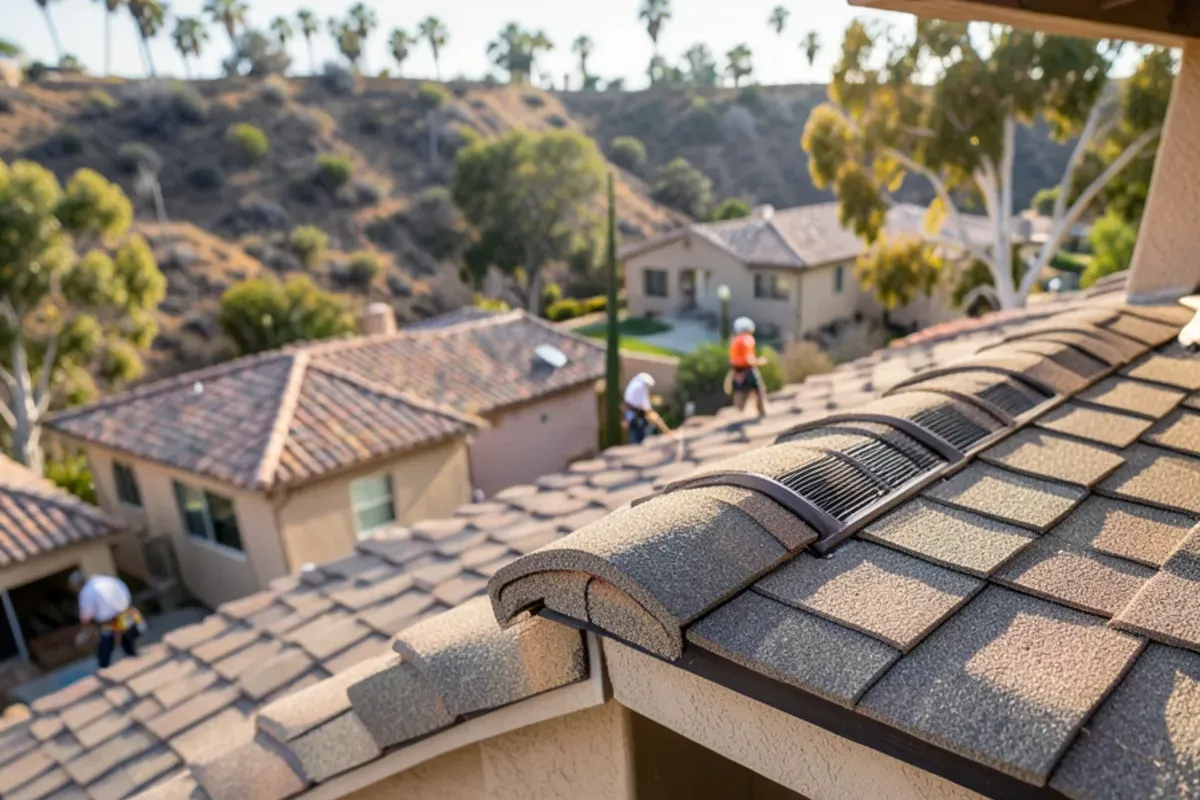
Concrete tile from makers such as Eagle Roofing and fiberglass shingle lines such as GAF Timberline HDZ are common market examples of Class A coverings. Coverage on the materials is set by the manufacturer and the line, while workmanship terms sit in your contract; request both in writing and ask whether a future buyer keeps them. If your project also involves panels, see reroofing with solar panels.
Foothill projects take us to La Cañada Flintridge, Monrovia, Altadena and Sierra Madre, among other hillside communities.
What customers say on Google
4.9★ from 48 Google reviews (checked Nov 2026)
“We had a great experience getting a new roof, gutters, and fascia flashing installed, and the finished work really shows. Everything looks clean, solid, and well done, and the whole roofing project felt organized from start to finish. …”
“the roofing team did an outstanding job with our roof replacement. even though the timing wasn't ideal for us, as we were selling our house, they really helped make everything go smoothly. tanner came out to inspect the roof after a big storm and then worked closely with our insurance adjuster. …”
“after noticing some leaks on my old tile roof, i decided it was time for a full replacement. i had a few roofing companies give me estimates, and william offered the most cost-effective solution for a new tile roof. the crew was quick and did an excellent job—everything was completed in under a month. …”
Where we handle fire-resistant class a roofing
- Altadena
Eaton Fire rebuilds and surviving homes in unincorporated foothill zones, permitted through LA County Public Works with Chapter 7A checks.
- Sierra Madre
Canyon-edge homes against the San Gabriel Mountains, where Very High zones put ember-resistant vents and Class A roofs on every reroof.
- Monrovia
Foothill streets where Craftsman and ranch homes back onto chaparral, so tile eaves and gable vents need ember detailing.
- La Cañada Flintridge
Hillside homes along the 2009 Station Fire edge, where steep lots and narrow roads shape staging for a Class A reroof.
- La Crescenta-Montrose
Homes climbing toward the Angeles National Forest, where Very High zones require ember-resistant vents and metal valley flashing.
- Glendora
Foothill neighborhoods touched by the 2014 Colby Fire, where tile roofs need eave fire-stopping and gutters kept clear of needles.
- Azusa
Foothill homes near the Colby Fire burn area, where reroofs pair a Class A covering with fine-mesh soffit and gable vents.
- Bradbury
Large estate lots in Very High zones, where long tile roofs and many attic vents make ember detailing a big share of the scope.
- Duarte
Upper streets against the foothills, where a reroof inside a mapped zone brings Chapter 7A vent and eave checks at inspection.
More places we handle fire-resistant class a roofing
Fire-Resistant Class A Roofing questions
What makes a roof assembly Class A, and does my material qualify?
Class A is the top rating in standard fire tests for flame spread, burning brands and burn-through. It belongs to the whole assembly, so the covering and the layers beneath it count together. Most fiberglass shingles, clay and concrete tile and listed metal systems qualify when installed per their listing. We check the label and listing before quoting.
Which San Gabriel Valley areas are Very High Fire Hazard Severity Zones?
On CAL FIRE's maps, Very High zones appear along the foothill edges of La Cañada Flintridge, La Crescenta, Altadena, Sierra Madre, Monrovia, Bradbury, Duarte, Glendora and Azusa, along with stretches of the Puente-Chino Hills. Valley-floor cities like Rosemead are generally outside them. Zones follow parcels, not city lines, so look up your exact address on the CAL FIRE map.
Do ember-resistant vents need to be replaced along with the roof?
In a mapped zone, roof vents installed during a reroof must meet the ember-resistant standard, and it is the sensible time to upgrade gable and soffit vents too. Older homes often have coarse 1/4-inch screen that embers pass through. We list each vent as its own line item so you can decide on the optional ones.
Is my tile roof already fire-safe?
Clay and concrete tile is Class A, but open ends at the eaves let embers lodge under the first row of tile, where dry debris can ignite. Fire-stopping those openings, clearing debris from under the tile and upgrading vents close the gaps. We check all three when inspecting a foothill tile roof.
Do I need a permit for a reroof in a fire zone?
Yes, and the inspector will check wildfire-code details as well as the roofing itself. Incorporated cities issue permits through their own building division or contracted county office, while unincorporated communities such as Altadena use LA County Public Works Building & Safety. We pull the permit and schedule each inspection.
Can you help with an insurance claim after fire or smoke damage?
We inspect, photograph and document heat and ember damage to the roof, vents and gutters, and we can meet your adjuster on site. We do not negotiate claims; California licenses public adjusters for that role. Our report gives you and your adjuster a clear record of what we found.