
By Tylzen Spoke Roofing · Published
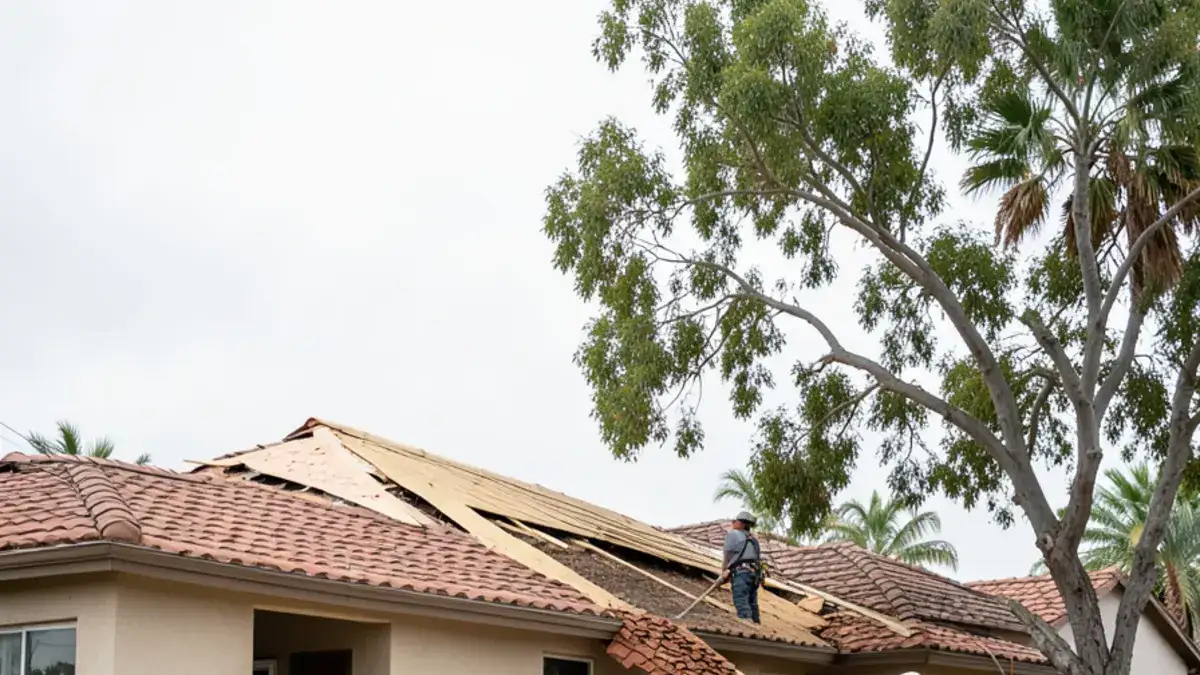
In the roof overlay vs tear off choice, an overlay (a second layer of shingles nailed over a single existing layer) is allowed only when the old roof is one layer, dry, flat enough to serve as a base and not tile or slate. A tear-off strips everything to the deck so the wood can be inspected and repaired. Overlays cost less up front; tear-offs give you a known deck, new flashing and a roof that runs cooler and usually lasts longer.
On older homes in the San Gabriel Valley, the overlay option is often already used up. We explain why below, compare the two side by side, and cover how each affects cost and manufacturer coverage. Our re-roofing service covers both approaches.
When does code allow a roof overlay?
California's Residential Code, in Section R908, sets the limits for laying a new roof over an old one, which the code calls a recover. A recover is not allowed in these cases:
- The roof already has two or more layers of any type of covering.
- The existing covering is water-soaked or has deteriorated so it cannot serve as a sound base.
- The existing covering is slate, clay tile, concrete tile or asbestos-cement tile.
Even when an overlay is legal, the new shingles must be compatible with what is underneath, and the manufacturer's installation instructions still apply. Your building department has the final word on how it reads the code for a specific house.
Want a roofer to look at it?
Call with your address and what you are seeing. We visit same-day or next-day when crews are free.
- 4.9 from 48 Google reviews
- Based on Rosemead Blvd
- Photos and a written quote before work
Why do so many roofs here need a full tear-off?
Age is the main reason. According to the City of Rosemead's Housing Element, more than half of local homes were built before 1960, and the post-war tracts in neighboring cities are of similar age. A house that age has usually been reroofed at least once or twice. If the last reroof was an overlay, the roof already holds two layers, and code requires both to come off.
Deck condition is the second reason. Roofs that old often hide soft plywood at the eaves, rot around old leaks, or board decks with gaps left from an original wood shake roof. None of that can be seen or fixed through an overlay.
Overlay and tear-off compared
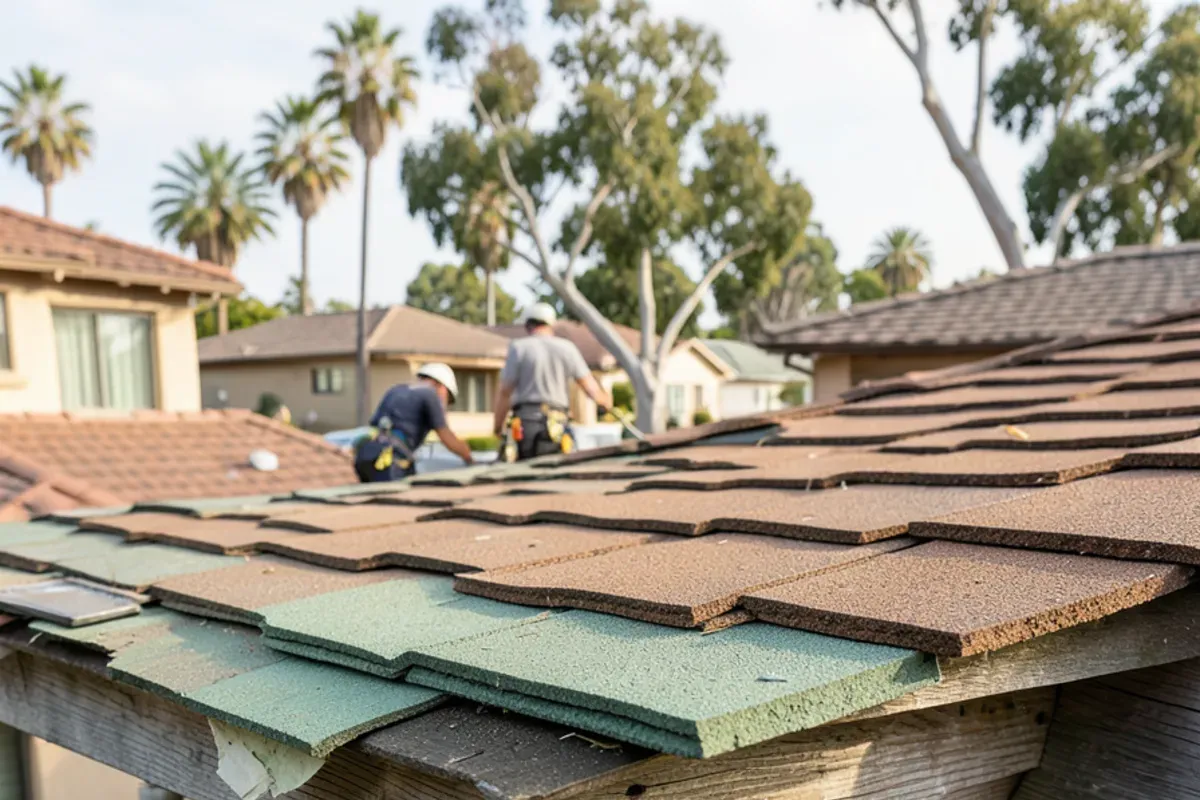
| Factor | Overlay | Tear-off |
|---|---|---|
| Up-front cost | Lower: no removal or disposal of old shingles | Higher: labor, haul-away and dump fees |
| Deck inspection | None; problems stay hidden | Every sheet visible and repairable |
| Flashing and drip edge | Often reused or layered over | Replaced new |
| Weight on framing | Adds a full second layer | Back to a single layer |
| Heat | Two layers run hotter in summer | Single layer over a ventilated deck |
| Surface finish | Old lumps and dips can show through | Flat, even new surface |
| Next reroof | Must strip two layers | Strips one layer |
An overlay saves money today and passes part of that saving forward as a more expensive tear-off next time.
What happens on tear-off day, step by step
A tear-off sounds disruptive, and it is loud, but a well-run one follows a tight order so the house is never left open to weather.
- Tarps go over plants, windows and the driveway, and a dumpster or trailer is placed where debris can drop straight in.
- Crews strip one section at a time, down to bare deck, rather than opening the whole roof at once.
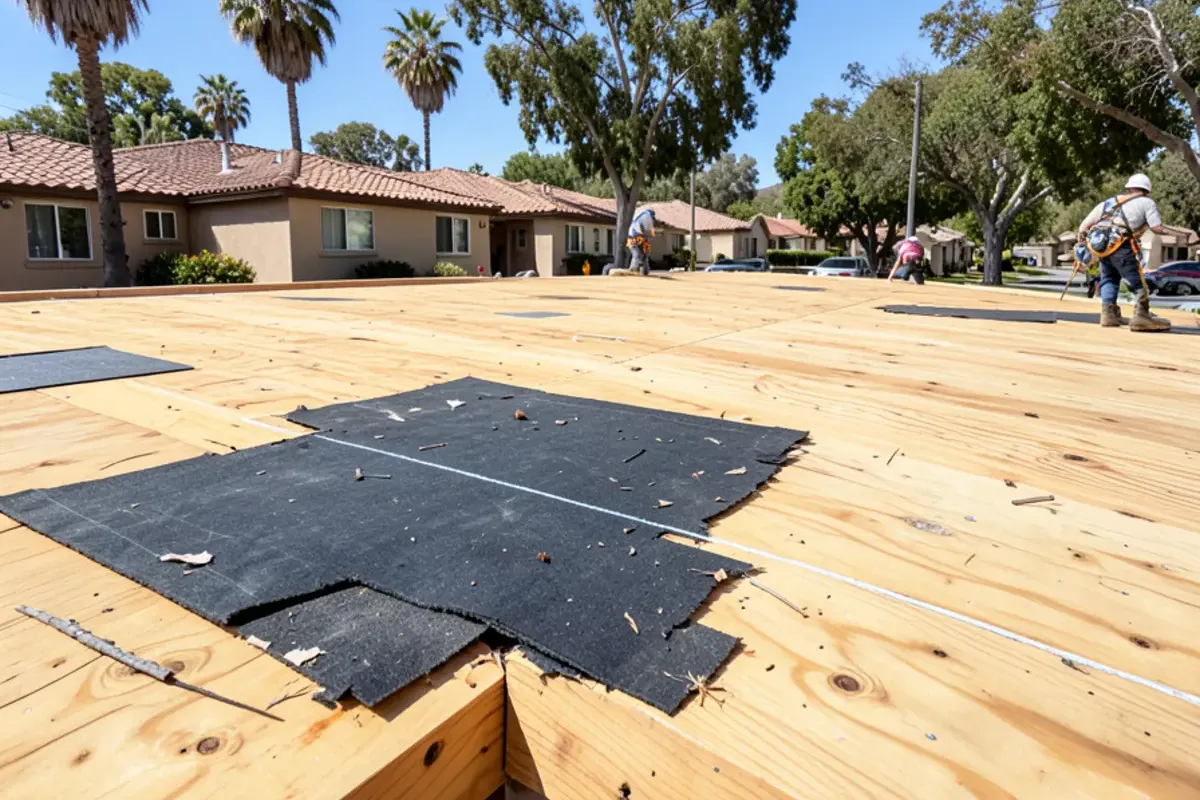
- The exposed deck is walked, probed and photographed, and soft or delaminated sheets are marked.
- Damaged sheets are replaced, and rotted fascia found at the edge is flagged for soffit and fascia repair on the same visit.
- Each stripped section is dried in with underlayment and drip edge before the crew moves on or leaves for the day.
- Flashing, vents and the new covering go on, followed by a magnetic sweep of the yard, driveway and street for nails.
Working in sections is the main trade-off on timing: it is a little slower than stripping everything first, but a surprise afternoon shower never reaches an open deck. Reviewers often mention clean, protected job sites, and this order is a big part of why.
How an overlay affects cost and manufacturer coverage
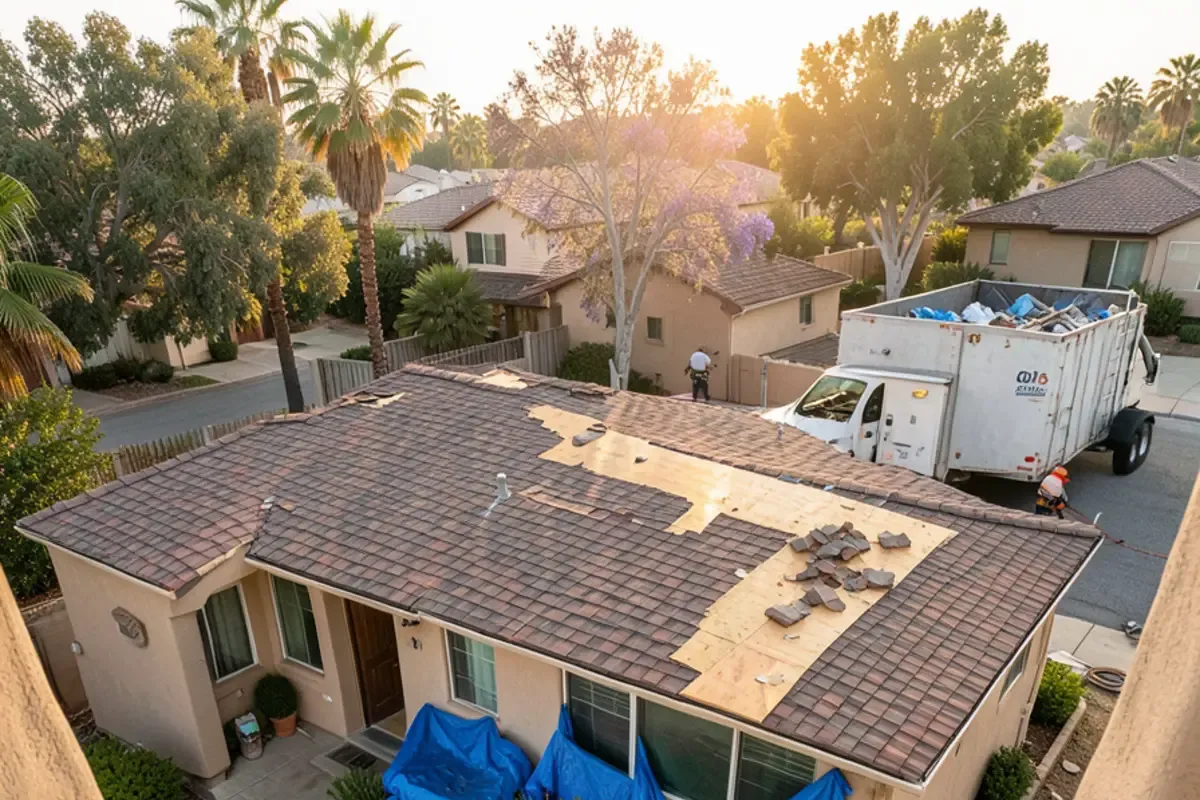
Tear-off cost depends mainly on the number of layers, the roof's size and pitch, disposal fees and how much deck needs replacing. Removing one layer is routine. Removing two layers nearly doubles the debris and adds labor, and the deck underneath is more likely to need work.
Coverage is a separate question. Some manufacturers limit or change their material coverage when shingles are installed over an existing roof, and enhanced system coverage generally requires a clean deck and specific underlayment and accessories. Coverage terms vary by product line, while workmanship terms belong in your contract. Get both in writing, and ask whether either transfers to a buyer.
What we find under old overlays in El Monte and Rosemead
On post-war homes in El Monte and Rosemead, we regularly strip two layers and find problems the overlay covered up: plywood delaminated along the eaves where gutters overflowed, short nails from the second layer that never reached solid wood, and old leaks around chimneys that were shingled over instead of flashed.
With the deck exposed, each damaged area is photographed before replacement, and each sheet is listed on the invoice at the per-sheet price stated in the quote. Rot that goes deeper than the sheathing is handled through our roof deck dry rot repair work.
Overlay shortcuts that cost owners later
When an overlay is legal, the way it is done still decides whether it was a saving. These are the shortcuts we most often find when we strip an old recover.
- Nails too short to pass through both layers into solid deck, which is why overlaid shingles lift in the first strong Santa Ana wind.
- Old drip edge left in place, so the new edge sits proud and water curls back behind the gutter.
- Valleys and wall flashing shingled over rather than replaced, keeping a leak path the owner already paid to fix once.
- The original vent layout kept as is, even though a second layer runs hotter and needs at least as much airflow.
- Bumps and dips from the old layer left uncorrected, so the new roof telegraphs every flaw.
An overlay done properly avoids all of these, but by then much of the price gap over a tear-off has closed. That is the trade-off in a sentence: an overlay is only cheap when it skips work.
Older roofing and asbestos
Some roofs from the mid-century era carry asbestos in old felt, mastic or cement shingles. If testing confirms it, removal falls under the South Coast Air Quality Management District's asbestos rule for renovation work, Rule 1403, and has to be handled by a contractor qualified for asbestos work. It is uncommon on composition roofs, but worth asking about before a tear-off on a house that still has its early layers.
Permits and Title 24 apply either way
An overlay is still a reroof in the eyes of the code. It normally needs a permit, and in Climate Zone 9 a shingle reroof covering 50% or more of the roof usually has to use a product rated by the Cool Roof Rating Council. Skipping the permit on an overlay does not make it legal, and it can surface later during a sale.
On a tear-off, some building departments inspect the deck or sheathing before the new underlayment goes on. We schedule the inspections the job needs and keep the work open until the inspector has seen it.
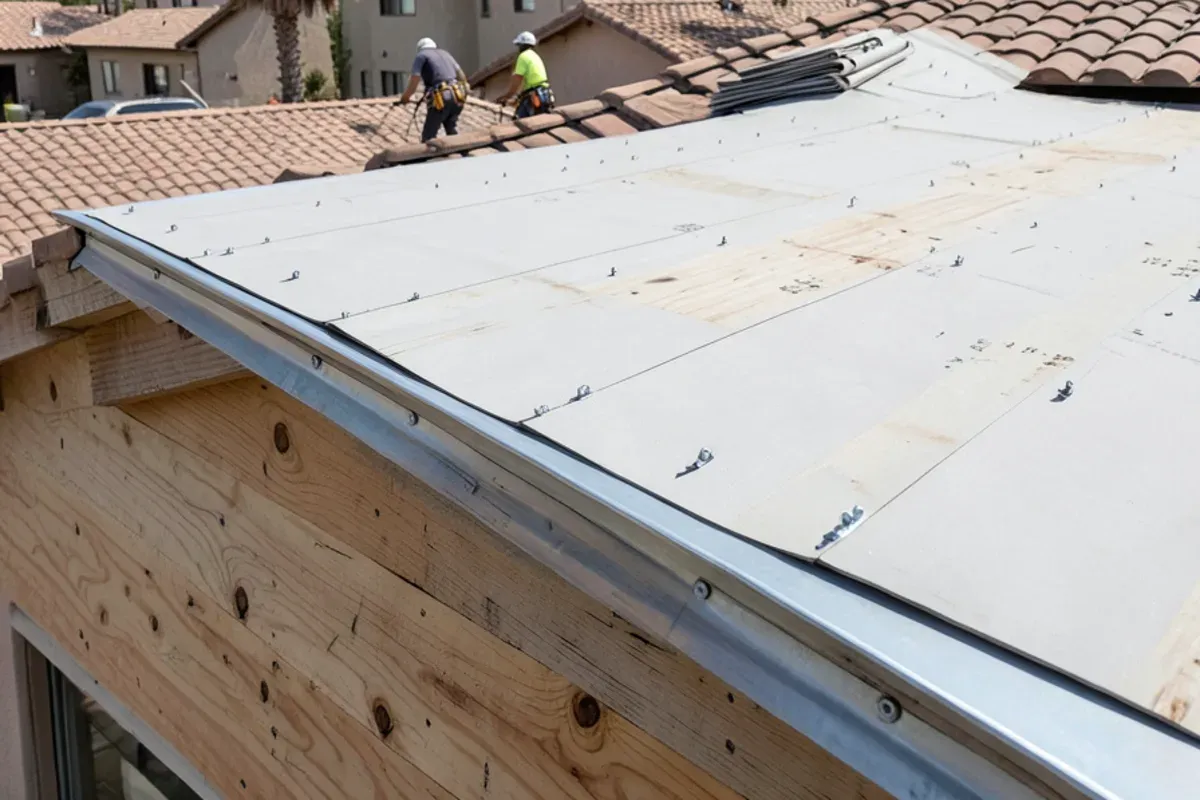
Choosing between overlay and tear-off
Checks to run on any overlay bid
- How was the layer count confirmed: by lifting an edge or cutting a test spot?
- How was the deck checked for soft areas without stripping it?
- Are drip edge, valley metal and wall flashing new or reused?
- Will nail length reach solid deck through both layers?
- Does the bid follow the shingle maker's published instructions for recovering a roof?
- Are the permit and a CRRC-rated cool product listed if Title 24 applies?
If your roof is one layer, dry and flat, an overlay may be allowed, and we will price it honestly alongside a tear-off. If it already has two layers or shows soft spots, a full roof tear-off is the only legal and sensible option. Call (725) 745-8803 or request a quote; the first things we check are the layer count and the deck.
Questions readers ask
How can I tell how many layers my roof has?
Look at the roof edge along a gable end or at the eave from a ladder. Two layers often show as a thick, stepped edge. A roofer can confirm by lifting a shingle at the edge or cutting a small test spot and resealing it. Old permit records at your city may also show past reroofs.
Can new shingles be installed over a tile roof?
No. Code does not allow a recover over clay, concrete, slate or asbestos-cement tile. The tile has to come off before any other covering is installed. Tile is also far heavier than shingle, so the switch changes the load on the framing. If you are tired of tile, the switch to shingle or metal is a full tear-off, and the framing and Title 24 rules should be checked for the new material.
Is an overlay ever the smart choice?
It can be when the roof has a single dry layer in good shape, the deck feels solid, flashing can be replaced properly, and the budget is tight or you plan to sell soon. Even then, weigh the hotter roof and the costlier future tear-off. We price both so you can compare.
How much time does a tear-off add compared with an overlay?
Less than most owners expect. On a single-story home with one layer, stripping usually adds hours rather than days, because the crew strips and dries in section by section. Two layers, heavy deck repair or a steep pitch can add a day or more. A winter tear-off also waits for a dry forecast, which an overlay would not avoid either, since both open up flashing and edges.
Sources
Written by Tylzen Spoke Roofing
A roofing contractor on Rosemead Blvd (CA-19) in Rosemead, working on shingle, tile, metal and flat roofs across the San Gabriel Valley. This guide reflects what our crews check on local roofs. Questions about your roof? Call (725) 745-8803.