
By Tylzen Spoke Roofing · Published
The clearest signs you need a new roof are a roof near the end of its expected life, leaks that keep turning up in new places, heavy granule loss or curling across whole slopes, underlayment that cracks when touched, and a deck that sags or feels soft. One of these on its own can often be repaired. Several together usually mean each repair buys less time than the last.
Here is how to read each warning sign, what it means underneath, and when it is time to price a roof replacement instead of another patch.
How old is too old for another repair?
Age is the first filter. Composition shingles in strong Southern California sun often wear out in roughly 20 to 30 years, faster on south and west slopes. The felt under clay or concrete tile tends to fail long before the tile does. Flat roofs over garages and additions usually have the shortest life of all.
If you do not know when the roof went on, check your purchase paperwork, ask a neighbor whose house was built at the same time, or look up the permit history with your city. In Rosemead, where the median home dates to 1959 according to Point2Homes, the current roof may be the third or fourth one a house has carried.
Want a roofer to look at it?
Call with your address and what you are seeing. We visit same-day or next-day when crews are free.
- 4.9 from 48 Google reviews
- Based on Rosemead Blvd
- Photos and a written quote before work
Warning signs you can check from the yard and the attic
You do not need to climb a ladder to spot most of these. Binoculars from the sidewalk and a flashlight in the attic cover the list.
| What you see | What it usually means | Repair or replace? |
|---|---|---|
| Bare patches and granules in gutters | The asphalt is exposed to UV and drying out | Replace if widespread; repair if one small area |
| Curled, cupped or cracked shingles | Shingles have lost flexibility from heat | Replace when it covers whole slopes |
| Leaks in two or more unrelated rooms | Underlayment failing in several places | Usually replace |
| Sagging ridge or wavy roof plane | Deck or framing weakened by moisture | Replace, with deck repair |
| Daylight through boards in the attic | Gaps, rot or missing sheathing | Usually replace |
| Cracked tiles with felt crumbling beneath | Tile underlayment past its life | Lift-and-relay or new tile |
| One cracked pipe boot or lifted flashing | A single failed component | Repair |
Why do leaks keep showing up in new places?
A single leak at a pipe or chimney is a component failure. Fix the component and the leak stops. Repeat roof leaks in different rooms tell a different story: the underlayment across the roof is giving out, and every storm finds the next weak spot.
That pattern shows up most in the first heavy rains of the November to March season, after a long, hot summer has dried sealant and felt. If you have paid for two or three leak repairs in different spots over a couple of winters, add up what they cost and compare that with the price of a new roof. Our guide to repair versus replacement shows how to run that comparison.
Reading a worn shingle roof: granules, curling, cracking
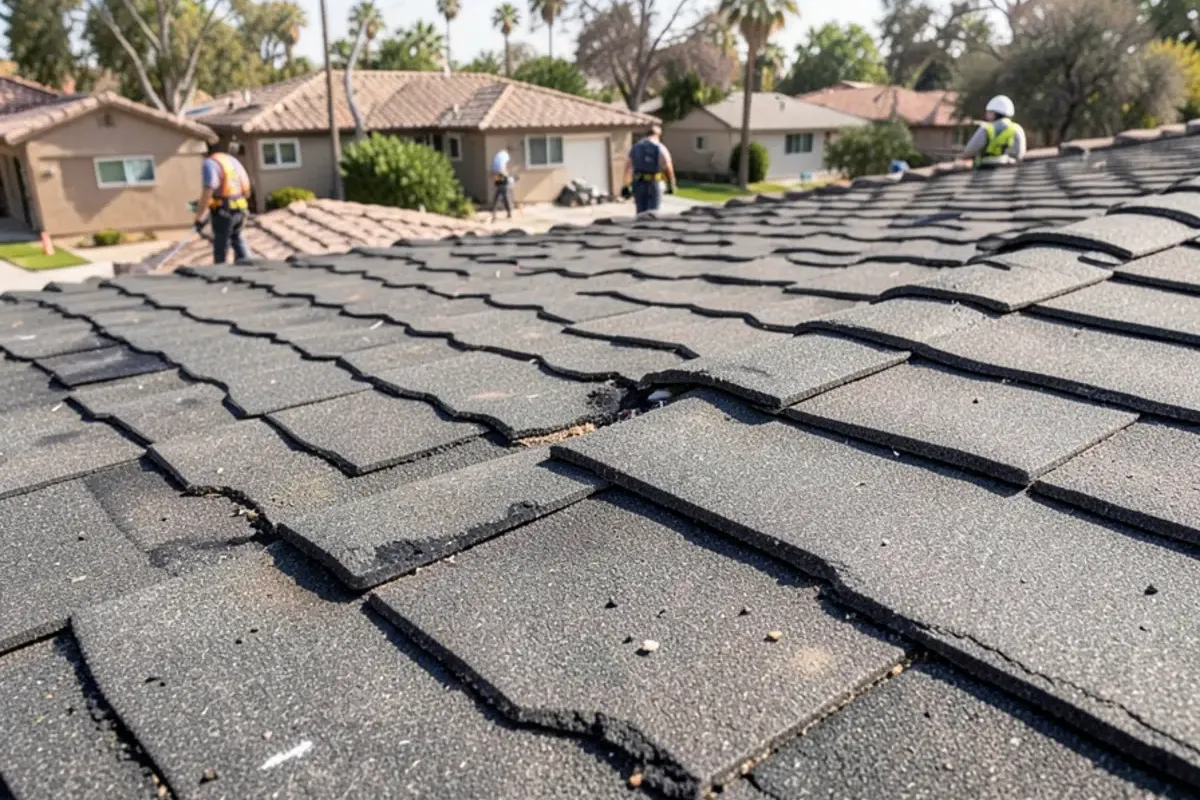
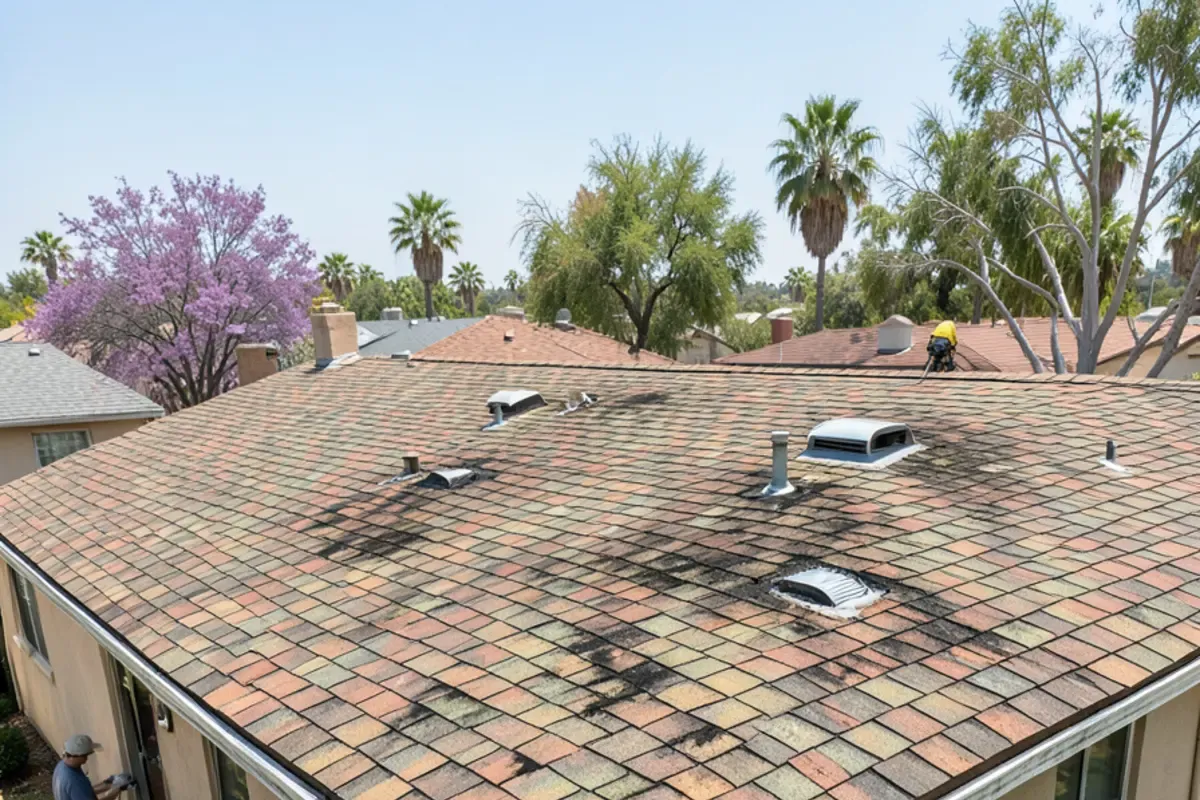
Shingle granules protect the asphalt from sunlight. When they wash off, the asphalt underneath dries, shrinks and cracks. A cup or so of granules after the first storm on a new roof is normal; heavy piles at every downspout on an older roof are not.
- Curling: shingle edges turn up or the middle cups downward, letting wind get underneath.
- Cracking: straight cracks across the tabs, often on the sunniest slopes first.
- Brittleness: shingles that snap instead of bending when a roofer lifts them for a repair.
- Patchwork: several colors of replacement shingles and dark streaks of roofing cement over old repairs.
That last sign matters. When a roofer cannot lift old shingles to slide new ones in without breaking them, repairs get harder and less reliable.
Soft spots, sagging and daylight: when the deck is the problem
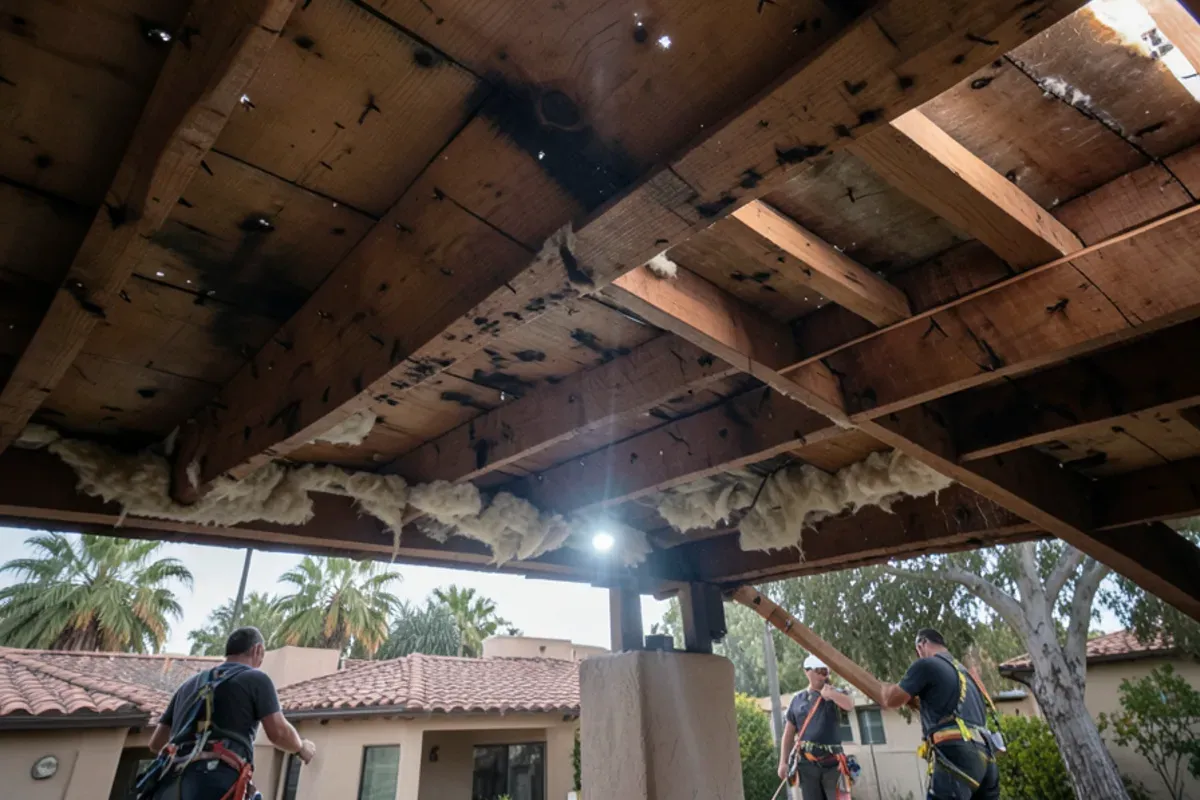
The deck is the plywood or board layer the roof is nailed to. Long-term moisture from slow leaks, poor attic ventilation or overflowing gutters softens it. A roofer feels it as a spongy step; you may see it as a dip between rafters or a ridge line that is no longer straight.
From inside the attic, look for dark stains on the underside of the boards, rusted nail tips, and pinpoints of daylight. Any of those across more than a small area points to a full tear-off, because new shingles cannot be fastened securely into rotten wood.
What do failing flat roofs over garages and additions look like?
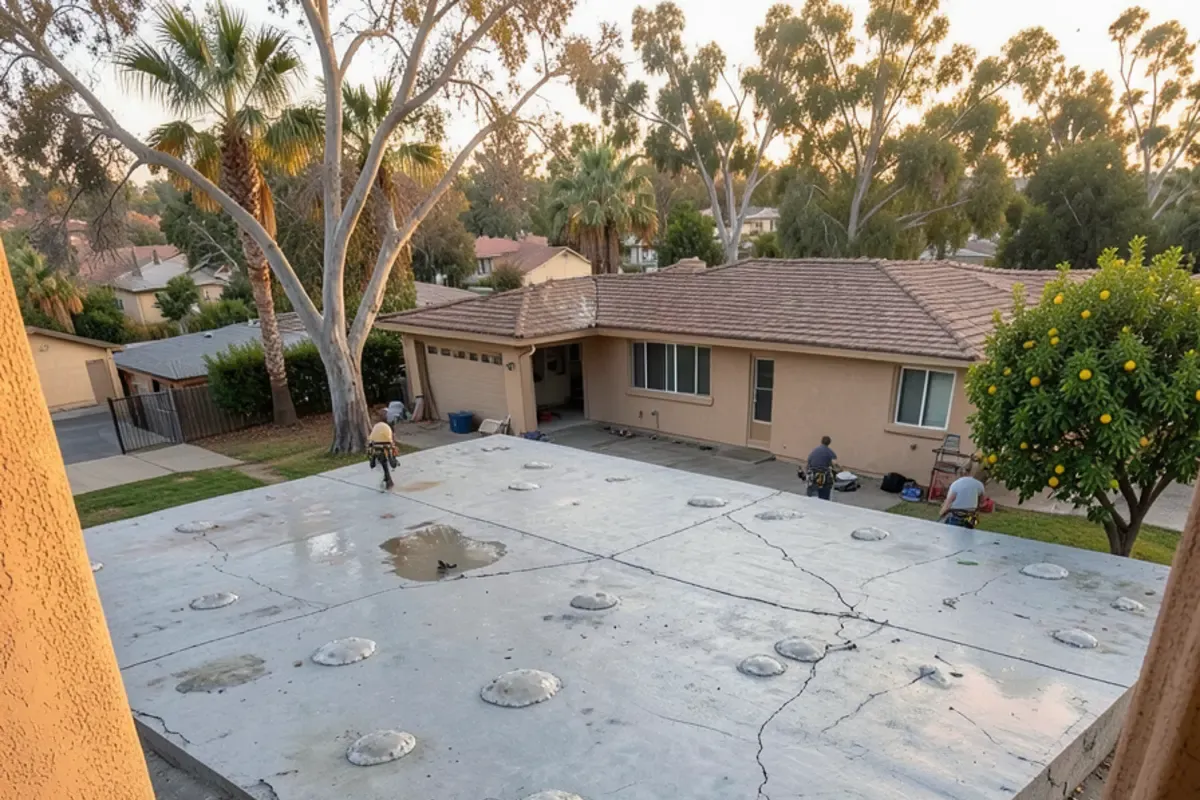
Many homes here carry a low-slope roof over a garage, a patio room or a back addition, and it ages on its own schedule. Flat roofs give different signals from shingles, and they often wear out years before the main roof does.
- Ponding: water still standing 48 hours after rain means the deck has sagged or the drains are blocked, and standing water speeds up membrane wear.
- Blisters and ridges: bubbles in torch-down or built-up roofing point to trapped moisture or layers that have lost their bond.
- Alligatoring: a cracked, scaly surface on an old coating or asphalt cap means the sun has dried the top layer through.
- Open seams and lifted edges: gaps at laps, parapet walls and the drip edge let wind-driven rain run straight under the membrane.
- Soft or crunchy footing: wet insulation or a rotting deck under the membrane, usually near drains and walls.
One blister or a lifted corner is a repair. Ponding over a soft deck, or seams failing across the whole surface, means the membrane is finished. Our flat roofing page explains the systems we install when a low-slope section has to be replaced.
What our crews see on El Monte and Baldwin Park roofs
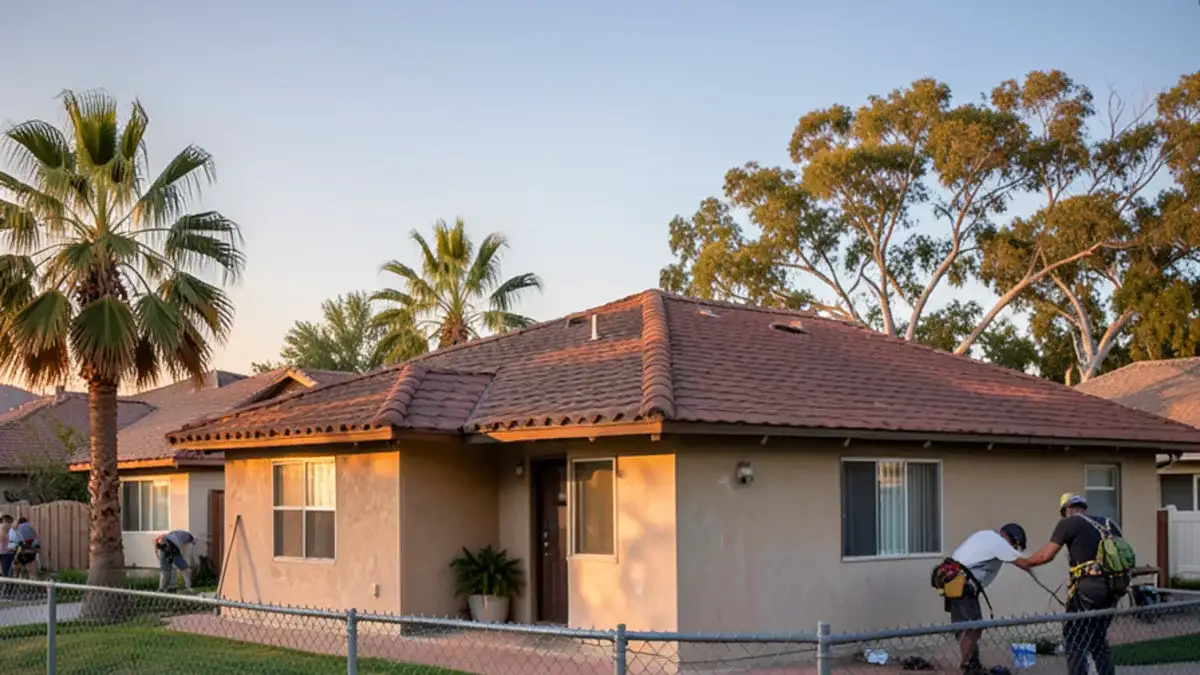
Much of El Monte and Baldwin Park is made up of post-war single-story stucco homes with composition shingle roofs. The roofs we are called to there often share the same history: an original roof, then one overlay, then years of spot repairs with roofing cement.
On these homes the south and west slopes wear out first, and the leaks show up near the eaves where water collects under the lowest course. When we find two layers, crumbling felt and patch after patch, we tell the owner plainly that another repair is a short-term fix and show the photos that support it. When the roof is sound apart from one failed boot or flashing run, we say that too.
Signs that look alarming but rarely mean replacement
Part of an honest inspection is telling owners what not to worry about. These come up on almost every call, and most of them do not justify a new roof.
- Dark streaks on shaded slopes: usually algae feeding on the limestone filler in shingles. It is cosmetic, can be cleaned gently, and does not end a roof's life by itself.
- A ceiling stain below an attic furnace or water heater flue: often a clogged condensate line or a loose vent collar rather than failed roofing.
- Nail pops: a few raised nails lifting shingle tabs call for a quick refasten and seal, not a tear-off.
- Old stains that never grow: a mark from a leak fixed years ago stays on the drywall. Trace its edge in pencil, and if it spreads after the next rain, the leak is active.
- A hot attic: usually a ventilation or insulation shortfall that new vents can solve without touching the roofing.
The trade-off of waiting one more winter
When the signs are borderline, owners often ask whether to stretch the roof another season. Waiting keeps money in hand now and uses up whatever life is left. The risk is what water damages on its way down: drywall, insulation, wiring and the deck itself, which can turn a planned replacement into a larger one with rotted sheets added. On a roof with a sound deck and one known weak spot, a repair and a watchful winter is reasonable. On a roof with a soft deck or leaks in several rooms, waiting usually costs more than it saves.
When one warning sign is not enough to replace
A roof with one cracked boot, a few wind-lifted shingles or a single slipped tile does not need replacing. Fixing those parts is cheaper and sensible. The decision tips toward replacement when signs stack up: age plus widespread wear, or repeat leaks plus a soft deck. A roof inspection with photos of every slope gives you that full picture before you spend money either way.
If several of these signs match your roof, call (725) 745-8803 or request a quote. We inspect from the attic and the roof, photograph what we find, and give you a written scope that says whether repair still makes sense.
Questions readers ask
Can a roof look fine from the street and still need replacing?
Yes, especially tile. Clay and concrete tile can look perfect while the felt underneath has crumbled. Low-pitched shingle roofs also hide wear you cannot see from the sidewalk. Attic stains, leaks near exterior walls and granules at the downspouts are better clues than how the roof looks from the curb.
Should I replace a worn roof before selling the house?
It depends on the market and the buyer, but a roof near the end of its life usually comes up in the buyer's inspection and becomes a negotiating point. Some sellers replace; others offer a credit. Either way, get the roof inspected first so you know what the buyer's inspector will find.
Does a leak during the first big storm mean I need a new roof?
Not by itself. The first heavy rain after summer often exposes one failed boot, flashing joint or clogged valley, and those are repairable. It points to replacement when the roof is old and the leak is one of several, or when the inspection finds brittle underlayment or soft decking around it.
Can I replace only the worn slopes instead of the whole roof?
Sometimes. When the south and west slopes have worn out and the north and east faces are still sound, a partial reroof can work, especially on hip or L-shaped roofs where slopes meet along clean lines. New shingles will not match faded old ones exactly, and the older slopes will need replacing sooner. In Rosemead's Climate Zone 9, replacing half or more of the roof also brings in Title 24 cool-roof rules.
Sources
Written by Tylzen Spoke Roofing
A roofing contractor on Rosemead Blvd (CA-19) in Rosemead, working on shingle, tile, metal and flat roofs across the San Gabriel Valley. This guide reflects what our crews check on local roofs. Questions about your roof? Call (725) 745-8803.