
By Tylzen Spoke Roofing · Published
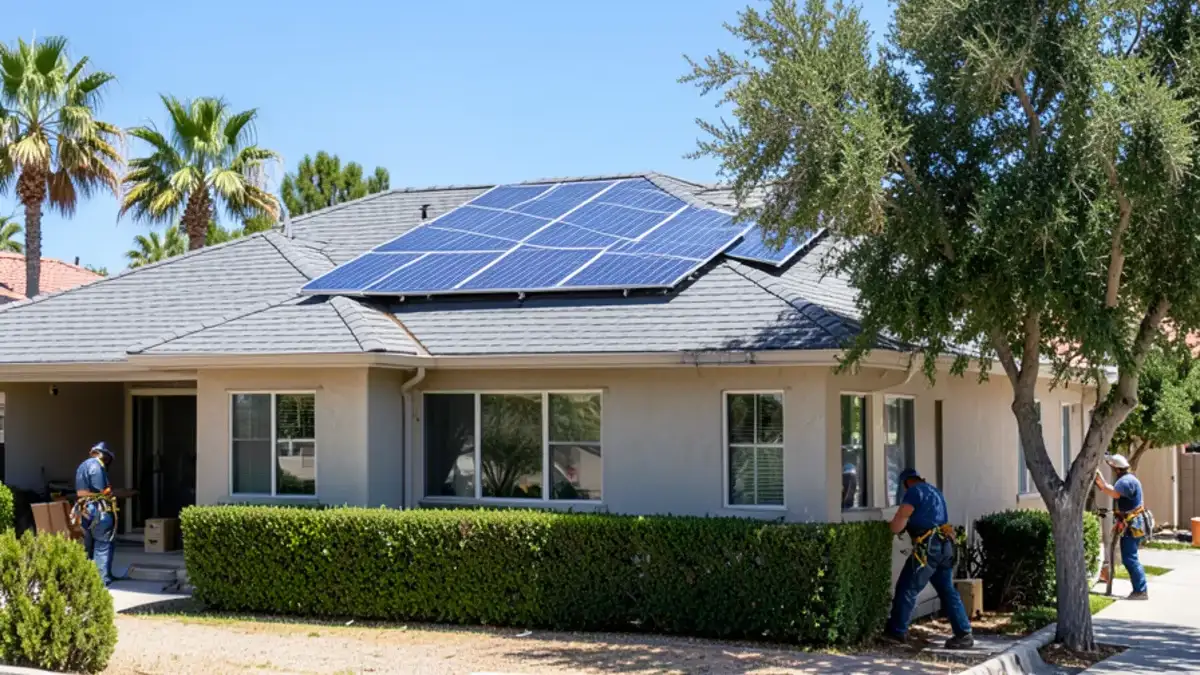
If you plan to reroof with solar panels already on the house, the panels have to come off first, the roof is replaced, and the array goes back on over new, properly flashed mounts. If you are adding solar to an older roof, replace the roof first when it has less than roughly 10 to 15 years left, because panels are expected to produce for 25 years or more and removing them later costs money.
This guide explains that timing decision, how a detach-and-reset is coordinated, and why mounts leak. Our solar-ready roof replacement service is built around this sequence.
Should you replace the roof before installing solar?
Compare two lifespans: the roof's remaining years and the array's expected working life. Composition shingles in this climate often last roughly 20 to 30 years, and felt under tile usually gives out well before the tile. If a 15-year-old shingle roof gets a new array today, the roof will likely need replacing while the panels still have many productive years left. That means paying for a detach-and-reset in the middle of the system's life.
Replacing the roof first costs more up front but avoids that second disruption. It also lets the roofer and solar installer plan mount locations on a fresh deck. Our article on how long a roof lasts in Southern California covers expected life by material.
Want a roofer to look at it?
Call with your address and what you are seeing. We visit same-day or next-day when crews are free.
- 4.9 from 48 Google reviews
- Based on Rosemead Blvd
- Photos and a written quote before work
How solar detach-and-reset works, step by step
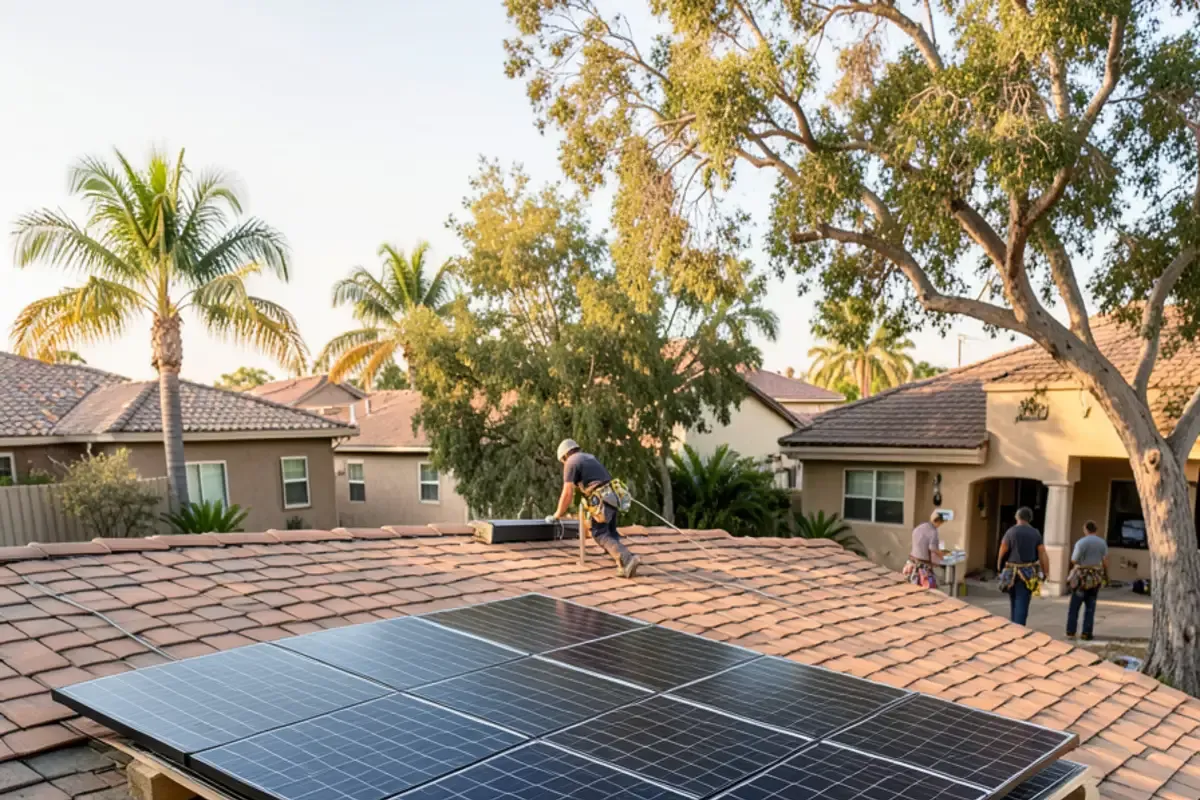
Solar detach and reset means the array is removed, stored and reinstalled around the roofing work. Two trades share the job, and the order matters.
- The solar contractor shuts the system down, disconnects the wiring and removes panels and racking.
- Panels are stored safely, either on site or off site, protected from breakage.
- The roofer tears off the old roof, repairs the deck and installs new underlayment and covering.
- New mounts are installed into the rafters and flashed into the roof, or the solar contractor does this with the roofer's flashing.
- The solar contractor reinstalls the racking and panels, reconnects and tests the system.
- Any required inspections for the roof and the electrical reconnection are completed.
Who handles each part of a solar reroof?
| Task | Usually handled by | Why it matters |
|---|---|---|
| System shutdown and disconnect | Solar contractor or electrician | Electrical work needs the right license classification |
| Panel and racking removal | Solar contractor | Protects panel and equipment coverage |
| Tear-off, deck and new roof | Roofer (C-39) | The roof assembly and its permit |
| Mount flashing | Roofer, or solar crew with roofer's flashing | Most solar leaks start here |
| Reinstall and testing | Solar contractor | System performance and monitoring |
Ask both contractors to put their part in writing so nothing falls in the gap between them. If your system came with coverage from the original installer, ask whether removal by another company affects it.
Why do solar panel roof leaks happen?
Most solar-related leaks come from the attachment points, not the panels. Common causes we trace include:
- Lag bolts that missed the rafter and only hit the deck.
- Mounts sealed with caulk alone instead of a metal flashing slid under the course above.
- Flashing set on top of shingles rather than woven into them.
- Cracked tiles around tile hooks, letting water reach tired underlayment.
- Conduit and junction box penetrations sealed with sealant that has dried out.
- Leaves and nesting debris trapped under the array, damming water at the mounts.
Leaks under an array are harder to find because the panels hide the roof. Our roof leak repair process starts in the attic, where staining near a rafter usually points to the mount above it.
Solar on tile and the Title 24 panel exception
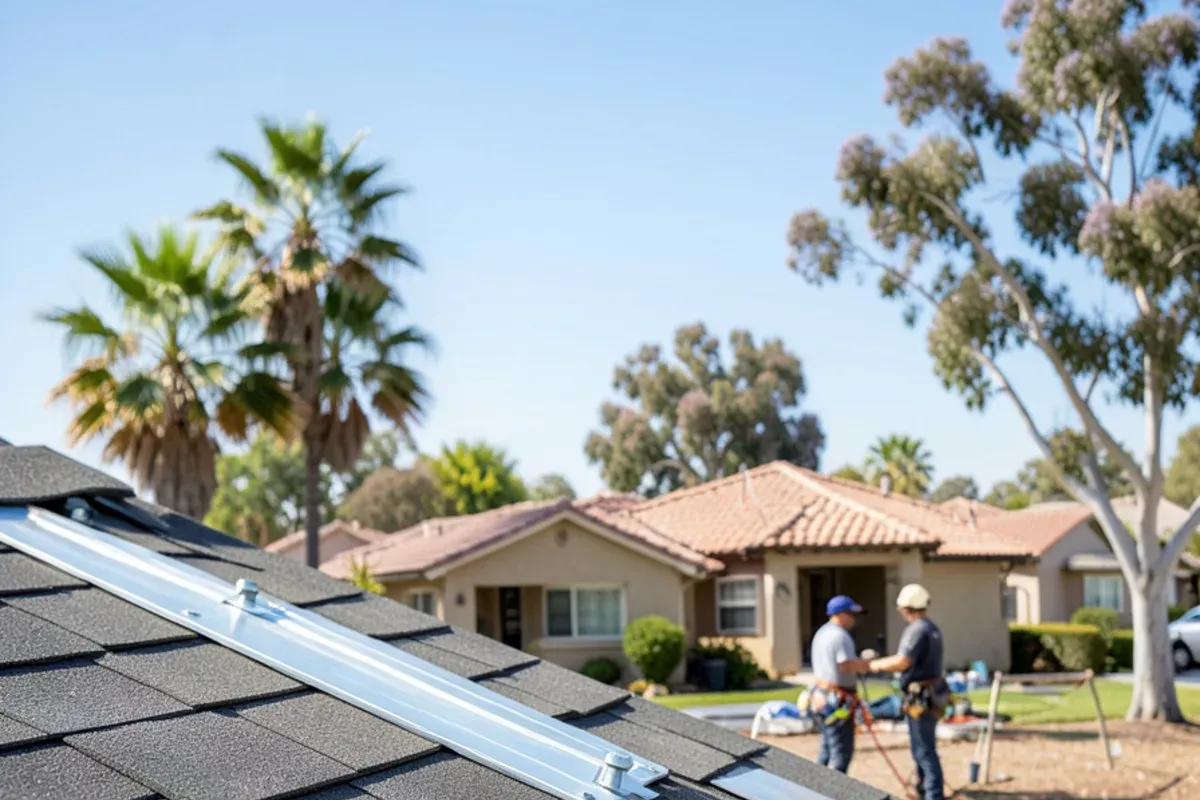
Tile roofs take solar well when the work is done carefully. Tile hooks pass under the tiles to the rafters, and the tiles over each hook are notched or swapped for flashed replacement pieces. Because tile underlayment often fails before the tile, many owners have a lift-and-relay done before an array goes on.
On shingle reroofs in Climate Zone 9, Title 24 cool-roof rules usually apply when 50% or more of the roof is replaced. Roof area covered by building-integrated solar panels is one of the listed exceptions (standard rack-mounted arrays are not named), but the rest of the roof still needs a rated product unless another exception applies. Confirm with the building department.
Which solar mounting method suits your roof type?
The new roof is only as watertight as the attachments that go back through it. Each mounting method has a cost, a speed and a failure mode, and the right one depends on the covering and the deck underneath.
| Method | Where it fits | Trade-off |
|---|---|---|
| Flashed foot lagged into a rafter | Shingle roofs with rafters at a known spacing | The most proven method, but every missed rafter is a wasted hole that must be sealed and flashed |
| Deck-attached mount listed by its maker | Shingle roofs with new, solid plywood | Frees the layout from rafter spacing, but depends on deck strength, so it is a poor match for old board decks |
| Tile hook under a flashed replacement tile | Clay and concrete tile kept for appearance | Keeps the tile look, but each hook means cutting or swapping tile, and broken pieces add up |
| Shingles under the array on a tile roof | Tile roofs where the array covers a large block | Fewer tile penetrations and easier future service, but the hidden section no longer matches the rest |
| Clamps on standing seam metal | Standing seam roofs | No holes through the panels at all, though the roof itself costs more to begin with |
Our take on reroofs here
On the 1950s homes common around us, many decks are spaced boards, so we prefer rafter-located attachments, or new plywood under the array before any deck-attached mount goes on. On tile, we look at how much of the roof the array covers before recommending hooks or a shingle section beneath it. Where the felt under the tile is worn out, our tile underlayment replacement work is done before any hook goes in, so the array never has to come off for it later.
What our crews find under arrays in Rosemead and Temple City
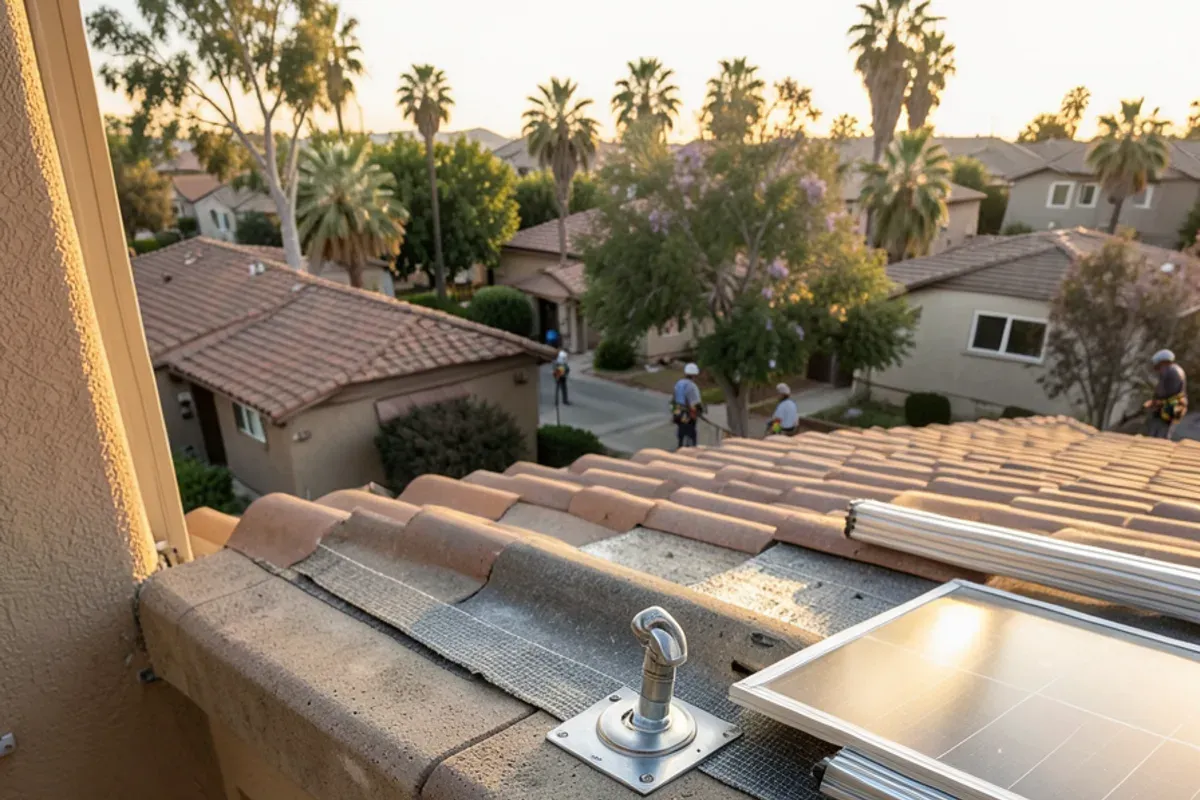
Many arrays on roofs in Rosemead and Temple City were installed on roofs that were already middle-aged. When those roofs reach the end of their life, the owner faces a detach-and-reset years earlier than expected. We also find pigeons and other birds nesting under panels, which packs debris around mounts, and conduit runs sealed only with caulk.
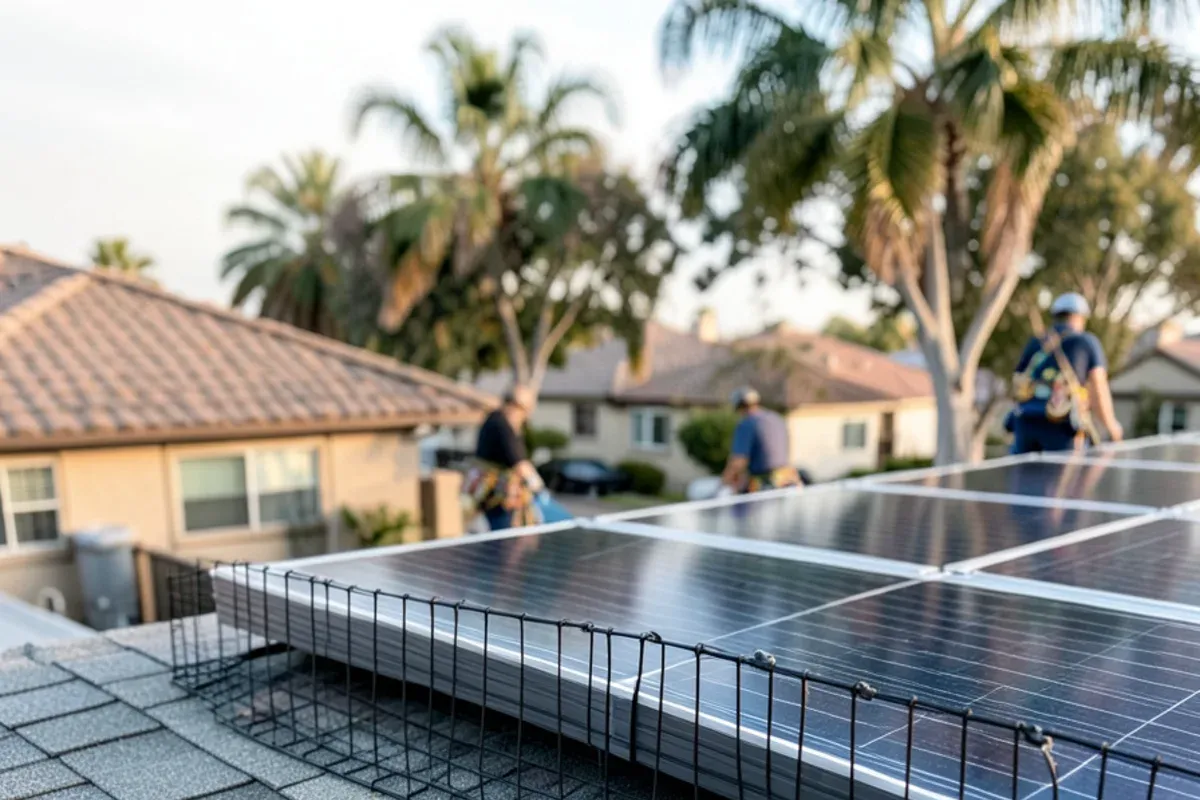
On a solar reroof, we photograph each mount location before the array comes off and again after the new roof and flashings are in, so you have a record of every penetration. Clean, flashed mounts and bird screening at the array edge, when you want it, are written into the quote.
Questions to put to both contractors before a detach-and-reset
Most problems on solar reroofs come from assumptions that neither trade wrote down. Ask these before you sign either agreement.
- Who is responsible for a panel that cracks while it is off the roof or in storage?
- Which mount and flashing product goes back on, and is it listed for the new roof covering?
- Will each mount be located on a rafter, and how will missed holes be sealed?
- Does the reinstalled layout still meet the fire access setbacks the building and fire departments enforce?
- Who files the electrical paperwork and schedules any utility sign-off for the reconnection?
- Is critter screening at the array edge included, or priced as an option?
- How many days will the system be offline, and who sets the reinstall date?
Get the answers in writing on each quote. Our side lists the roofing scope, the mount flashing and the photo record of every penetration, so the solar contractor knows exactly what roof the array is going back onto.
Planning a reroof with solar
Get the roofing and solar quotes at the same time so the schedules line up. Ask about payment options if the combined project is large. If you want us to inspect the roof under or around your array, call (725) 745-8803 or request a quote, and we will tell you how much life the roof has left.
Questions readers ask
Can a roofer repair around the panels without removing them?
Sometimes. Leaks at the edges of an array, or at a single accessible mount, can often be repaired in place. Leaks deep under the panels, widespread shingle wear, or underlayment failure under tile all need the panels lifted. We tell you which situation you are in after checking the attic and the roof around the array.
Who pays for a solar detach-and-reset?
Usually the homeowner, as part of the reroof budget. If a covered event such as wind or a falling tree caused the roof damage, the insurance claim may include removal and reinstallation; your adjuster decides. Get the solar contractor's price in writing alongside the roofing quote so you see the full cost.
How long will my solar system be offline during a reroof?
Plan for the length of the roofing job plus the time it takes the solar contractor to schedule removal and reinstallation, and any inspection or utility sign-off. Coordinating both contractors before work starts keeps the gap as short as possible. The roofing portion on a typical single-story home takes a few working days.
Is a reroof a good time to add panels or move the array?
Often, yes. With the roof open, new mounts can go exactly where a larger or relocated array needs them, flashed into fresh underlayment. Any change to system size, though, runs through a new solar permit and the utility's interconnection review, which can affect how your system is billed. Ask your solar contractor what changing the system would mean for your account before you decide.
Sources
Written by Tylzen Spoke Roofing
A roofing contractor on Rosemead Blvd (CA-19) in Rosemead, working on shingle, tile, metal and flat roofs across the San Gabriel Valley. This guide reflects what our crews check on local roofs. Questions about your roof? Call (725) 745-8803.