
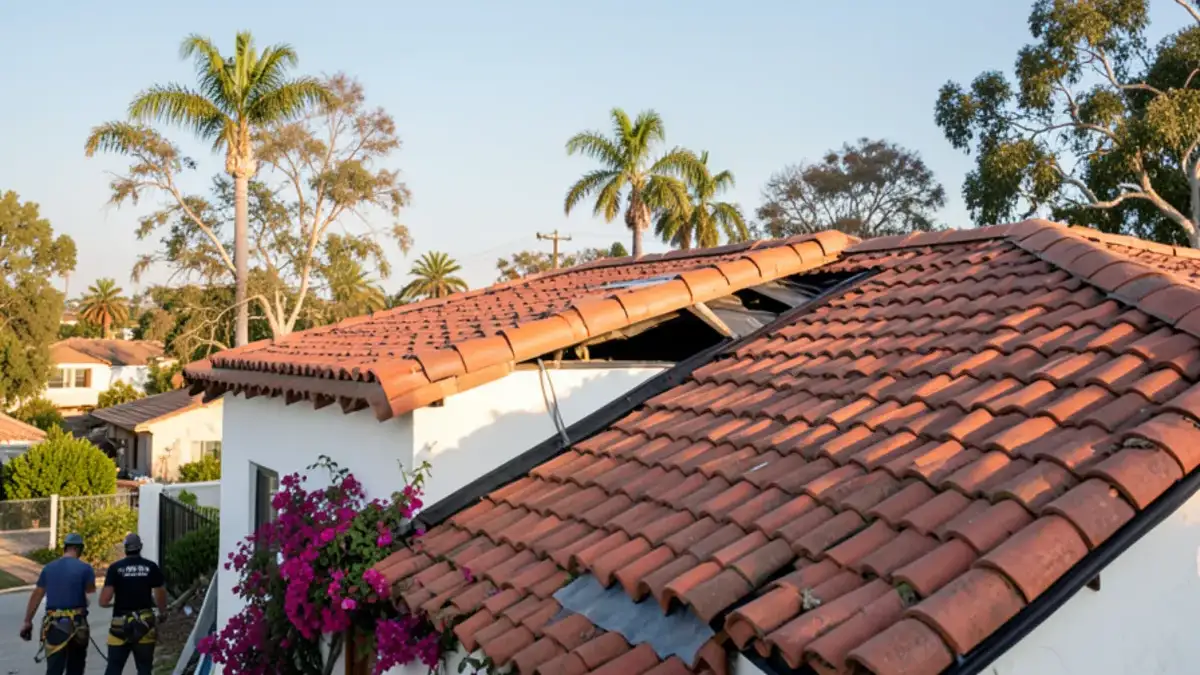
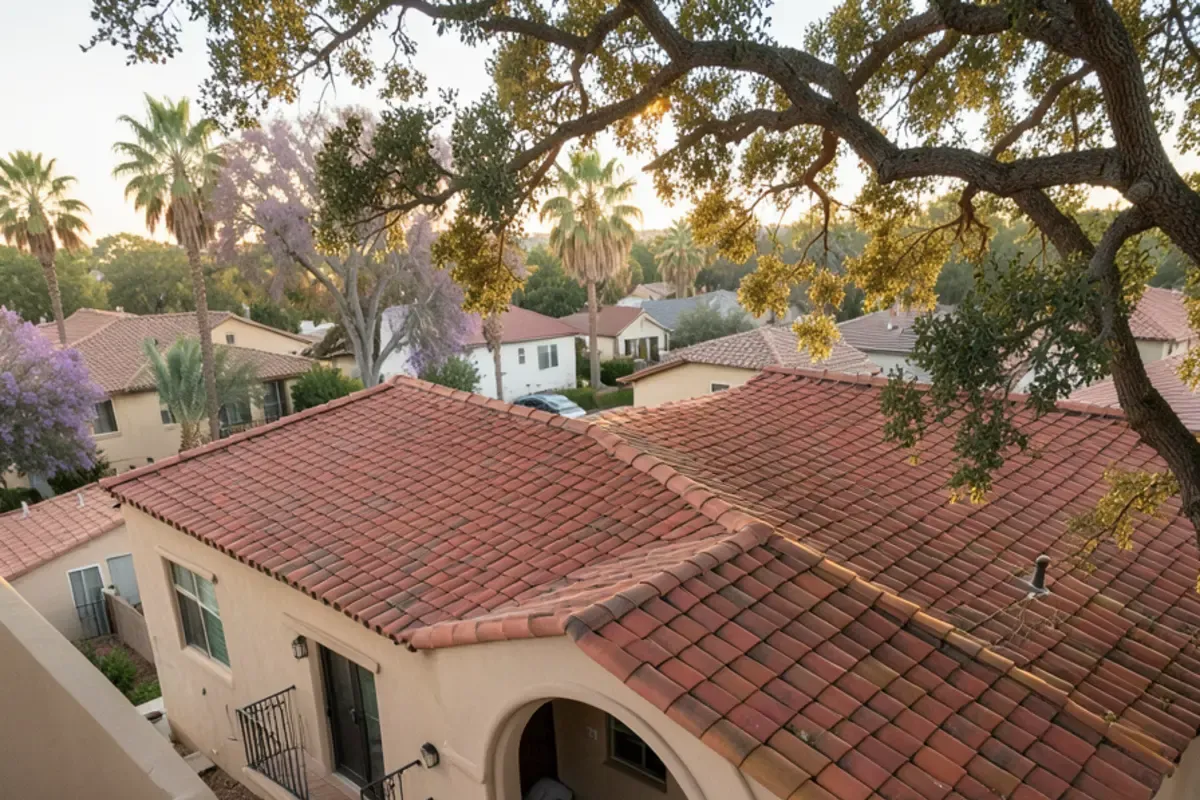
Tile roof underlayment replacement in Rosemead, often called a lift-and-relay or refelt, removes the tiles, replaces the waterproof layer and flashing underneath, and puts the original tiles back. Clay and concrete tile can outlast several generations of underlayment, so on many tile homes the roof looks sound while the layer doing the real waterproofing has failed. This is a tile-specific service within our roof replacement work.
We see the problem most on Spanish Revival homes with clay S-tile and on 1970s to 1990s houses with concrete tile, where the original felt has spent decades baking under summer highs in the upper 80s.
Why the tile outlasts the felt underneath
Tile sheds most of the rain, but it is not watertight. Wind-driven water gets under the laps and runs down the underlayment to the eave. When that layer cracks, water reaches the deck.
- Older felt dries out and turns brittle in summer attic heat, then splits at nail holes and laps.
- Exposed felt at cracked or slipped tiles breaks down in sunlight.
- Wood battens hold moisture and rot, letting tiles slide.
- Valley metal and pan flashing rust through, especially where leaves and debris have sat for years.
- Mortar at ridges and hips cracks and lets water into the ridge line.
Two signs show from the ground. A ridge or eave line that has started to wave usually means tile settling into rotted deck, and ceiling stains below a valley after storms, with no broken tile above, point to failed felt. Confirming either one means lifting a few tiles, which we do during the inspection.
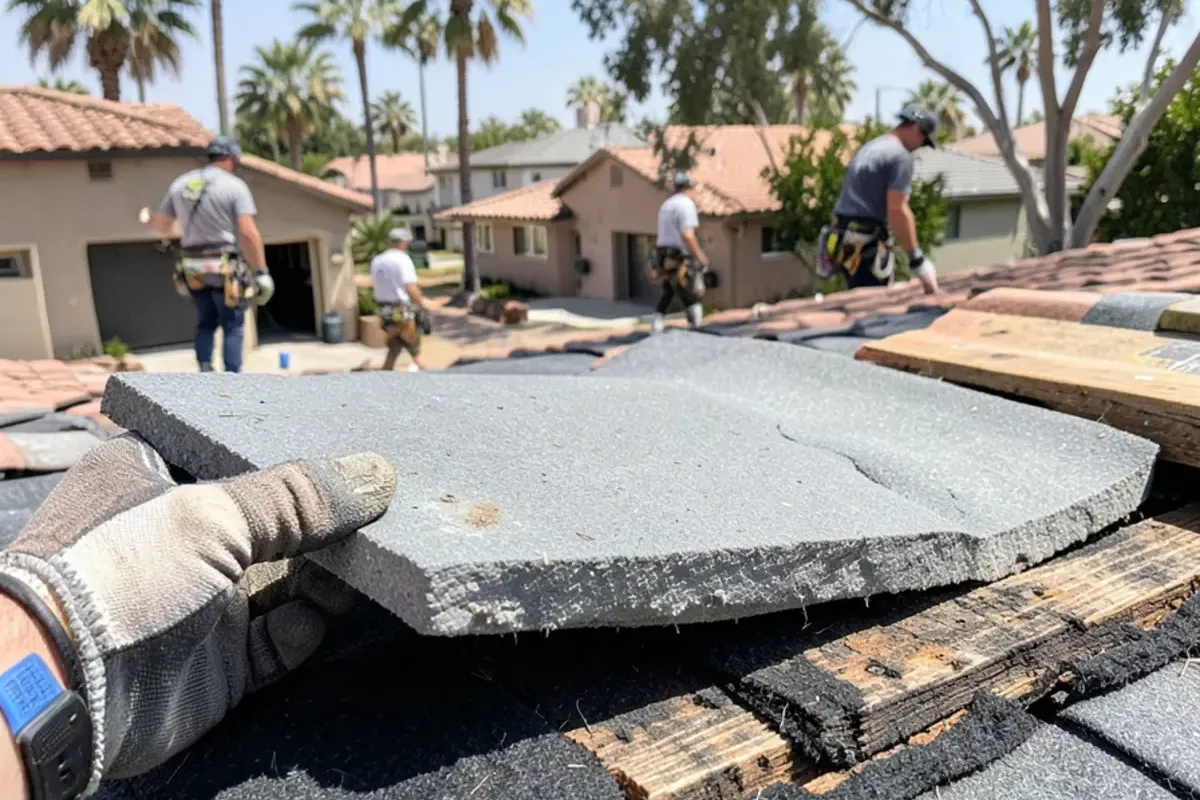
In our experience, felt under Southern California tile often lasts roughly 20 to 30 years, sometimes less on south and west slopes. Leaks with no visible tile damage are the usual first sign. Isolated broken tiles are a tile roof repair job; widespread brittle felt calls for a refelt.
How a tile roof lift-and-relay works, course by course
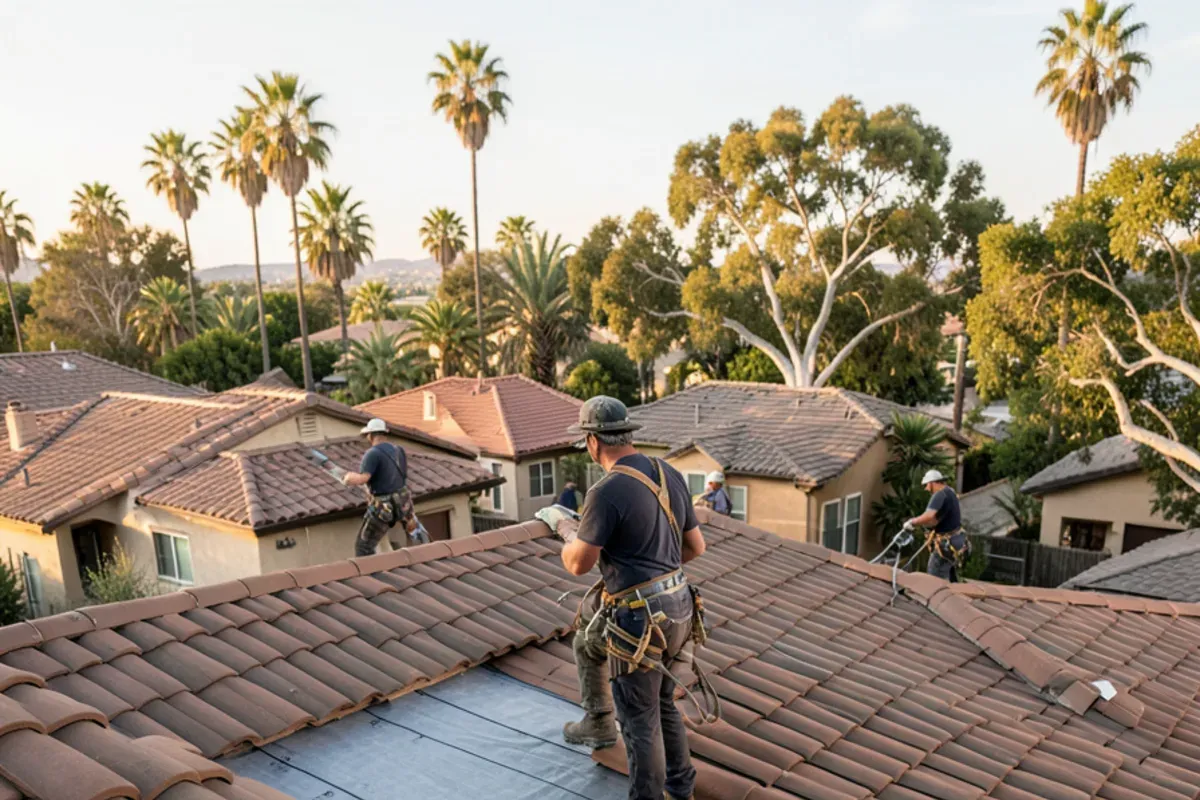
- Each tile comes off by hand and is sorted, then stacked on the roof or staging with the rest of its slope.
- Old underlayment, rotted battens and rusted flashing are stripped to the deck.
- Damaged sheathing is replaced and photographed, priced per sheet as listed in the quote.
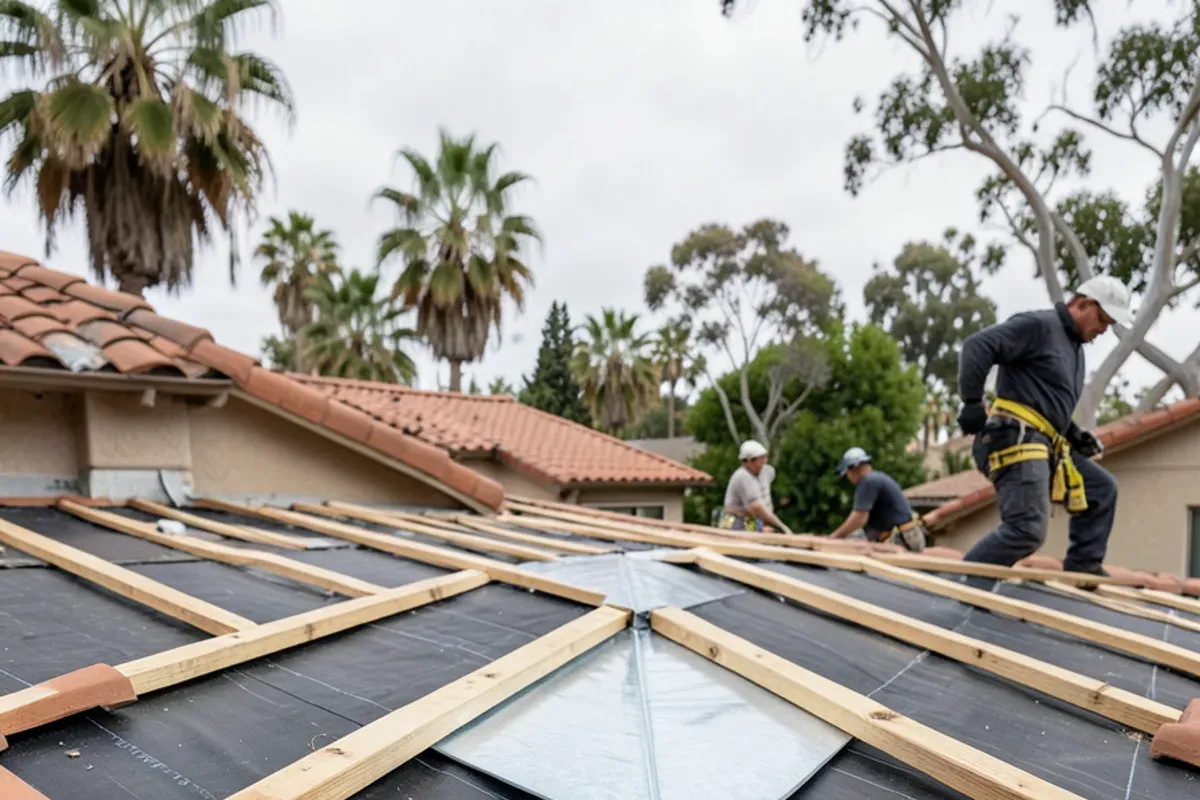
- New underlayment goes down, with self-adhered membrane at valleys, walls and penetrations.
- New battens, valley metal, headwall flashing, pipe flashings and eave closures are installed.
- Original tiles are relaid, with broken ones swapped for matching tiles, and ridges and hips are reset.
Most single-story tile homes take several working days, longer for steep, cut-up roofs or fragile clay. We open only what we can dry in by the end of the day.
What the refelt quote should list
Every lift-and-relay bid should break the job into the same lines, so you can compare them fairly:
- Tile removal and sorting, with a written breakage allowance for pieces that crack.
- Deck repair priced per sheet, photographed before any sheet is replaced.
- The named underlayment system, plus self-adhered membrane at valleys, walls and penetrations.
- New battens, valley metal, headwall and pipe flashing, and an eave closure fitted so it keeps birds out without damming water.
- Ridge and hip reset with mechanical fastening, in mortar or a dry ridge system.
- The permit, the final inspection and haul-away of old felt and broken tile.
Which roof tiles can be reused, and which must be replaced?
Most concrete tile survives removal well. Old clay is more brittle, and some breakage is normal on any lift-and-relay.
- Reusable: tiles that ring rather than thud when tapped, with intact nail holes and no hairline cracks.
- Replace: cracked, spalled or badly eroded tiles, and pieces broken during removal.
- Matching: replacements come from the original maker's line when it still exists, or from salvage yards that stock discontinued styles.
- Placement: replacement tiles go on less visible slopes, with originals moved to the street side.
Underlayment choices under clay and concrete tile
| Option | How it works | Trade-offs |
|---|---|---|
| Two plies of heavy felt | Traditional layered system, nailed and lapped | Familiar and economical; ages faster in high heat |
| Synthetic tile underlayment | Woven polymer sheet rated for tile | Light, tear-resistant, handles heat better than felt |
| Self-adhered tile membrane | Peel-and-stick sheet that seals around nails | Highest water resistance; costs more and needs a clean deck |
| Mineral-surfaced cap sheet over base | Two-layer system common under tile in fire zones | Durable and robust under foot; heavier to install |
As market examples, tile owners often compare self-adhered membranes such as Polyglass Polystick TU Plus with synthetic tile underlayments from the major manufacturers. We recommend based on roof slope, tile type and budget, and write the exact product on the quote.
Need tile underlayment replacement help this week?
Tell us what you are seeing. We schedule same-day or next-day visits when crews are free and send photos with a written quote.
- 4.9 from 48 Google reviews
- Based on Rosemead Blvd
- Photos and a written quote before work
Code points for a tile reroof: cool roofs and fire zones
A lift-and-relay over 50% or more of the roof is a reroof under Title 24. In Climate Zone 9 that brings cool-roof rules into play unless an exception applies. Exceptions include roof assemblies weighing 25 lb/ft² or more, R-38 ceiling insulation and a radiant barrier. Whether your specific tile qualifies depends on its weight and rating, so we confirm with the building department before work starts.
Tile in the foothill fire zones also needs fire-stopping at the eaves so embers cannot blow into the gap under the first course. Our page on fire-resistant Class A roofing covers those details, and our cool roof installation page explains the Title 24 numbers.
Rosemead issues tile reroof permits through its Building and Safety Division, and unincorporated communities such as South San Gabriel go through LA County Public Works Building & Safety. Because a refelt needs a permit, it must be done by a CSLB-licensed contractor, normally under the C-39 roofing class. Look up any bidder's number at cslb.ca.gov and check the workers' compensation record on the same page.
What does a tile reroof cost compared with a new tile roof?
Reusing your tile removes the largest material cost from the job, so a lift-and-relay usually costs less than tearing off and buying new tile. Labor is higher than on a shingle reroof because every tile is handled twice. The quote depends on:
- Roof area, pitch and the number of hips, valleys and cut tiles.
- Tile type and expected breakage, especially on older clay.
- The underlayment system chosen.
- Deck repair, batten replacement and new flashing.
- Ridge and hip resetting, in mortar or a dry ridge system.
Breakage is the swing item. Concrete tile usually comes off with few losses, while older clay cracks more often and discontinued profiles may have to come from salvage. Rot found under the felt is the other variable, which is why decking is priced per sheet instead of folded into a lump sum.
Our guide to lift-and-relay versus new tile roof cost walks through the comparison. Ask about payment options when we review your numbers.
Why tile owners in the San Gabriel Valley call us
- Reviewers describe clear explanations, with no push to buy new tile when the old tile is sound.
- Our quotes include photos of the underlayment and a line for deck replacement.
- We handle the permit and the city or county inspection.
- From our Rosemead Blvd base, tile homes across the valley are a short trip.
The underlayment and any new tile carry manufacturer coverage that depends on the product, and our workmanship terms are part of your written contract. Ask for each in writing, and whether a buyer would inherit them.
We refelt tile roofs in San Marino, Arcadia and Monterey Park, and across the surrounding hills.
What customers say on Google
4.9★ from 48 Google reviews (checked Nov 2026)
“We've had a couple of experiences with this roofing company, and both have been great. The first time, we had a leak around an old roof vent. Their team replaced the vent, sealed everything up, and put our cement tile shingles back in place. The work was finished quickly, looked good, and the price was reasonable. …”
“We had a great experience getting a new roof, gutters, and fascia flashing installed, and the finished work really shows. Everything looks clean, solid, and well done, and the whole roofing project felt organized from start to finish. …”
“awesome roofing team that does solid work. i couldn’t be happier with how my new roof turned out. after the roof replacement was finished, there was a small issue related to the original roof design, not the installation, and david went above and beyond by coming out quickly with william to take care of it himself. …”
Where we handle tile underlayment replacement
- Rosemead
Scattered clay-tile Spanish Revival homes, where the tile often outlives two rounds of felt baked by upper-80s summers.
- San Marino
Period revival homes with clay tile worth keeping, where hand removal and matched replacements protect the original look.
- Arcadia
Large tile roofs under heavy tree canopy, where debris-packed valleys rust the metal long before the tile wears.
- Monterey Park
1970s-90s hillside homes with concrete tile, now at the age when leaks start without a single broken tile.
- San Gabriel
Spanish Revival and Mediterranean homes near the San Gabriel Mission with clay S-tile that usually survives a careful lift.
- Alhambra
Revival-style homes with barrel tile, where cracked ridge mortar and brittle felt tend to fail in the same season.
- Hacienda Heights
Hillside concrete tile tracts, where long valleys carry heavy runoff and wear out the underlayment and valley metal first.
- Rowland Heights
Unincorporated hillside neighborhoods with concrete tile, where a refelt is permitted through LA County Public Works.
- Diamond Bar
Planned-community homes from the 1970s onward with concrete tile, many reaching the age when original underlayment gives out.
More places we handle tile underlayment replacement
Tile Underlayment Replacement questions
Can my existing tiles be reused when the underlayment is replaced?
Usually most of them can. Concrete tile survives removal well, while older clay breaks more often. We sort every tile, set aside cracked or eroded pieces, and replace them with matching tiles, placing new ones on less visible slopes. The quote includes an allowance for breakage based on what we see during inspection.
How long does tile roof underlayment last in Southern California?
Felt under tile often lasts roughly 20 to 30 years here, and less on hot south and west slopes or where tiles have been cracked and the felt exposed. Synthetic and self-adhered underlayments resist heat better. Leaks without visible tile damage are the most common sign that the layer has failed.
What does a lift-and-relay cost compared with a new tile roof?
A lift-and-relay usually costs less because you keep your tile, which is the largest material expense. Labor runs higher than a shingle reroof since every tile is handled twice. We price both options when the tile is borderline, so you can compare with real numbers for your roof.
Do I need a permit for a tile lift-and-relay?
Yes. Replacing underlayment across the roof is a reroof and needs a building permit. We file it and book the inspection. Rosemead handles permits through its building division, while unincorporated areas such as East San Gabriel are permitted by LA County Public Works Building & Safety.
Will a lift-and-relay trigger Title 24 cool-roof rules?
It can, since replacing 50% or more of the roof counts as a reroof. Exceptions include roof assemblies weighing 25 lb/ft² or more, R-38 ceiling insulation or a radiant barrier. Whether your tile qualifies depends on its weight and rating, so we confirm with the building department before ordering materials.
How long does a tile refelt take?
A single-story tile home often takes several working days. Steep pitches, many hips and valleys, or fragile clay tile add time. We remove only as much tile each day as we can dry in, so the house is never open overnight.