
By Tylzen Spoke Roofing · Published
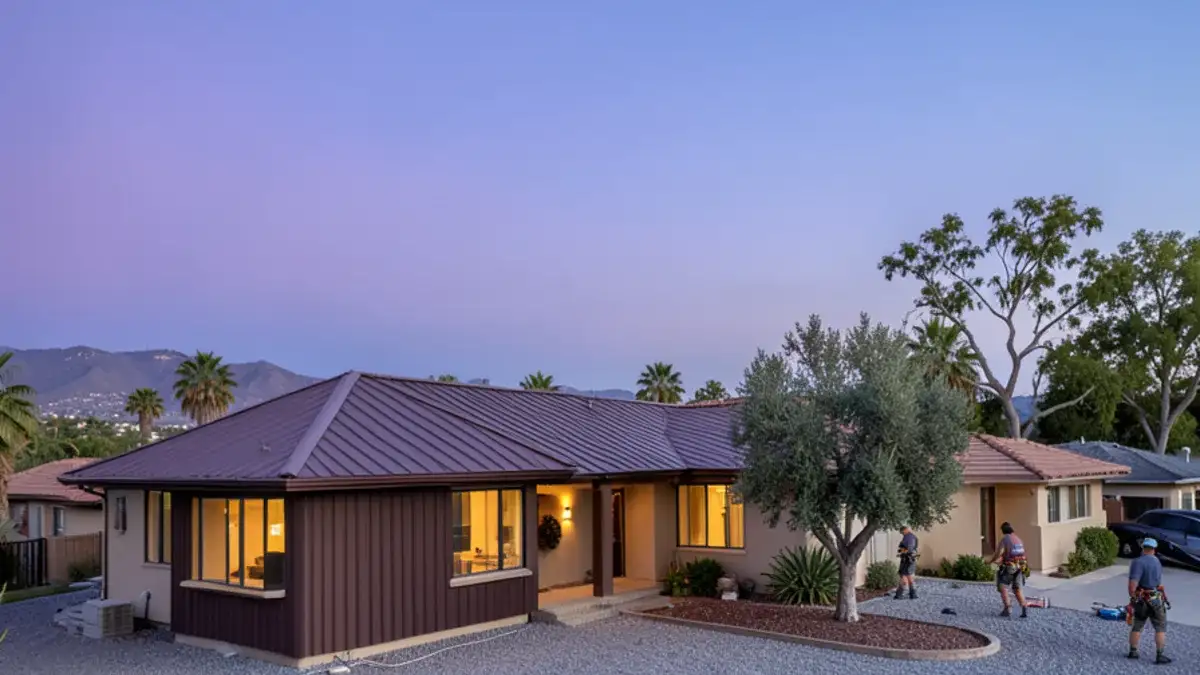
Choosing standing seam vs stone coated steel is mostly a choice of look and detailing: standing seam gives long, smooth panels with raised seams and hidden clips, while stone-coated steel uses smaller pressed panels covered in granules that mimic tile, shake or shingle. Both are light, long-lasting and fire resistant, and both can serve San Gabriel Valley homes well when installed correctly.
Standing seam usually suits ranch, mid-century and modern houses. Stone-coated steel tends to suit Spanish and Mediterranean homes whose framing cannot carry real tile, or owners who want a traditional look with metal's low weight.
What is the difference between the two metal roof types?
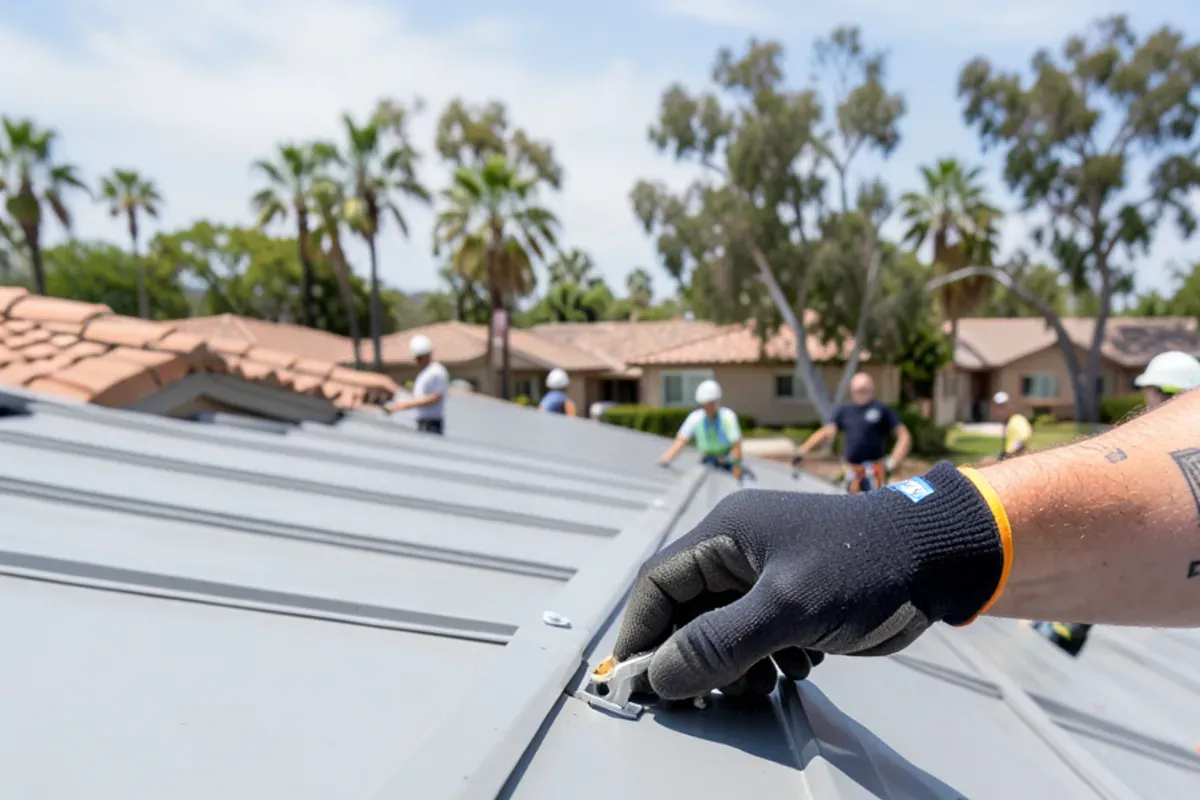
Standing seam panels run in one piece from eave to ridge. Neighboring panels lock together at a raised seam, and clips hidden under the seam hold them to the deck, so no fastener goes through the face of the panel. The panel can slide slightly on its clips as it heats and cools.
Stone-coated steel is formed into shorter panels shaped like rows of tile, shakes or shingles. The surface is coated and covered with bonded stone granules, which gives it color and texture. Panels are typically fastened to wood battens or the deck, with overlapping courses covering most fastener points.
Want a roofer to look at it?
Call with your address and what you are seeing. We visit same-day or next-day when crews are free.
- 4.9 from 48 Google reviews
- Based on Rosemead Blvd
- Photos and a written quote before work
Comparing looks, noise, fasteners and cost
| Factor | Standing seam | Stone-coated steel |
|---|---|---|
| Look | Clean vertical lines; modern or farmhouse | Imitates tile, shake or shingle |
| Fastening | Concealed clips under the seam | Fastened per course, mostly covered by overlaps |
| Rain noise over solid deck | Low with underlayment; a little crisper than shingles | Very low; granules and battens dampen sound |
| Low-slope roofs | Some seam types work on low pitches | Needs a steeper pitch like tile |
| Walking | Slippery; step on flat areas near seams | More grip; still needs care |
| Solar | Seam clamps can mount racks without piercing panels | Mounts pierce the roof and need flashing |
| Up-front cost | Usually the higher of the two | Usually somewhat lower; varies by profile |
Neither has a set price we can publish. Panel gauge, finish, roof complexity, tear-off and deck repair drive the quote, and both systems need trim, flashing and underlayment matched to the panel.
Which metal roof fits a ranch or Spanish-style home?
Ranch and mid-century homes
The long, low rooflines common on post-war and mid-century houses suit standing seam. The vertical lines emphasize the length of the house, and darker bronze, charcoal or light gray finishes all work. Low-pitched sections that are too flat for shingles may still take a seam profile rated for that slope.
Spanish and Mediterranean homes
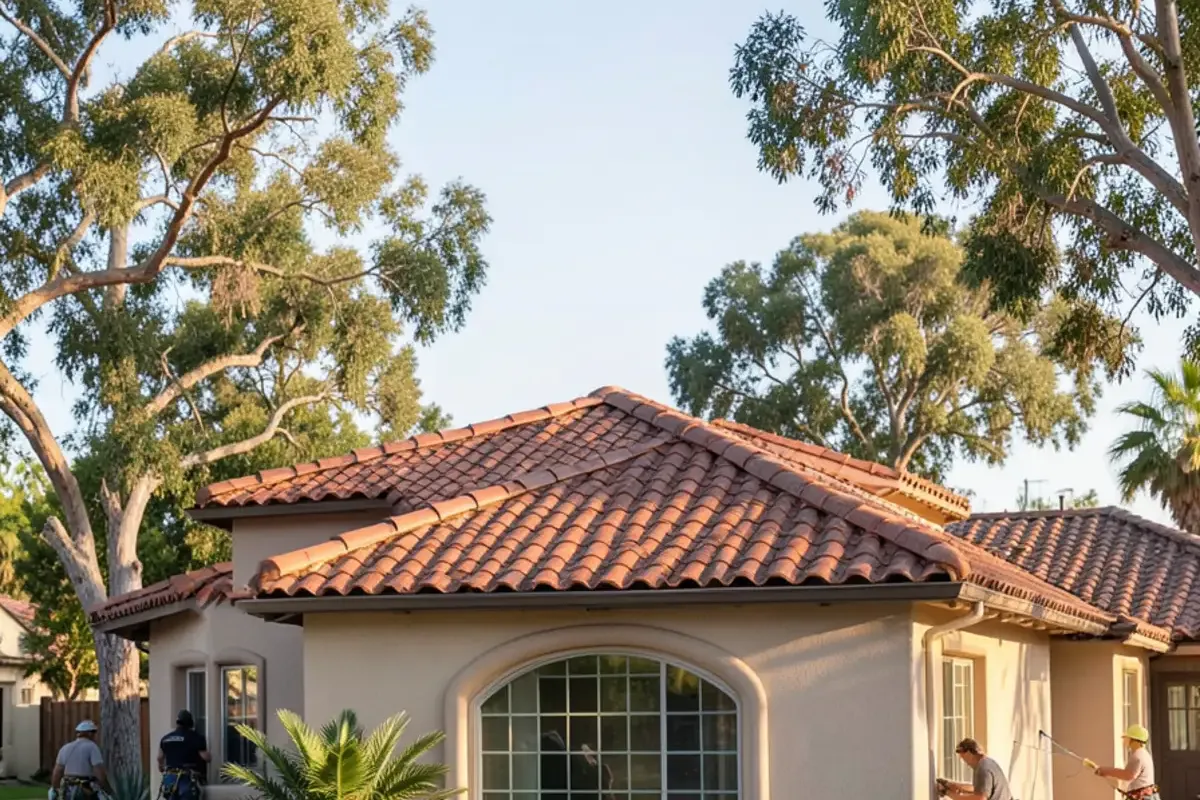
Standing seam rarely looks right on stucco arches and clay-colored walls. A barrel-tile profile in stone-coated steel keeps the Spanish look without tile's weight, which matters when a house was framed for shingles or when owners want fewer cracked pieces after workers walk the roof.
Heat, fire and wind behavior
Light metal finishes reflect a large share of summer sun and cool quickly after sunset. Many standing seam colors carry CRRC ratings that clear Title 24's steep-slope floor (0.20 reflectance after aging, 0.75 emittance). Stone-coated steel colors vary, so check the rating of the exact color.
- Fire: each system can earn a Class A assembly listing, which California demands in Very High zones like the foothill edges of Glendora and Azusa.
- Embers: eave closures and ridge details must be sealed so embers cannot get under the panels.
- Wind: Santa Ana events peak October through March; concealed clips and interlocking courses both resist uplift when spaced to the maker's instructions.
Our fire-resistant roofing work covers the closure and vent details that make a metal roof perform in ember storms.
How is each metal roof installed?
The two systems share the same first half of the job and split once the deck is ready. Knowing the sequence helps you read a quote and spot a missing step.
- Tear off the old roofing and inspect the deck, replacing soft or delaminated sheets and listing each one in writing.
- Lay underlayment suited to metal, usually a high-temperature synthetic or self-adhered sheet, since panels run hot on the underside.
- Install eave, rake and valley flashing, plus bird stops or closures where the profile leaves gaps.
- Standing seam: fix clips at the spacing the maker specifies and lock each full-length panel to its neighbor. Stone-coated steel: fasten battens or panels course by course from the eave up.
- Flash every wall, chimney and pipe with metal compatible with the panels, then set ridge and hip trim with closures beneath.
- Walk the finished roof for scratches, loose trim and debris, then schedule the final inspection.
Seam type, gauge and coating
Standing seam comes in snap-lock panels, which click together and install faster, and mechanically seamed panels, which are folded shut with a seaming tool and hold better on lower pitches and in hard wind. Thicker gauges resist dents and oil canning. Inland valley homes usually get aluminum-zinc coated steel, while aluminum panels make more sense closer to the coast, where salt air attacks steel at cut edges.
Upkeep and service life for each system
Both systems are long-lived compared with asphalt shingles, and both ask for little routine work. The upkeep differs in a few ways worth knowing before you buy.
- Standing seam: rinse off dust and leaf debris, keep gutters clear, and check sealant at pipe and vent penetrations every year or two.
- Stone-coated steel: watch for bare spots where granules have worn away, since exposed coating ages faster, and touch up with the maker's repair kit.
- Both: remove debris from valleys and behind chimneys, where wet leaves hold moisture against the metal.
- Both: keep dissimilar metals such as copper and bare steel from touching the panels.
Paint finishes on quality panels resist chalking and fading for many years, and fastener-free standing seam has fewer parts to wear out. A roof installed with the wrong trim or careless cuts will need attention much sooner, whichever system you pick.
Problems our crews find on metal roofs
Most metal roof trouble we see around Rosemead and West Covina comes from details, not the panels.
- Exposed-fastener panels sold as a cheaper alternative, with washers that have dried and cracked in the sun.
- Standing seam with clips fastened too tightly, causing waviness known as oil canning.
- Stone-coated panels with granule loss where installers or other trades walked the same path repeatedly.
- Flashing at chimneys and walls cut from a different metal, which can corrode where the two touch.
- Leaks at satellite or solar mounts drilled through panels without proper flashing.
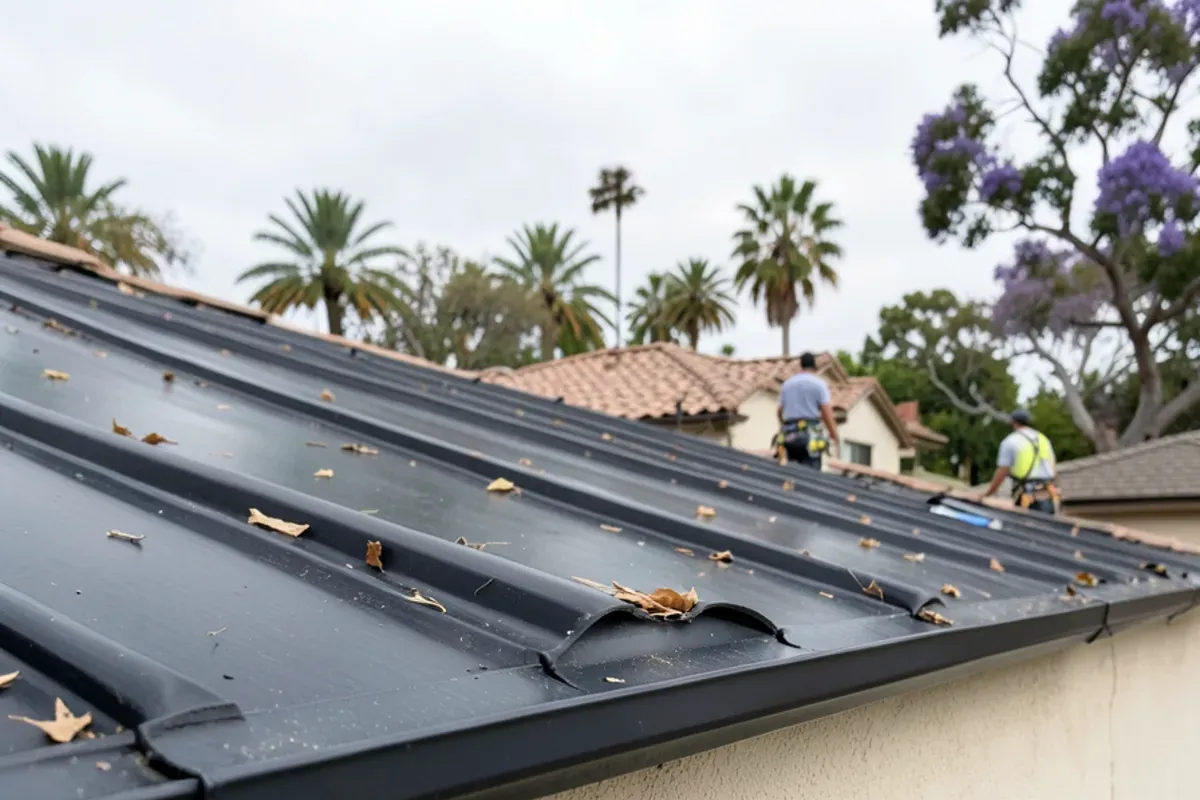
When an existing metal roof leaks, our metal roof repair visit checks seams, fasteners and flashing and photographs each before quoting.
Trade-offs we walk through before you choose
- Standing seam's hidden clips remove the fastener maintenance that exposed-screw panels need, but panels are long and specific to each slope, so a dented one is replaced eave to ridge rather than patched.
- Stone-coated steel repairs are smaller, since one course can be lifted and swapped, yet the granule finish wears where people walk and needs touch-up over the years.
- Snap-lock seams cost less and go on faster. Mechanically seamed panels cost more and take longer, but they are the safer pick on shallow slopes and windy foothill lots.
- Planning a solar-ready roof replacement favors standing seam, because seam clamps avoid new holes; stone-coated steel still works, with flashed mounts placed before the panels go down.
Choosing your metal roof
Pick the profile that matches your home's architecture, then check the color's cool-roof rating, the fastening method and how flashing and trim are detailed. Ask for manufacturer coverage and workmanship terms in writing. To compare both systems on your own house, see our metal roofing page or call (725) 745-8803 to request a quote.
Questions readers ask
Is a metal roof noisy when it rains?
Installed over a solid deck and underlayment, neither type is loud. Standing seam sounds slightly crisper than shingles in heavy rain, while stone-coated steel is close to silent because the granules and batten spacing absorb sound. Noise complaints usually come from metal installed over open framing, like barns.
Can stone-coated steel really look like clay tile?
From the street, a barrel-profile panel in a terracotta blend comes close, especially on single-story homes. Up close the panels are thinner and more uniform than real clay. It works well when weight or breakage rules out tile, and it can be a good match for Spanish-style tract homes.
Does a metal roof make a house hotter?
No. A light or cool-rated finish usually keeps the attic cooler than a dark shingle roof, because it reflects more sunlight and releases heat quickly at night. Attic ventilation and insulation still play a large part in how the rooms below feel.
Can solar panels go on a standing seam roof?
Yes, and it is one of the easiest roofs for solar. Clamps grip the raised seams, so racking attaches without drilling through the panels. Stone-coated steel can carry solar too, but mounts need flashed penetrations, so plan both projects together.
Should a San Gabriel Valley metal roof be steel or aluminum?
For most inland homes, aluminum-zinc coated steel is the usual choice. It is strong, widely stocked and holds up well in dry valley air. Aluminum costs more and dents more easily, but it does not rust, which is why it suits beach cities where salt air eats at cut steel edges and fasteners. Either way, keep trim and flashing in a compatible metal.
Sources
Written by Tylzen Spoke Roofing
A roofing contractor on Rosemead Blvd (CA-19) in Rosemead, working on shingle, tile, metal and flat roofs across the San Gabriel Valley. This guide reflects what our crews check on local roofs. Questions about your roof? Call (725) 745-8803.