
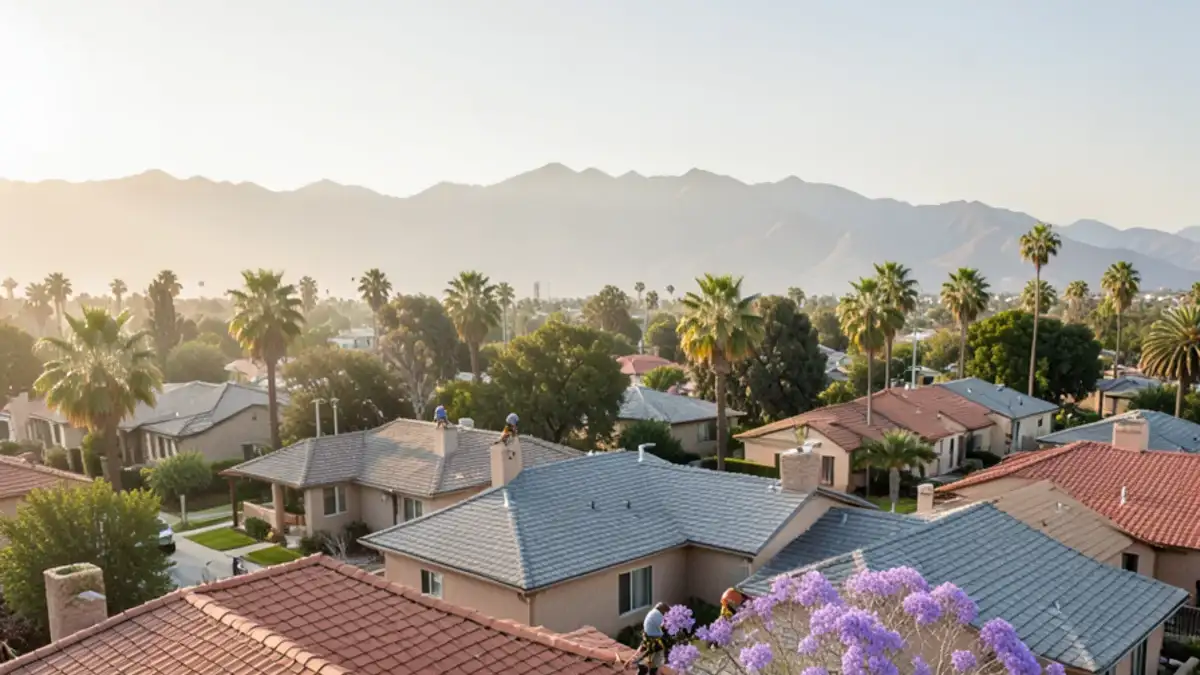
By Tylzen Spoke Roofing · Published
The best roof material for a hot climate like the San Gabriel Valley is one that reflects or sheds heat, tolerates years of strong UV, and still keeps water out when the winter storms arrive. For most homes here that means clay or concrete tile, a light-colored metal roof, or a cool-rated architectural shingle, with a reflective membrane on any flat section.
There is no single winner, because house style, roof pitch, framing and budget all narrow the choice. Below we compare how each material behaves in local heat, what Title 24 asks for on a reroof, and what we see on roofs around Rosemead and its neighbors.
What does SGV heat actually do to a roof?
Summer highs in Rosemead run roughly 78-88°F according to Weather Spark, and inland pockets of the valley get hotter. A dark roof surface sits far above air temperature on a clear afternoon. That heat does three kinds of damage.
- UV breakdown: sunlight dries the asphalt in shingles and the rubber in pipe boots, so they crack and shed granules.
- Thermal cycling: materials expand in the afternoon and shrink overnight, which loosens fasteners and opens sealant joints.
- Attic heat: a hot roof deck radiates into the attic, cooks the underlayment from below and pushes up cooling bills.
Then roughly 14-16 inches of rain falls in a few months, mostly November through March. A roof that looked fine in September can leak in its first December storm because the summer quietly opened every weak joint.
Want a roofer to look at it?
Call with your address and what you are seeing. We visit same-day or next-day when crews are free.
- 4.9 from 48 Google reviews
- Based on Rosemead Blvd
- Photos and a written quote before work
How common roof materials compare in hot, dry summers
| Material | Heat and UV behavior | Weak point here | Best fit |
|---|---|---|---|
| Architectural asphalt shingle | Dark colors absorb heat; cool-rated colors reflect more | Granule loss and brittle tabs after many summers | Post-war ranch and tract homes on a budget |
| Clay tile | Natural color does not fade; air gap under the tile vents heat | Underlayment beneath wears out before the tile | Spanish Revival and Mediterranean homes |
| Concrete tile | Heavy mass slows heat transfer; color can fade | Surface wear and cracked pieces from foot traffic | 1970s-2000s hillside and planned-community tracts |
| Metal (standing seam or stone-coated) | Reflective finishes shed heat quickly and cool fast at night | Fastener and seam details must allow for movement | Ranch homes, modern designs, re-covers where weight matters |
| Flat membrane (TPO or coated roof) | White surfaces reflect most of the sun | Seams, drains and ponding, not the heat itself | Additions, garages, patio covers, apartments |
Tile and metal usually handle heat best over the long run. Shingles remain the most common choice on valley tract homes because they are lighter, simpler and less costly up front. Our asphalt shingle roofing page covers line and color options, and tile roofing explains clay and concrete profiles.
Do cool roofs make sense in Climate Zone 9?
Under the California Energy Code map, Rosemead and nearly all of the surrounding valley fall in Climate Zone 9. Title 24, Part 6 can bring cool-roof rules into play once half or more of a pitched roof is being replaced. For homes in zones with the requirement, the floor is 0.20 aged reflectance paired with 0.75 emittance; an SRI of 16 is the alternate route.
Weathered dark shingles usually land somewhere around 0.05 to 0.15 reflectance, well short of that floor for a typical charcoal color. Products must be rated and labeled by the Cool Roof Rating Council. The code also lists exceptions: roofs at or above 25 lb/ft² (most tile qualifies), ceilings insulated to R-38, a radiant barrier, or an attic with no ductwork. Your local building department has the final word.
Our cool roof installation service handles the product selection and paperwork for permitted reroofs.
Ventilation matters as much as the roof surface
Even the most reflective material underperforms over a sealed, stuffy attic. Balanced intake at the eaves and exhaust near the ridge lets hot air escape, which protects the underlayment and keeps rooms below cooler.
- Check that eave vents are not painted over or blocked by insulation.
- Confirm there is an exhaust path: ridge vent, roof vents or gable vents.
- Look for ducts running through the attic, since they gain heat all afternoon.
- Ask whether a radiant barrier fits your roof replacement scope.
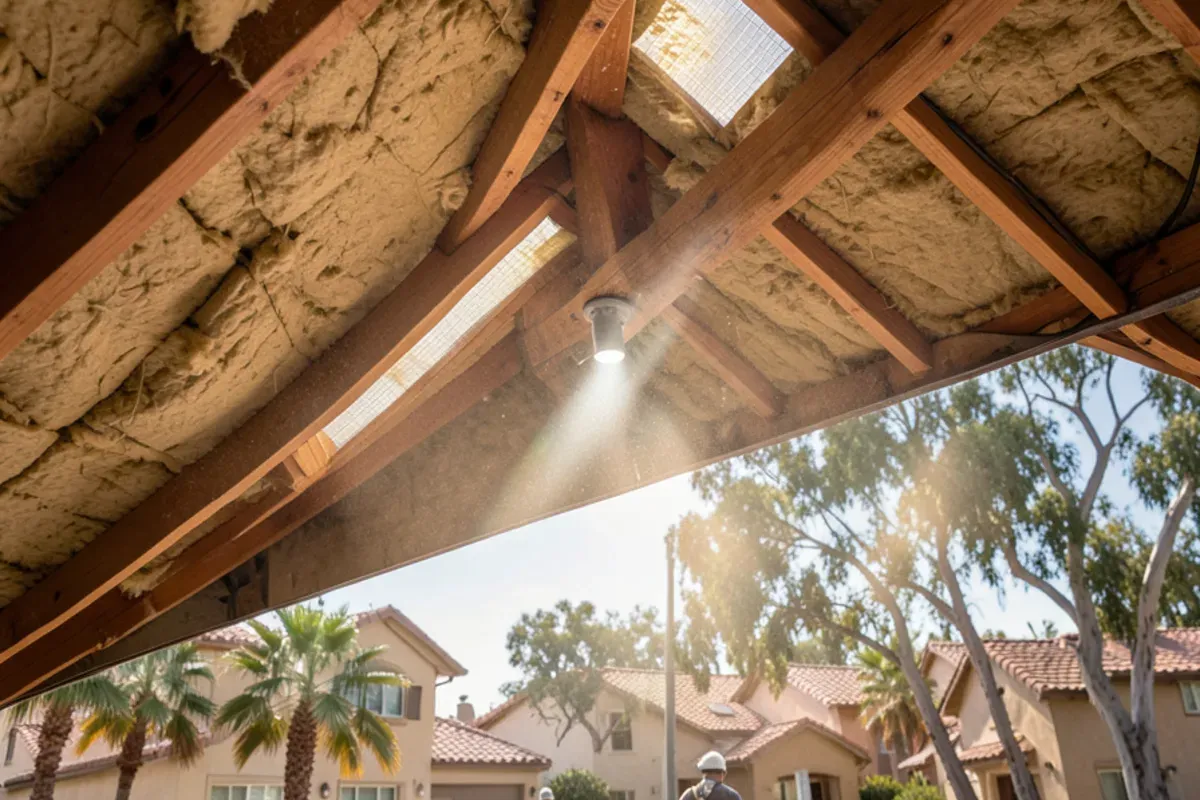
If the attic fails those checks, fixing airflow is often cheaper than upgrading the roofing itself. Our attic ventilation work covers adding intake, clearing blocked soffits and choosing an exhaust that suits the roof shape.
What we see on San Gabriel Valley roofs every summer
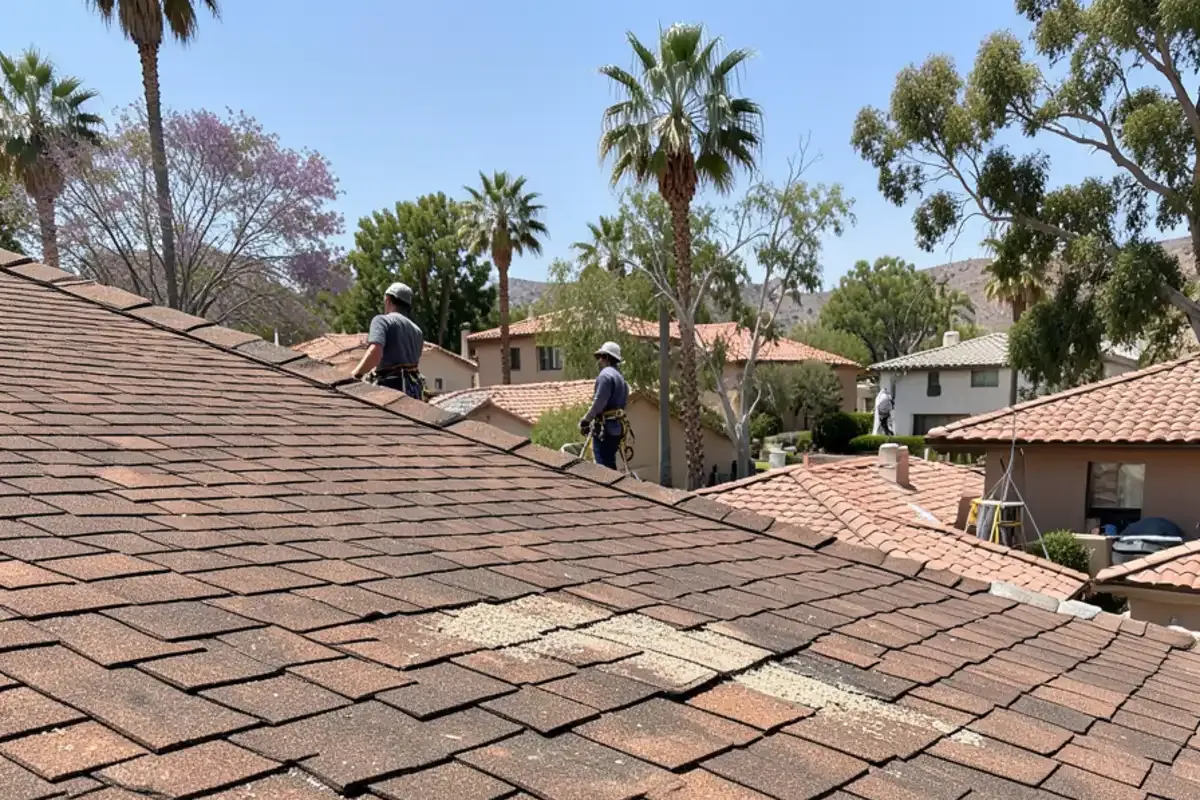
Our crews spend a lot of time on post-war homes in Rosemead, El Monte and the cities around them, and heat damage follows a familiar pattern.
- South- and west-facing slopes wear out years before the north side of the same roof.
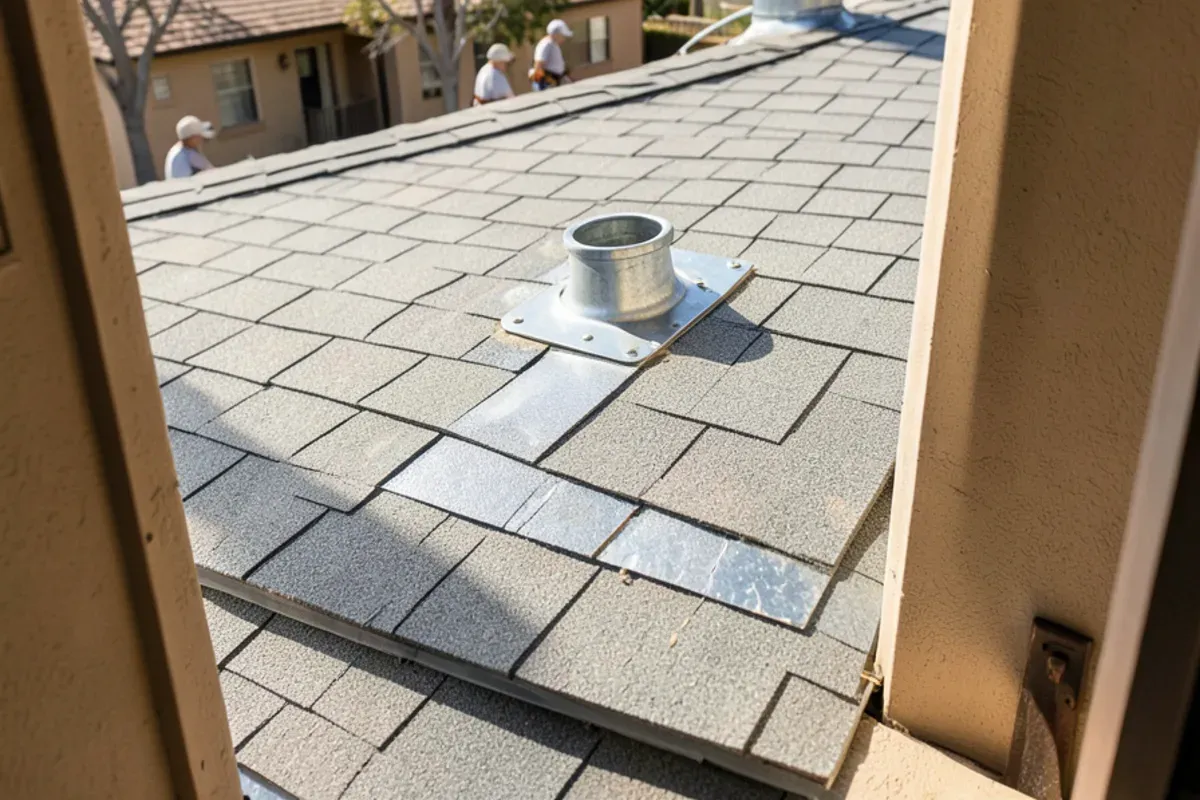
- Pipe boots crack long before the shingles around them, so a newer roof can still leak at a vent.
- From the curb a tile roof can look flawless even when the felt beneath it has dried out and split.
- Dark shingles over unvented attics show curling and blistering sooner than light ones over vented attics.
When we inspect, we photograph each slope separately so you can see the difference between sun-facing and shaded sides before deciding on repair or replacement.
The honest trade-offs between heat-friendly materials
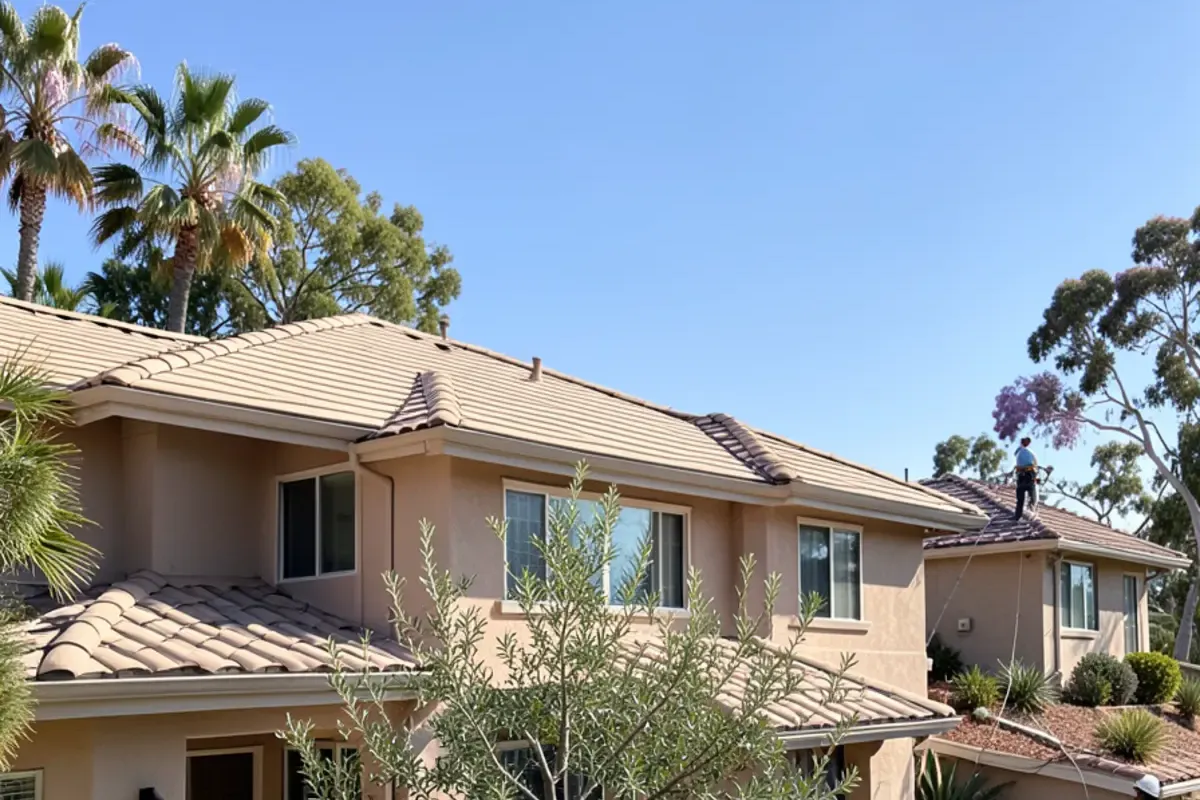
- Tile handles heat for decades, but it weighs several times more than shingle, and the underlayment beneath it still wears out, which means lifting and relaying every piece when that day comes.
- Light-colored metal sheds heat fast and suits a low ranch roof, yet it costs more up front, and panels must be fastened so they can slide with the daily expansion and contraction.
- Cool-rated shingles keep shingle pricing and clear Title 24 without an exception, though the color range is narrower than in standard lines.
- White flat-roof membranes reflect the most sun, but they throw glare at nearby second-story windows and need an occasional rinse to hold their reflectance.
Which hidden layers decide how a hot roof ages?
The surface gets the attention, but in valley heat the layers under it often fail first. Three details are worth asking about on any quote, whatever covering you choose.
Underlayment that can take attic heat
Under tile, the underlayment is the real waterproofing, and years of trapped summer heat are what dry out and split old felt. Many tile reroofs now use a synthetic or heavier modified underlayment, which is the core of tile underlayment replacement. Metal panels run hot on the underside too, so manufacturers usually call for a high-temperature underlayment beneath them. Ask which product your quote lists and why.
Aged reflectance, not the brochure number
The Cool Roof Rating Council publishes two figures for each rated product: an initial value measured on a new sample and an aged value taken after three years of outdoor weathering. Title 24 uses the aged figure. Bright white surfaces usually lose some reflectance as dust and grime settle, so compare aged numbers when two colors look equally cool on paper.
Boots, sealant beads and ridge pieces
Rubber pipe boots, exposed sealant and ridge caps take the full afternoon sun. On a new roof we would rather use metal or silicone-collared boots and flash joints mechanically than lean on caulk, because an exposed caulk bead is usually the first thing a Rosemead summer cracks.
Picking the right material for your house
Start with the framing and the style. A house built for shingles may need an engineering check before carrying tile. A Spanish Revival home usually looks wrong in anything but tile or a tile-profile metal. Then weigh heat performance, Title 24 compliance and budget. We can lay out those choices with photos from your roof in hand: call (725) 745-8803, or fill out the quote request.
Questions readers ask
Is metal or tile cooler for a San Gabriel Valley home?
Both perform well. Tile's mass and the air space beneath it slow heat getting into the attic. Light-colored metal reflects sunlight and cools off fast after sunset. The difference in comfort usually depends more on attic ventilation and insulation than on which of the two you choose.
Do dark shingles wear out faster in Southern California heat?
They tend to run hotter, which speeds up drying of the asphalt and granule loss, especially on south- and west-facing slopes. A lighter or cool-rated color and good attic ventilation both reduce that wear. Shingle quality and installation still matter more than color alone.
Will a cool roof lower my electric bill?
It usually reduces attic heat, which helps most when ducts or living space sit under the roof. Savings vary by house. Since SCE, not LADWP, serves Rosemead and most valley cities, look up what SCE and Energy Upgrade California currently offer before counting on any rebate.
Can I put tile on a house that has always had shingles?
Sometimes. Tile weighs far more than shingles, so the rafters and sheathing must be checked, and some homes need reinforcing. Lightweight concrete tile and stone-coated steel pressed in a tile profile are the usual options when the existing framing cannot carry standard tile.
Does valley dust reduce how well a cool roof works?
Yes, to a degree. Dust, pollen and soot settle on light surfaces and lower their reflectance, which is why the Cool Roof Rating Council rates products after three years of outdoor weathering and why Title 24 relies on that aged value. A gentle rinse of a white membrane or coating before summer helps. Skip the pressure washer, which can strip granules and thin coatings.
Sources
- California Energy Commission: Building Energy Efficiency Standards (Title 24, Part 6)
- Cool Roof Rating Council: rated products directory
- ENERGY STAR: roof products
- Cool Roof Rating Council: Product Rating Program (initial and three-year aged values)
- Lawrence Berkeley National Laboratory: soiling of building envelope surfaces and solar reflectance
Written by Tylzen Spoke Roofing
A roofing contractor on Rosemead Blvd (CA-19) in Rosemead, working on shingle, tile, metal and flat roofs across the San Gabriel Valley. This guide reflects what our crews check on local roofs. Questions about your roof? Call (725) 745-8803.