
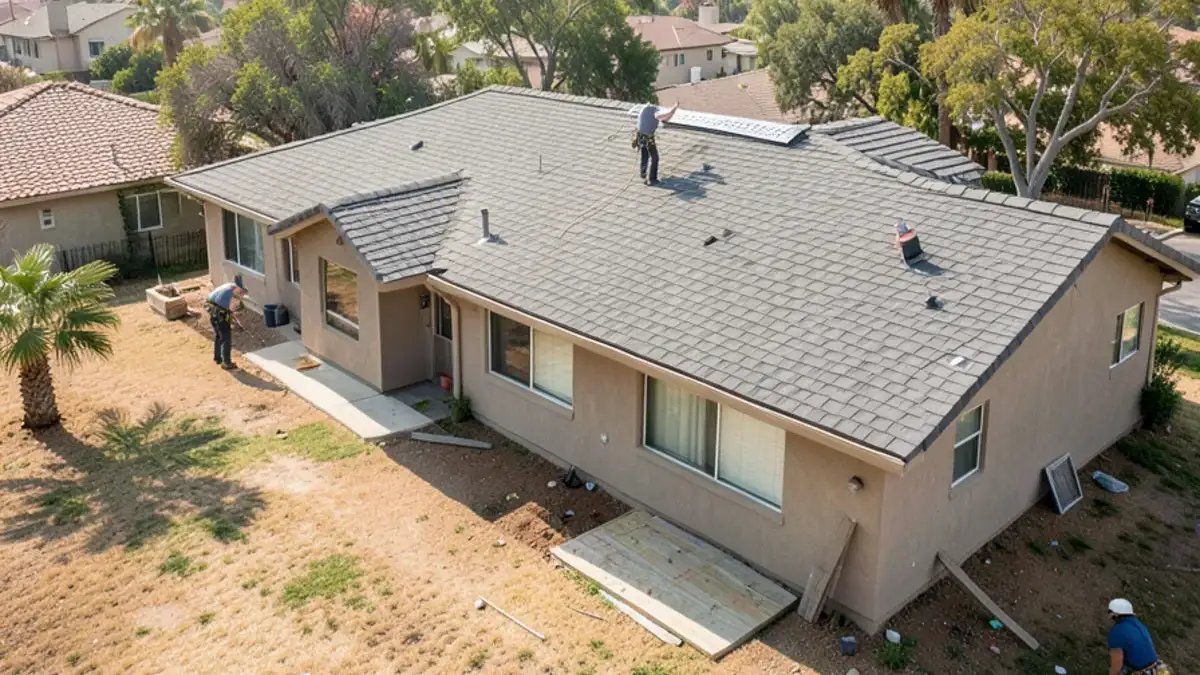
Attic ventilation in Rosemead decides how hot your attic gets on an 88-degree afternoon and how long the roof above it lasts. We open blocked eave vents, add ridge or off-ridge exhaust, install attic fans where they make sense, and replace old screens with ember-resistant vents. This work is part of our roof maintenance services, and it usually starts when an owner asks why one upstairs bedroom never cools down.
Southern California attics carry an extra load: many homes here run their air-conditioning ducts through the attic. A poorly vented attic heats the ducts, the air inside them and the ceiling below, all at once.
Attic ventilation in Rosemead: signs of a hot, under-vented attic
- Upstairs rooms run several degrees hotter than downstairs and stay warm late into the evening.
- Opening the attic hatch on a summer afternoon feels like opening an oven.
- Shingles on the upper slopes blister or lose granules faster than the lower ones.
- The air conditioner runs long after sunset.
- Rust on nail tips or dark spots on roof boards, often from a bath fan venting into the attic.
- Eave vents painted over, or buried under insulation when you look from inside.
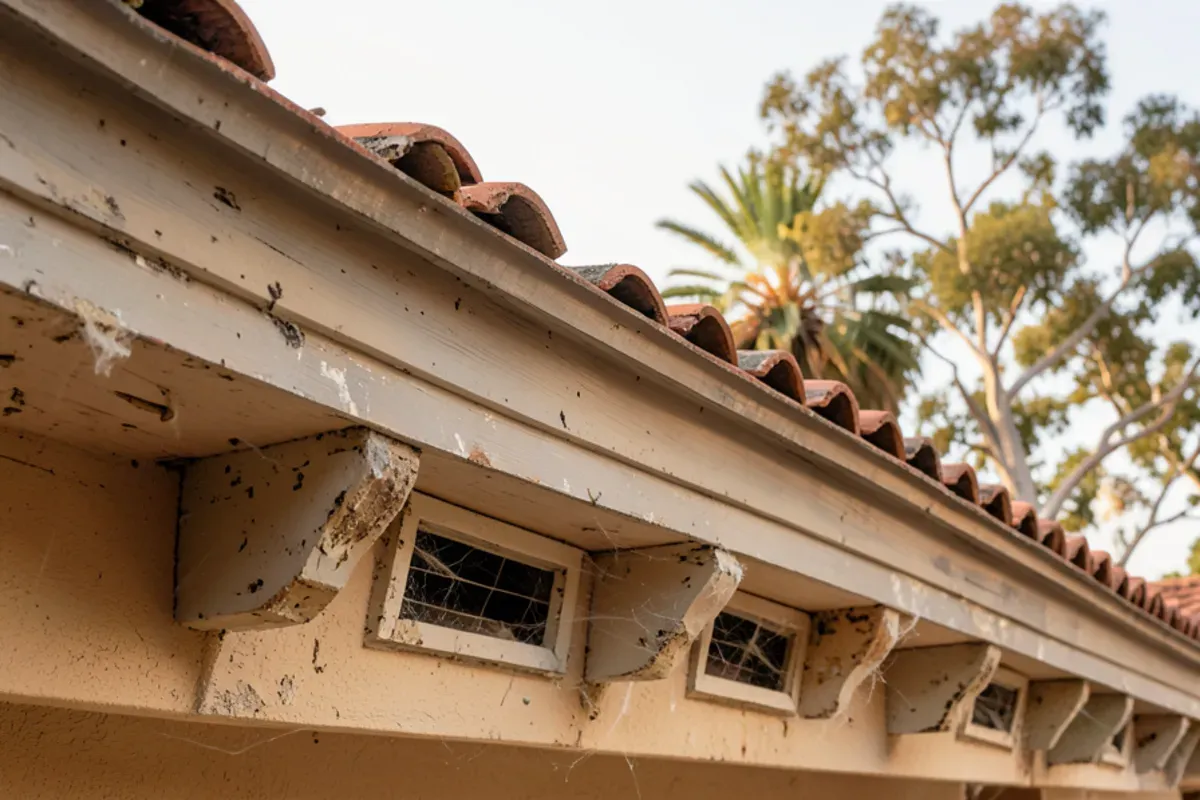
Post-war stucco homes often vent the attic through small screened holes in the frieze blocks between rafters. Years of exterior paint and blown-in insulation close many of them, leaving the attic with exhaust and no intake.
Soffit vents, ridge vents and attic fans: the options
Intake at the eaves
Soffit vents, frieze-block vents and eave vents let cool air in low. They only work if the path above them is open, so we add baffles between rafters to hold insulation back.
Exhaust near the ridge
A shingle-over ridge vent runs the length of the ridge through a cut slot. Box or off-ridge vents sit just below the ridge. Gable vents work on simple roofs. Tile roofs use low-profile vents that sit within the tile courses.
Powered and solar attic fans
A thermostat-controlled electric fan pushes air out hard. A solar attic fan needs no wiring but runs only in sun and moves less air.
| Vent type | Moves air by | Fits | Watch out for |
|---|---|---|---|
| Ridge vent | Rising warm air, all day | Shingle and metal roofs with a usable ridge | Needs matching intake; needs an internal baffle |
| Box or off-ridge vents | Rising warm air | Hip roofs with short ridges | Count and placement must match the attic |
| Gable vents | Cross breeze and rising air | Simple gable roofs | Can short-circuit a ridge vent |
| Tile roof vents | Rising warm air | Clay and concrete tile | Must be flashed into the underlayment, not the tile |
| Electric attic fan | Motor and thermostat | Attics with limited passive exhaust | Can pull conditioned air from the house |
| Solar attic fan | Solar-powered motor | Sunny slopes, no wiring | Runs only in sun; smaller air volume |
Should you choose a ridge vent installation or a powered fan?
Start with a balanced passive system. Clear intake at the eaves plus a ridge vent or off-ridge vents moves air every hour of the day with no motor to fail. Powered fans are a tool for attics that cannot fit enough passive exhaust.
Fans have two catches. A strong fan can depressurize the attic and pull cooled air out of the house through ceiling gaps, and where a gas water heater or furnace sits nearby it can draw exhaust gases back down the flue. A fan mixed with a ridge vent also pulls air in through the ridge instead of the eaves, which defeats both.
Sizing starts with the California Residential Code (Section R806): 1 square foot of net free vent area for every 150 square feet of attic floor, or 1 per 300 when intake and exhaust are balanced. A 1,500 square foot attic needs 10 square feet at the first ratio, or 5 at the second, split between eaves and ridge.
What about sealing the attic instead?
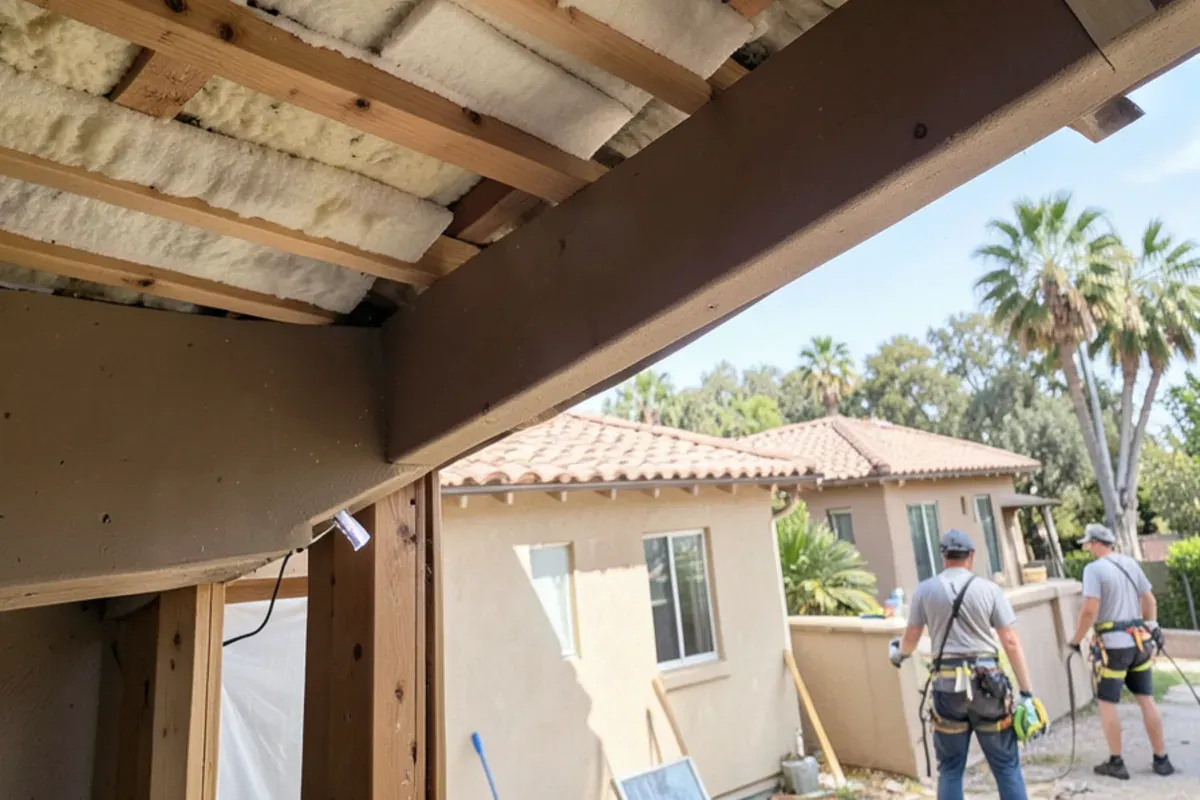
Some owners ask about the opposite approach: an unvented attic with foam insulation sprayed under the roof deck, which brings the ducts inside conditioned space. The California Residential Code allows it only when every condition in Section R806.5 is met, it is a far larger job than vent work, and some shingle makers limit coverage over foam-sprayed decks. For most Rosemead homes with ducts in a vented attic, clearing intake and balancing exhaust is the practical first step.
Ember resistant attic vents in fire hazard zones
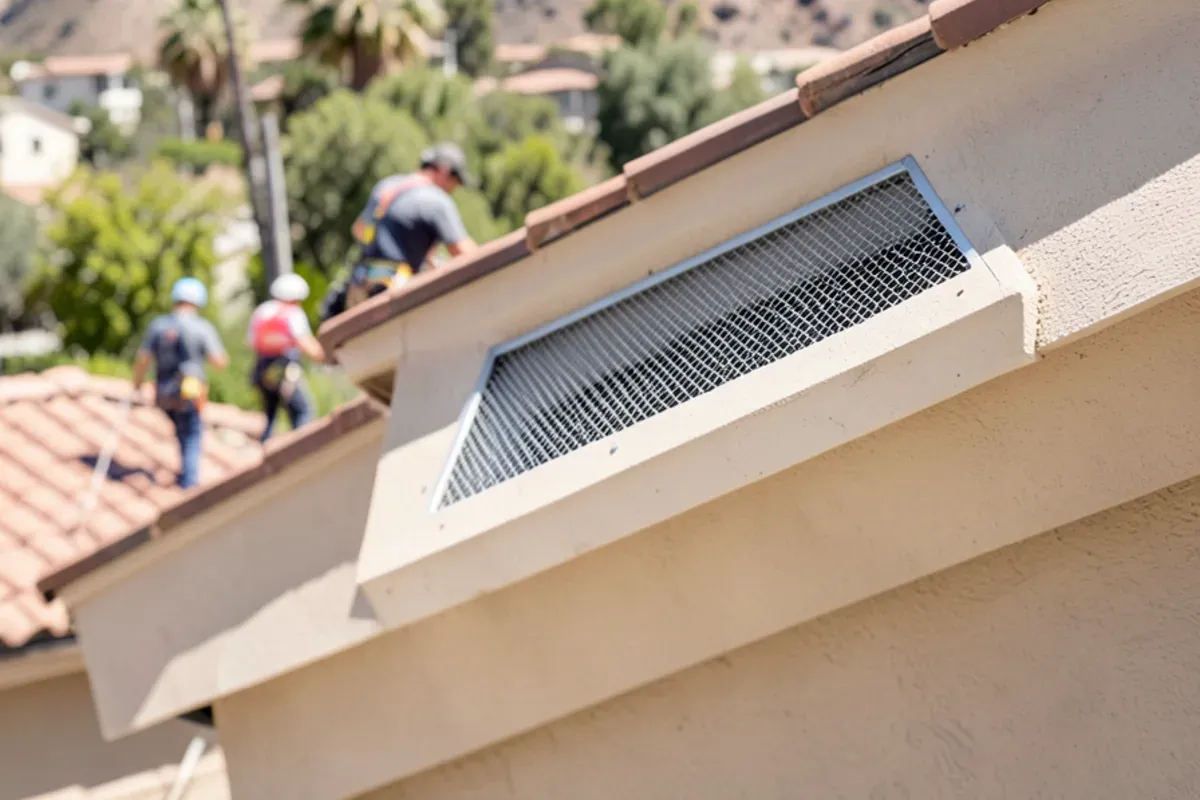
Wind-blown embers enter houses through vents. In Very High Fire Hazard Severity Zones, California Building Code Chapter 7A and Residential Code R337 require ember-resistant vents with mesh between 1/16 and 1/8 inch, along with Class A roof assemblies. Mapped zones reach into foothill parts of Glendora, Azusa, Sierra Madre, Monrovia and Altadena, where the Eaton Fire burned much of the community in January 2025.
Some vents are tested for ember and flame intrusion under ASTM E2886, which goes beyond a fine screen. We match the vent to your zone and your roof, and our fire-resistant roofing page covers the rest of the assembly.
Need attic ventilation help this week?
Tell us what you are seeing. We schedule same-day or next-day visits when crews are free and send photos with a written quote.
- 4.9 from 48 Google reviews
- Based on Rosemead Blvd
- Photos and a written quote before work
Hot attic fix: how a ventilation job runs
- We measure the attic floor, count existing intake and exhaust, and look for blocked eaves and bath fans venting inside.
- You get photos and a written, line-by-line plan and quote.
- Intake comes first: we open or add eave vents and install baffles so insulation stays clear.
- Exhaust follows: a ridge slot is cut and capped, or off-ridge or tile vents are flashed in.
- Bath and kitchen fans are ducted to the outside rather than into the attic.
- We photograph the finished work from inside and out.
Most single-story jobs take a day. Tile roofs take longer because vents are set into the courses and flashed into the underlayment. A powered fan that needs new wiring may need a permit, which we pull when it applies.
Cutting a ridge slot or flashing new vents into the roof is roofing work, so California requires a CSLB-licensed contractor once the job passes $1,000 in labor and materials; look up any license at cslb.ca.gov. Outside fire zones, the residential code still calls for vent openings screened with corrosion-resistant mesh between 1/16 and 1/4 inch, which keeps birds and rodents out. Inside Very High zones, the tighter 1/8 inch limit from Chapter 7A applies. Venting done during a full reroof falls under that reroof's permit from the city or LA County Public Works.
What affects the cost of attic venting repairs?
- Roof material: cutting vents into tile takes more labor than shingle.
- Length of ridge and the number of vents the attic needs.
- Eave access, since stucco soffits and frieze blocks need careful cutting.
- Baffles, and moving or topping up insulation at the eaves.
- Passive vents versus a fan, and any electrical work.
- Ember-resistant vents in fire hazard zones.
- Rerouting bath or kitchen fans that vent into the attic.
Ask about payment options once the plan and quote are in front of you.
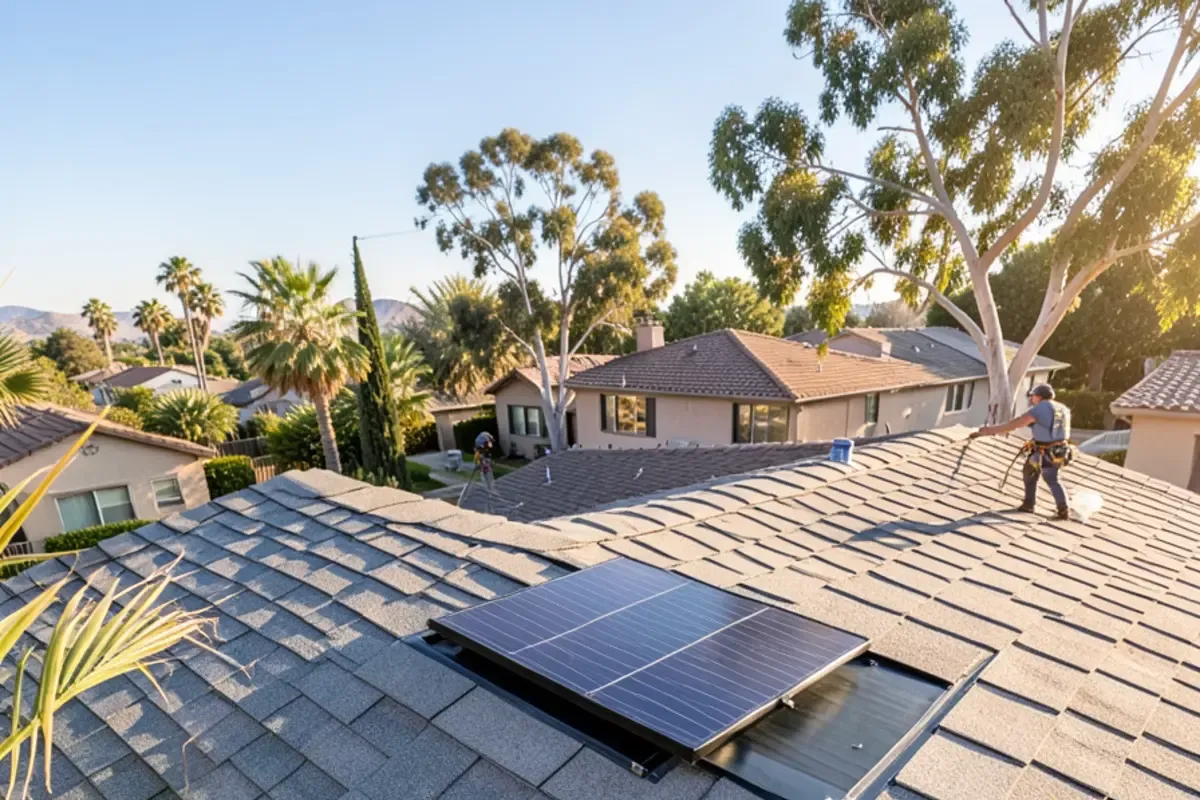
Why homeowners ask Tylzen Spoke to fix hot attics
- A Google rating of 4.9 stars from 48 reviews, as of November 2026.
- Photo-documented findings and a written quote before anything is cut.
- Reviewers say we explain the options plainly, including when a cheaper passive fix will do.
- Same-day or next-day visits when crews are free.
Market examples include ridge and box vents from Air Vent and Lomanco, GAF Cobra ridge vents, low-profile tile vents from O'Hagin, and ember-resistant vents from Vulcan Vents and Brandguard Vents. We name them only as examples; the right vent depends on the roof and the fire zone.
Shingle makers often tie their coverage to proper attic ventilation, and the terms vary by product line. Workmanship terms for our work are written into the contract. Get both in writing and confirm whether they follow the house to a new owner. Keep eave vents free of paint and insulation, and rinse solar fan panels when you clean the gutters.
Ventilation works hand in hand with attic insulation, and a roof inspection includes an attic check if you are not sure where to start. We fix hot attics in Glendora, Azusa and Covina, as well as Rosemead.
What customers say on Google
4.9★ from 48 Google reviews (checked Nov 2026)
“William was very professional and easy to work with. We had a long-term roof leak around the attic and a room on the second floor, and several roofing contractors came out to inspect it and give estimates. William clearly had the strongest roofing experience, explained the problem in simple terms, and his price was competitive too. …”
“A recent strong wind loosened a shingle on my roof in Rosemead. It took just one call, and Tanner came out the very next day to help. While we talked, I mentioned how thankful I still am for the excellent roofing work the crew did years ago, which has continued to hold up very well. …”
“awesome roofing team that does solid work. i couldn’t be happier with how my new roof turned out. after the roof replacement was finished, there was a small issue related to the original roof design, not the installation, and david went above and beyond by coming out quickly with william to take care of it himself. …”
Where we handle attic ventilation
- Rosemead
Post-war Rosemead stucco homes often vent through frieze-block holes that years of paint and blown-in insulation have closed off.
- Temple City
Large two-story rebuilds under hip roofs often have short ridges, so off-ridge vents and open eaves carry the exhaust load.
- Glendora
Foothill homes in Very High fire zones need eave and gable vents with 1/16 to 1/8 inch mesh, a lesson the Colby Fire taught.
- Altadena
Homes rebuilt or repaired after the Eaton Fire need ember-resistant attic vents as part of meeting Chapter 7A in Very High zones.
- Sierra Madre
Canyon-edge streets in Very High fire zones get ember-resistant vents sized so the attic still breathes through summer heat.
- El Monte
Single-story homes with ducts in low, cramped attics show blocked eave vents first as bedrooms that never cool down.
- Monterey Park
Split-level hillside houses often have several small attic spaces, and each one needs its own intake and exhaust path.
- San Gabriel
Older homes with bath fans dumping into the attic show rusted nail tips and dark sheathing that proper ducting and venting stop.
- Arcadia
Large tile-roofed homes need low-profile vents set within the courses and flashed to the underlayment rather than ridge slots.
More places we handle attic ventilation
Attic Ventilation questions
How do I know if my attic is under-ventilated?
Check three things on a summer afternoon: whether upstairs rooms run much hotter than downstairs, whether the attic air feels like an oven when you open the hatch, and whether you can see daylight or screens at the eaves from inside. Insulation pushed against the eaves or paint over vent screens usually means intake is blocked.
Ridge vent, attic fan or solar fan: which works best here?
For most Rosemead homes, a balanced passive system: clear eave intake plus a ridge vent or off-ridge vents. It has no motor and keeps moving air whenever the attic is warmer than outside. Powered fans help attics that cannot fit enough passive exhaust, but they should never be mixed with a ridge vent, and they need a well-sealed ceiling.
Can adding vents cause roof leaks?
Only when they are installed badly. Every vent is a hole in the roof, so its flashing must lap under the roofing above and over the roofing below, and ridge vents need an internal baffle against wind-driven rain. Installed to the maker's instructions, vents stay dry. Putting the wrong vent on a low slope is the usual mistake.
Do I need ember-resistant vents if I'm not in a fire zone?
Code requires them only in Very High Fire Hazard Severity Zones, which reach into foothill parts of Glendora, Azusa, Monrovia and Altadena. Elsewhere they are optional. Many owners near the foothills choose them anyway after the Eaton Fire, since embers travel well beyond a mapped line. Check your address on the CAL FIRE hazard map.
Will better ventilation lower my electric bill?
It lowers attic and duct temperatures, which eases the load on your air conditioner, but the savings vary with insulation, duct condition and how you run the AC. Ventilation and insulation work as a pair. Check SCE and Energy Upgrade California for any current offers on related upgrades.
Can ventilation be fixed without replacing the roof?
Yes. Clearing eaves, adding baffles, installing off-ridge or tile vents and rerouting bath fans can all be done on an existing roof. Cutting a continuous ridge vent into tile is harder, so tile homes often get low-profile vents instead. A reroof is still the easiest moment to redesign the whole system.