
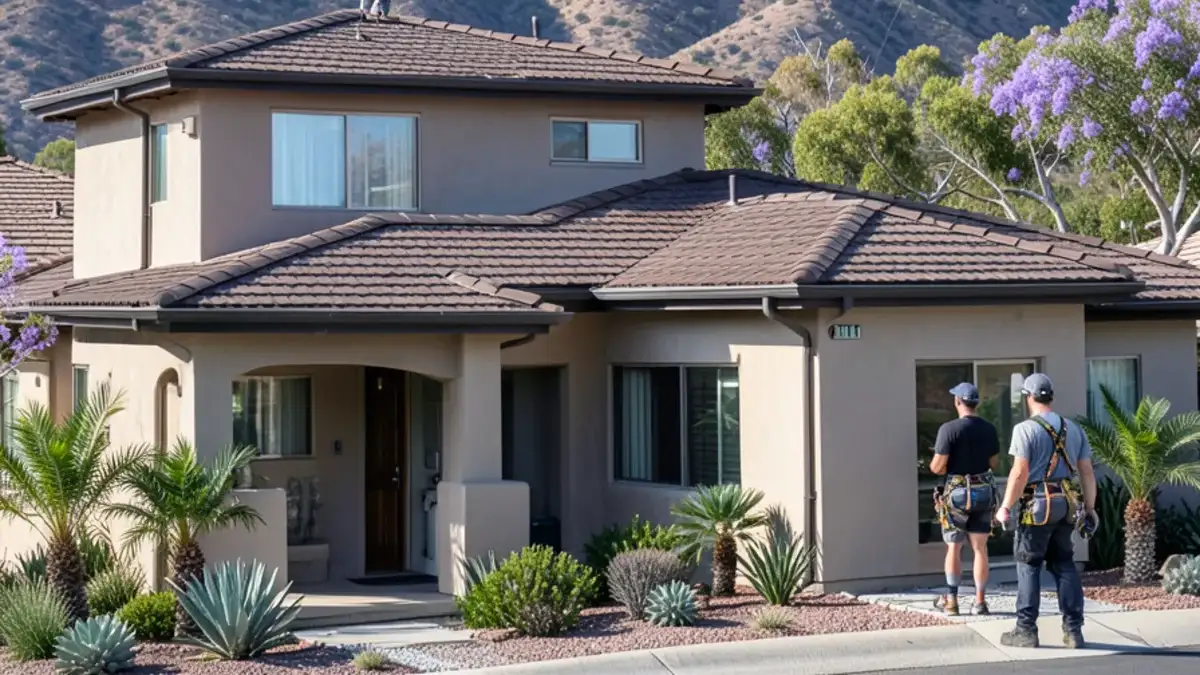
By Tylzen Spoke Roofing · Published
Eaton Fire rebuild roofing in Altadena and nearby foothill neighborhoods has to meet California's wildfire building rules: a Class A roof assembly, ember-resistant vents with 1/16 to 1/8 inch mesh, blocked openings at the eaves under tile, metal valley flashing and gutters protected from collecting leaves. Those rules come from California Building Code Chapter 7A and Residential Code Section R337, which apply in mapped fire hazard zones.
This guide walks through each requirement, the material choices that meet it, and who issues the permit. Our fire-resistant roofing page covers the assemblies we install.
Who issues the permit for an Altadena or Pasadena rebuild?
It depends on which side of a city line your lot sits. Altadena is unincorporated, so rebuild permits there, including the roof, come from LA County Public Works Building & Safety. A lot inside Pasadena city limits goes through the City of Pasadena's own building department. Other unincorporated foothill pockets near the burn area also fall under the county.
Mailing addresses can mislead. A Pasadena mailing address does not always mean the City of Pasadena has jurisdiction. Check your parcel against the county's records before you or your builder file anything. We do not quote permit fees or review times because they change; the issuing office is the source for both.
Want a roofer to look at it?
Call with your address and what you are seeing. We visit same-day or next-day when crews are free.
- 4.9 from 48 Google reviews
- Based on Rosemead Blvd
- Photos and a written quote before work
What does a Class A roof assembly actually mean?
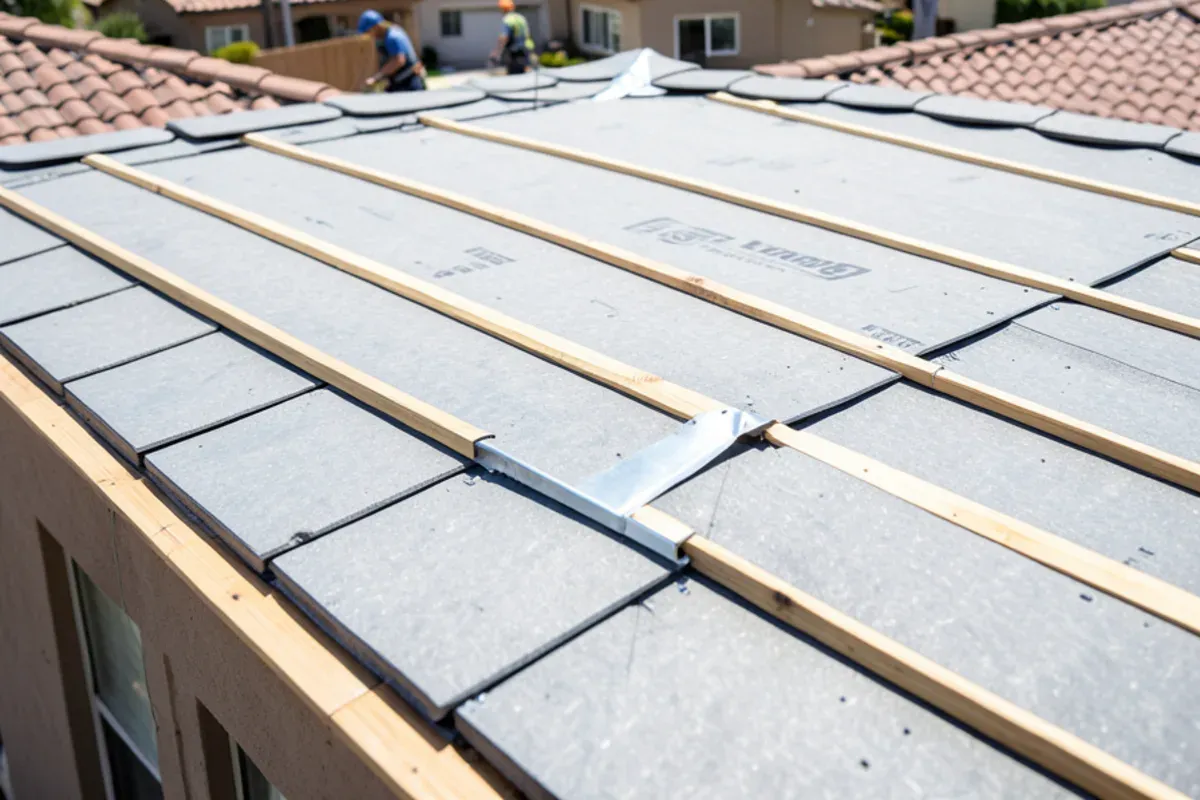
Roof coverings are rated Class A, B or C based on standardized fire tests that measure how well they resist flame spread and burning brands landing on top. Class A is the highest rating. The word assembly matters: some products earn Class A on their own, while others only reach it when installed over a specific underlayment or cap sheet listed by the manufacturer.
That is why a rebuild plan should name the exact product and the underlayment it was tested with. Swapping the underlayment on site to save time or money can quietly drop the assembly out of its rating.
Roof materials that work for a fire-zone rebuild
| Material | Fire rating notes | Weight and structure | Other considerations |
|---|---|---|---|
| Asphalt shingle | Most current shingles are Class A | Light; standard framing | Title 24 cool-rated colors usually needed |
| Concrete tile | Class A | Heavy; framing must be designed for it | Eave openings must be blocked |
| Clay tile | Class A | Heavy; framing must be designed for it | Eave openings must be blocked; traditional look |
| Standing seam metal | Often Class A as an assembly with a listed underlayment | Light | Check the listing and the underlayment |
| Stone-coated steel | Often Class A as an assembly | Light | Profile mimics tile or shake |
Because a full rebuild is new construction, the framing can be designed for whatever weight you choose. That freedom does not exist on most reroofs, so it is worth deciding on the roof material early, before the structural plans are finished.
Picking a rebuild roof: trade-offs beyond the Class A label
Every option in the table can pass the fire rules, so the choice comes down to what else each one asks of the house. These are the trade-offs we lay out for rebuild owners.
Tile: long life, heavier framing, more detail at the eaves
Clay and concrete tile suit the foothill look and outlast several shingle roofs, but the framing has to be engineered for the load, and every open eave end needs fire-stopping that must stay in place for the life of the roof. Tile also makes later solar work slower, because crews lift and reset tile around each mount.
Metal: light and quick to flash, but sensitive to its listing
Standing seam and stone-coated steel keep the structure light and shed pine needles well. Their Class A rating often depends on the underlayment named in the listing, so substitutions are where these roofs go wrong. Standing seam also accepts clamp-on solar attachments that grip the seams instead of drilling through the panels.
Shingles: lowest cost, shortest service life
Class A shingles are the cheapest way to meet the code and the easiest to repair. They wear out sooner than tile or metal in hillside sun and wind, so an owner choosing them should expect to reroof while the rest of the house still looks new. A cool-rated color will usually be needed under Title 24 as well.
Vents, gutters and eaves: where embers get in
Most homes that burn in wildfires are lit by embers, not by a wall of flame. Embers drift into openings and land in debris. The code targets those spots:
- Attic and eave vents: ember-resistant vents with corrosion-resistant mesh between 1/16 and 1/8 inch, or vents tested for ember and flame resistance.
- Tile eave ends: the open ends of curved tile are fire-stopped, or a mineral-surfaced cap sheet is installed beneath.
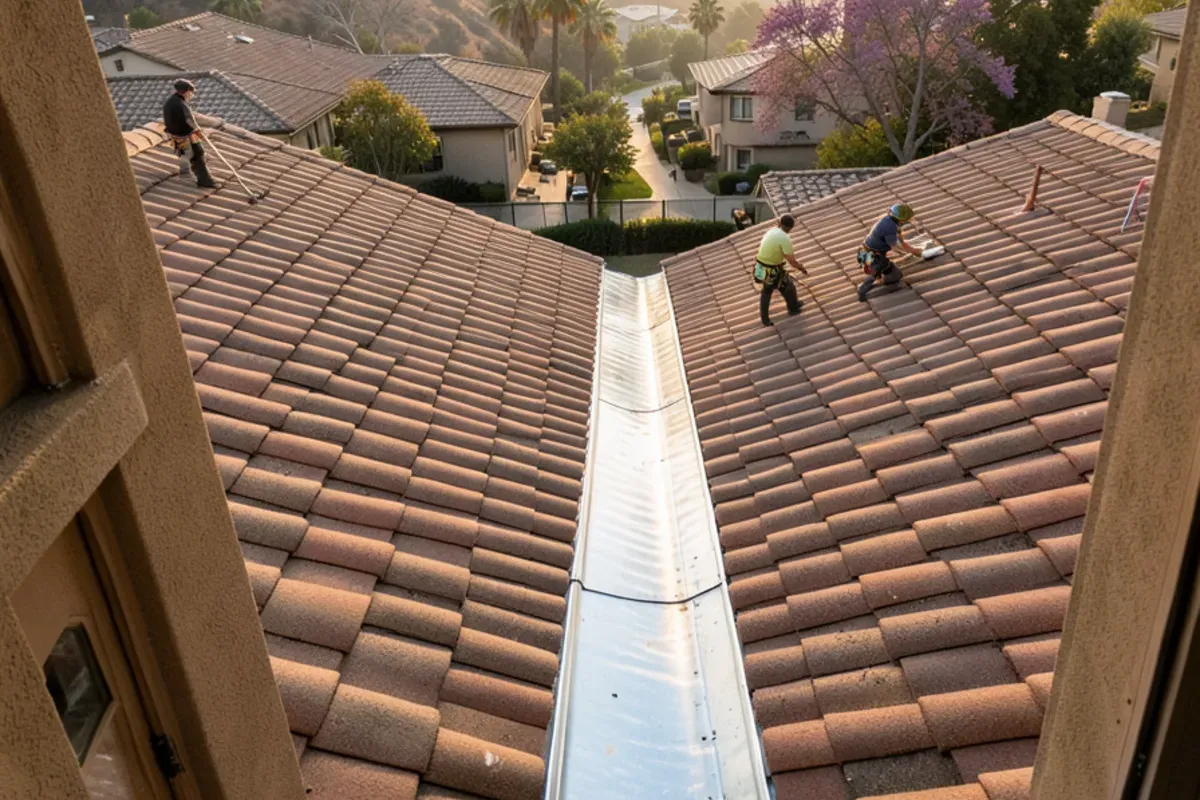
- Valleys: metal valley flashing over an underlayment strip, so needles and leaves cannot ignite the roof below.
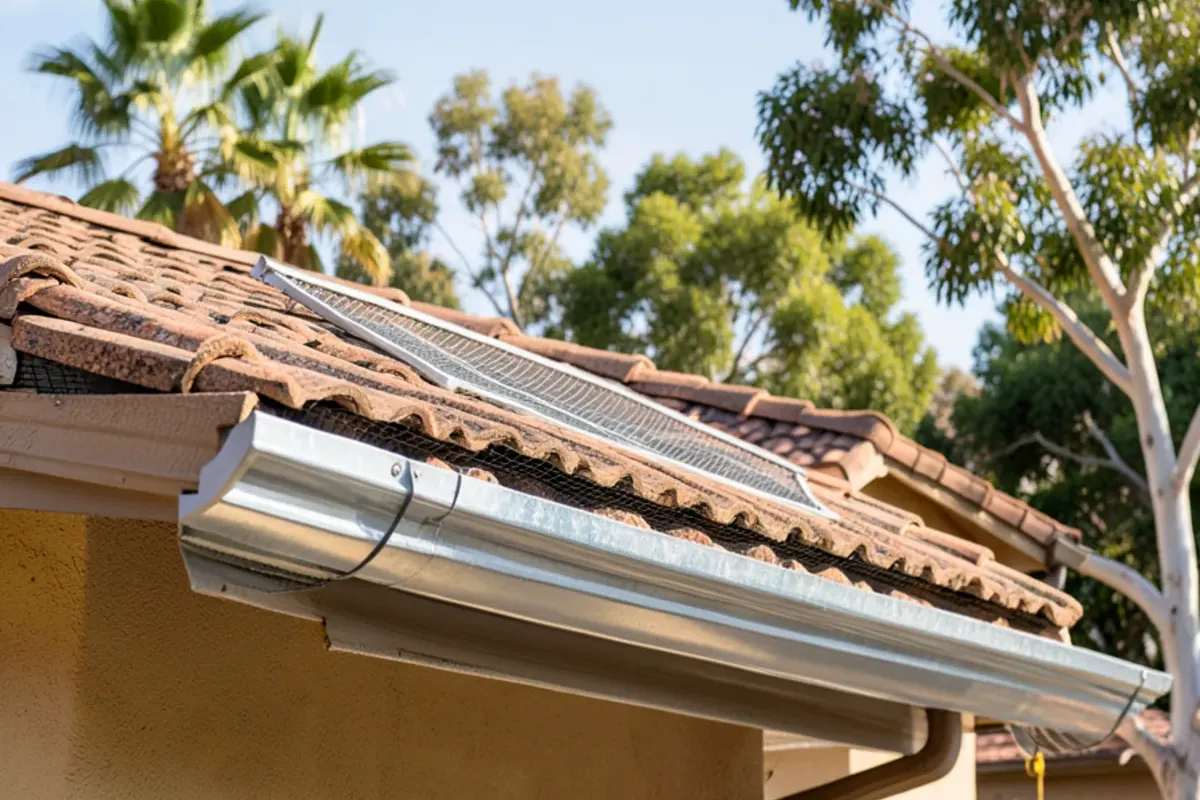
- Gutters: a means to keep leaves and debris from collecting, such as noncombustible guards.
- Eaves and soffits: built with materials and details that meet the code's ignition-resistance rules.
Metal gutter guards are a common way to handle the gutter requirement. Plastic guards are a poor choice in a fire zone.
What our crews look for on foothill roofs after a fire
In Altadena and the foothill streets around it, rebuilds sit next to houses that survived with damage. On those surviving roofs, we look for melted plastic vent covers and pipe boots, heat-warped gutters, scorched fascia, and ash packed into valleys and gutters that holds moisture through the rainy season.
A surviving roof is not automatically a sound one. Heat can soften shingle sealant strips and crack tile without visible charring. When we inspect after a fire, we photograph every finding so you have records for an insurance claim. For surviving homes, our fire damage roof repair page explains what that work involves.
Roof details to confirm on the plans before you submit
Rebuild plans move faster when the roof is fully specified on paper. Before the set goes to the building office, check that it shows each of these.
- The roof covering's exact product name and its Class A listing, including the underlayment it was tested with.
- Each attic, eave and gable vent by model, with its ember-resistance listing or mesh size noted.
- Fire-stopping or a cap sheet at every open tile eave end.
- Metal valley flashing over an underlayment strip, plus metal flashing where the roof meets walls and chimneys.
- A noncombustible gutter guard, with metal gutters and downspouts.
- The solar mount layout, or a note that the roof is being built solar-ready.
- A spark arrestor on any chimney or fireplace flue the plans include.
Getting these onto the drawings means the inspector checks them once, rather than a field change holding up the final. If you are still comparing parcels and zone maps, our guide to roofing in very high fire hazard zones covers the foothill cities beyond Altadena.
Contracts signed after a disaster
State rules add protection in burn areas. CSLB's contract guidance swaps the usual three-day cancellation window for a seven-day right to cancel in disaster situations, and the legal down payment is still $1,000 or 10% of the price, whichever is less. Ask for the cancellation notice in writing and read it before any work is scheduled.
How the roof fits into the rebuild schedule
On a rebuild, the roofer works inside the general contractor's sequence. Framing and roof sheathing are inspected first. Then underlayment, flashing and the roof covering go on, followed by vents, gutters and any solar mounts. Planning the roof early helps in three ways:
- The structural design can carry tile if you want it.
- Solar mounting points can be planned and flashed during roofing, not cut in afterward.
- Vent locations and sizes can be drawn to meet both ventilation and ember rules.
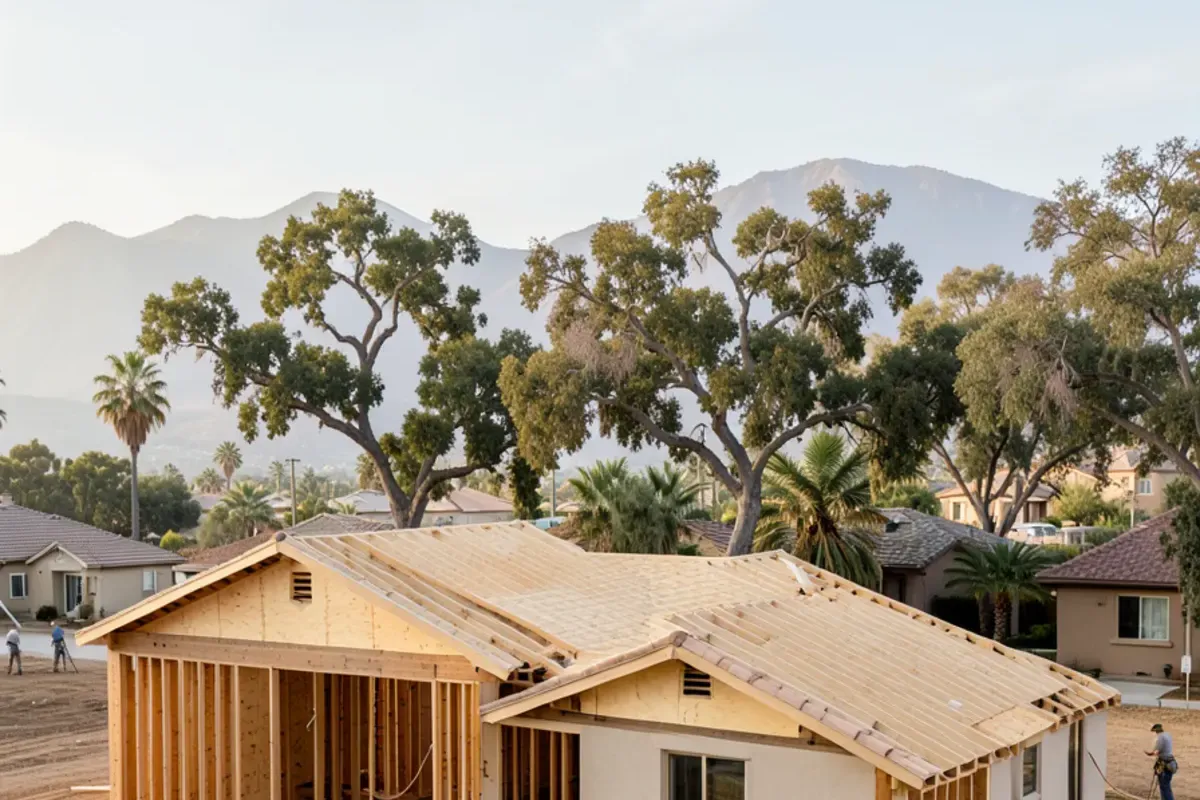
For homeowners in Pasadena and Altadena who are pricing the roof portion of a rebuild, we provide a written, line-by-line scope naming the product, the tested underlayment and every vent and flashing detail. Call (725) 745-8803 or request a quote to start that conversation.
Questions readers ask
Does my rebuilt roof have to be Class A if the old one was not?
In a mapped Very High Fire Hazard Severity Zone, yes. New construction there must meet Chapter 7A and R337, which require a Class A roof assembly regardless of what the original house had. Check your parcel on CAL FIRE's hazard zone map, and confirm with the issuing building office if your lot sits near a zone boundary.
Can I add solar panels to a rebuilt fire-zone roof?
Yes. Solar is common on rebuilds. The key is coordinating the mounts with the roofing so each one is flashed into the new assembly rather than drilled through it later. Roof area covered by building-integrated solar panels is also exempt from Title 24 cool-roof rules; standard rack-mounted arrays are not named in that exception. Your solar installer and roofer should agree on mount layout before the covering goes on.
My house survived but the roof has ash and heat damage. Does it need replacing?
Not necessarily. Many roofs need cleaning, new vents, new pipe boots and gutter work rather than full replacement. Heat damage to sealant or tile is not always visible, though, so get the roof inspected with photos before the rainy season. If your insurer is involved, those photos help the adjuster see what changed.
Can I rebuild with the same roof style the house had before the fire?
Usually, as long as the new version meets current rules. A shingle, tile or metal look can almost always be rebuilt as a Class A assembly with ember-resistant vents and metal valleys. What changes is the detail work: open tile eave ends get fire-stopped, plastic vent covers and guards have no place in the assembly, and untreated wood shake cannot meet the Class A requirement. Bring photos of the old house so the designer and roofer can match its look.
Sources
Written by Tylzen Spoke Roofing
A roofing contractor on Rosemead Blvd (CA-19) in Rosemead, working on shingle, tile, metal and flat roofs across the San Gabriel Valley. This guide reflects what our crews check on local roofs. Questions about your roof? Call (725) 745-8803.