
By Tylzen Spoke Roofing · Published
Roof rats in the attic almost always come in through a gap at the roofline: open tile ends at the eaves, a damaged vent screen, a gap between the fascia and the roof deck, or a hole around a pipe or wire. The lasting fix has two parts. First the animals are removed, then every opening is closed with metal screens, closures and roof repairs they cannot chew through.
This guide shows where rats and squirrels get into San Gabriel Valley homes, the signs of each, and the repairs that keep them out. For the roof side of the job, see our animal damage roof repair service.
How roof rats and squirrels reach the roof
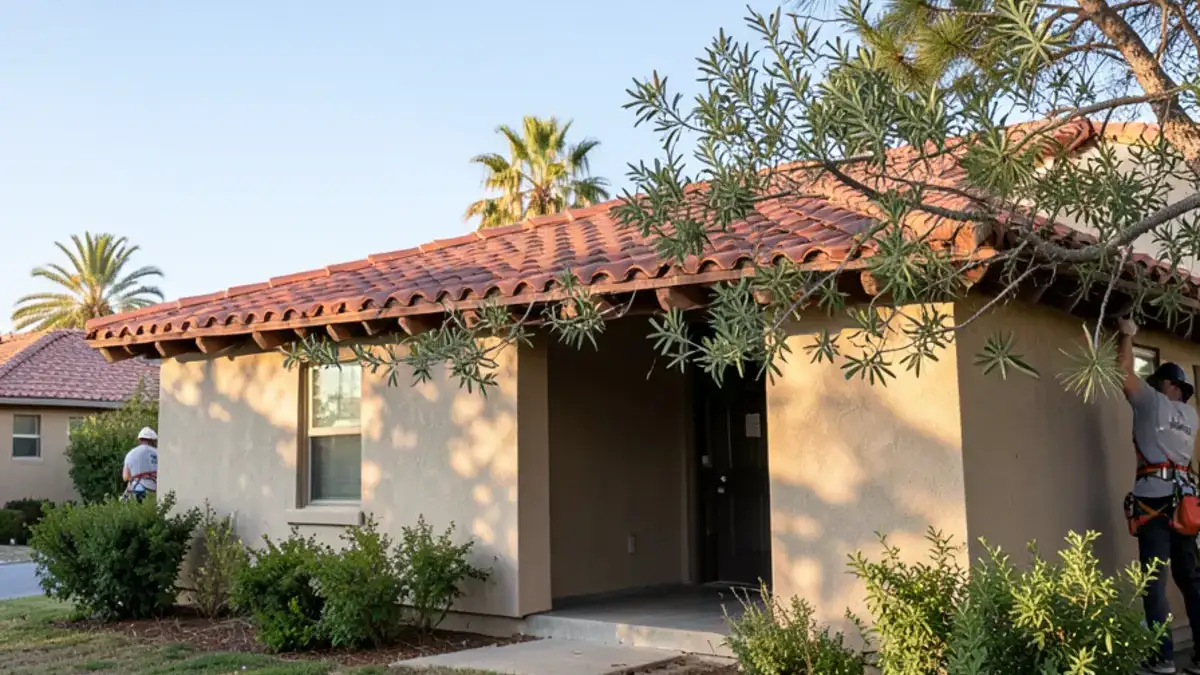
Roof rats are skilled climbers. They travel along utility lines, fences, vines and tree branches, and they nest in palms, dense shrubs and ivy. Tree squirrels jump from overhanging limbs and run along gutters. Both look for warm, dry, protected space, and an attic full of insulation is exactly that.
Neighborhoods with mature trees, fruit trees and dense landscaping give them easy routes to the roof. Once there, they probe the edges, where small gaps can be chewed wider in a single night.
Food nearby keeps them coming back. Fallen fruit, open compost, pet food left outside and bird feeders all draw rats to a yard, and from there the roof is a short climb. Cleaning up those sources does not seal the house, but it lowers the pressure on every small gap at the roofline.
Rat or squirrel: why the difference changes the repair
The two animals leave different damage. Roof rats slip through small existing gaps and widen them a little, so the repair is mostly about closing many small openings. Squirrels chew larger, rounded holes, often at fascia corners, roof returns and the ends of ridge vents, and they can tear at weak screens. Squirrel repairs need heavier metal at those corners and a careful look at any wood the holes have exposed to rain. Trapping rules also differ by species, which is one more reason the removal step belongs to the licensed pest control company.
Want a roofer to look at it?
Call with your address and what you are seeing. We visit same-day or next-day when crews are free.
- 4.9 from 48 Google reviews
- Based on Rosemead Blvd
- Photos and a written quote before work
Where are the entry points on a typical SGV roof?
- Open ends of clay or concrete tile at the eaves, where the bird stop closure is missing or broken.
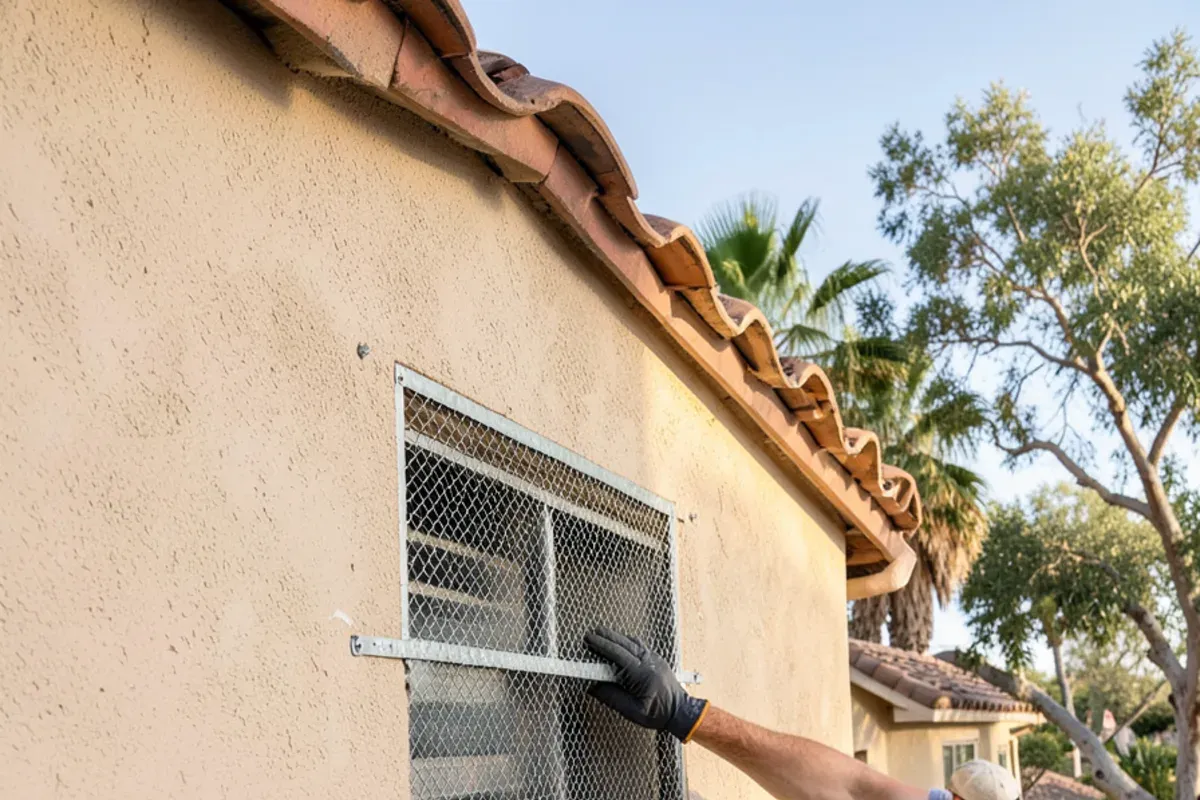
- Gable and eave vents with rusted, torn or loose screens.
- Gaps between the fascia board and the roof deck, often where wood has rotted.
- Soffit panels that have sagged or separated from the wall.
- Openings around plumbing vents, cable lines, solar conduit and exhaust pipes.
- Roof-to-wall junctions on additions, where flashing never fully closed the joint.
- Ridge and turbine vents with damaged or missing baffles.
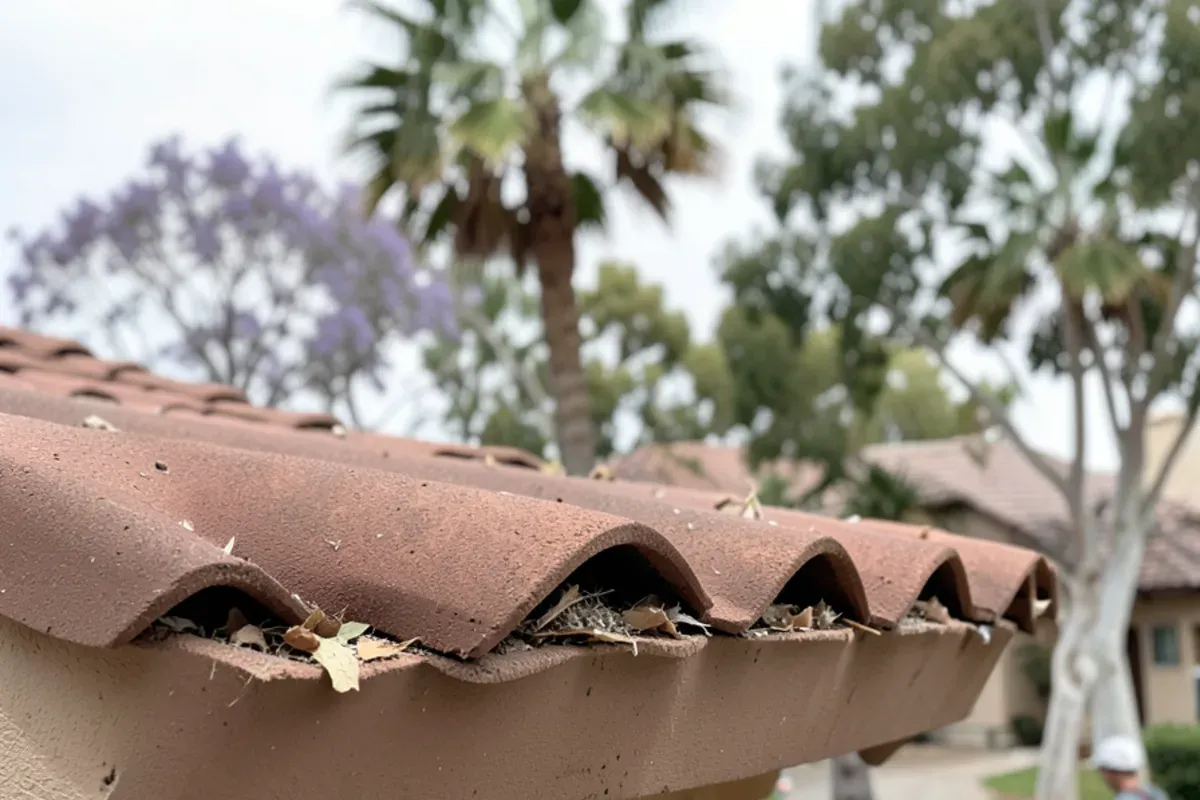
Rats can squeeze through surprisingly small openings, so a gap you can fit a finger into is worth sealing.
Signs of rats or squirrels in the attic
The timing of the noise is the first clue. Roof rats are active at night, so scratching and scurrying after dark usually points to rats. Squirrels are active by day, and their noise tends to start in the early morning.
- Droppings in the attic, along beams or near the water heater.
- Gnaw marks on wood fascia, vent frames or wiring.
- Dark grease smudges along rafters and entry holes from repeated travel.
- Flattened or tunneled insulation.
- Chewed or pushed-out vent screens seen from the yard.
- Nesting material, such as shredded insulation or leaves, packed into eave openings.
Why does the order of removal and sealing matter?
Sealing the roof while animals are still inside traps them, which leads to new holes as they chew their way out, or odors when they die in the attic. Removal comes first. In California, pest control companies are licensed by the Structural Pest Control Board, and they handle trapping and one-way exclusion doors that let animals leave but not return.
Spring is nesting season, and young animals left behind can be sealed in by mistake. Once the pest control company confirms the attic is clear, the roof and vent repairs close every opening.
Repairs and screens that keep rodents out
| Entry point | Most common visitor | Repair that closes it |
|---|---|---|
| Open tile ends at the eaves | Roof rats, birds | Install metal or rigid bird stop closures |
| Torn gable or eave vent screens | Rats and squirrels | Replace with metal mesh vents |
| Rotted fascia gap at the deck | Squirrels | Replace fascia and close the gap with metal flashing |
| Gaps around pipes and conduit | Roof rats | Fit metal collars or hardware cloth |
| Damaged ridge or turbine vent | Squirrels | Repair or replace the vent with screened baffles |
Metal is the rule. Galvanized hardware cloth, sheet metal and metal-mesh vent covers stop chewing; foam, plastic and caulk alone do not. In fire hazard zones, vents with ember-resistant mesh between 1/16 and 1/8 inch, required under California Building Code Chapter 7A, keep both embers and rodents out.
Vents must stay open to airflow. Covering them solid traps heat and moisture in the attic, so any screen we add keeps the free vent area the attic needs. Our attic ventilation page explains how that balance works.
Rodent exclusion, from first inspection to final recheck
A rodent job crosses two trades, pest control and roofing, and it works best when both follow the same sequence. This is the order we coordinate around:
- Walk the roofline and attic, photograph every opening and mark it on a simple sketch of the house, including gaps that show no activity yet.
- The licensed pest control company traps or fits one-way exclusion doors at the active entries, leaving one route open so animals can leave.
- Activity is monitored until it stops, often with tracking powder or by watching whether the one-way doors are pushed from inside.
- Our crew seals every opening on the sketch with metal: bird stops, hardware cloth, metal vent screens, collars around pipes, and new fascia where wood is chewed.
- Contaminated insulation is removed and the attic cleaned once droppings have been wetted with disinfectant, then new insulation goes in.
- Both trades recheck a few weeks later, because a determined rat will test the new work and find any gap that was missed.
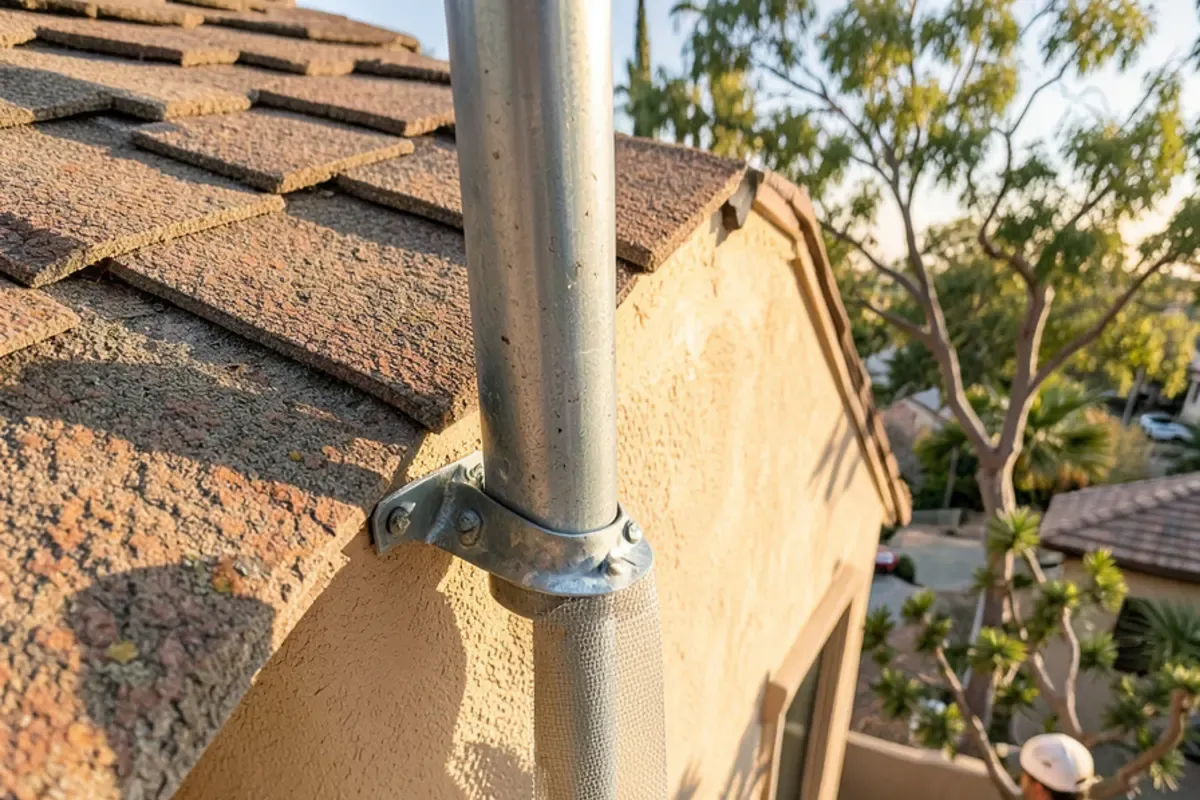
UC IPM's rat guidance notes that roof rats can get through openings larger than about 1/2 inch and recommends 1/4 inch hardware cloth or sheet metal for sealing. That is why we treat every gap around a pipe or conduit as an entry point, even when it looks too small.
What we find in Arcadia and Temple City attics
Mature trees and lush yards make rodent entry common across roofs in Arcadia and homes in Temple City. On tile roofs, the most frequent entry is a run of eave tiles with no bird stop at all, which gives rats a covered tunnel straight to the attic edge. On shingle homes, it is usually a rotted section of fascia where the deck edge has softened.
Inside, our crews often find contaminated insulation that has to be removed and replaced, a job covered on our attic insulation page. Where fascia or soffit wood has been chewed or rotted, we rebuild it as part of soffit and fascia repair before closing the gap with metal.
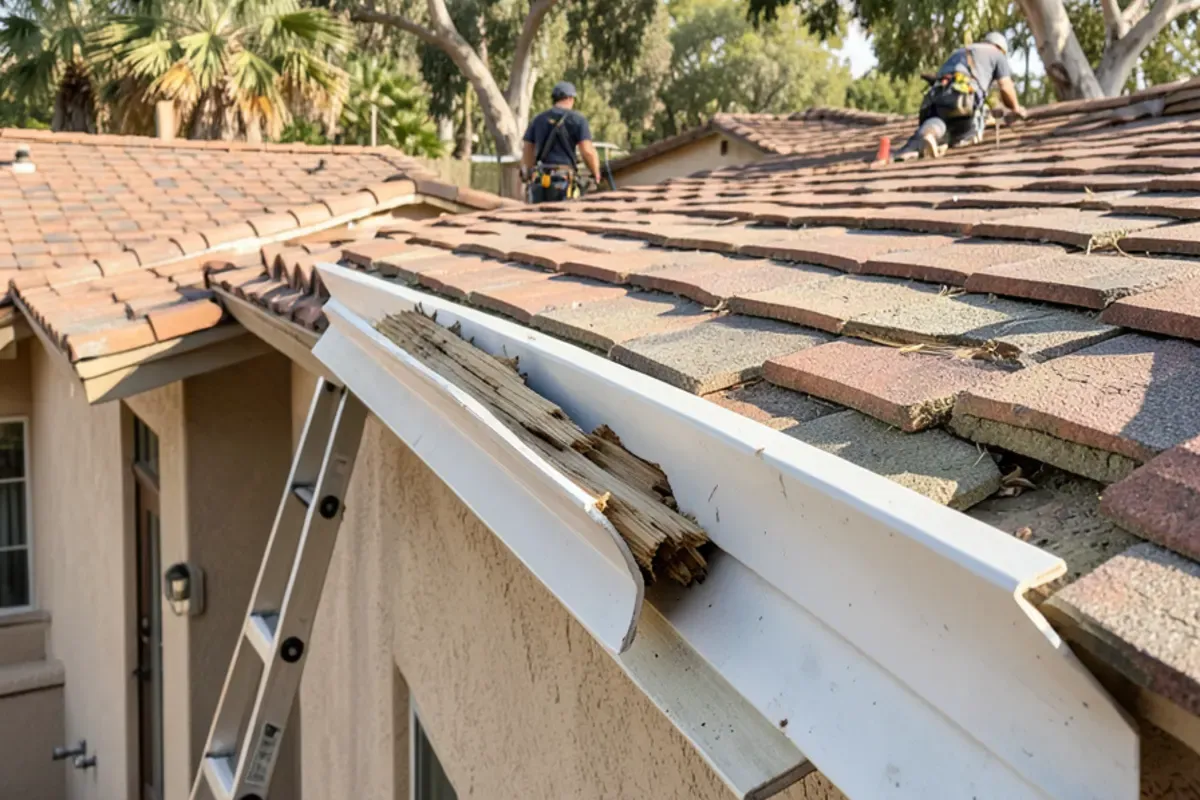
Bird stops, mortar or foam at the tile eaves?
Closing open tile ends is the single most common repair we make on these roofs, and there are three ways to do it. Metal bird stops are fast, chew-proof and inexpensive, though their edge can be visible from the street on some profiles. A mortar eave closure gives a traditional look, but mortar cracks over time and, if it is packed tight, can block water that needs to drain out from under the tile. Foam closures fit neatly and cost little, yet rats chew through them in a night. We default to metal and match its color to the tile where the eave faces the street.
Close the gaps and keep them closed
Trim branches back several feet from the roof, clear vines off walls, and check vents and eave closures each fall. Once the pest control company has cleared the attic, phone (725) 745-8803 to request a quote; our crew photographs every opening and lists each repair separately.
Questions readers ask
Can rats chew through a roof?
Rarely through intact shingles or tile, but readily through softer parts: wood fascia, plastic vents, vinyl screens and foam sealant. They usually start at an existing small gap and enlarge it. Replacing those weak spots with metal closures and screens removes the easy routes.
Should attic insulation be replaced after rodents?
Usually, if droppings and urine are spread through it. Contaminated insulation holds odors and can carry disease risks, and trampled insulation loses much of its value. Small, localized areas can sometimes be cleaned up. The CDC recommends wetting droppings with disinfectant before cleanup rather than sweeping or vacuuming them dry.
Will trimming trees keep squirrels off the roof?
It helps a lot, but it is not enough on its own. Cutting branches back several feet removes the easiest jump, yet squirrels still climb walls, downspouts and utility lines. Pair trimming with metal screens, closures and repaired fascia so the roof has no openings worth finding.
Do ultrasonic devices keep rats out of the attic?
Not reliably. Rats and squirrels tend to get used to the sound, and attic framing and insulation block much of it. University research summarized by UC IPM has not shown these devices to give lasting control. Sealing every roofline opening with metal after the animals are removed is what keeps them out for good, along with trimming branches back from the roof.
Sources
Written by Tylzen Spoke Roofing
A roofing contractor on Rosemead Blvd (CA-19) in Rosemead, working on shingle, tile, metal and flat roofs across the San Gabriel Valley. This guide reflects what our crews check on local roofs. Questions about your roof? Call (725) 745-8803.