
By Tylzen Spoke Roofing · Published
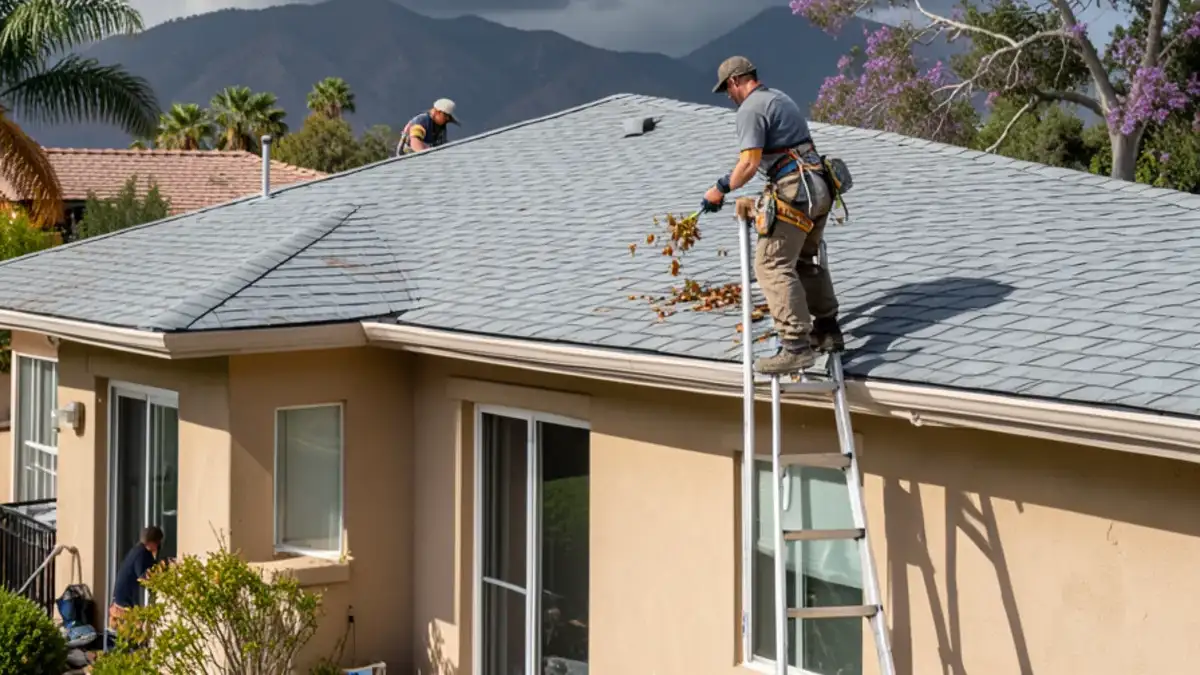
Rainy season roof prep in Los Angeles County works best on a calendar: inspect and repair in late summer, clear gutters and trim trees in fall, watch the roof and drains through the November to March storms, then check for damage in April. Start early, because roofers' schedules fill fast once the first storm hits and every small crack shows itself at once.
Most of the rain arrives in a handful of heavy storms, with February usually the wettest month at about 86 mm. A roof that sheds a light shower can still fail when an atmospheric river stalls over the San Gabriel Valley for two days.
Your month-by-month rainy season roof calendar
| Month | Roof task | Why now |
|---|---|---|
| August | Book a roof inspection or tune-up | Repair crews have open dates before fall demand |
| September | Repair the flashing, vent boots, cracked tiles and lifted shingles the inspection found | Sealants and repairs cure best in dry weather |
| October | Trim branches over the roof; clear the roof surface and valleys | Santa Ana season begins, and wind drops debris into valleys |
| Early November | Clean gutters and flush downspouts; check splash blocks and drains | The first storm washes a summer of debris into gutters |
| December to February | Recheck gutters after windy days; look in the attic after big storms | Peak storm months, with February usually the wettest |
| March | Note any stains or drips while they are fresh | Late storms reveal slow leaks |
| April | Post-season inspection and repairs | Fix damage before summer heat widens it |
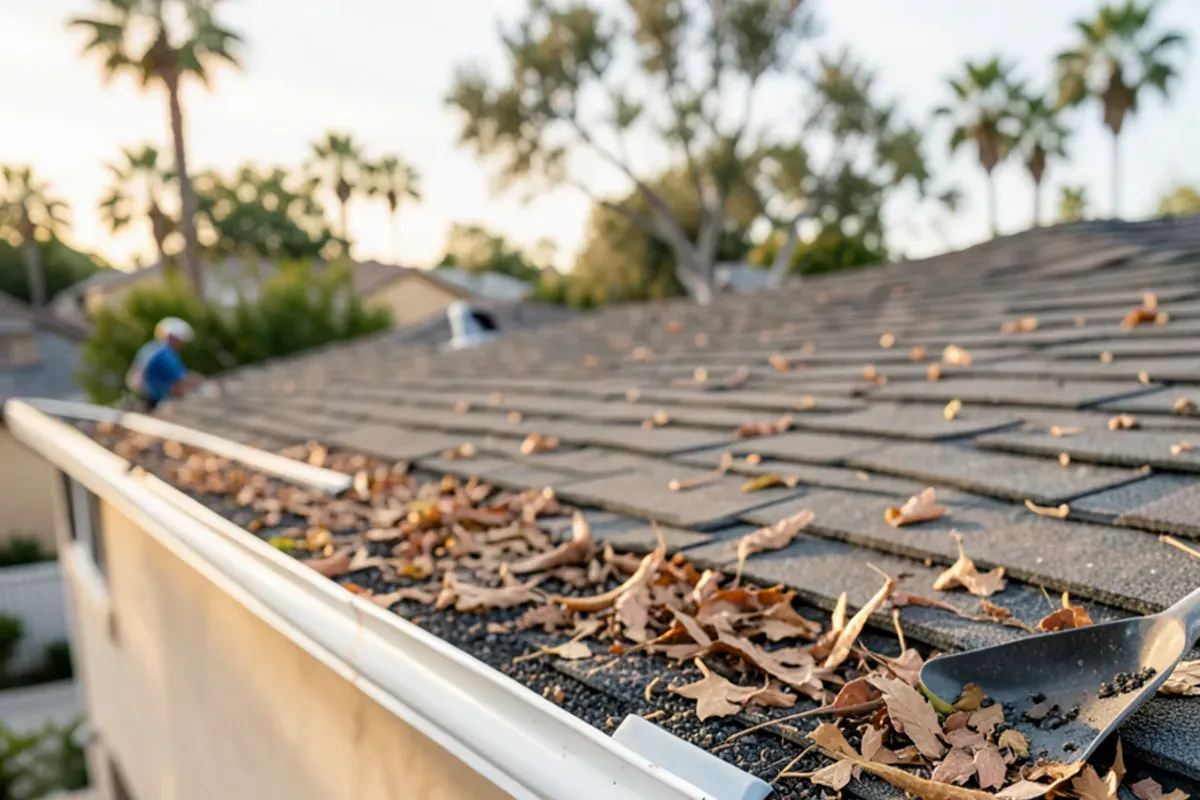
Flat roofs and parapet drains need the same attention as gutters, and homes under big trees may need the gutter step repeated mid-season.
Short on time? Prioritize three items: a repair check on flashing and vent boots, clean gutters and downspouts, and branches cut back from the roof. Those cover the failures that cause most first-storm leaks in the area, and all three are easier to schedule in September than in December.
Want a roofer to look at it?
Call with your address and what you are seeing. We visit same-day or next-day when crews are free.
- 4.9 from 48 Google reviews
- Based on Rosemead Blvd
- Photos and a written quote before work
What should a fall roof check cover?
A fall check looks for the small openings that summer heat created. Sealant shrinks, rubber cracks and fasteners back out, and none of it shows until water finds the gap. Cover these points:
- Flashing at chimneys, walls, skylights and valleys: gaps, rust and sealant that has pulled away.
- Pipe boots and vent jacks: rubber collars split after a summer of sun and cause many first-storm leaks.
- Field of the roof: lifted or missing shingles, cracked or slipped tiles, exposed nail heads.
- Flat sections: blisters, open seams, ponding marks and clogged scuppers.
- Gutters and fascia: sagging runs, loose hangers and soft fascia boards.
- Attic: old water stains, daylight at nail holes and damp insulation.
A roof tune-up handles these items in one visit, with photos of anything that needs work and a written quote for repairs. Booking it in late summer leaves time to fix what it finds before the forecast turns.
Gutters, downspouts and drains before the first storm
Overflowing gutters do more damage than most people expect. Water spilling over the back edge soaks the fascia and runs down the stucco, and downspouts that dump at the foundation push water toward slabs and crawlspaces.
- Scoop out debris, then flush each run with a hose to confirm it drains toward the downspout.
- Run water through every downspout; a slow drain usually means a clog at an elbow.
- Make sure downspouts discharge onto splash blocks or extensions that carry water away from the house.
- Tighten loose hangers and reseal leaking end caps and seams.
- On flat roofs, clear scuppers and drains, then watch for standing water after a hose test.
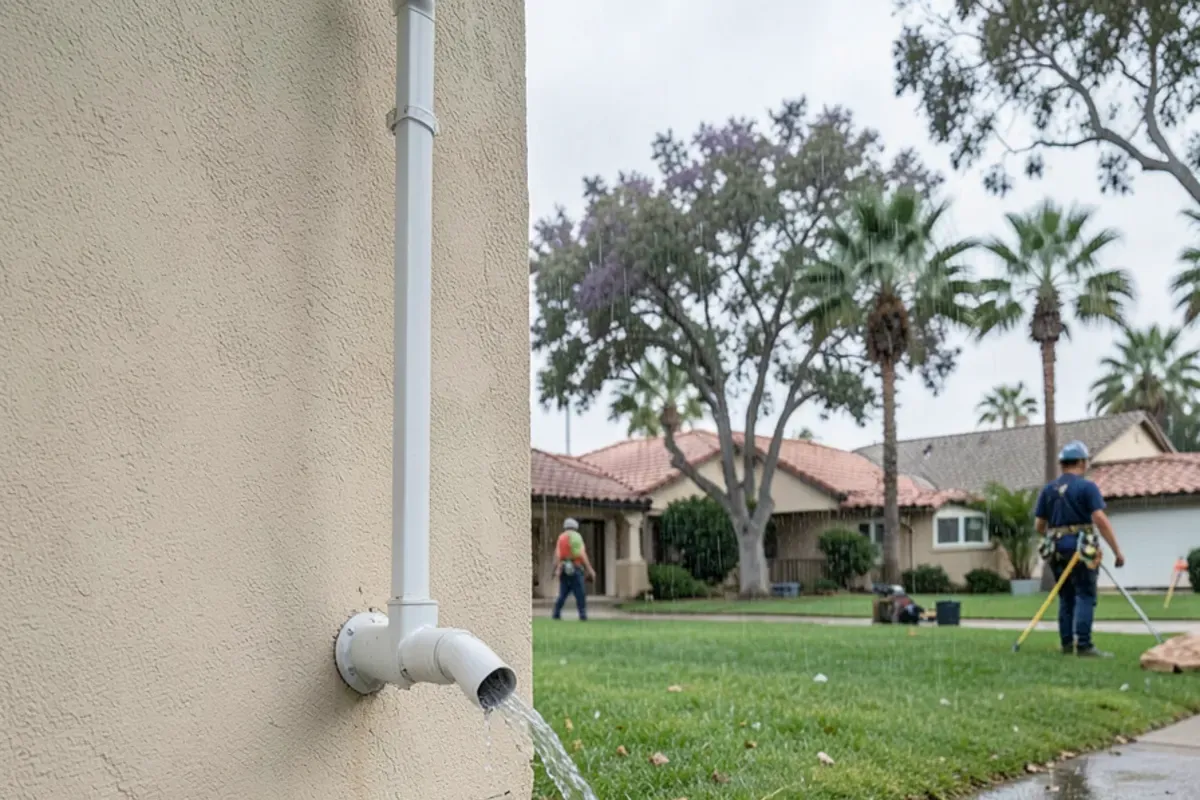
Broken or undersized runs are a smaller job before November than during a storm, and gutter repair and cleaning can be booked alongside the roof visit.
Where does roof water go once it leaves the gutters?
Roof prep does not stop at the downspout. A clean roof can still flood a garage or soak a wall if the water it sheds has nowhere good to go. Work through the yard before November as well:
- Bag gutter and roof debris for the green waste bin instead of sweeping it to the curb. Storm drains carry runoff to the rivers and the ocean without treatment, and a pile of leaves at the curb blocks the inlet down the street.
- Check that soil and planter beds still slope away from the house. Beds built up against the stucco over the years can turn downspout water back toward the wall.
- Find the low points: a garage door at the bottom of a sloped driveway, or a patio door a step below the yard. Sandbags placed before a storm keep sheet flow out.
- LA County Public Works keeps a list of County Fire stations that traditionally have free sand and sandbags for residents. Call ahead, because supplies vary once a storm is forecast.
- Make sure downspouts do not empty onto a neighbor's side yard or a shared walkway, where the runoff becomes a dispute as well as a drainage problem.
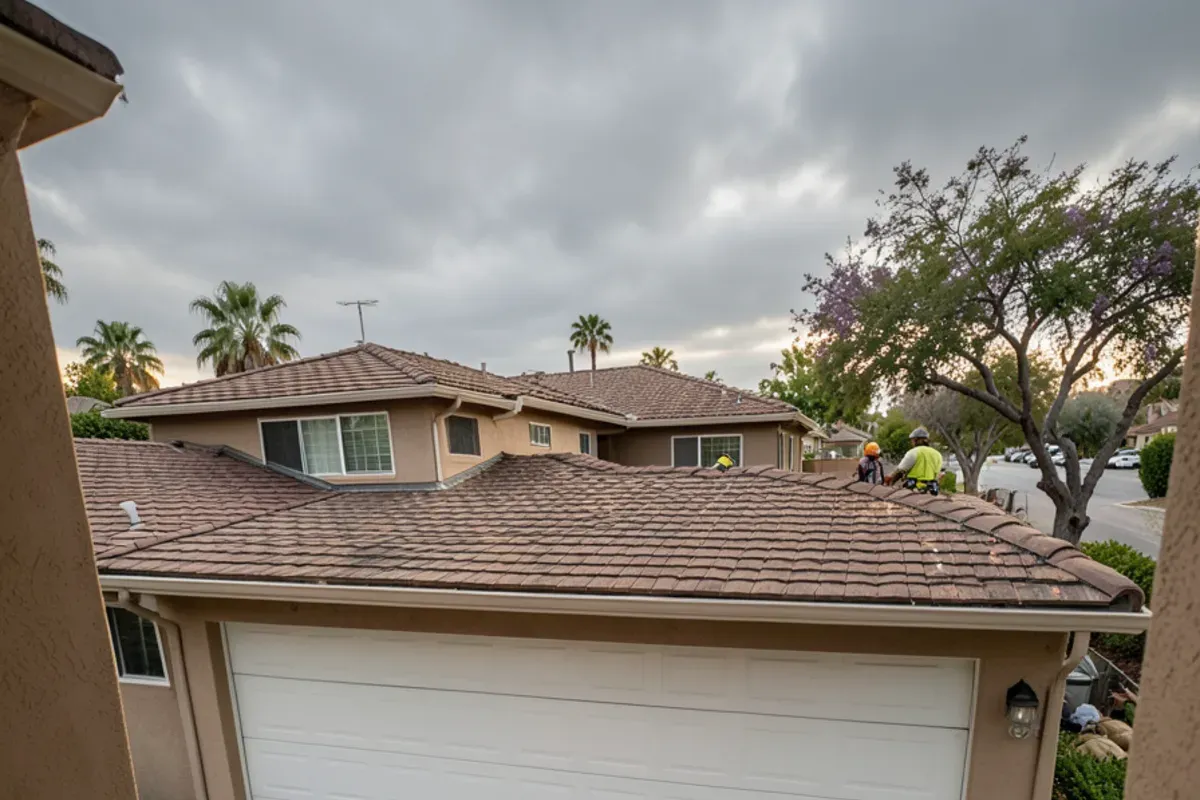
If water already pools against the foundation after a normal storm, downspouts and drainage work is worth adding to the fall visit while the ground is dry enough to trench.
How do you get a roof ready for an atmospheric river?
Long, heavy storms test a roof differently from short showers. They saturate tired underlayment, overwhelm clogged valleys and drive water sideways when wind comes with them. The National Weather Service office for Los Angeles posts forecasts days ahead, which gives you time to act.
- Clear valleys, gutters and roof drains a day or two before the storm arrives.
- Tie down or store loose patio items that wind could throw onto the roof.
- Keep a tarp, buckets and towels inside; a leak at night is easier to manage with supplies on hand.
- Check the attic with a flashlight during the storm if it is safe to enter.
- Photograph any leak and note when it started, for the repair visit and any insurance claim.
What we see when the first big storm hits the SGV
The first heavy rain of each season brings a familiar set of calls from Rosemead and San Gabriel: cracked vent boots over bathrooms, valleys packed with summer leaves, and gutters that overflowed because no one cleaned them after the fall winds. Most of those leaks would have been a short repair in September.
Older homes add another layer. More than half of Rosemead's housing, 51.6% by the City's Housing Element, predates 1960, and many of those houses are on their second or third roof. A worn roof can get through a mild winter and then fail when a long storm soaks through tired underlayment.
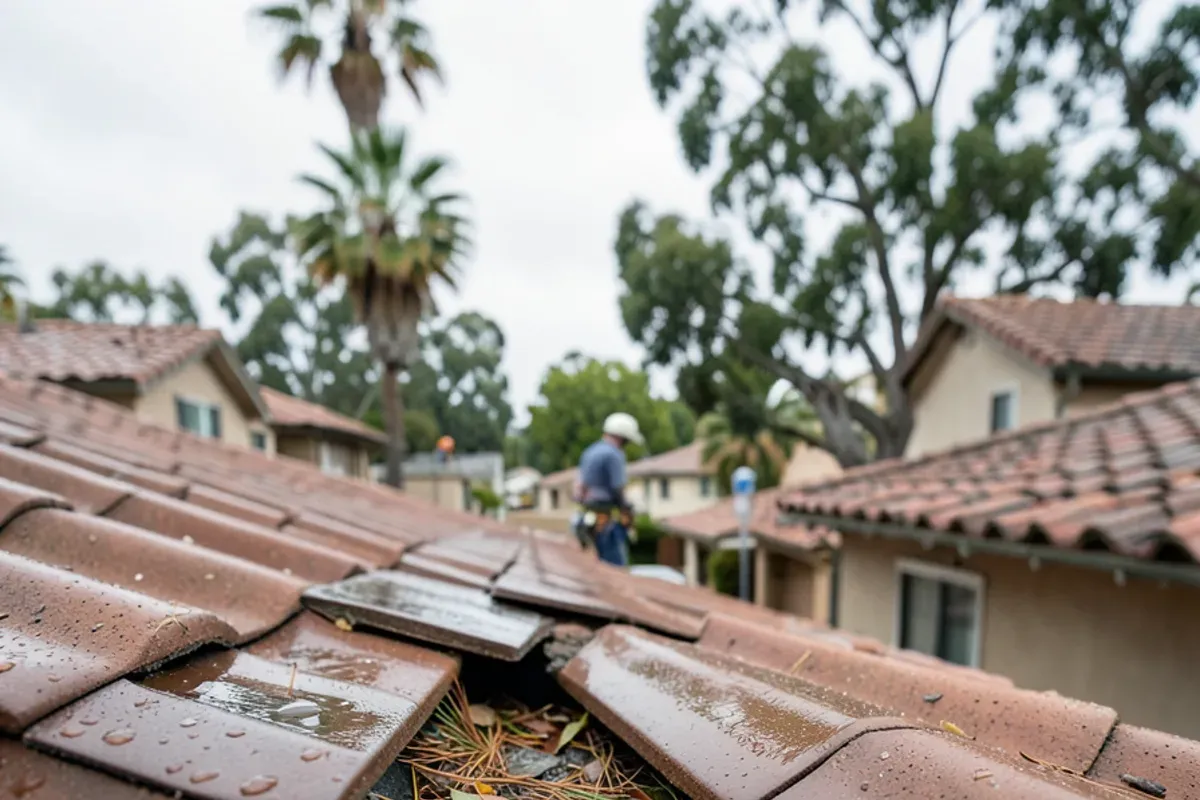
Tile roofs are the hardest to judge from the ground. Cracked pieces and worn felt beneath them let water in during long storms, so a fall check that lifts a few tiles at the valleys and eaves is worth the time.
Patch for one more winter, or reroof before the rain?
Every September we meet roofs that are close to the end, and the owner has a real choice. A full reroof before November needs several dry days in a row for tear-off and a slot on a filling schedule. Patching the worst spots and reroofing in spring buys time, but the money spent on patches disappears when the old roof comes off.
Our rule of thumb: when a roof leaks in more than one place or the deck feels soft underfoot, we push to reroof before the rains, because a patched roof in that state tends to find a new leak each storm. When it is one or two leak points on an old but sound roof, a targeted repair now and a spring reroof is a reasonable plan. We price both options in writing so the comparison is plain.
Start the calendar before the forecast does
The cheapest rainy season repair is the one done in dry weather. Book the inspection by late summer, fix what it finds in September, clear gutters and trees in October and early November, and keep watch through March. To get on the schedule before the next storm, call (725) 745-8803 or request a quote.
Questions readers ask
When is the rainy season in Los Angeles County?
The wet months run November through March, and February tends to bring the most rain. Rosemead and the San Gabriel Valley average roughly 14-16 inches a year, but totals swing widely, and a single atmospheric river can drop several inches in a few days. Plan roof work for August through October.
Is it too late to fix my roof once the rain starts?
No, but it gets harder. Many repairs need a dry roof, so crews work in the gaps between storms, and demand spikes after each one. A tarp can protect the house until a proper repair is possible. When crews are free, we can usually get out same-day or next-day.
How many times should gutters be cleaned each season here?
Clean them once in fall before the rains, and again mid-season if the house sits under trees. Pines, sycamores and palms can refill a gutter within weeks. Check them after strong wind too, since Santa Ana events often drop leaves and needles right before a storm arrives.
Does rainy season prep change for homes near a burn area?
Yes. Ash, burned bark and loose soil wash onto roofs and into gutters faster near burn scars, such as the foothill areas around Altadena burned in the January 2025 Eaton Fire, so gutters need clearing more often and downspouts need a check after each storm. Homes below burned slopes can also face mud and debris flows in heavy rain. Follow LA County Public Works and National Weather Service alerts, and place sandbags early.
Sources
Written by Tylzen Spoke Roofing
A roofing contractor on Rosemead Blvd (CA-19) in Rosemead, working on shingle, tile, metal and flat roofs across the San Gabriel Valley. This guide reflects what our crews check on local roofs. Questions about your roof? Call (725) 745-8803.