
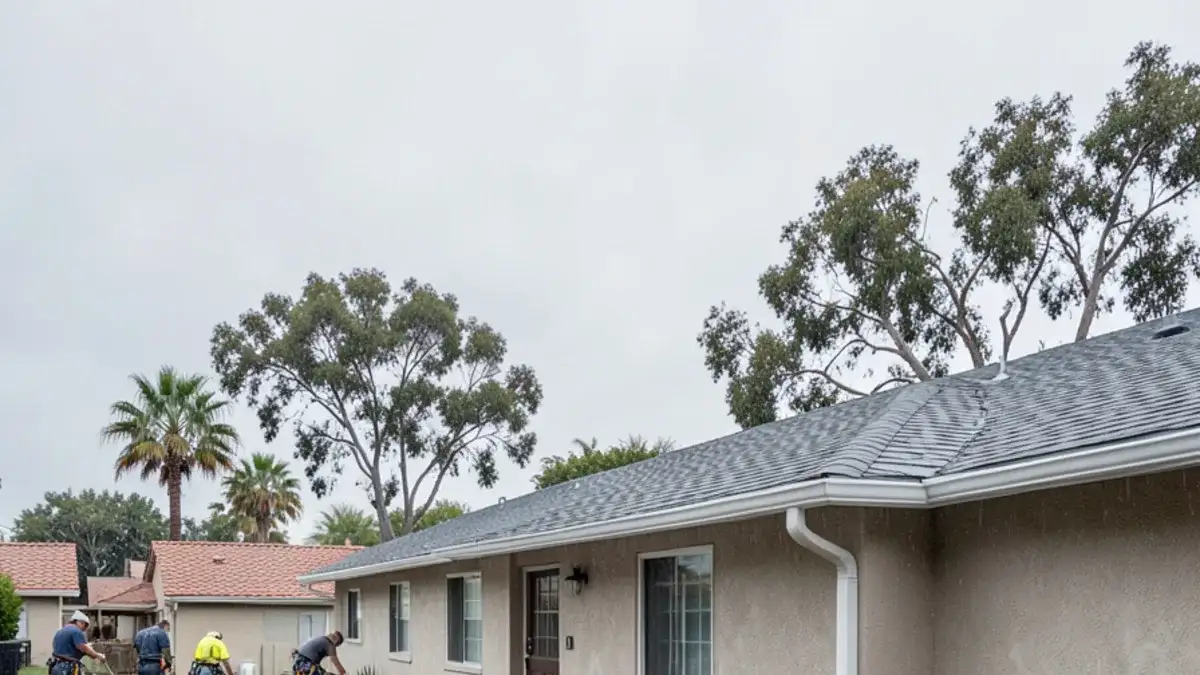
Downspout installation in Rosemead decides where every gallon from your roof ends up. A gutter can collect the water perfectly and still cause trouble if the downspout dumps it beside the foundation, across a walkway or against a neighbor's block wall. Drainage is the last step of every rain gutter system we install, and we also correct it on gutters we never touched, adding extensions, splash blocks or buried lines as the lot requires.
Lots here are often tight. With 84.5% of Rosemead housing single-family, according to SCAG's 2021 profile, many homes sit close to side-yard fences and driveways, so there is not always an obvious place to send the water.
How many downspouts does a roof need, and what size?
Downspout count depends on how much roof drains to each gutter run and how hard the rain falls. A 2x3 downspout has a 6-square-inch opening and a 3x4 has 12, so the larger size moves roughly twice the water. Round downspouts for half-round gutters come in 3- and 4-inch diameters.
- On most homes we place one downspout for each 30 to 40 feet of gutter, and more where a valley feeds the run.
- Put a downspout close to each valley, where two roof planes concentrate their water.
- Use 3x4 downspouts with 6-inch gutters, on two-story walls and below tile roofs.
- Avoid long sideways runs of downspout across a wall, which clog and leak at every elbow.
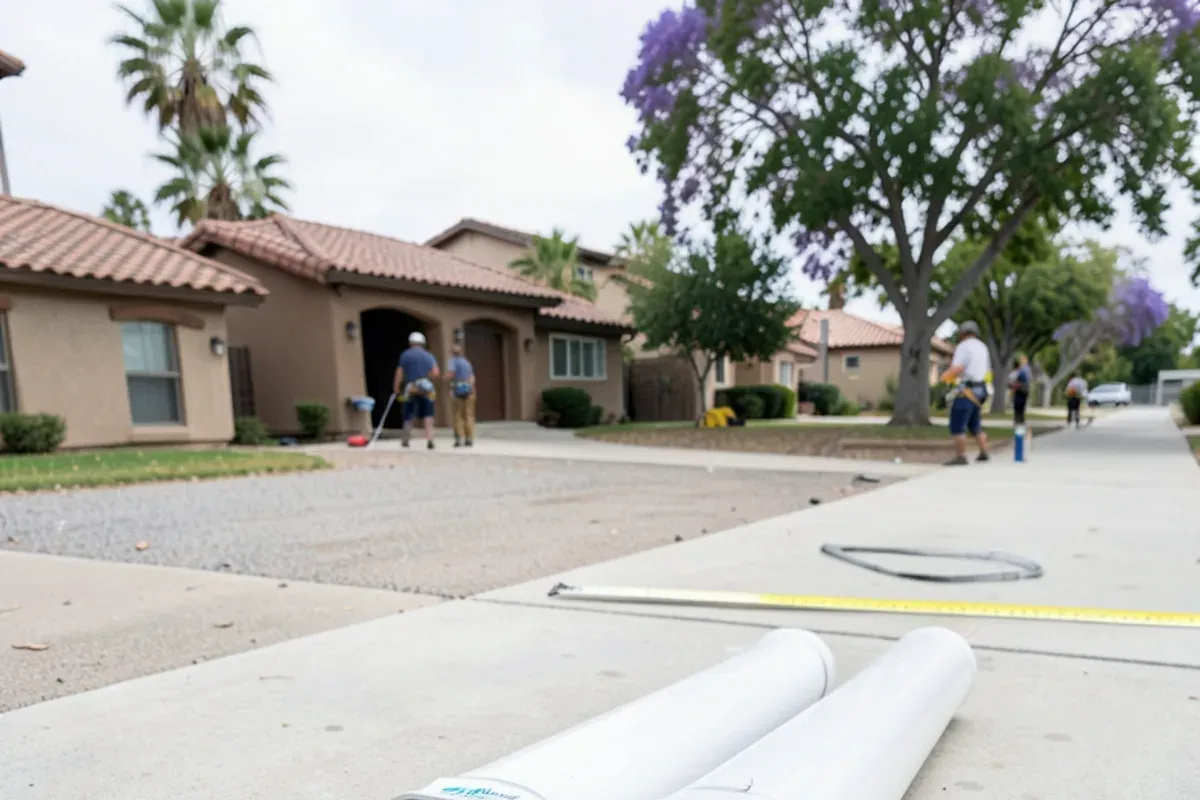
Getting storm water runoff from the roof away from the foundation
The goal is simple: roof water should land several feet from the house, on ground that slopes away, and never be aimed at a neighbor's property. Some older valley homes sit on a raised foundation over a crawlspace, where water pooled against the stem wall can find its way under the floor. Slab homes suffer too, with damp patches inside, heaving walkways and soil washing out from under the edge.
Signs roof water is landing in the wrong place
- Trenches or bare soil directly under a downspout or gutter corner.
- White mineral crust or peeling paint on the stucco near grade.
- A damp, musty crawlspace on a raised-foundation house after storms.
- Puddles on the patio long after the rain stops.
- Walkways cracking or lifting beside the house.
| Option | Best use | Trade-offs |
|---|---|---|
| Downspout extension | Moving water 4 to 6 feet out onto lawn or planting | Can be kicked loose or crushed; flip-up styles help beside walkways |
| Splash block | Slowing water where soil already slopes away | Spreads water only a short distance; no help on flat or inward-sloping ground |
| Buried drain line | Carrying water to a curb outlet or a planted area far from the house | Higher cost; needs smooth-wall pipe, steady slope and a cleanout |
| Pop-up emitter | Ending a buried line in a lawn or bed | Grass can grow over it; the lid must stay free to open |
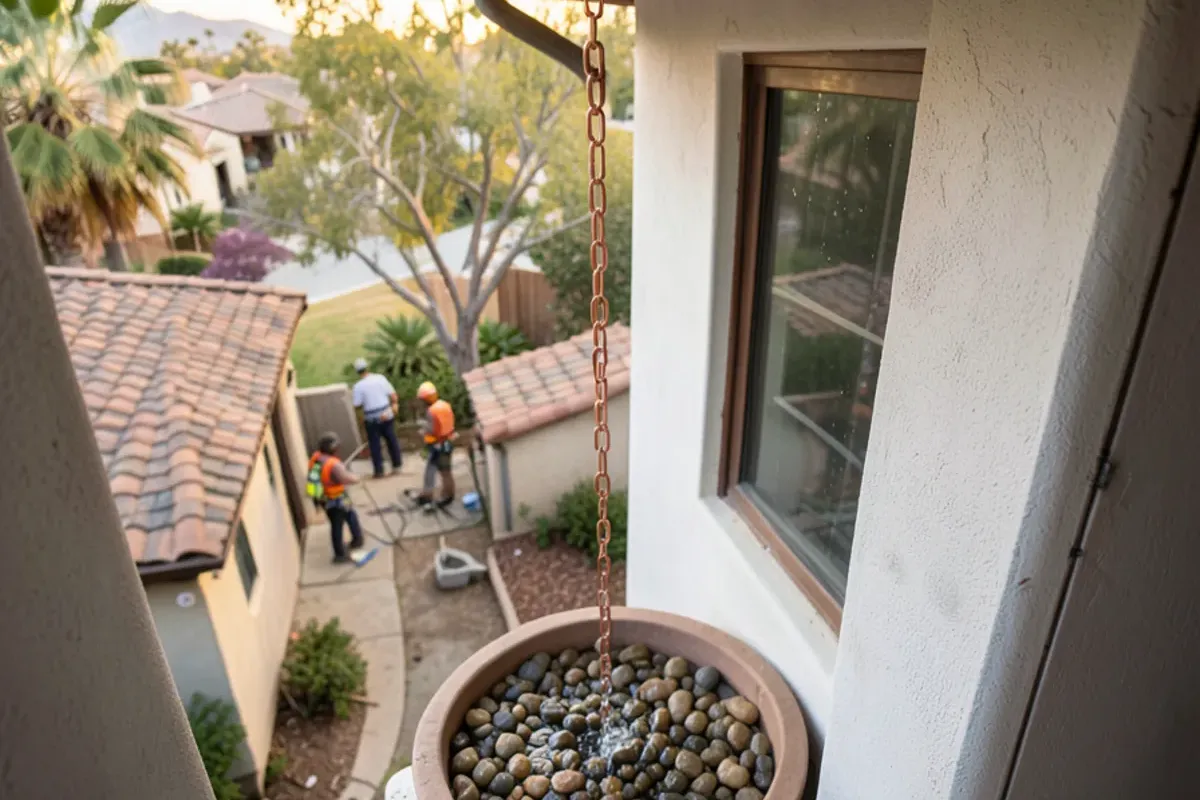
| Rain chain | Entries and patios with small roof sections | Splashes and carries less water than a closed downspout |
| Rain barrel | Saving water for the garden | Fills fast in a storm; the overflow must be routed safely |
Extensions and splash blocks handle most single-story homes. Narrow side yards between a house and a block wall often need a short buried line instead, so water does not sit in the gap.
What our drainage work covers
- Outlet sizing and placement, including new outlets cut where a run needs one.
- Downspouts, elbows and straps fastened at every section.
- Discharge by extension, splash block, emitter or buried line.
- Flush tests of old buried lines, with photos of where the water comes out.
Downspout drain lines that stay clear
A buried line carries water from the base of the downspout to where it can safely leave: a curb outlet, a dry well or a planted area well away from the house. We use smooth-wall PVC rather than corrugated flex pipe, which crushes, sags and traps leaves in its ridges.
- Slope the line continuously, at least 1/8 inch per foot, so water and debris keep moving.
- Add a cleanout or removable fitting at the downspout so clogs can be cleared from the surface.
- Fit a leaf strainer at the inlet when trees are close to the roof.
- Keep roof water out of sewer cleanouts; it belongs in the soil or the storm system, not the sanitary sewer.
- Check with the city before cutting a curb outlet through the parkway, since that work sits in the public right-of-way.
Older homes sometimes have clay or corrugated lines buried long ago that are now crushed or full of roots. We run water through them during the visit, and if they back up, we price a replacement line alongside the downspout work.
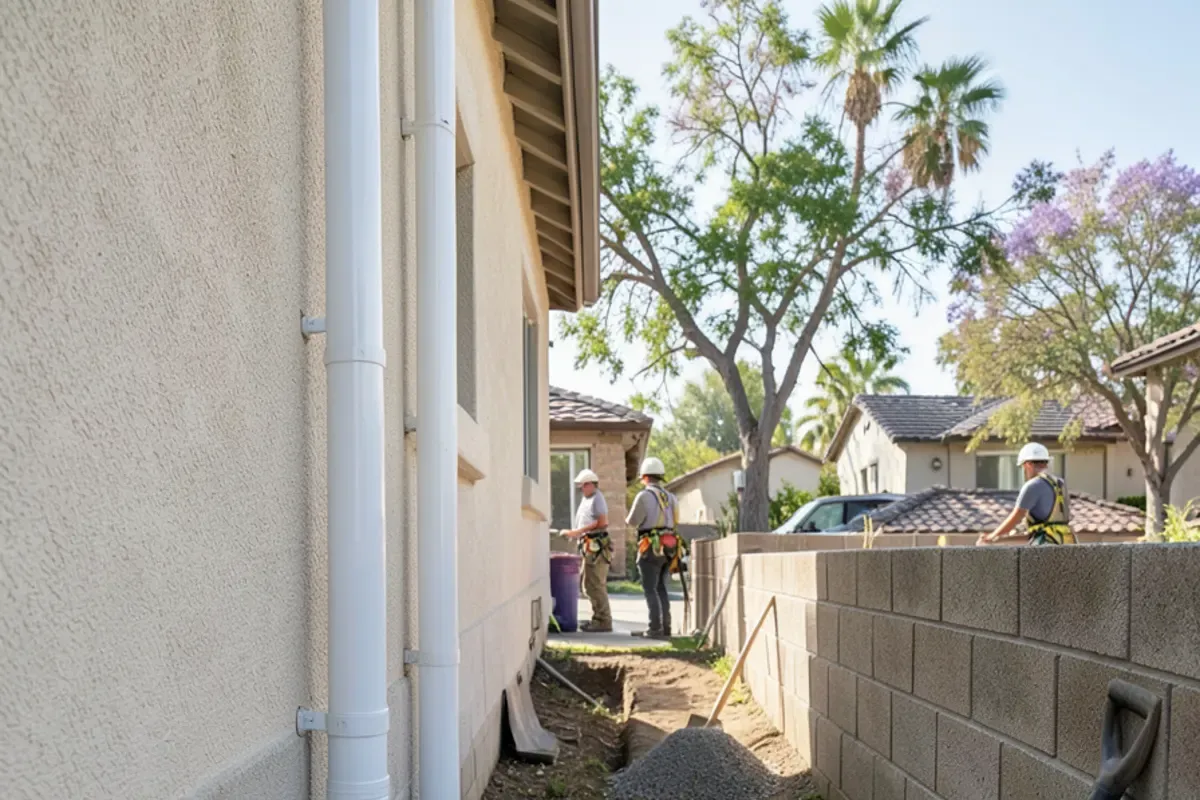
Downspout installation in Rosemead, from measuring to water test
- Read the evidence: we look for erosion, staining, pooling and overflow marks that show where the current system fails.
- Plan: downspout locations, sizes and discharge points go on a site sketch with photos.
- Quote: each downspout, extension, splash block and foot of drain line is its own line item.
- Install: outlets are cut and sealed, downspouts strapped to the wall at each section, and every piece fitted with its crimped end pointing downhill so joints shed water.
- Test: a hose at the top of each run confirms the water reaches its destination.
Adding or moving downspouts on an existing gutter usually takes a few hours. A buried drain line adds a day or more, depending on its length, the digging conditions and any concrete in the way.
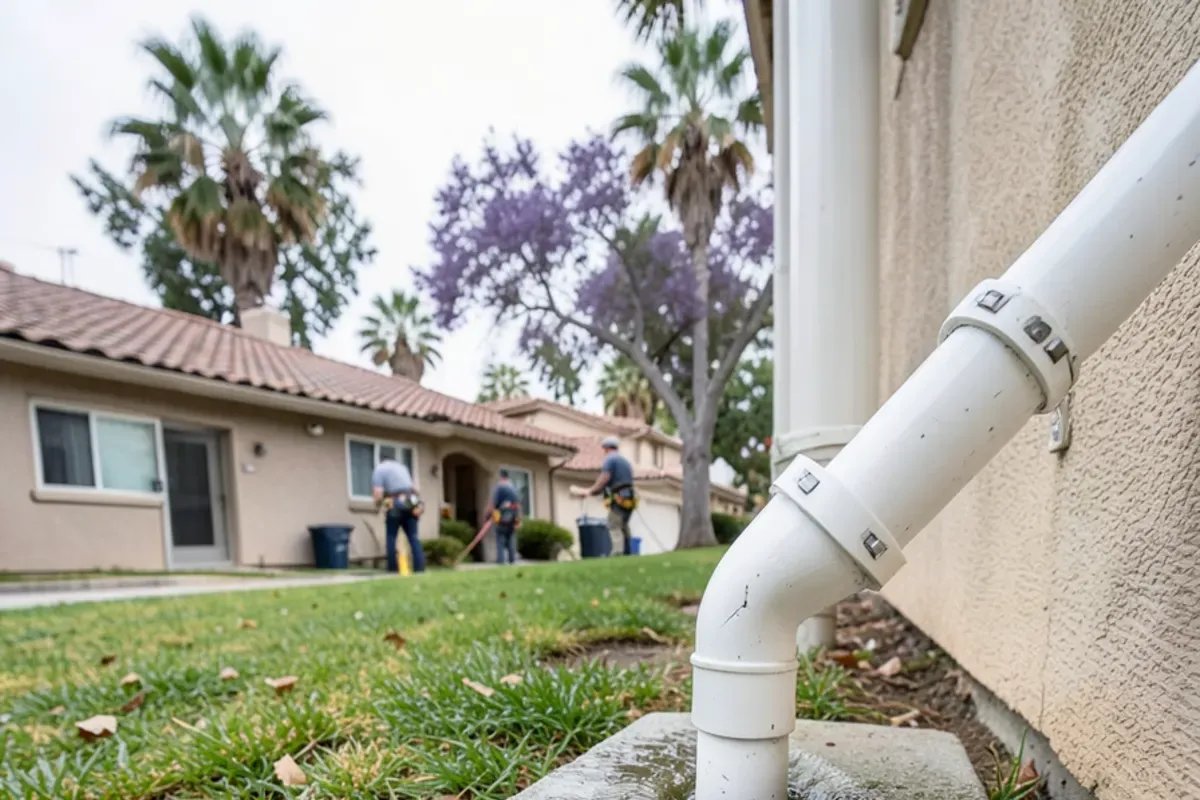
Need downspouts & roof drainage help this week?
Tell us what you are seeing. We schedule same-day or next-day visits when crews are free and send photos with a written quote.
- 4.9 from 48 Google reviews
- Based on Rosemead Blvd
- Photos and a written quote before work
What does it cost to fix roof drainage?
Drainage pricing follows the parts and the digging. Above-ground work is modest. Buried lines cost more because of trenching, pipe, fittings, and any concrete cutting or patching.
- Number and size of downspouts added or replaced.
- Extensions, splash blocks or rain chains chosen.
- Length of buried line, soil conditions and roots in the path.
- Concrete or pavers removed and restored.
- Curb outlet work and any city approval it requires.
- Gutter changes, such as a new outlet or upsizing a run.
Above-ground fixes come first in our quotes; when an extension solves the problem, any buried line is listed as an option, not the default.
Ask about payment options if drainage work is paired with new gutters or a reroof. If water spills over the gutter itself rather than backing up the downspout, our article on gutters overflowing in heavy rain explains the usual causes.
Keeping downspouts flowing year after year
Flush each downspout with a hose every fall, before the first storm, and check that extensions are still attached after gardeners or mowers have been through. After a windstorm, look for disconnected elbows and straps pulled out of the stucco.
If water runs behind the gutter and down the wall instead of into the outlet, the wood behind it is at risk; our soffit and fascia repair page explains what we look for. When the gutters themselves are undersized or failing, we price replacement gutter installation with the new downspouts so the two are designed together.
Fittings and extensions from widely sold lines such as Amerimax are typical in this market, and we list the exact parts on your quote. Downspout metal and finish carry their maker's terms, which vary by product line, and our installation terms are spelled out in the contract. Request each in writing, including whether coverage moves to a buyer when the house changes hands.
Stormwater rules for roof drainage in LA County
Los Angeles County's Low Impact Development ordinance (Title 12, Chapter 12.84) asks new development to send roof runoff toward landscaped ground rather than straight to the street, and the county's residential review sheet lists disconnecting roofs from paved surfaces. Many valley cities run their own version. A downspout swap rarely needs review, but we aim for the same result.
Two things need approval first. A curb outlet through the parkway is work in the public right-of-way, so check with the city's public works office, or LA County Public Works in unincorporated areas. Tying into a county flood control drain takes a separate connection permit. Drainage jobs above $1,000 also require a CSLB-licensed contractor.
Why homeowners bring drainage problems to Tylzen Spoke
- Reviewers mention crews that lay out the options plainly and leave the choice to you.
- Photo-documented findings and a written, itemized quote before any digging starts.
- A base on Rosemead Blvd (CA-19), close to most San Gabriel Valley homes.
- When crews have room, we come out same-day or next-day.
We solve downspout and drainage problems for homes in Rosemead, Monterey Park, Pico Rivera and Whittier, where hillside lots and flat tracts each send water in different directions.
What customers say on Google
4.9★ from 48 Google reviews (checked Nov 2026)
“Our flat garage roof had a leak, and since the main roof was already aging, we decided to handle the full roofing project at the same time and upgrade from asphalt shingles to a metal roofing system. …”
“the roofing crew did an excellent job replacing the roof on my house in rosemead. we had some hail damage after a storm, which another roofer first pointed out. i wanted a second opinion, so i called for a quote, and the response was fast. tanner came by, explained clearly what needed fixing, and was very professional and friendly. …”
“tylzen spoke roofing was recommended to me, so i gave them a call and talked with brandon. i explained that my roof in rosemead had two layers of comp shingles and lots of dry rot on the rafters and plywood under the eaves. i wanted all of that repaired, plus anything else they found once the old shingles were removed. …”
Where we handle downspouts & roof drainage
- Rosemead
Tight lots where the side yard between house and block wall leaves little room to discharge water.
- Monterey Park
Sloped lots where loose downspout water undercuts retaining walls and runs onto the property below.
- Pico Rivera
Flat tract lots near the Rio Hondo, where water has no slope to follow and extensions do the work.
- Whittier
Hillside neighborhoods where buried lines carry runoff downslope without eroding terraced yards.
- El Monte
Older homes on raised foundations, where water pooling at the stem wall can reach the crawlspace.
- South El Monte
Small lots with a driveway down one side, where flip-up extensions keep the walkway clear.
- Alhambra
Older homes on narrow lots, where clay or corrugated lines buried long ago are crushed or full of roots.
- Hacienda Heights
Unincorporated hillside tracts, where any parkway drainage work goes through LA County Public Works.
- Rowland Heights
Hillside homes with concrete tile roofs, where 3x4 downspouts handle fast runoff from steep planes.
More places we handle downspouts & roof drainage
Downspouts & Roof Drainage questions
What if there's no good place on my lot for downspout water?
Most small lots still have one. We look for the nearest planted area, lawn or driveway that slopes toward the street, then run an extension or short buried line there. Where a side yard is boxed in by a block wall, a buried line to the front of the lot is often the answer. We avoid sending water onto a neighbor's property.
Is it a good idea to bury my downspout lines?
It can be, if the line is built right: smooth-wall pipe, steady slope, a cleanout at the top and a clear outlet at the end. Buried lines keep yards and walkways dry. Poorly built ones, especially corrugated pipe, clog out of sight and push water back up the downspout, which is worse than having no line.
How do you decide how many downspouts to add?
We start with the roof area feeding each gutter run and where the valleys sit. Many single-story homes need four to six, placed at corners and near valleys. Two-story homes and roofs with complex hips and valleys often need more, or larger 3x4 downspouts. Overflow stains on the fascia are a reliable sign that a run needs another outlet.
Are rain chains a good replacement for downspouts?
On a small roof section such as a porch or entry, they work and look good. They carry less water than a closed downspout and splash in heavy rain, so they need a basin, gravel bed or drain at the bottom. We rarely recommend them for a main roof plane that takes the full force of a February storm.
Why is water pooling by my foundation even with downspouts?
Usually the downspout ends too close to the house, the extension has come loose, or the ground slopes back toward the wall. Clogged buried lines and splash blocks set facing the wrong way are other common causes. We check each one with a hose and fix the least expensive real cause first.