
By Tylzen Spoke Roofing · Published
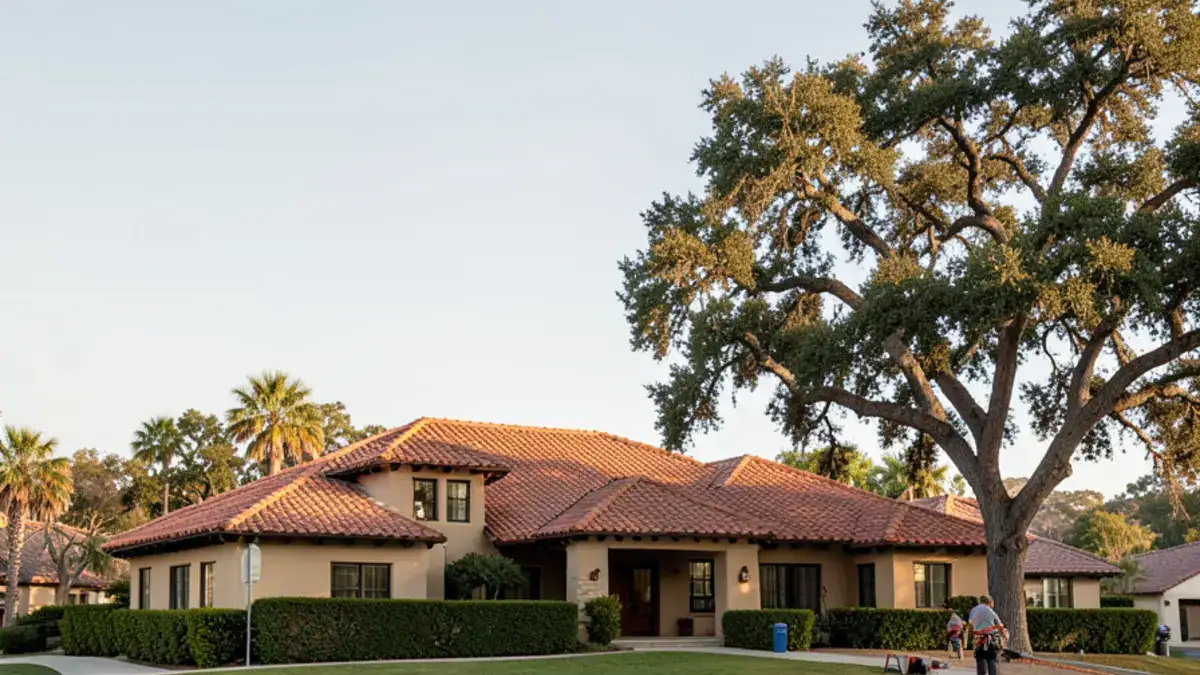
Tile roof care in San Marino comes down to three things: keep the underlayment beneath the tiles in good shape, replace cracked or slipped pieces with matching ones, and keep untrained feet off the roof. Clay tile and natural slate are long-lived materials, but the waterproof layer under them wears out much sooner, and most leaks on these roofs are a sign of that.
The same rules apply in Arcadia, where large lots, mature trees and a mix of clay and concrete tile roofs shape the work. This guide covers underlayment, maintenance, tile matching, slate repair and the access precautions that big, steep roofs require, with links to our tile roof repair service where it helps.
Why the underlayment matters more than the tile
Tiles shed most of the rain, but they are not watertight. Wind-driven water slips through laps, and the underlayment below carries it to the eave. On many older roofs that layer is felt, which dries out and cracks under years of attic heat. When it fails, leaks appear even though the tiles look perfect from the street.
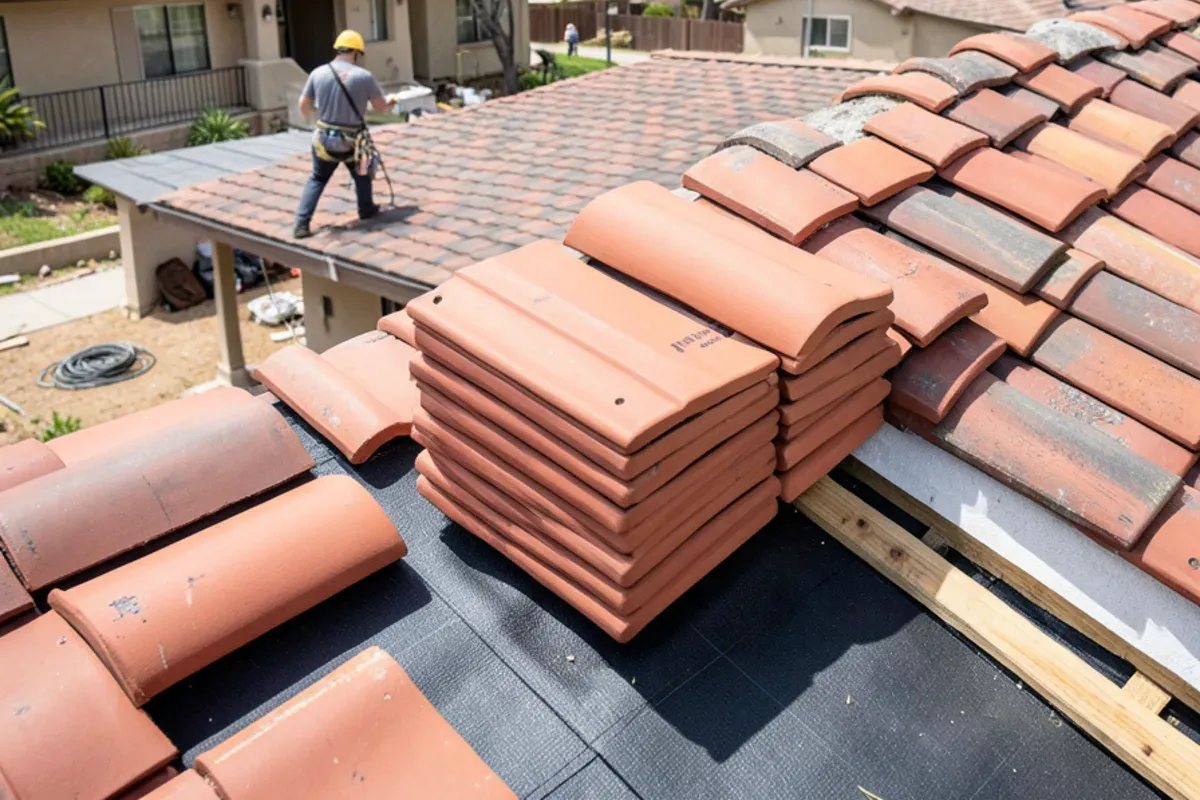
The usual fix is a lift-and-relay: crews remove the tiles, stack them on the roof or ground, replace the underlayment and battens, then reinstall the original tiles with new ones mixed in where pieces broke. It keeps the look of the house and reuses a material with plenty of service life left. Our tile underlayment replacement page walks through that process.
Want a roofer to look at it?
Call with your address and what you are seeing. We visit same-day or next-day when crews are free.
- 4.9 from 48 Google reviews
- Based on Rosemead Blvd
- Photos and a written quote before work
How should a clay tile roof be maintained?
Good care is mostly about water flow and avoiding damage. A yearly routine looks like this.
- Scan the roof from the ground with binoculars each fall for cracked, slipped or missing tiles.
- Have valleys, gutters and the gaps behind chimneys cleared of leaves before the rainy season.
- Check that eave closures, often called bird stops, are in place so nests and debris cannot block water at the edge.
- Look at ridge and hip lines for cracked mortar or loose pieces after wind.
- Trim branches back from the roof so they do not drop limbs or rub tiles.
- Skip pressure washing, which can drive water under tiles and erode clay surfaces.
Can you match roof tiles on an older home?
Often, but it takes work. Older clay profiles and colors may no longer be made, and new tiles rarely match the patina of a roof that has weathered for generations. Crews have a few options: source the same profile from a current maker in a close blend, salvage original tiles from a less visible slope such as a rear garage and use new tiles there, or mix new and old pieces so the blend reads as one roof.
Concrete tiles used as replacements on a clay roof are a common mismatch on older homes; they differ in weight, profile and how they age. If you have spare tiles from a past job, keep them, since they may be the closest match available.
Slate roof inspection and repair
Natural slate is less common in the San Gabriel Valley than clay tile, but some period homes carry it. A slate roof inspection looks for cracked, slipped or missing slates, rusted nails that let slates slide, and worn flashing, which on slate roofs is often copper.
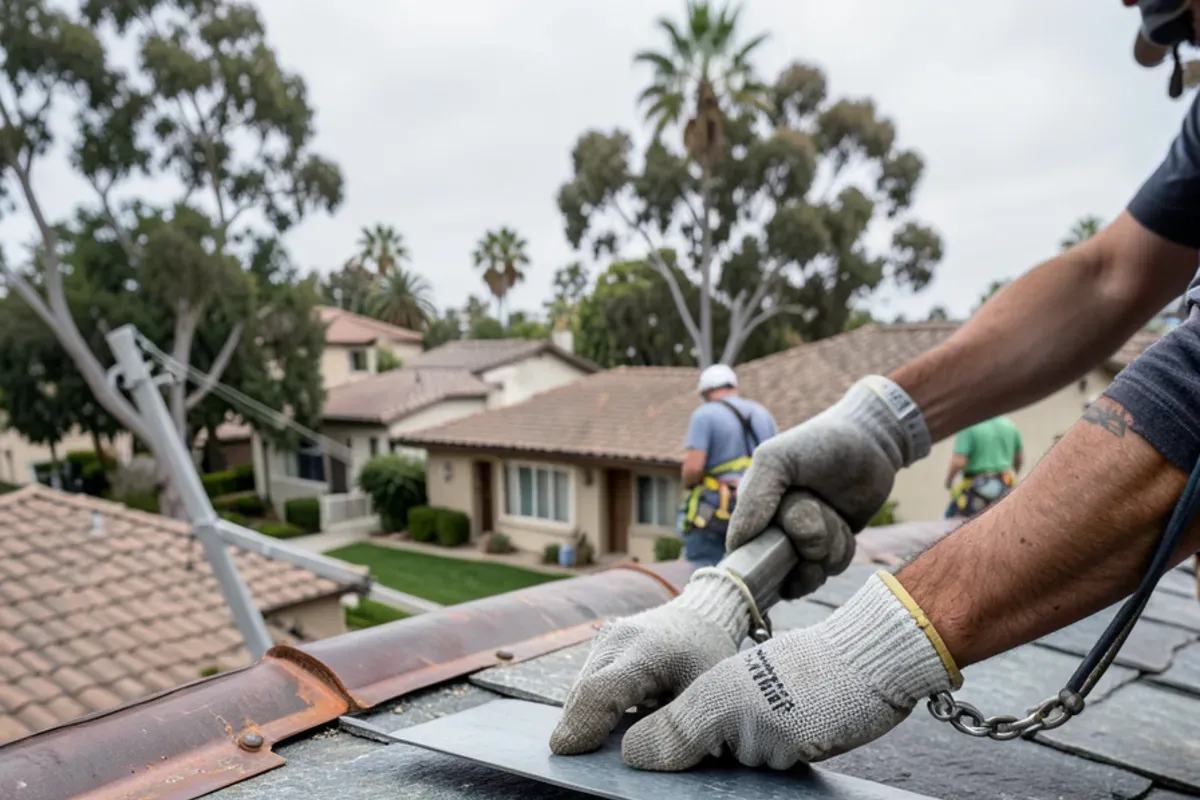
Repairing one slate is precise work. A slate ripper cuts the old nails, the new slate slides into place, and it is held with a nail through the joint above, covered by a small metal bib so water cannot reach the nail. Where real slate is not available or the roof needs replacement, synthetic slate can recreate the look at less weight; our slate and synthetic roofing page compares the two.
Which underlayment goes under a lift-and-relay?
When the tiles come off, the underlayment choice decides how long the relaid roof stays dry. Each option has a cost and a weakness, so the right pick depends on pitch, attic heat and how long you plan to keep the house.
| Underlayment | Strengths | Trade-off |
|---|---|---|
| Two plies of asphalt-saturated felt | Familiar, low material cost, forgiving to install | Dries and cracks from attic heat sooner than the other options |
| Mineral-surfaced cap sheet over a base ply | Tough surface that resists foot traffic during tile setting | Heavier and slower to install; seams need careful lapping |
| High-temperature synthetic | Light, tear-resistant, holds up to sun while the roof is open | Quality varies by product; needs the fastening pattern its maker specifies |
| Self-adhered membrane at valleys and eaves | Seals around nails where water concentrates | Too costly for a whole roof on most homes; hard to remove later |
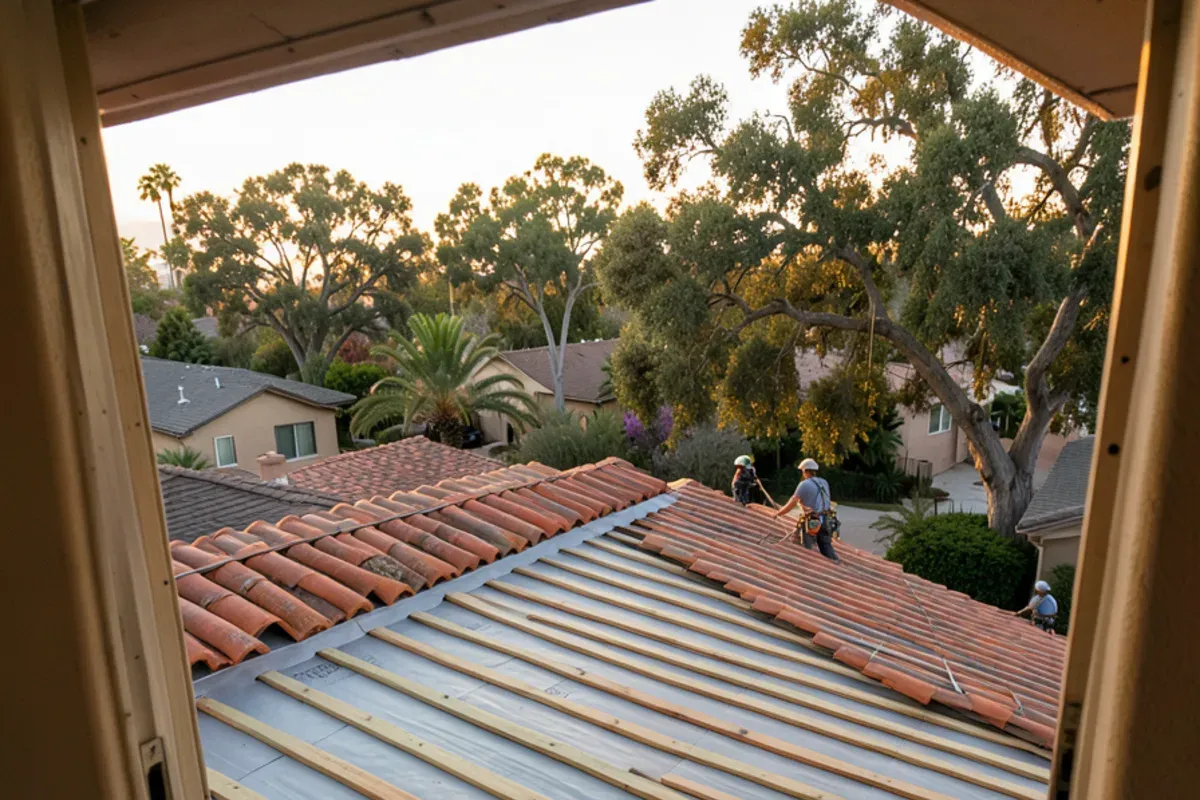
Battens matter as much as the sheet. Raised or counter-battens let water that gets under the tile drain to the eave instead of pooling behind each batten, which helps on low-pitched tile roofs common on Arcadia ranch homes. On steep San Marino roofs, the extra height has to be planned at the eaves and walls so flashing still laps correctly.
Tile and slate roofs compared
| Roof type | What wears first | Care focus | Warning signs |
|---|---|---|---|
| Clay S-tile or barrel tile | Underlayment and mortar at ridges | Clear valleys, replace cracked tiles, check bird stops | Ceiling stains with no visible tile damage |
| Concrete tile | Underlayment and surface coating | Same as clay, plus checking for slipped tiles | Faded, porous tiles; leaks after heavy rain |
| Natural slate | Nails and flashing | Replace slipped slates, inspect copper flashing | Slates sliding out of courses |
| Synthetic slate | Fasteners and flashing | Inspect after wind and around penetrations | Lifted or cracked pieces at edges |
What we see on San Marino and Arcadia tile roofs
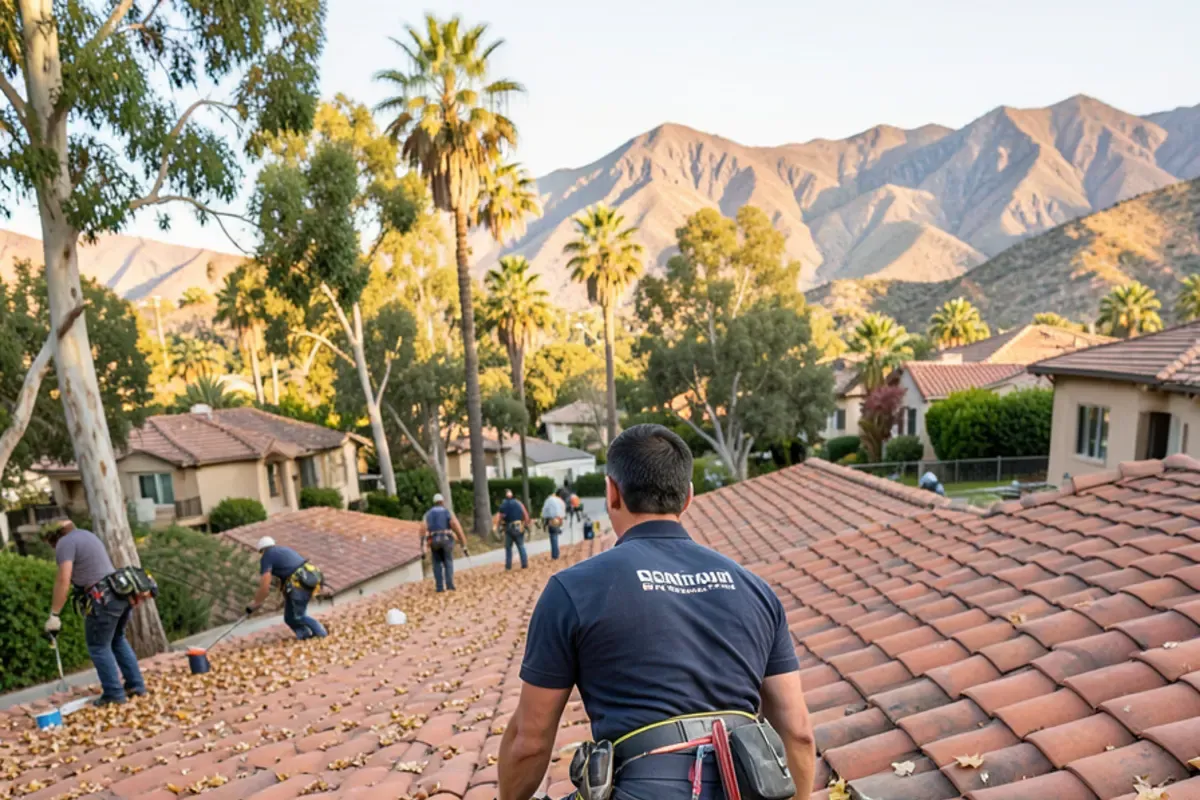
Big roofs on big lots bring their own patterns. Homes needing roofing in San Marino often have large, steep clay tile roofs with multiple valleys, and leaves from mature trees pack those valleys every fall. Many show earlier repairs where a few mismatched tiles were set without new underlayment beneath.
In roofs in Arcadia, we see both clay and concrete tile, and wind off the foothills slips pieces out of their rows. Another frequent find is cracked tile around equipment added after the roof was built, such as satellite mounts or conduit, where installers walked on unsupported tiles. We photograph each issue so you can see what is cosmetic and what is letting water in.
Original character or modern details?
Many older clay roofs here were laid in mortar with mortar-set ridges, and owners of period homes often want that look kept. The trade-off is durability: mortar cracks as the house moves and the roof heats and cools, and a mortar-set tile is harder to lift without breaking. Mechanically fastened tile on battens with a dry-set ridge system is easier to service and can add ridge ventilation, but the ridge line looks slightly different up close. On street-facing slopes we can keep a mortar-bedded look at the ridge and hips while fastening the field tiles, a middle path many owners choose.
Safe access and the rules for tile reroofs
Crews on tile keep their weight on the headlap, where each piece rests on the one below, or use foam pads, and on slate they use roof hooks and ladders so no one stands on the slates at all. Large two-story homes may need staging. That setup time is part of why heavy-roof repairs take longer than shingle work.
If a tile roof is replaced, California's Title 24 cool-roof rules apply to reroofs of 50% or more in the zones that require them, but most tile roofs are exempt because they weigh 25 lb/ft² or more. Confirm with your city's building department before choosing materials. To keep a tile or slate roof sound, call (725) 745-8803 or request a quote for an inspection with photos.
Questions readers ask
How long does tile roof underlayment last?
Far less time than the tile. Older felt underlayment dries and cracks from attic heat and it is usually behind leaks on tile roofs whose tiles look perfectly sound. Modern synthetic and upgraded underlayments hold up better. An inspection that lifts a few tiles shows its real condition.
Can I walk on my tile roof to clean the gutters?
We recommend against it. Tile cracks under point loads, and the damage often stays hidden until the next rain. Clean gutters from a ladder at the eave, or have a crew that knows where tiles are supported handle valleys and upper gutters.
Should I replace natural slate with synthetic slate?
Only if the slate itself is failing or no matching slate can be found. Sound natural slate can be repaired piece by piece for many years. Synthetic slate is lighter and easier to install, which matters when framing was not built for slate weight. We explain the trade-offs with photos of your roof.
How often should a clay tile roof be inspected?
Once a year from the ground each fall, and after any strong Santa Ana event. Every few years, or whenever a ceiling stain appears, a closer look that lifts tiles at the valleys, eaves and around chimneys shows how the underlayment is aging. Large roofs with many valleys under mature trees need the valley cleaning more often than the inspection itself.
Sources
Written by Tylzen Spoke Roofing
A roofing contractor on Rosemead Blvd (CA-19) in Rosemead, working on shingle, tile, metal and flat roofs across the San Gabriel Valley. This guide reflects what our crews check on local roofs. Questions about your roof? Call (725) 745-8803.