
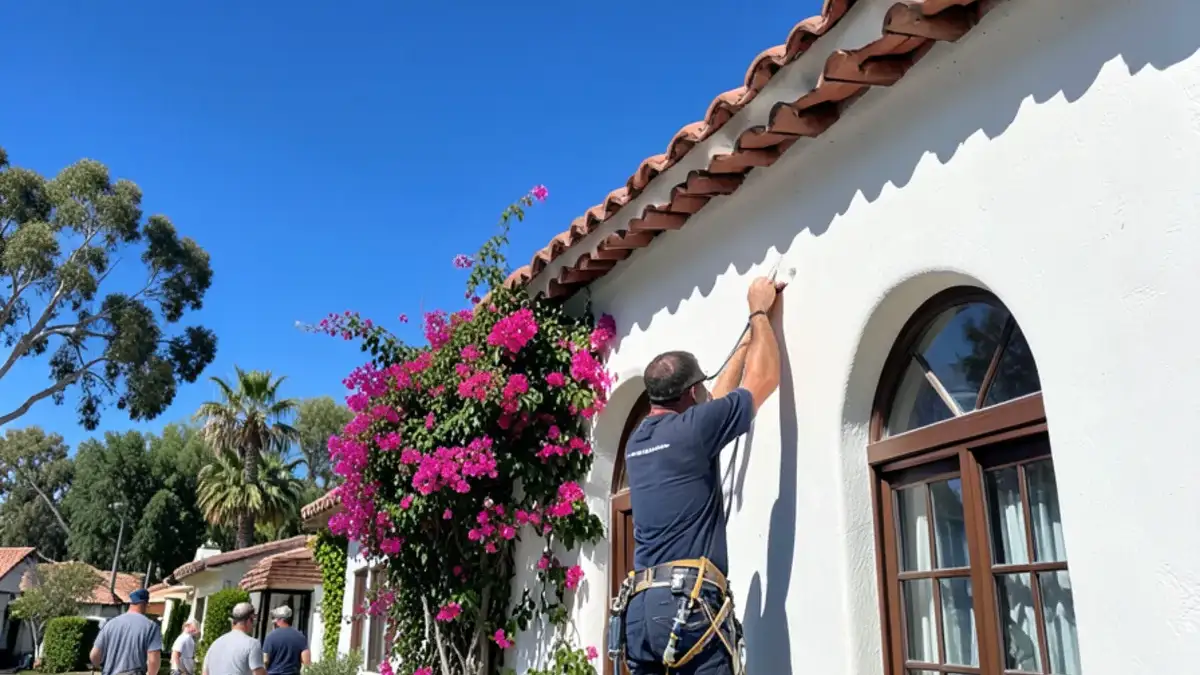
Tile roof repair in Rosemead is rarely just about the tile. Clay and concrete tiles shed most of the water, but the felt or synthetic underlayment under them is the real waterproof layer, and it usually wears out long before the tiles do. We replace broken pieces, reset slipped courses and fix the layer underneath where it has failed.
Tile work is a specialty within our roof repair service for Rosemead homes. It covers Spanish Revival houses under clay S-tile and barrel tile, and the concrete tile common in later hillside and planned tracts across the valley.
What tile roof damage looks like from the yard
- Cracked or missing pieces, often in a line where someone walked across the roof.
- Tiles that have slid down out of their course, leaving a gap at the top.
- Bare felt or a dark strip showing between tiles.
- Mortar crumbling at the ridge, hips or rake edges.
- Missing eave closures, sometimes with birds nesting in the opening.
- Interior stains with nothing visibly wrong on the roof.
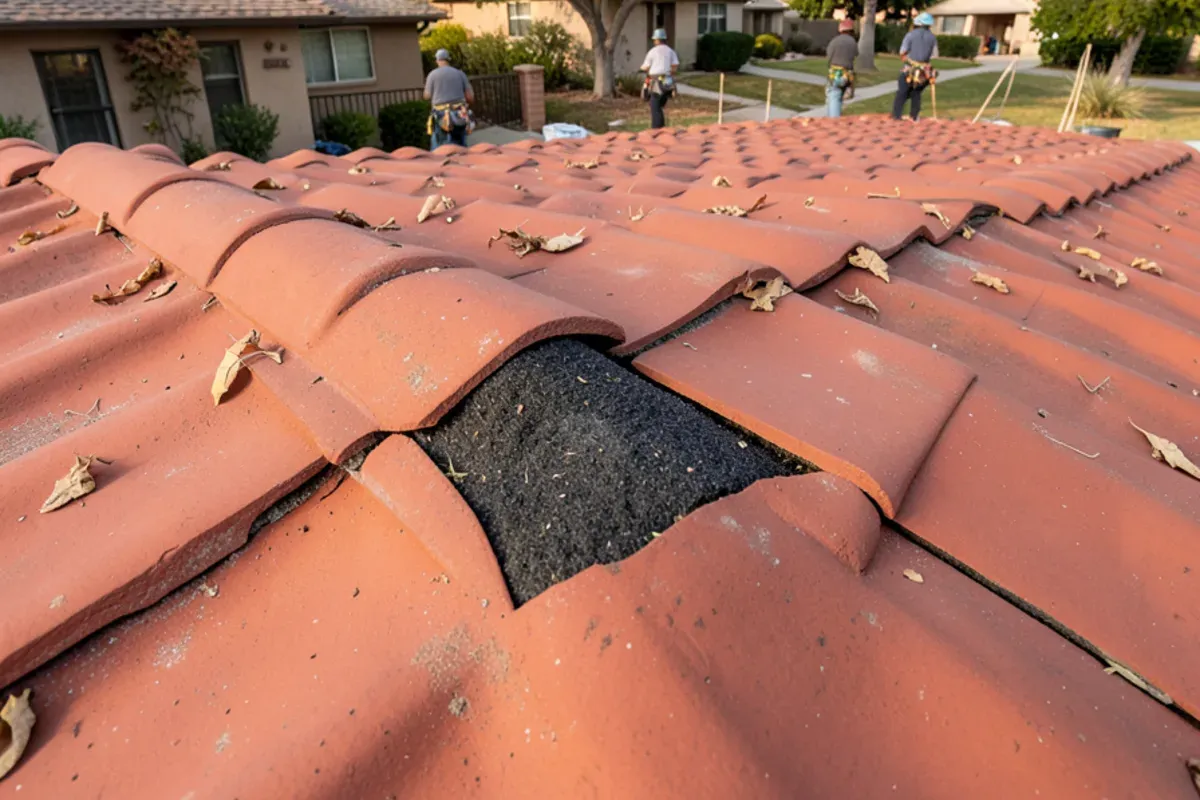
Broken tiles often come from foot traffic. Painters, satellite installers, solar crews and gutter cleaners can crack a dozen pieces in an afternoon without noticing. Fallen limbs and earthquakes do the rest; the 1987 Whittier Narrows quake was centered just south of Rosemead, and many older tile roofs here have shifted since.
Is the leak in the tile or the underlayment beneath it?
Usually the underlayment. Water always runs under tile in heavy rain; that is how the system is designed. The layer below carries it down to the eave. Once that felt dries out and cracks, which happens years before the tiles show wear, every nail hole and lap becomes a leak path.
Older roofs here often used a single layer of asphalt felt, and summer heat trapped under the tiles bakes it brittle. Where tiles are broken or slipped, sun reaches the felt directly and destroys it even faster. That is why a single cracked tile left for a season can leave a hole the size of your hand in the layer below.
The two parts age on different clocks. Clay tile can last many decades, while the felt under it is commonly put at 20 to 30 years. On a tile roof laid in the 1990s or earlier, we expect the underlayment, not the tile, to decide what the repair involves.
Clay tile repair versus concrete tile repair
| Factor | Clay tile | Concrete tile |
|---|---|---|
| Where you see it | Spanish Revival and Mediterranean homes | 1970s-2000s tracts in the hills and planned communities |
| How it breaks | Brittle; cracks under foot or impact | Tougher, but corners and anchor lugs snap |
| Fastening | Nails or wire, often with mortar at ridges | Hung on wood battens, nailed on many courses |
| Matching | Older profiles can be hard to find | Color fades, so new tiles look brighter |
| Typical slippage cause | Rusted nails or broken wire ties | Broken lugs or rotted battens |
Both are heavy, and that weight matters for code. Title 24 lists roofs of 25 lb/ft² or more, which includes most tile, among the exceptions to the cool-roof rules. Confirm with your building department before any large tile project.
How we inspect a tile roof without breaking more tile
Walking tile takes technique. We step only on the lower portion of each piece, where it overlaps the course below and has support underneath, and we use pads on fragile clay. Before going up, we check the attic for staining so we know which area to focus on.
- Map stains in the attic and match them to the slope above.
- Look for cracked, slipped and missing pieces from the eave up.
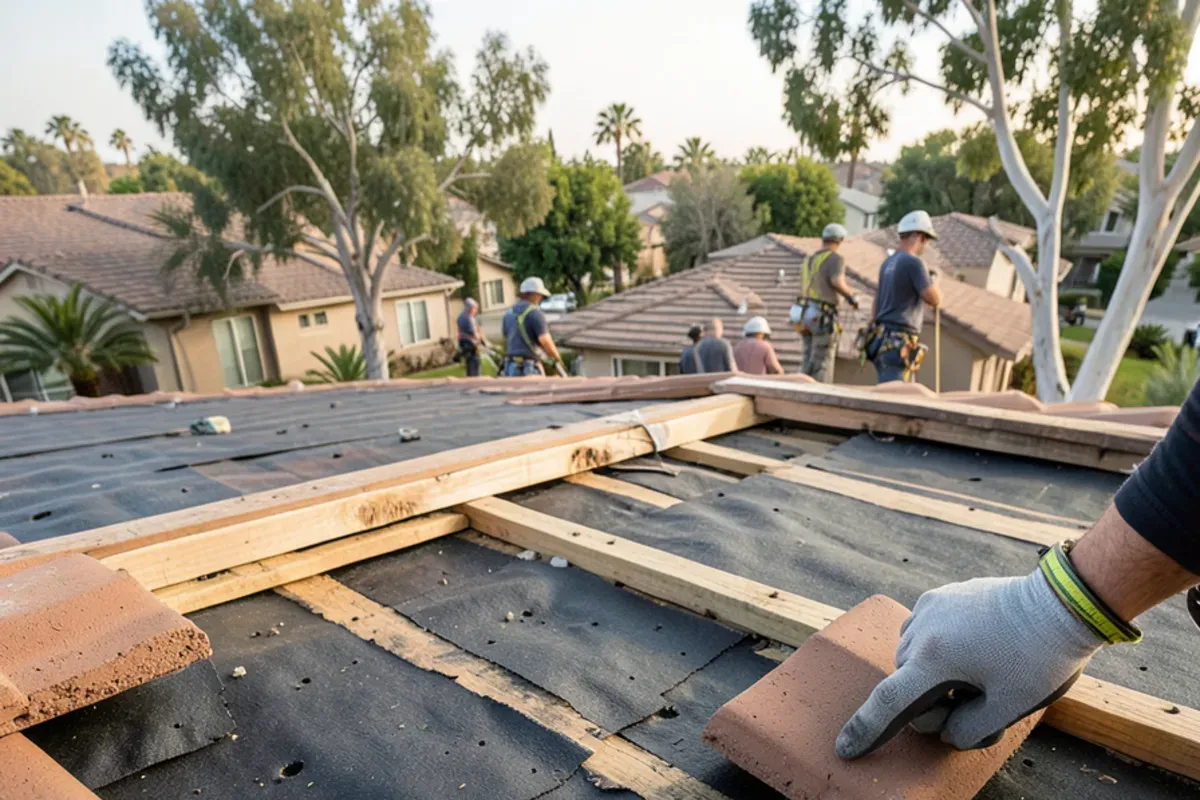
- Lift a few tiles at the problem area to see the condition of the underlayment and battens.
- Check valleys, ridge and hip mortar, wall flashing and pipe penetrations.
- Photograph everything, including a sample of underlayment from another slope for comparison.
Tile roof repair in Rosemead: methods and when each fits
Single tile replacement
A broken piece is removed and a new one slid in, secured with a tile hook, copper wire or a nail and sealant depending on the profile. It is quick, but it only fixes the tile. If the felt below is torn, it needs attention too.
Local underlayment patch
We lift the tiles in the leaking area, stack them carefully, install new underlayment woven into the old, and relay the tiles. This works when the rest of the roof's felt is still flexible.
Lift and relay
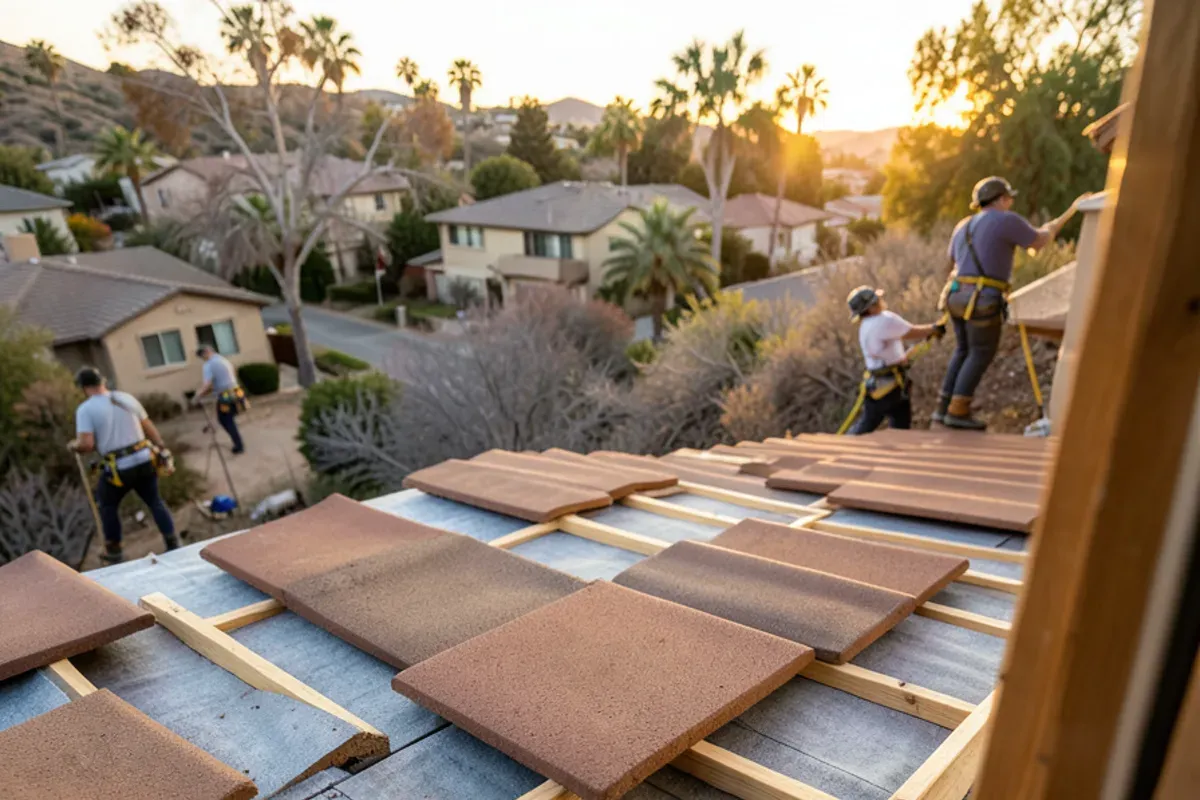
When the felt is brittle everywhere, we remove all the tile, install new underlayment and flashing, replace rotted battens and relay the original tile, swapping out broken pieces. Our tile underlayment replacement page covers that job in detail.
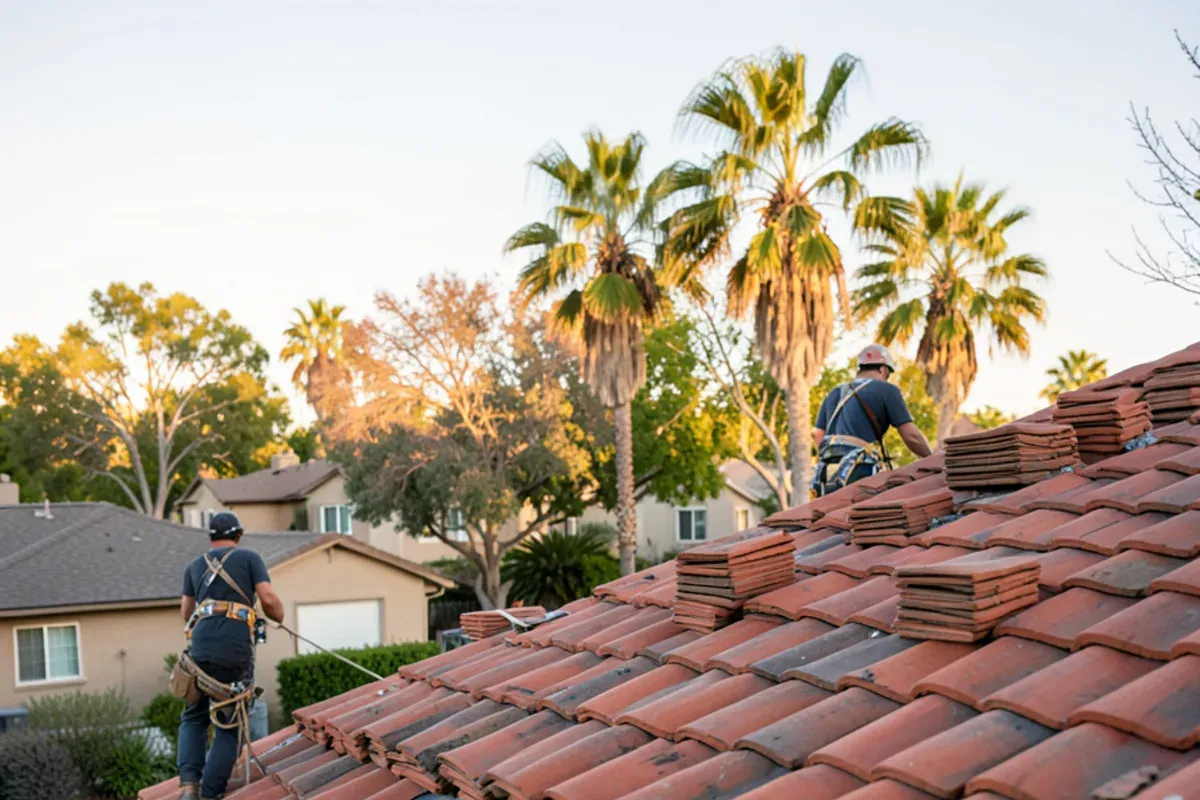
Leaks at walls, chimneys and valleys on tile roofs are usually metal problems rather than tile problems, which our roof flashing repair team handles in the same visit.
Need tile roof repair help this week?
Tell us what you are seeing. We schedule same-day or next-day visits when crews are free and send photos with a written quote.
- 4.9 from 48 Google reviews
- Based on Rosemead Blvd
- Photos and a written quote before work
What happens on a tile repair day
We arrive with replacement tile chosen to match, protect landscaping under the work area, and stage removed tiles on the roof or on padded ground racks so they are not chipped. Single-tile swaps take an hour or two. An underlayment patch over one leak area often takes most of a day. A lift and relay on a typical single-story home takes several working days, and we tarp any open area overnight.
Once the repair is done, we photograph the finished work and the new underlayment before the tile went back on, so you have a record of what is under there.
What changes the price of a tile repair?
As a planning figure only, Manta's 2023 calculator puts LA County roof repairs at $1,185-$1,625 before permits. Tile jobs move within and beyond that range mostly on labor, because every piece over the damaged felt comes up by hand and goes back in its course. A lift and relay reuses most of the original tile, so it renews the waterproof layer for well below the cost of new tile.
- Clay versus concrete, and whether the profile is still made.
- How many tiles must come up to reach the damaged underlayment.
- Battens or decking found rotted once the area is open.
- Ridge and hip mortar that needs to be rebuilt along with the field repair.
- Pitch, height and how much staging space the yard allows.
Permits, fire-zone rules and licensing for tile work
Swapping broken tiles in Rosemead seldom needs a permit. A lift and relay that renews underlayment across a slope usually does, through the Building and Safety Division, or LA County Public Works in unincorporated areas. In Very High Fire Hazard Severity Zones on the foothill edge, such as Sierra Madre or Altadena, Chapter 7A also calls for a Class A roof assembly and ember-resistant vents.
Tile repairs above $1,000 in labor and materials need a contractor with a CSLB license in the C-39 Roofing class. Search the roofer's name or number at cslb.ca.gov to see license status and workers' comp coverage.
Why tile owners in the valley call Tylzen Spoke
- Reviewers mention clear, no-pressure explanations of whether a tile roof needs a patch or a relay.
- Our base on CA-19 in Rosemead keeps drives short to the tile-heavy neighborhoods north and east.
- You get photos of the underlayment, not just the tile, and a line-by-line written quote.
- When a project needs a permit, we pull it and book the inspection.
Tile and underlayment coverage depends on the specific manufacturer's product, and our workmanship terms are spelled out in your contract. Ask for both in writing and whether they carry over to a new owner.
We repair tile roofs in Arcadia, San Marino and South Pasadena, along with Rosemead and the surrounding cities. For panel roofs on garages or shops, see our metal roof repair service.
What customers say on Google
4.9★ from 48 Google reviews (checked Nov 2026)
“I contacted Tylzen Spoke Roofing several times to help with my roof after some storm damage caused us to lose a few tiles. William came out and gave me a clear and fair estimate. I provided the replacement tiles, and the crew handled the repairs quickly, making sure everything was secure and looked great. …”
“We were referred to this roofing company by a friend, and after our experience, we completely understand why they came so highly recommended. We had some serious leaks in the roof of our new house and needed repairs right away. The owner called me back promptly, even on a Friday evening, and came out the next day to check things out. …”
“Our flat garage roof had a leak, and since the main roof was already aging, we decided to handle the full roofing project at the same time and upgrade from asphalt shingles to a metal roofing system. …”
Where we handle tile roof repair
- Rosemead
Spanish Revival homes under clay S-tile and barrel tile, where decades-old felt beneath the tile causes most leaks.
- Arcadia
Large Mediterranean and ranch homes under clay and concrete tile, with pine and oak limbs that crack pieces.
- San Marino
Period homes with original clay tile, where matching old profiles and careful footing matter on every repair.
- South Pasadena
Older Spanish-style homes whose clay tile and mortared ridges loosen with age, foot traffic and past earthquakes.
- Monterey Park
Hillside concrete tile tracts from the 1970s on, where broken lugs and rotted battens let courses slide.
- San Gabriel
Mission-style and Spanish Revival homes where cracked clay tile and worn felt are the usual repair.
- Sierra Madre
Foothill tile roofs in Very High fire zones, where relays must keep a Class A assembly and ember-resistant vents.
- Rowland Heights
Planned hillside communities under concrete tile, where faded color makes new replacement pieces stand out.
- Temple City
Mixed streets where tile-roofed homes sit beside shingle ranches, often cracked by solar and satellite installs.
More places we handle tile roof repair
Tile Roof Repair questions
My tiles look intact, so why is the roof leaking?
Because the tiles are not the waterproof layer. Rain runs beneath them in every heavy storm, and the underlayment carries it to the eave. When that felt cracks with age and heat, water gets through at nail holes and laps even though every tile is whole. Lifting a few tiles at the leak area shows us right away.
Can I supply my own spare tiles for the repair?
Yes, and we encourage it. Spares left by the original builder match the color and profile far better than anything new. We check them for cracks before use. If you do not have enough, we use your spares on the most visible slopes and source the closest match for areas less in view.
Is it safe to walk on a clay tile roof?
Not for most homeowners. Clay is brittle, the surface is uneven and it gets slippery with dust or dew. Stepping in the wrong spot cracks a tile and can send you sliding. We walk only on the supported lower part of each piece with pads, and we suggest you inspect from the ground or a ladder at the eave.
Do tile repairs trigger Title 24 cool-roof requirements?
Small repairs do not. A project that replaces half the roof area or more is treated as a reroof, and in Climate Zone 9 that can bring cool-roof rules into play. However, roofs weighing 25 lb/ft² or more, which covers most tile, are listed as an exception. Confirm the details with your local building department before a large relay.
Why do my concrete tiles look faded and chalky?
The surface color coat on concrete tile wears with sun and rain, leaving a dull, powdery look. It is cosmetic and does not mean the roof leaks. It does make new replacement tiles stand out, so for repairs on visible slopes we sometimes move original tiles from a rear slope and put new pieces there.
How long does a tile roof repair take?
Replacing a few broken tiles is usually done in an hour or two. Patching underlayment over one leak area can take most of a day. A full lift and relay on a single-story home typically takes several working days, and any area left open overnight is covered with tarps.