
By Tylzen Spoke Roofing · Published
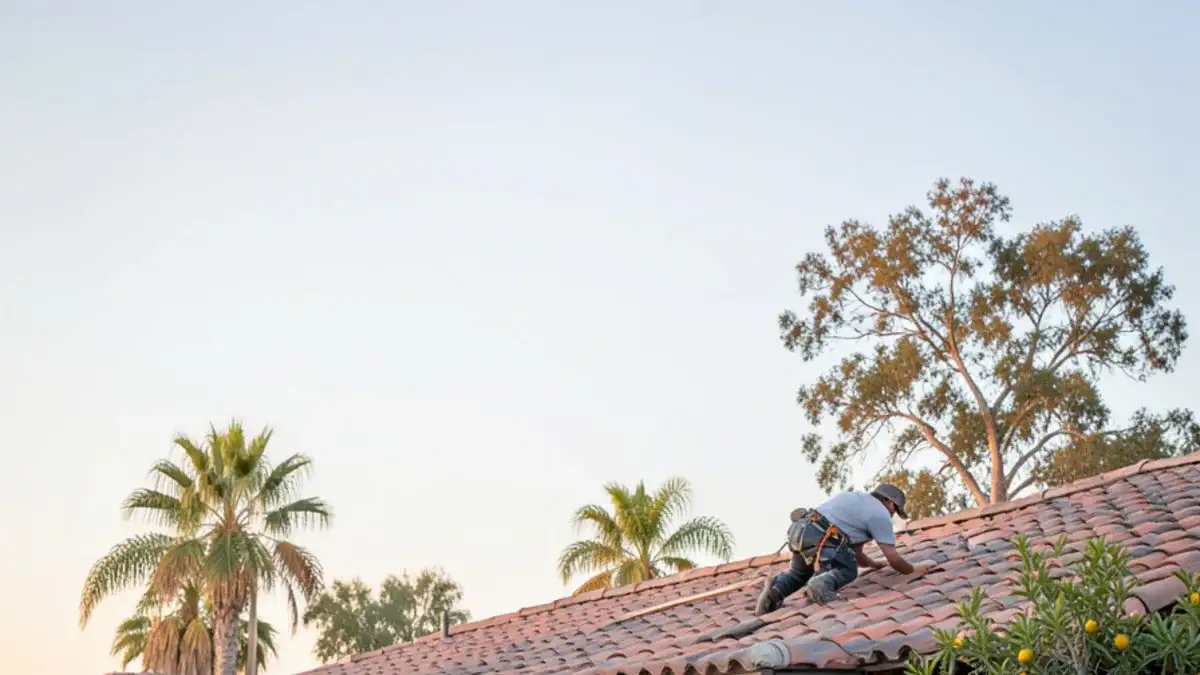
A solid roof maintenance checklist for Southern California covers six areas twice a year: the roof surface, flashing and penetrations, sealants, gutters and drainage, the attic, and the trees around the house. Do the walk-around checks yourself from the ground and the attic, and leave anything that means walking the roof to a roofer, especially on tile.
Timing matters more here than in snowy climates. Summer heat does the slow damage, the November to March rains expose it, and Santa Ana winds in between lift whatever is loose. Spring and fall checks line up with those cycles.
The checklist, one roof part at a time
Work from the top down and from the outside in. Binoculars from the yard cover most of the surface checks on a single-story home, and the attic shows what the roof hides.
Roof surface
- Shingles: curling edges, bald patches where granules are gone, cracks and missing tabs.
- Tile: cracked, slipped or missing pieces, and mortar falling out at ridges and hips.
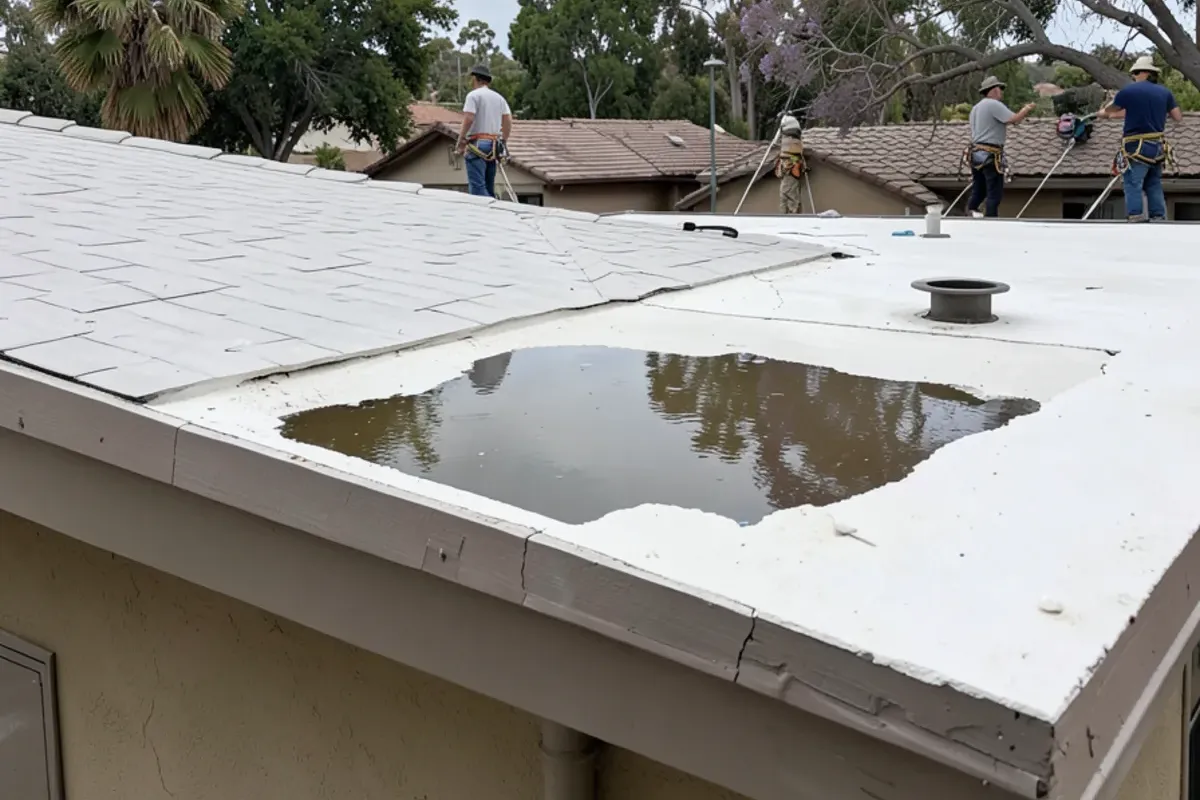
- Flat sections: blisters, cracked coating, open seams and spots where water stands more than 48 hours after rain.
Flashing, penetrations and sealants
- Chimney, wall and skylight flashing: gaps, rust and lifted edges.
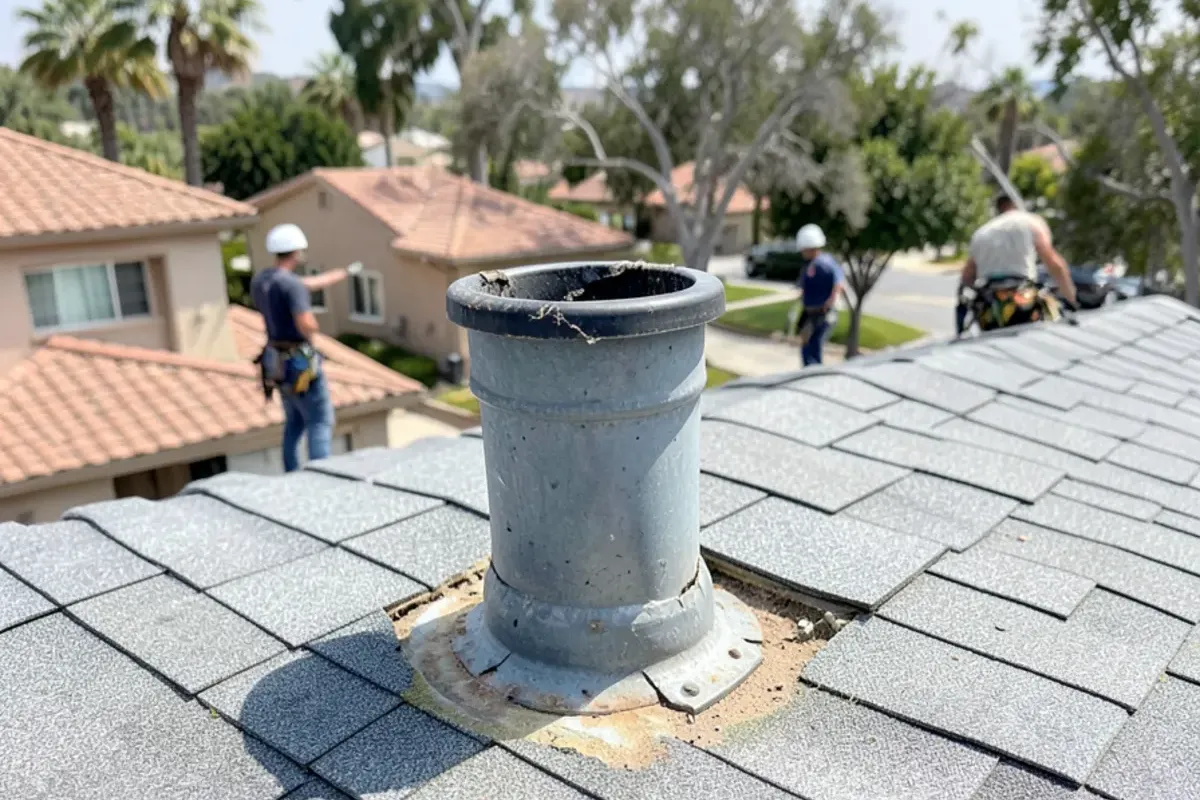
- Pipe boots and vent jacks: split or shrunken rubber collars.
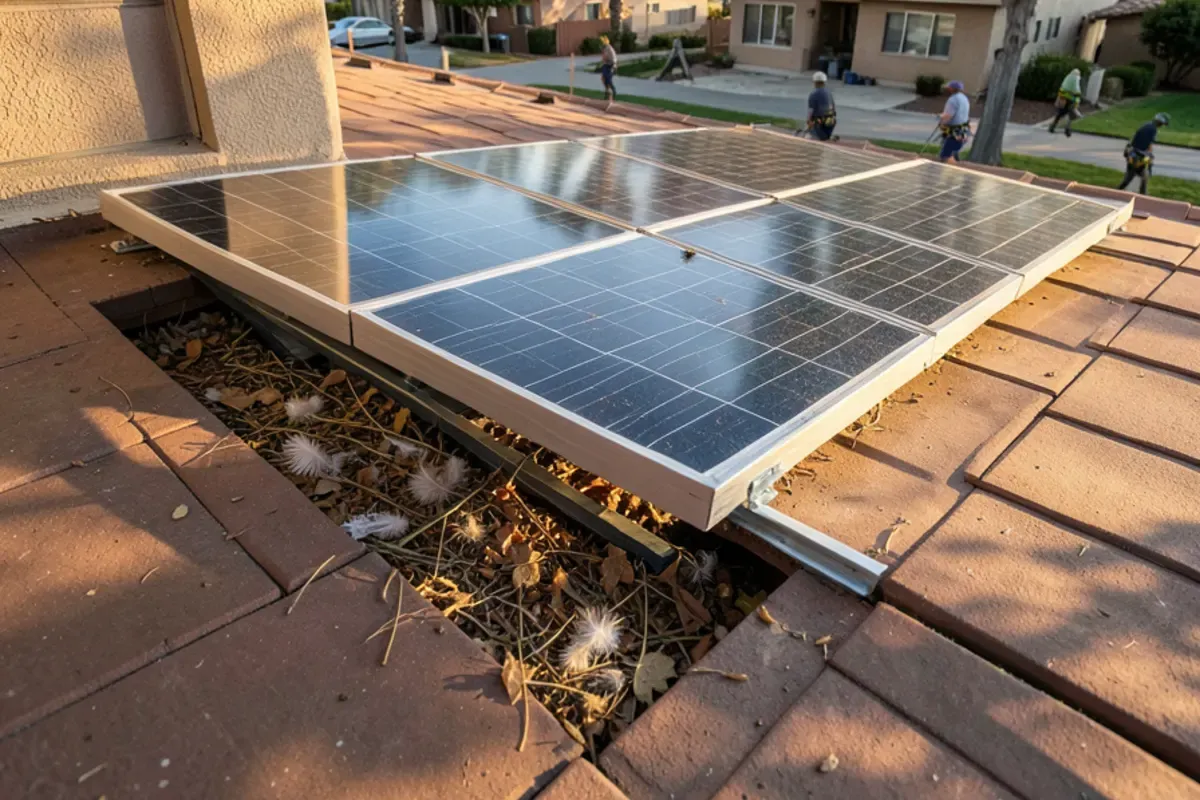
- Solar and satellite mounts: loose fasteners and sealant that has dried, cracked or pulled away.
Gutters, fascia and drainage
- Clear debris, run water through each downspout and confirm it leaves the foundation area.
- Look for peeling paint, stains or soft spots on fascia boards.
Attic
- Water stains on sheathing and rafters, damp insulation, and daylight at nail holes.
- Blocked soffit vents, plus signs of pests such as droppings or chewed vent screens.
Around the house
- Branches within a few feet of the roof, and palm fronds or pine needles collecting in valleys.
Want a roofer to look at it?
Call with your address and what you are seeing. We visit same-day or next-day when crews are free.
- 4.9 from 48 Google reviews
- Based on Rosemead Blvd
- Photos and a written quote before work
How does maintenance differ for shingle, tile and flat roofs?
| Roof type | Common SoCal wear | What to watch | Who should check |
|---|---|---|---|
| Asphalt shingle | Heat-dried shingles, cracked sealant, granule loss | Curled edges, granules in gutters, lifted tabs after wind | You from the ground; a roofer up close |
| Clay or concrete tile | Cracked tiles, worn underlayment beneath | Broken or shifted tiles, debris in valleys, attic stains | A roofer, since walking tile breaks it |
| Flat or low-slope | Ponding, UV-cracked coatings, open seams | Standing water, blisters, clogged drains | You from a ladder; a roofer for repairs |
| Metal | Loose fasteners, worn washers, scratches that rust | Backed-out screws, rust near the coast, seam sealant | A roofer |
Tile is the material most often misjudged. The tiles themselves are durable, but the underlayment beneath them wears out sooner, and that hidden layer does the actual waterproofing.
Flat roofs over garages, patio rooms and additions need closer attention than the main roof. Water moves slowly across them, and every seam sits in full sun all summer.
Spring and fall: splitting the list by season
Split the checklist across two visits so each one lines up with the season ahead.
- Spring (April-May): look for winter storm and wind damage, note attic stains while they are fresh, and schedule repairs before summer heat bakes the gaps wider.
- Fall (September-October): recheck flashing and boots, clean gutters, trim trees and clear valleys before the first rain.
- After any big wind event: walk the property and look for missing shingles, shifted tiles or branches on the roof.
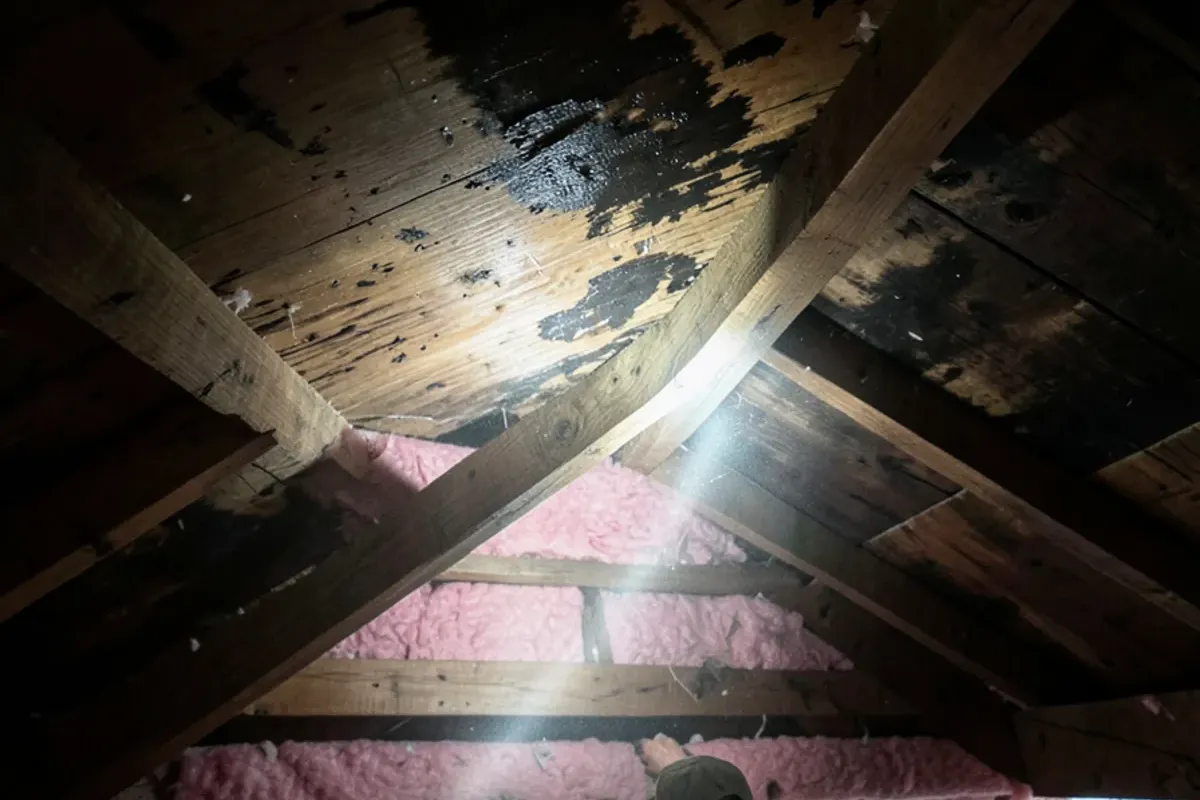
A professional roof inspection once a year, or every other year on a newer roof, fills in what you cannot see from the ground. It also gives you a dated record with photos, which helps with an insurance claim or a future home sale.
Keep a simple log between visits. Date each check, save a few photos from the same spots in the yard and the attic, and note any repairs with the contractor's name and what was done. Comparing this year's photos with last year's makes slow changes, like a sagging ridge or spreading attic stain, easy to spot.
Checks to add after wind, storms and work crews
The twice-a-year list catches slow wear. Some events cause damage on their own schedule, and each one deserves a short look within a few days:
| After this | Look for | Where to look from |
|---|---|---|
| A Santa Ana or downslope wind event | Lifted or creased shingles, shifted ridge caps, slipped tiles, branches in valleys | The yard, with binoculars on the windward slopes |
| A long or heavy storm | New ceiling or attic stains, overflow marks on fascia, standing water on flat sections | The attic with a flashlight, and a ladder at the flat roof edge |
| A summer heat wave | Sealant pulled away at walls and chimneys, newly curled shingle edges | The yard, on south and west slopes |
| Solar, satellite, HVAC or cable work on the roof | Cracked tiles along the walking path, new holes sealed only with caulk | The yard, then a roofer if anything looks broken |
| Tree trimming or removal | Gouged shingles, cracked tiles and debris left in valleys or gutters | The yard and the gutters |
Other trades walking a roof cause more tile damage than most homeowners expect. If solar panels cover part of the roof, debris and nests can build up under the array where no one sees them; our post on solar panels and reroofing covers how panels and roof work fit together.
Which checks should homeowners leave to a roofer?
Some checks are safe and useful from the ground. Others risk a fall or cause damage, so leave these to a roofer:
- Walking any tile roof, since clay and concrete tile crack under misplaced weight.
- Resealing or replacing flashing, which has to lap under the roofing in the right order.
- Replacing vent boots and repairing ridge caps.
- Anything on a two-story roof or a pitch you cannot stand on comfortably.
- Clearing valleys and debris on steep or high sections.
Our roof maintenance visits cover those items, with photos and a written list that separates what needs work now from what can wait.
What we see on roofs across Rosemead and Alhambra
Homes we visit in Rosemead and Alhambra range from post-war stucco tracts with composition shingle to older Spanish-style houses with clay tile, and many have a flat-roofed room or patio cover added later. The main roof often holds up while the flat addition behind it ponds water and cracks its coating, because nobody sees it from the street.
The other pattern is maintenance that stops at the gutters. The gutters get cleaned, but nobody checks the vent boots, so the rubber collars over bathrooms and the kitchen crack quietly until the first heavy rain. A boot is one of the cheapest roof parts to replace and one of the most frequent leak sources we trace.
On older roofs we also find sealant smeared over sealant at chimneys and walls, a sign of past leaks patched rather than fixed. That deserves a closer look before the next wet season.
When regular maintenance stops paying off
Maintenance is cheap insurance on a roof with years left in it. It is a poor investment on a roof at the end of its life. When an older shingle roof needs new boots, resealed flashing and a handful of shingles every year, those repair bills start to add up to a meaningful share of a replacement, and the next leak is never far off. On that kind of roof, we would rather show you the numbers side by side than sell another tune-up.
The opposite case is just as real. A newer shingle roof on a single-story house with no trees overhead may need only your own seasonal checks and a professional look every other year. Tile roofs on original underlayment and flat additions sit at the other end and are worth a yearly visit, with tile roof repair handled while the problems are still small.
Keep the list, keep the roof
Twice a year, work through the list: surface, flashing, sealants, gutters, attic and trees. Note what you see, photograph anything that changes, and bring in a roofer for the parts that need a ladder and a harness. To schedule a maintenance visit or an inspection, call (725) 745-8803.
Questions readers ask
How often should a roof be inspected in Southern California?
Once a year is a sensible baseline, with an extra look after major wind events. Newer roofs in good shape can stretch to every two years, while older roofs, tile roofs on original underlayment and roofs under heavy trees benefit from an annual professional check. Your own ground-level checks fill in the gaps.
Is it safe to clean debris off my own roof?
You can clear gutters from a ladder and brush debris from the edge of a single-story shingle roof. Skip pressure washers, which strip granules and force water under shingles and tiles, and stay off tile roofs entirely. Shaded north slopes can grow dark algae streaks, and those need a gentle cleaner rather than force.
What is the most overlooked roof maintenance item?
Pipe boots and vent jacks. Their rubber collars dry out and split in the heat, and a split boot lets water run straight down the pipe into the ceiling. They are inexpensive to replace and easy to check with binoculars from the yard. Look for gaps between the rubber and the pipe.
Should a roof be checked after an earthquake?
Yes, after any quake strong enough to rattle dishes. The 1987 Whittier Narrows earthquake, centered just south of Rosemead, is a reminder that the area sees them. Masonry chimneys tend to crack at the roofline, chimney flashing can pull away from the brick, and tiles can slip out of place. Look from the yard and in the attic for daylight or new cracks, and stay off the roof until it has been checked.
Sources
Written by Tylzen Spoke Roofing
A roofing contractor on Rosemead Blvd (CA-19) in Rosemead, working on shingle, tile, metal and flat roofs across the San Gabriel Valley. This guide reflects what our crews check on local roofs. Questions about your roof? Call (725) 745-8803.