
By Tylzen Spoke Roofing · Published
In the clay vs concrete roof tile decision, clay usually wins on color that never fades and on long-term looks, while concrete wins on lower material cost and wider availability. Both are heavy, both last far longer than the underlayment beneath them, and both crack if walked on carelessly.
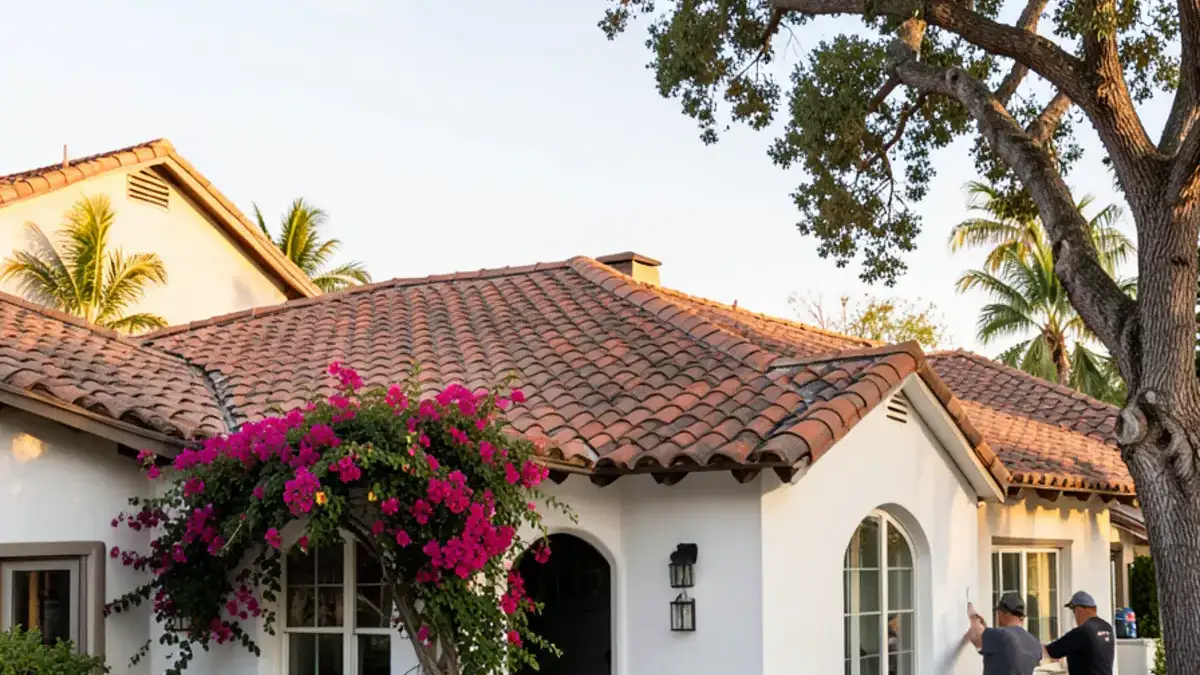
In the San Gabriel Valley the split often follows the house. Older Spanish Revival and Mediterranean houses, common in San Marino, usually wear clay S-tile or barrel tile. Concrete took over on the hillside and master-planned tracts of the 1970s to 2000s. Here is how to choose, or how to repair what you already have.
How are clay and concrete tiles made?
Clay tile is shaped from natural clay and fired in a kiln. The color comes from the clay itself or from a fired-on glaze, so it holds for the life of the tile. Concrete tile is a molded mix of cement, sand and water, colored either through the body or with a surface coating.
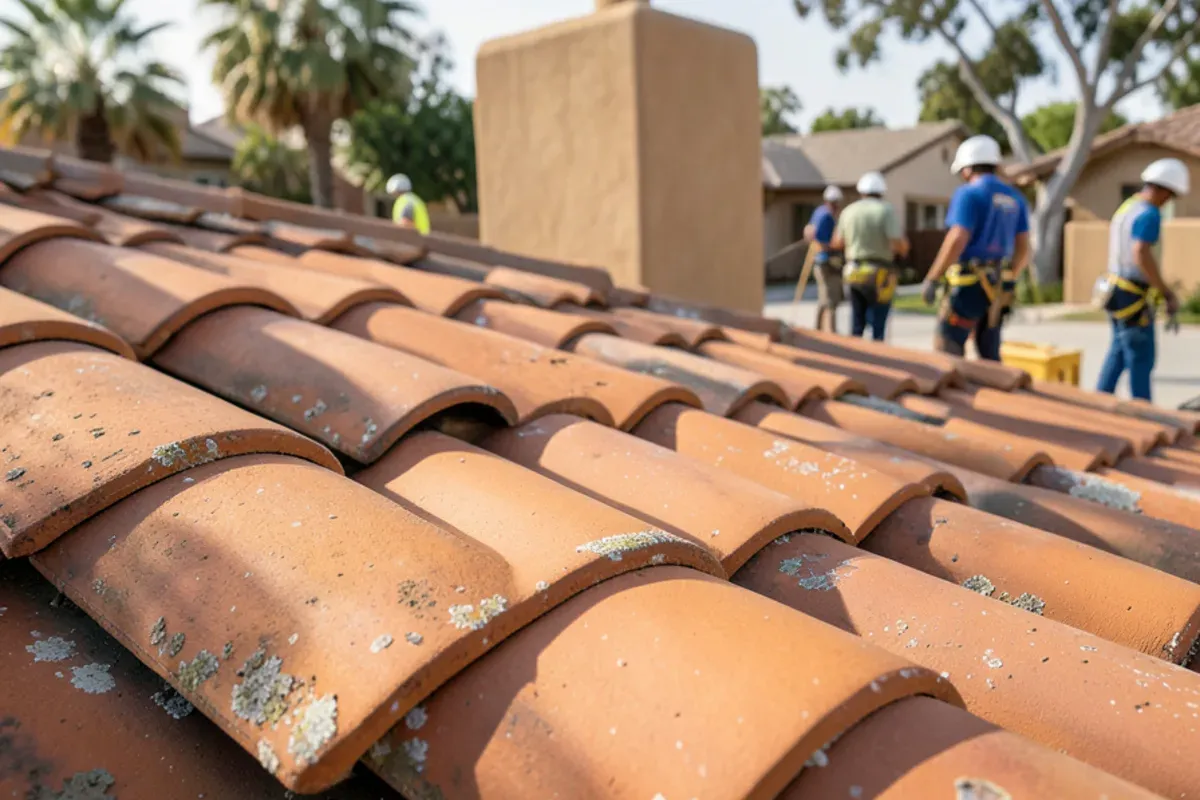
That difference drives most of what follows. Clay is dense and absorbs little water. Concrete is more porous, so it can pick up moisture, grow moss in shaded spots and lose surface color as the coating weathers in strong sun.
Want a roofer to look at it?
Call with your address and what you are seeing. We visit same-day or next-day when crews are free.
- 4.9 from 48 Google reviews
- Based on Rosemead Blvd
- Photos and a written quote before work
Clay tile vs concrete tile at a glance
| Factor | Clay tile | Concrete tile |
|---|---|---|
| Material cost | Higher | Lower |
| Weight | Heavy; standard profiles often a bit lighter than concrete | Heavy; lightweight versions exist |
| Color over time | Holds color; natural patina | Surface color can fade in UV |
| Water absorption | Low | Higher; may stain or grow moss in shade |
| Breakage | Brittle under foot or impact | Also cracks under foot; edges can chip |
| Profiles | Barrel, S-tile, flat; strong Spanish look | Flat, S and shake looks; many colors |
| Matching later | Salvage often needed for older profiles | Discontinued colors can be hard to find |
Both materials meet the Title 24 heavy-roof exception because tile roofs typically come in at 25 lb/ft² or heavier, so a tile reroof often avoids the cool-roof requirement. Confirm with your building department before ordering.
Which tile lasts longer in Southern California sun?
Both tiles outlast nearly everything else on the roof. Fired clay is close to inert in sunlight and keeps its color. Concrete keeps its strength but can lose surface color and texture after many summers, which is mostly a looks issue rather than a leak issue.
What fails first on almost every tile roof is the underlayment. Tile is a water-shedding layer; the felt or synthetic sheet below it is the real waterproofing. Once that sheet dries out and tears, rain that slips past the tile reaches the deck. Our tile underlayment replacement work lifts the tile, replaces the underlayment and battens, and relays sound pieces.
Breakage, walking and repairs
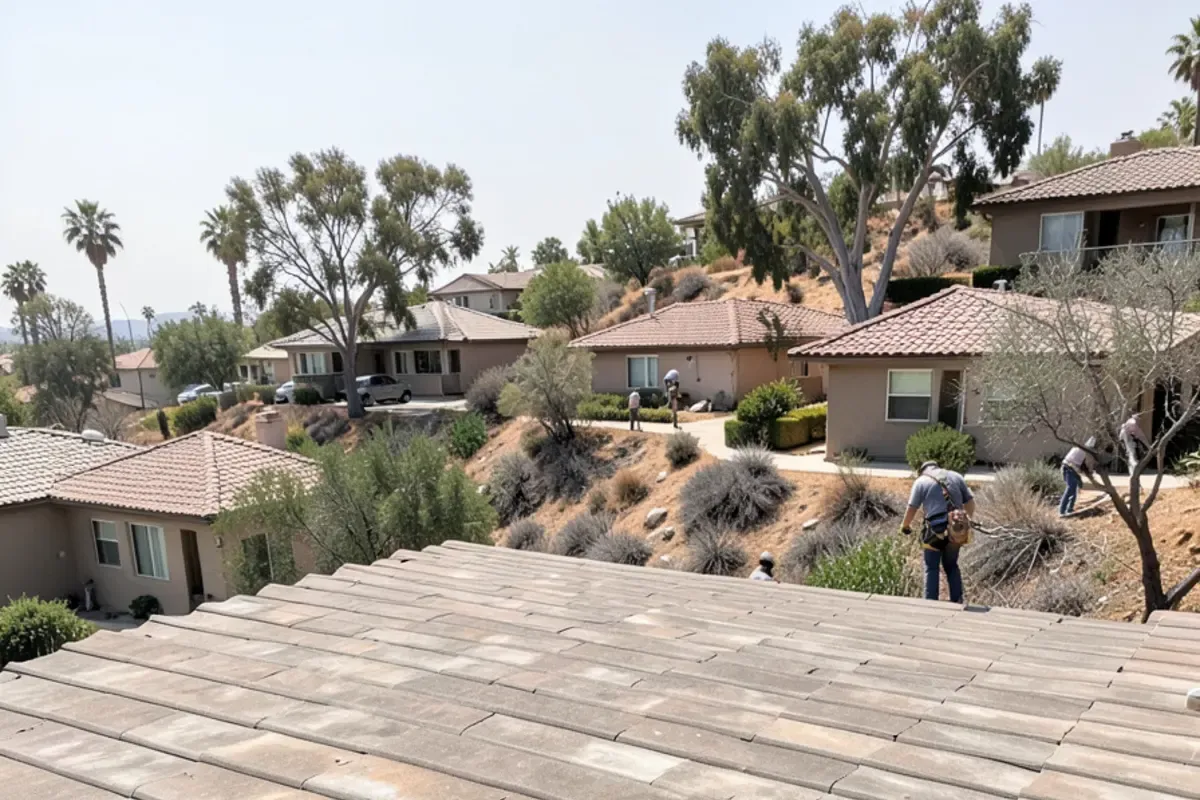
Most cracked tile we see was broken by people, not weather: satellite installers, solar crews, painters and well-meaning owners clearing leaves. Hiring a crew that knows where to step matters as much as the tile you choose.
- Put weight only on the bottom third of a tile, where it overlaps the course below; the middle is unsupported and snaps.
- Keep spare tiles from your installation stored in the garage for future matching.
- Replace cracked pieces before the rainy season so water does not reach worn underlayment.
- Have ridge and hip mortar or fastening checked after strong Santa Ana wind events.
Single-tile swaps are routine tile roof repair. Matching is easier with concrete in current colors and harder with older clay profiles that are no longer made, which is where salvaged tile from a hidden slope helps.
How do fire-zone and wind rules apply to tile roofs?
Clay and concrete are both noncombustible, and either can form part of a Class A roof assembly. The weak spot in a wildfire is the gap. S-tile and barrel profiles leave open channels between the tile and the deck, and embers blown into them can reach the underlayment and wood below.
For parcels in Very High Fire Hazard Severity Zones, the state's wildland-urban interface roof rules (Chapter 7A and R337, also published in the California Wildland-Urban Interface Code) deal with that gap directly. Where a tile profile leaves an airspace over a combustible deck, a 72-pound cap sheet meeting ASTM D3909 goes over the deck unless at least 1 inch of mineral wool board or other noncombustible material separates tile from wood. Bird stops close the eaves, hip and ridge caps are mudded in, and valley flashing sits over a cap sheet at least 36 inches wide. Our fire-resistant roofing scopes list each of these as its own line.
Wind is the other test. Santa Ana and downslope events peak from October through March, and loose ridge caps are often the first pieces to move. On a reroof we fasten field tile and ridge pieces mechanically to the manufacturer's instructions rather than trusting mortar alone, even where the fire rules also call for mudded caps.
What we check on a tile roof before fire and wind season
- The eave line, for missing bird stops or open channels at the first course.
- Valleys and roof-to-wall joints, where packed leaves are both fuel and a dam for water.
- Ridge and hip caps, tapped for looseness and checked for cracked or missing mortar.
- Attic and gable vents, which need 1/16- to 1/8-inch ember-resistant mesh in Very High zones.
- Cracked or slipped field tiles, listed for replacement before the first storm arrives.
Tile roof cost comparison: where the money goes
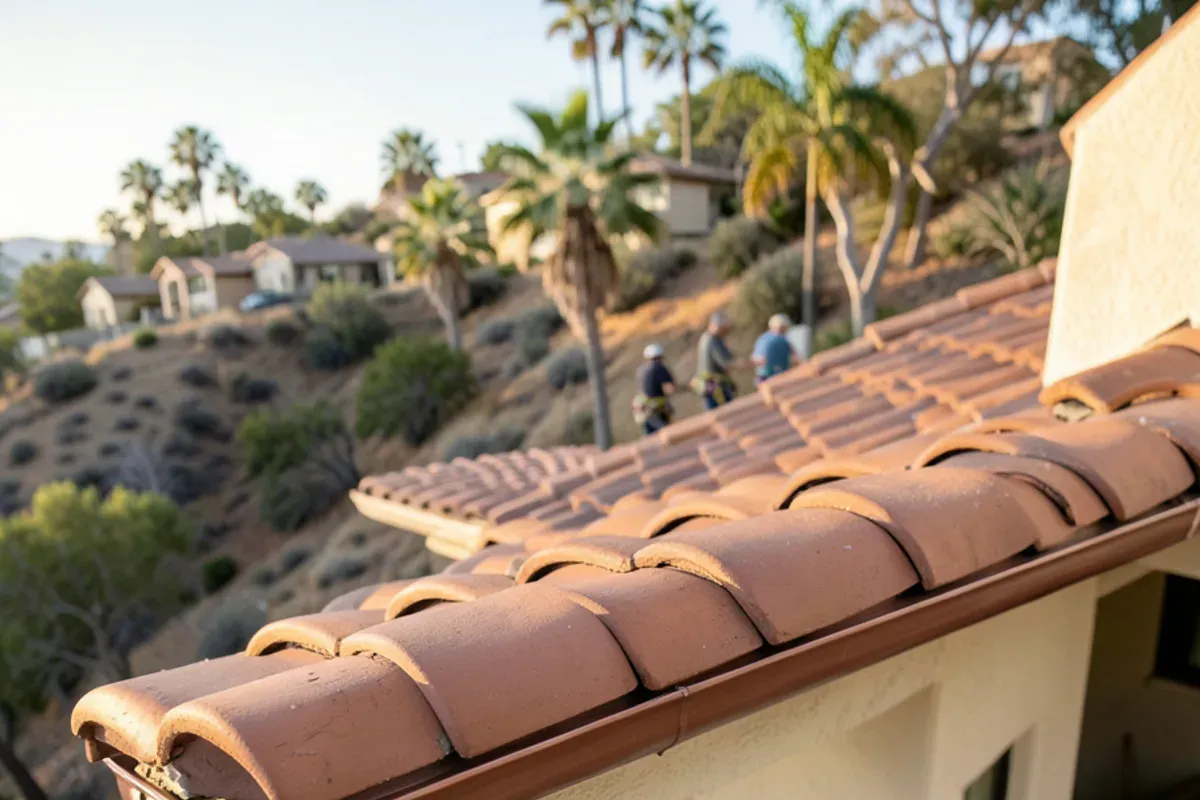
We do not publish tile prices, because labor dominates tile jobs and every roof differs. What we can say is that the tile itself is only one part of the bill. Clay costs more per piece than concrete, but on a reroof both jobs share the same big line items.
- Lifting, stacking and protecting existing tile, or hauling it away.
- New underlayment, battens, flashing and bird stops at the eaves.
- Replacement tile to fill breakage, which costs more when an old clay profile must be sourced from salvage.
- Deck repairs found once the old underlayment comes off, listed per sheet in writing.
- Permits and inspections, shown as their own line on the quote.
Real quotes depend on roof size, pitch, deck condition and how much original tile survives handling.
What we see on tile roofs around San Marino and Alhambra
Tile roofs are common across San Marino, Alhambra and the older Spanish-style streets nearby, and our crews keep running into the same handful of conditions.
- Original clay tile in good shape sitting on underlayment that is brittle enough to crumble by hand.
- Mixed roofs where earlier repairs used concrete pieces on a clay roof, which stand out after a few years of fading.
- Ridge mortar cracked or missing, letting wind lift caps and water reach the ridge board.
- Valleys and roof-to-wall joints packed with leaves from mature street trees.
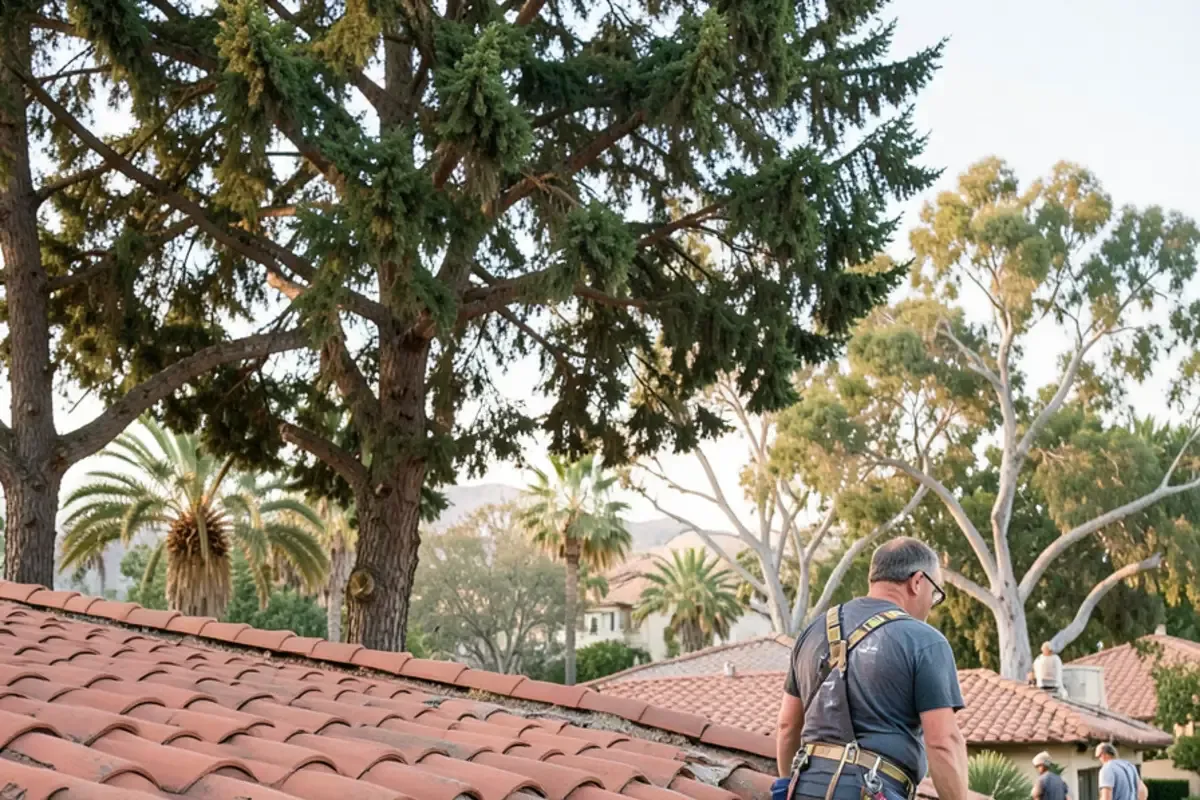
On many of these homes, a lift-and-relay with new underlayment gives the roof decades more life at less cost than new tile, because the expensive part is already on the house.
Trade-offs we lay out for tile owners
- Lift-and-relay saves the costly tile, but some pieces always break in handling, so the quote should say how replacements will be sourced and on which slopes any near-matches will go.
- A dry, mechanically fastened ridge system vents the attic and holds up in wind without mortar, but it suits parcels outside Very High fire zones, where the wildland rules call for mudded hip and ridge caps. On a Spanish Revival roof some owners also simply prefer the mortared look.
- Two plies of heavy felt cost less than a premium synthetic or self-adhered sheet, while the better layer usually lasts closer to the tile's own life. The labor to reach the underlayment is the same either way, which is why we usually suggest the longer-lived option.
- Bird stops at the eaves keep nests and embers out of the first course but change how the eave reads from below, so on older homes we choose a color that disappears against the tile.
How to choose between clay and concrete
If you own a Spanish Revival or Mediterranean home, clay keeps it authentic and holds its color. If you own a newer tract home that already has concrete, staying with concrete keeps cost and weight predictable. Either way, plan on quality underlayment, sound flashing and a crew that walks tile properly. Read our tile roofing overview, then call (725) 745-8803 if you want photos of your current roof alongside a written quote.
Questions readers ask
Is concrete tile heavier than clay tile?
Standard concrete tile usually weighs somewhat more than comparable clay profiles, though both are heavy roofs compared with shingles or metal. Lightweight concrete tile exists for houses whose framing cannot carry the standard product. Any switch from a lighter roof to tile should include a framing check.
Can concrete tiles be painted or recoated when they fade?
Coatings made for concrete tile exist, and some owners use them to refresh faded color. A coating does not fix cracked tile or tired underlayment, and it needs periodic renewal. Most owners decide based on looks, since faded concrete tile usually still sheds water well.
Should I replace my clay tile roof or just the underlayment?
If most tiles are sound, replacing only the underlayment is usually the better value. The tiles are lifted and stacked, new underlayment and flashing go down, and the original clay goes back on. Badly broken or mismatched roofs may justify new tile.
How can I tell if my roof is clay or concrete tile?
Look at a broken edge or the underside of a spare tile. Clay shows a uniform fired color, often terracotta, and feels dense. Concrete shows gray cement and sand inside, with color mainly on the surface. Concrete also tends to have a rougher texture.
Does a tile roof in a fire zone need more than the tile itself?
Yes. The tile will not burn, but the open channels under S-tile and barrel profiles can catch embers. In Very High Fire Hazard Severity Zones, the state's wildland-urban interface rules call for a 72-pound cap sheet over a combustible deck under those profiles, bird stops at the eaves and mudded hip and ridge caps. Ember-resistant vents and clean valleys finish the assembly.
Sources
- California Energy Commission: Title 24 cool roof requirements and exceptions
- Ludowici: clay roof tile manufacturer
- Eagle Roofing: concrete roof tile manufacturer
- California Wildland-Urban Interface Code §504.2: roof coverings, airspace, cap sheet and valley rules
- Office of the State Fire Marshal: Fire Hazard Severity Zones
Written by Tylzen Spoke Roofing
A roofing contractor on Rosemead Blvd (CA-19) in Rosemead, working on shingle, tile, metal and flat roofs across the San Gabriel Valley. This guide reflects what our crews check on local roofs. Questions about your roof? Call (725) 745-8803.