
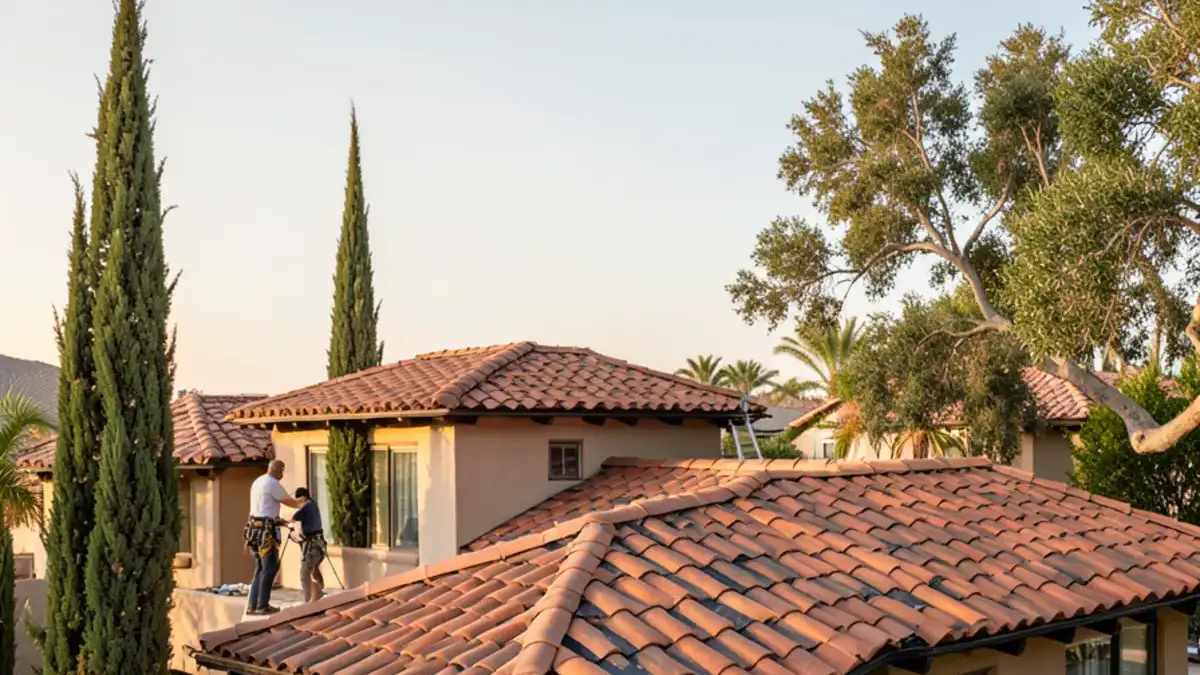
By Tylzen Spoke Roofing · Published
Tile roof underlayment replacement cost is usually well below the price of a brand-new tile roof, because a lift-and-relay reuses the tiles you already own and only buys new underlayment, flashing and replacements for broken pieces. It is the right call when the tiles are sound and replacements that match can still be found. A new tile roof makes more sense when the tiles themselves are worn out, the profile is unobtainable, or you want a different look or weight.
Below we explain what each option includes, the factors that drive the price of each, and the signs that tell us which way to go. Both are part of our tile underlayment replacement service.
Why a tile roof leaks while the tiles still look fine
Clay and concrete tiles shed most rain, but they are not watertight. Wind pushes water under the laps, and that water runs down the underlayment to the eave. The underlayment is the real waterproof layer. On many older roofs it is asphalt felt, and years of attic heat dry it out until it cracks, tears at the nail holes or simply crumbles at the eaves and valleys.
From the street the roof looks the same as the day it was built. Inside, you see stains near exterior walls, at valleys or under the lowest course of tile. Swapping a few cracked tiles does nothing when the layer beneath is gone, which is why repeat tile repairs on an old roof often stop working.
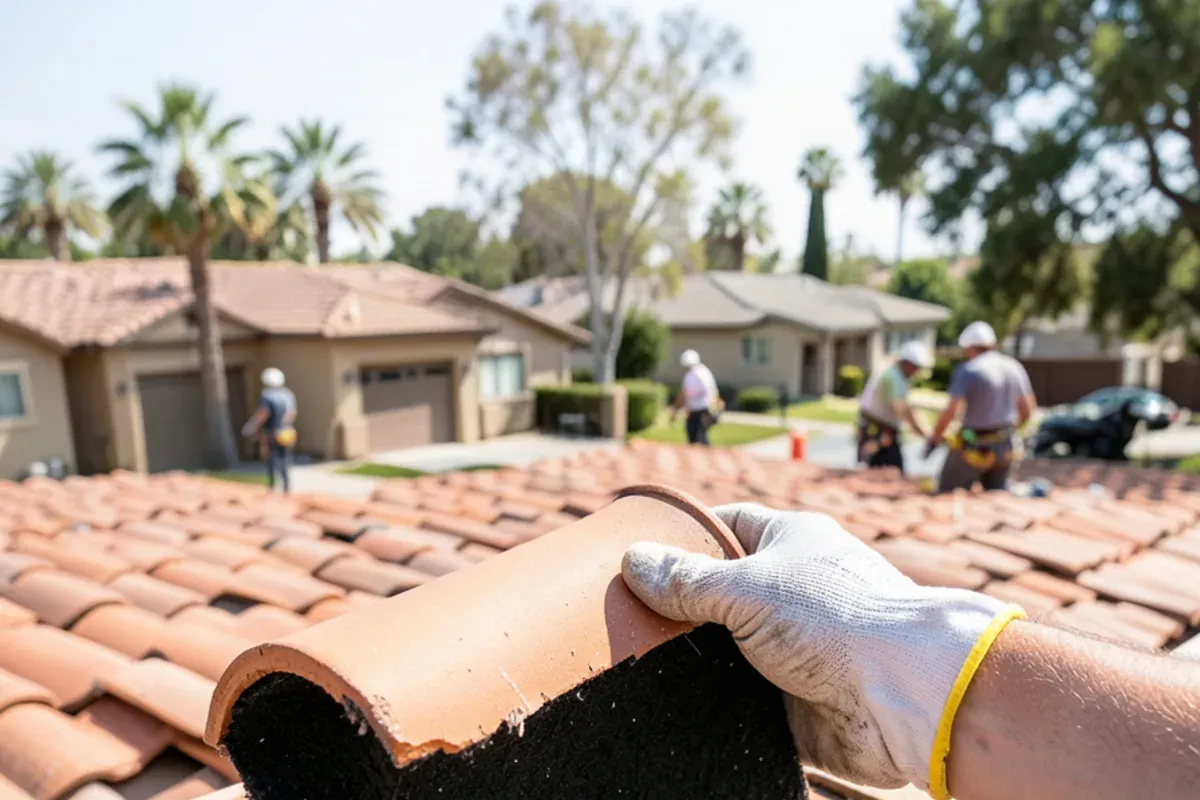
Want a roofer to look at it?
Call with your address and what you are seeing. We visit same-day or next-day when crews are free.
- 4.9 from 48 Google reviews
- Based on Rosemead Blvd
- Photos and a written quote before work
What happens during a lift-and-relay
The job is also called a refelt or tile reroof. The steps are the same on clay and concrete.
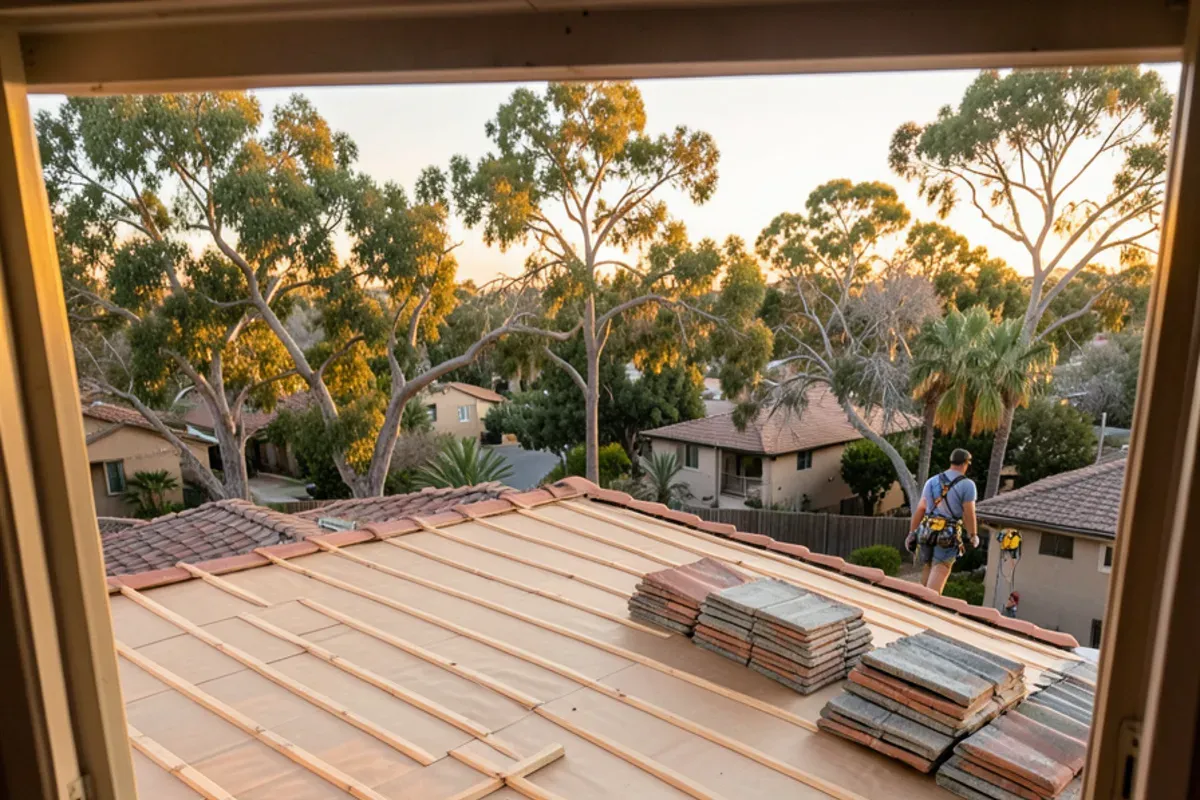
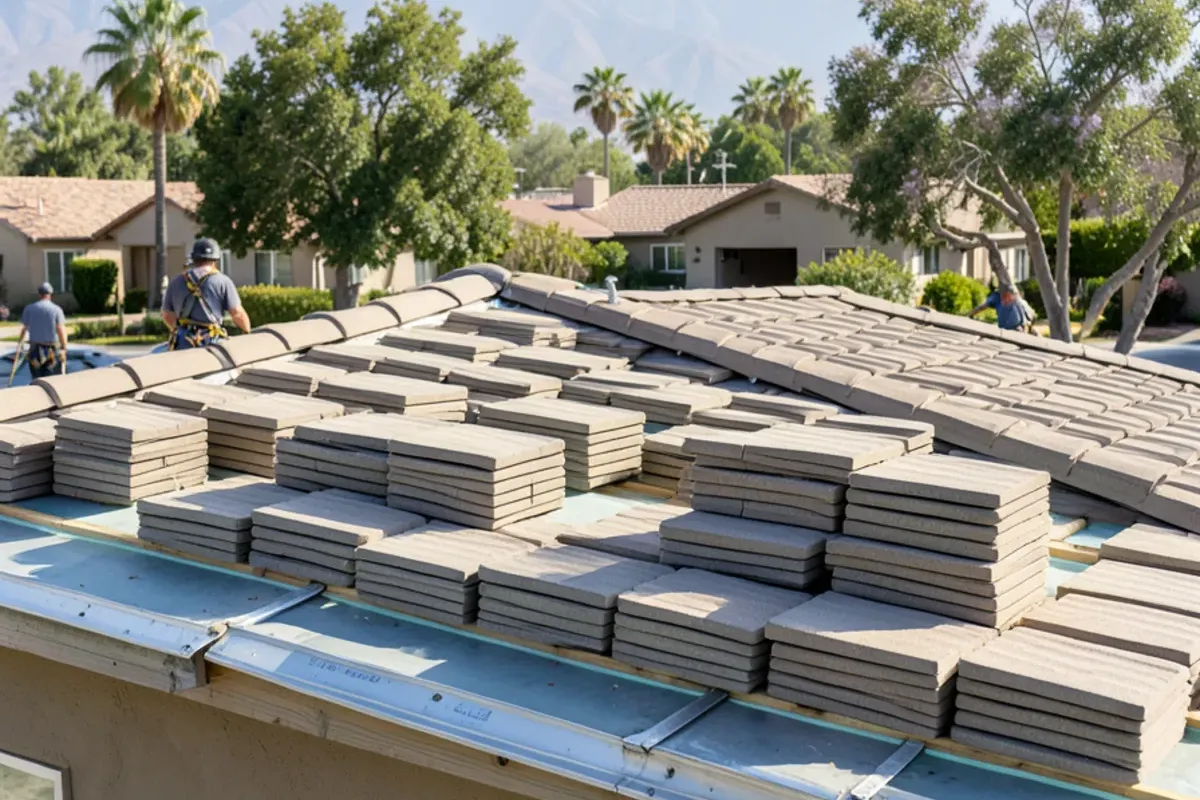
- Tiles are lifted by hand, sorted and stacked on the roof or on padded ground staging.
- Old underlayment, rotten battens and loose nails are stripped to the deck.
- The deck is inspected and damaged sheets are replaced and photographed.
- New underlayment goes down, typically two layers or a heavier synthetic or cap sheet, lapped toward the eave.
- Valleys, walls, chimneys and pipes get new metal flashing instead of reused pieces.
- Eave closures or bird stops are installed so the open ends of curved tile are blocked.
- Sound tiles are relaid, broken ones replaced, and hips and ridges are reset and sealed.
Felt, synthetic or cap sheet: what goes under the relaid tile?
The underlayment is the part you are really paying for in a lift-and-relay, so it deserves more attention than the tile. Tile roofs in this climate are normally built to the moderate-climate installation manual from the Tile Roofing Industry Alliance and the Western States Roofing Contractors Association, which treats underlayment and flashing as the waterproofing and the tile as a weather shield on top. Within that standard there are three common builds, and each one trades something.
Two plies of felt
The traditional build costs the least, every inspector knows it, and it lies flat under curved tile. Its weakness is the same one that failed the old roof: asphalt felt slowly dries out under hot tile and turns brittle, first at eaves and valleys.
Synthetic underlayment
Synthetics are lighter, hold better at nail holes and resist tearing while crews walk the deck during the relay. The catch is that products vary widely, and not every one is approved for use under tile or rated for the heat that builds beneath it. Ask for the product name and check that the maker lists it for tile roofs.
Mineral-surfaced cap sheet over a base ply
This heavier two-layer build is the one we lean toward on low-pitch tile slopes and in valleys, where water moves slowly and sits longest. It costs the most in material and adds some weight, but it holds up best in the spots where old roofs fail first. Our tile roofing page covers profiles and new installs if you are weighing a full change.
Side-by-side: reusing tile or buying a new tile roof
| Factor | Lift-and-relay | New tile roof |
|---|---|---|
| Tile material cost | Only replacements for broken pieces | A full set of new tile |
| Appearance | Same color and profile as today | Your choice of profile and color |
| Structural load | Unchanged; the framing already carries it | Depends on the tile; lightweight concrete is an option |
| Matching risk | Older or discontinued profiles can be hard to source | None |
| Title 24 cool-roof rules | Most tile at 25 lb/ft² or more falls under an exception | Same exception unless a lighter product is chosen |
| Good fit when | Tiles are sound and the underlayment has failed | Tiles are brittle, porous or the look needs to change |
Both options replace the underlayment and flashing completely. The difference is the tile on top, and that is the largest single material cost on a tile roof.
What drives tile roof underlayment replacement cost?
There is no dependable public planning figure for tile reroofs in this part of LA County, and shingle calculators do not translate. What moves a tile quote is the following.
- Roof size and pitch, measured in squares of 100 square feet.
- Breakage rate: older clay and weathered concrete crack more often when handled.
- Replacement tile supply: a current profile is easy, a discontinued one may mean salvage tile or borrowing from a hidden slope.
- Underlayment specification: two plies of felt, synthetic, or a mineral-surfaced cap sheet each price differently.
- Flashing scope around chimneys, walls, skylights and valleys.
- Deck repair found after the tile and felt come off, priced per sheet.
- Permit, inspection, staging and disposal.
When is a brand-new tile roof the smarter spend?
Reusing tile only saves money if the tile survives handling and lasts as long as the new underlayment. We recommend pricing new tile when any of these apply:
- Concrete tiles have worn through their surface, absorb water and break under light pressure.
- Clay tiles show widespread hairline cracks or flaking from impact or age.
- Many tiles were broken by foot traffic and the profile is no longer manufactured.
- You want a different color or profile, or a lighter product to reduce load.
- The home is in a mapped fire zone and the assembly must be rebuilt to meet current Class A rules.
For a closer look at the materials themselves, our comparison of clay and concrete roof tile covers weight, durability and appearance.
What we see on tile roofs in San Marino and Arcadia
Tile is common on Spanish Revival and Mediterranean homes in San Marino, where clay S-tile and barrel tile set the character of whole streets, and on concrete-tile homes from the 1970s onward in Arcadia. On both, we find the same pattern: tiles in decent shape over underlayment that has run out of life, especially at eaves, valleys and the walls where heat builds.
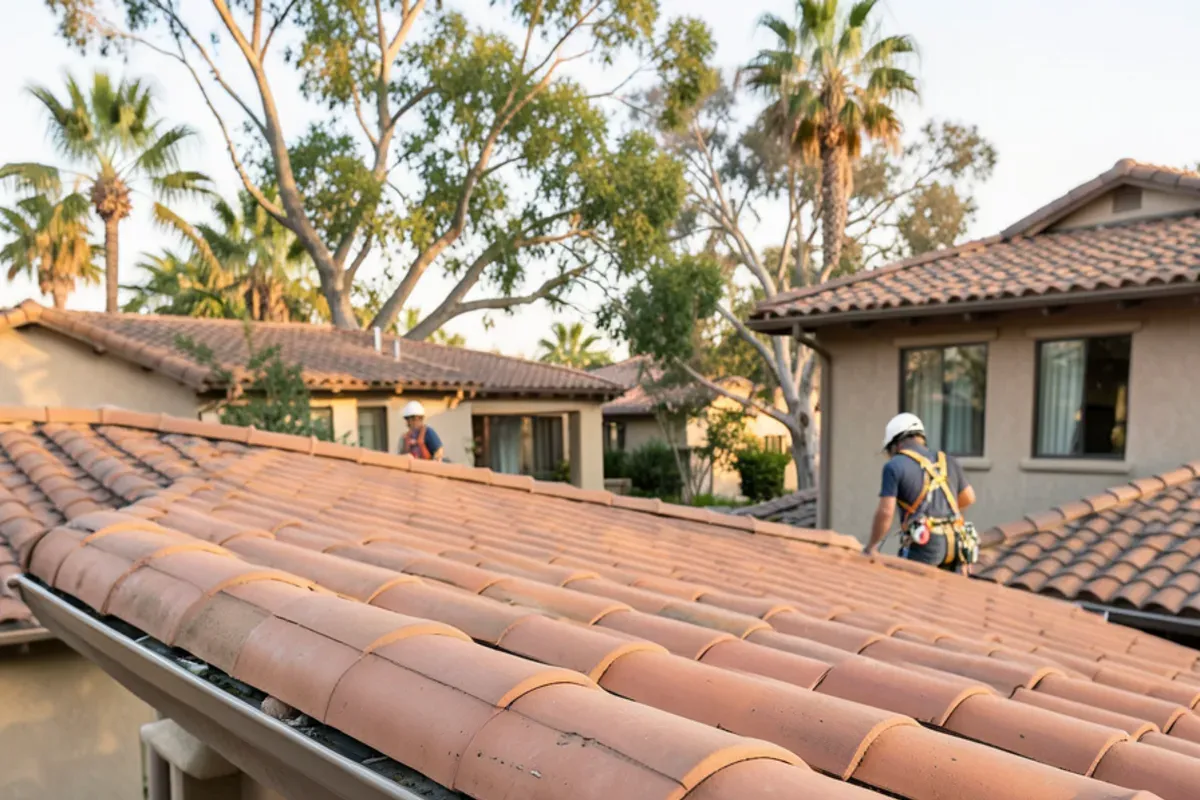
We also see damage from people walking the roof for other work, such as painting, satellite dishes or solar. Cracked tiles from foot traffic often line up in a path. When we quote a lift-and-relay, we photograph the tile condition, estimate how many replacements the roof will need, and state how those replacements are priced so there is no guesswork later.
Questions to settle before you approve a lift-and-relay quote
Two tile quotes can look close on the bottom line and describe very different jobs. Work through these with each bidder.
- How many test tiles were lifted, and on which slopes?
- How many replacement tiles does the price include, and what does each extra one cost?
- Which underlayment product goes down, in how many plies, and is it listed for tile?
- Are the battens new or reused, and are counter-battens included?
- Is every flashing piece new, including the pans at walls and chimneys?
- Are eave closures or bird stops written into the scope?
- Where will lifted tile be staged, and how are the driveway and plants protected?
- Is the permit its own line, with the underlayment inspected before tile goes back on?
A quote that cannot answer most of these is priced on a guess. Ours answers them line by line in writing, with photos from the test lift attached, so the reuse and new-tile options can be compared item for item.
Deciding with real numbers for your roof
The choice comes down to the condition of your tile and the availability of matches. We lift a few tiles during the inspection, check the underlayment and deck, and write both options into the quote when both make sense. If only a small area is failing, tile roof repair may be enough for now. To get both options priced for your home, call (725) 745-8803 or request a quote.
Questions readers ask
Is it safe to walk on a tile roof to check it myself?
We advise against it. Clay and concrete tiles crack when stepped on in the wrong spot, and a broken tile can become a new leak. Pitched tile is also slippery. Look from the ground with binoculars and check the attic for stains instead, then let a roofer walk it with proper footing and fall protection.
How many tiles usually break during a lift-and-relay?
It depends on age, material and how brittle the tile has become, so there is no single number. Newer concrete tile handles well; old clay breaks more. We estimate breakage during the inspection by lifting test tiles, and the quote states how replacement tiles are priced and sourced.
Does replacing tile underlayment need a permit?
In most cities, yes, because it replaces the waterproof layer across the roof and counts as a reroof. The permit comes from the city where the home is located. We pull it when the job requires one and schedule the inspections so the new underlayment is checked before the tile goes back on.
Will Title 24 cool-roof rules change my tile color?
Usually not. Title 24 includes an exception for roofs weighing 25 lb/ft² or more, which covers most clay and concrete tile. Lightweight tile may not qualify for that exception. Confirm with your building department, especially if you are switching to a lighter product.
Can a tile roof be refelted one slope at a time?
Yes, when only some slopes have failed and the budget is tight. Crews redo the worst slopes first, often the south and west faces that take the most sun, and tie the new underlayment into the old at a hip or ridge. The trade-off is a seam between new and old layers and a second setup later, which costs more overall than one job. Ask your city whether a partial refelt needs its own permit.
Sources
Written by Tylzen Spoke Roofing
A roofing contractor on Rosemead Blvd (CA-19) in Rosemead, working on shingle, tile, metal and flat roofs across the San Gabriel Valley. This guide reflects what our crews check on local roofs. Questions about your roof? Call (725) 745-8803.